
Starting a Cheetos Manufacturing Plant: A Comprehensive Preparation Guide
The global snack food market’s robust growth, with some sectors expanding at 8-12% annually , makes a Cheetos-style extruded snack manufacturing plant an enticing venture. The distinctive, cheese-flavored corn curls are beloved worldwide, offering a significant opportunity for entrepreneurs. However, transforming this idea into a successful operation requires meticulous planning and preparation. Here is a step-by-step guide on the essential groundwork needed before the first batch of cheesy snacks rolls off the production line.

1. Feasibility Study and Product Definition
Before investing in a single piece of machinery, you must have a crystal-clear vision of your product and its market. This foundational step involves:
- Market Research: Analyze your target market to understand consumer preferences for flavors (e.g., cheese, spicy, barbecue), packaging sizes, and price points . Identify your competitors and study their strategies to find a potential niche, such as baked varieties, organic ingredients, or locally-inspired flavors .
- Product Specification: Decide on the exact type of Cheetos-style snack you will produce. Will it be the classic fried, crunchy curl, or a baked version for the health-conscious consumer ? This decision will dictate your entire production process and equipment needs.
- Business Plan: Develop a comprehensive business plan outlining your projected costs, revenue, operational expenses, and break-even analysis. This document is crucial not only for your own roadmap but also for securing funding from investors or financial institutions .
2. Regulatory Compliance and Licensing
The food industry is heavily regulated to ensure consumer safety. Securing the correct permits is a non-negotiable prerequisite.
- Business Registration: Register your business and obtain the necessary trade licenses.
- Food Safety Licenses: Depending on your location and scale, you must obtain the relevant food safety certification (e.g., FSSAI registration in India, FDA compliance in the US) . This process often involves submitting a detailed plan of your facility, equipment lists, and water test reports .
- Other Permits: You may need a factory license, GST registration (or equivalent local tax registration), and environmental clearances, especially if your process involves frying and managing waste oil or emissions .
- Food Safety Plan: Develop and implement a food safety management system based on principles like Hazard Analysis Critical Control Points (HACCP) and Good Manufacturing Practices (GMPs) .
3. Site Selection and Facility Layout
The physical location and design of your factory are critical for operational efficiency and hygiene.
- Location: Choose a site with reliable access to raw materials (like corn grits), utilities (three-phase power, clean water), and your target market to minimize logistics costs . It must be situated away from environmental contaminants .
- Facility Layout: Design the plant to ensure a hygienic and logical workflow that prevents cross-contamination. The principle is to have a unidirectional flow: from raw material storage → mixing → extrusion → frying/baking → seasoning → cooling → packaging → finished goods storage . You must have separate areas for “clean” and “dirty” processes, with smooth, easy-to-clean floors (e.g., epoxy-coated concrete) and walls .
- Space Requirements: Ensure adequate space around machines (at least 1.5-2 meters) for maintenance and operation . A small to medium-scale line might require an area of 80 to 100 square meters .
4. Machinery and Equipment Procurement
The heart of your operation is the production line. Selecting the right equipment is paramount.
- Core Production Line: A typical Cheetos-style processing line consists of integrated machinery :
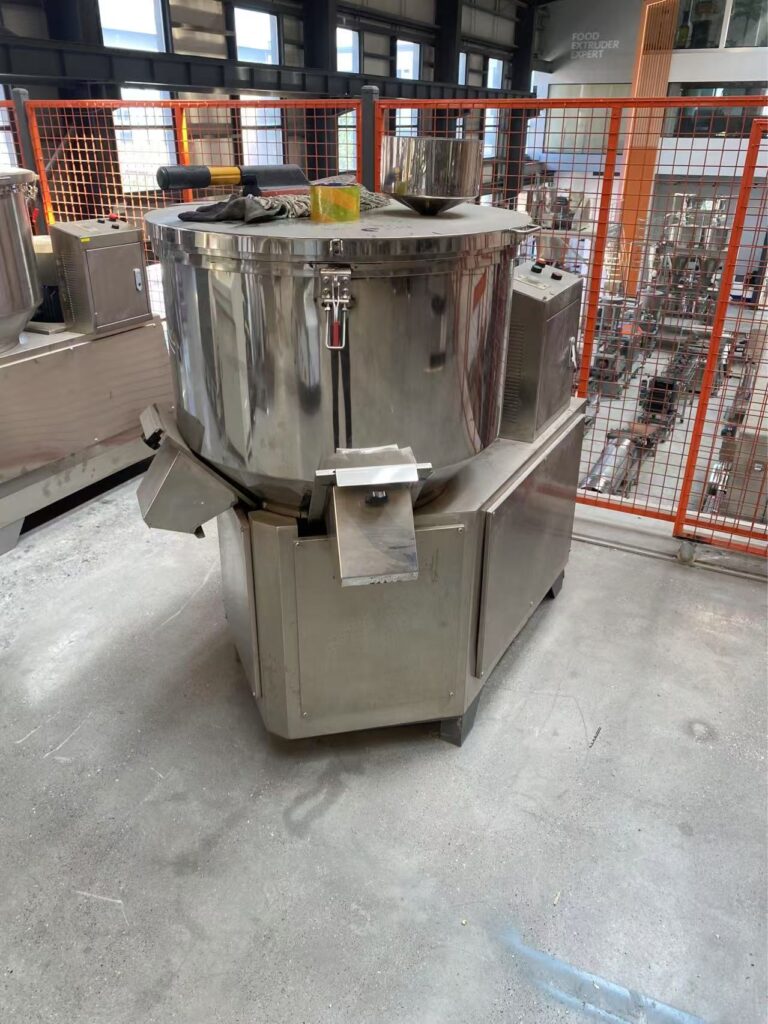
- Mixer: To blend corn grits with water and other wet ingredients uniformly. It should be made of food-grade stainless steel .
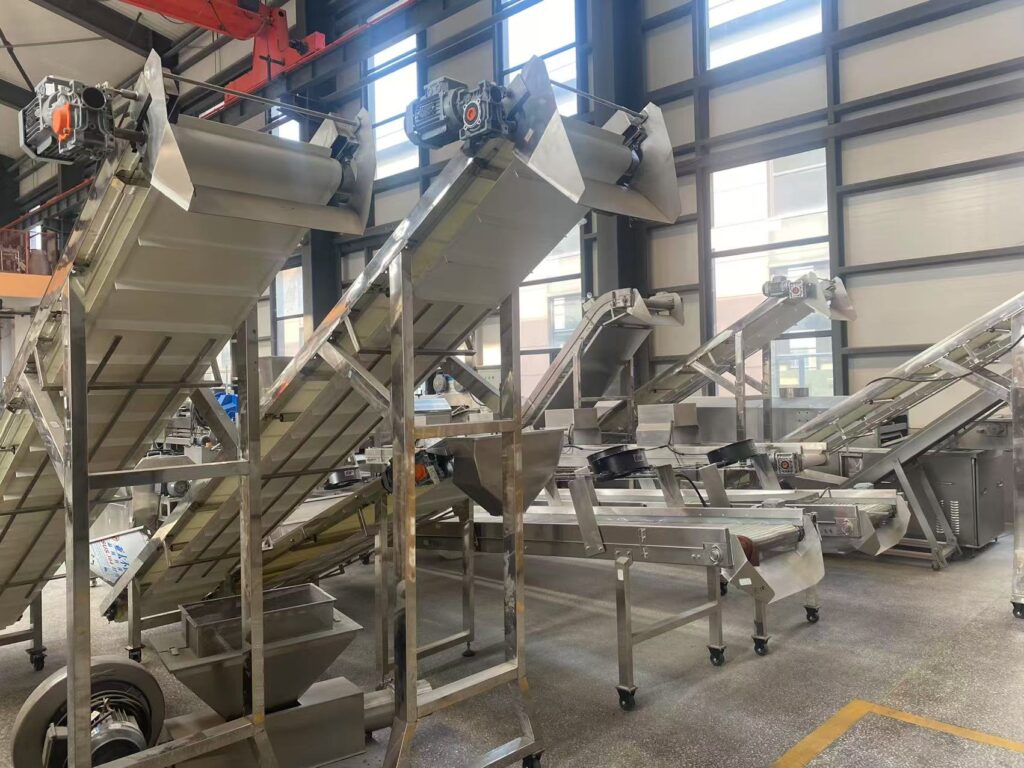
- Screw Conveyor: To transport the mixed material automatically to the extruder .
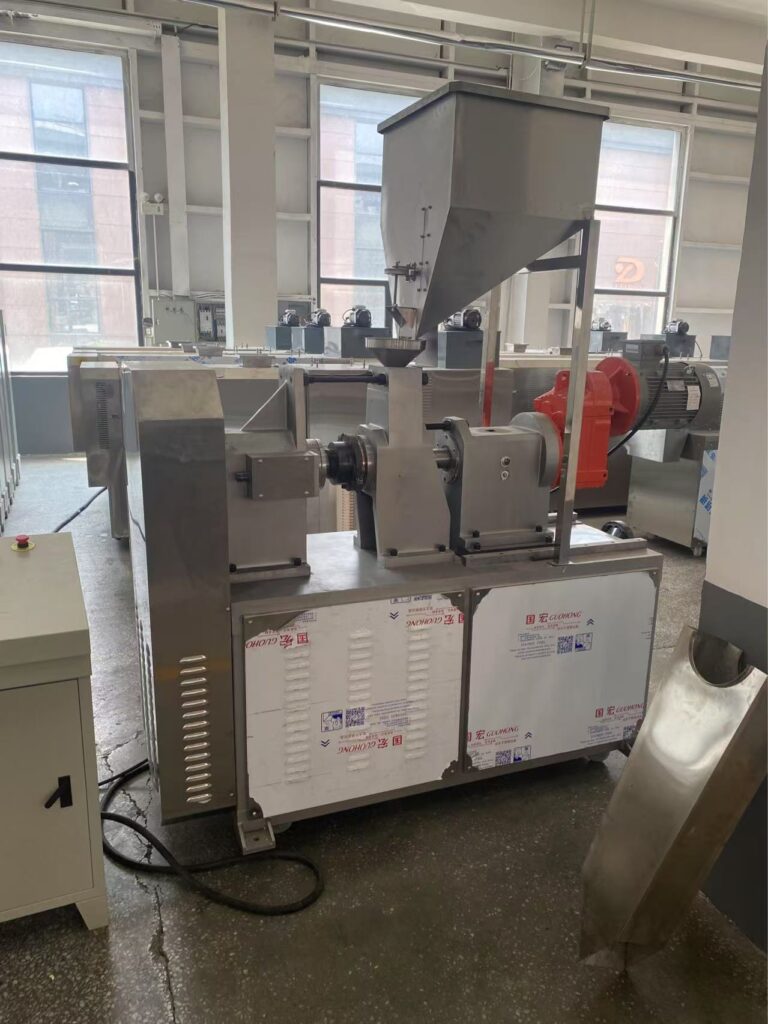
- Extruder: The most critical component. This machine uses heat, pressure, and a rotating screw to cook the dough and force it through a die, creating the signature puffed shape .
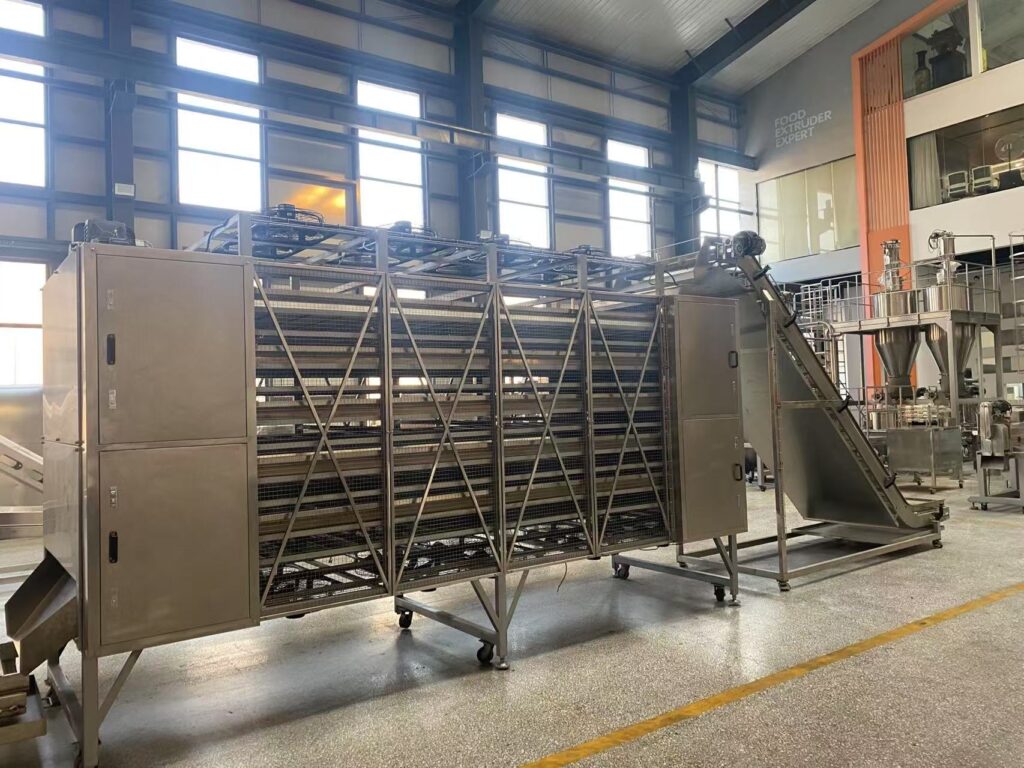
- Fryer or Oven: Depending on your product, you’ll need either a continuous fryer for the classic version or a hot air baking oven for a baked, low-oil variant .
- Seasoning System: A drum coater where flavorings, oil, and cheese powder are evenly applied to the snacks .
- Cooling Conveyor: To bring the product down to room temperature before packaging .
- Packaging Machine: To automatically weigh, fill, and seal the final product in protective bags .
- Supplier and Installation: Source machinery from a reputable manufacturer who can provide installation, commissioning, and training . Ensure all equipment that contacts food is made of food-grade materials (typically 304 stainless steel) .
5. Infrastructure and Utilities Setup
Your machinery cannot run without robust supporting infrastructure.
- Power Supply: A stable and sufficient power supply is essential. Extruders and fryers are power-intensive. You will likely need a dedicated three-phase electrical circuit with appropriate circuit breakers and grounding, installed by a qualified electrician . Calculate your total installed power (e.g., a 100-150 kg/hr line might require ~59 kW of installed power) .
- Water and Drainage: You need a reliable supply of clean, potable water for mixing and cleaning. Adequate drainage is equally important to handle wastewater efficiently and maintain hygiene .
- Ventilation: Frying or even baking generates heat, steam, and fumes. A powerful ventilation and exhaust system is necessary to maintain a comfortable and safe working environment and comply with regulations .
6. Raw Material Sourcing and Supply Chain
Consistent product quality starts with consistent raw materials.
- Key Ingredients: The primary raw material is corn grits . Other essentials include vegetable oil, cheese powder, sugar, salt, and various seasoning blends .
- Supplier Network: Establish relationships with reliable suppliers for all your raw materials and packaging. Consider having backup suppliers to mitigate risks .
- Storage: Prepare clean, dry, and well-ventilated storage areas for raw materials (like corn grits and seasonings) and a separate area for packaging materials. Ingredients must be stored off the floor and away from walls to prevent spoilage and pest infestation .
7. Workforce Planning and Training
Your staff will be the ones operating the complex machinery and ensuring food safety.
- Key Personnel: Plan to hire a team that includes machine operators, quality control staff, packaging line workers, and maintenance technicians .
- Training: Comprehensive training is vital. Operators must know how to run the machinery, adjust settings for different products, perform routine cleaning and maintenance, and troubleshoot common issues . All staff must be trained in personal hygiene and food safety protocols, with a requirement for health certificates for those handling food .
8. Financial Planning and Working Capital
Starting a food processing plant requires significant capital. A realistic financial plan covers:

- Capital Expenditure (CAPEX): This includes the cost of land, building construction/renovation, and the machinery itself. For a small to medium-scale snacks unit, this could range significantly, potentially from ₹20 lakhs to over ₹2 crores ($25,000 to $250,000+ USD) depending on automation and location .
- Operational Expenditure (OPEX): You must have sufficient working capital to cover at least 3-6 months of operating costs, including raw materials, salaries, utilities, packaging, and maintenance .
By meticulously working through these eight areas, you can lay a solid foundation for a successful and sustainable Cheetos-style snack manufacturing business. The preparation phase is complex, but it is the most critical step in turning a tasty idea into a profitable reality. If you are interested in the cheetos machine , you can contact me , i will give you good advice and solutions .
1.Will you help us with the installation ?
Yes , We will send engineers to install and debug the equipment, and assist in training your staff.
2.Are you a factory or trading company?
We are a factory.
3.What certificate do you have?
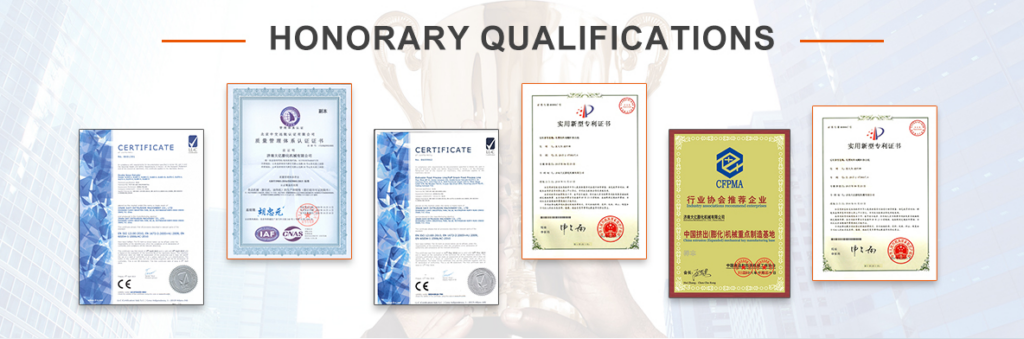
We have ISO and CE certificate.
4.How long is the warranty period?
All of our machines have one year warranty.
5.What’s the main market of your company?
Our customers all over the world.
6.How much production capacity of your company one year?
This depends on your needs.
 English
  Russian
  Spanish
  Italian
  Arabic
  Portuguese
  German
  French
  Japanese
  Moroccan Arabic
  Persian
  Belarusian