
Introduction
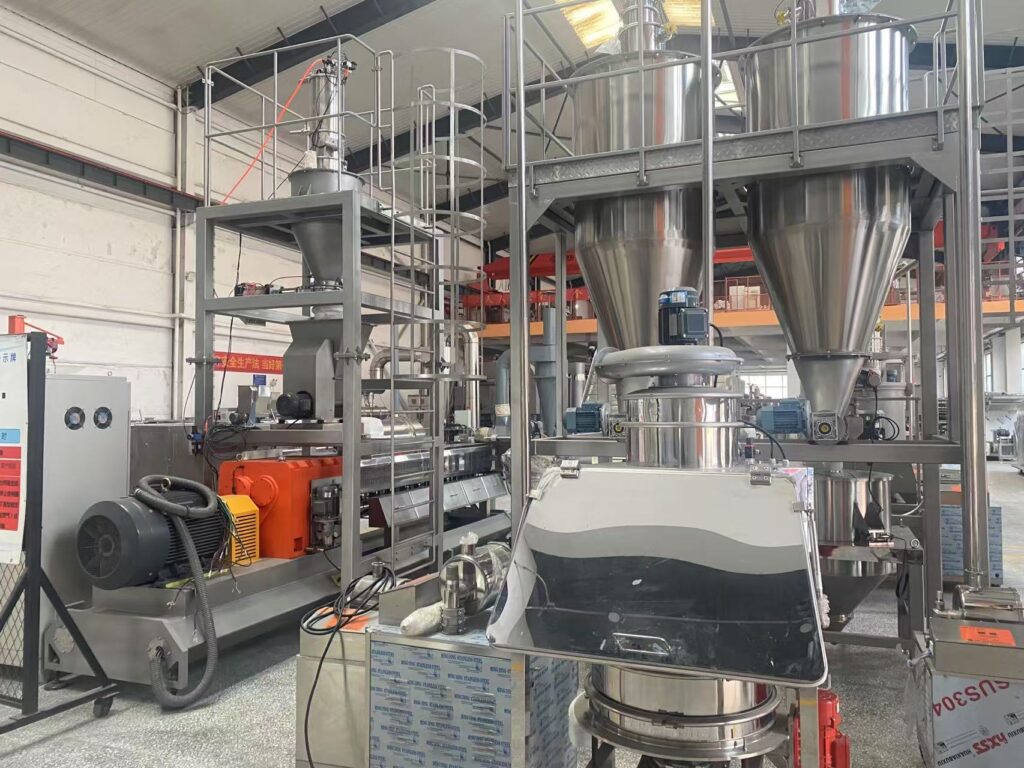
Starch is the second most abundant renewable biomass on Earth, serving as a primary energy reserve in plants and a fundamental raw material for human civilization . modified starh making machine However, native starches in their unmodified form suffer from inherent limitations—poor thermal stability, high retrogradation tendency, low freeze-thaw stability, insolubility in cold water, and susceptibility to mechanical shearing . These drawbacks severely restrict their direct utilization in modern industrial processes.
Modified starch refers to starch that has been physically, chemically, or enzymatically altered to enhance its functional properties, such as paste clarity, gel strength, film-forming ability, modified starh making machineviscosity stability, and freeze-thaw resistance . Today, over 2,000 varieties of modified starch exist, with applications spanning food, papermaking, textiles, pharmaceuticals, cosmetics, construction, and even advanced regenerative medicine . This article provides a systematic overview of the major application domains of modified starch.
1. Food Industry Applications
The food industry is the largest consumer of modified starch, accounting for the majority of global consumption. Modification enables starch to withstand harsh processing conditions while delivering desired texture and mouthfeel.
1.1 Bakery Products
The bakery sector extensively utilizes starch-modifying enzymes including α-amylases, β-amylases, and glucose oxidase . Modified starches serve multiple functions in baked goods:
- Anti-staling agents: Enzymatically modified starch retards recrystallization of amylopectin, maintaining softness and extending shelf life
- Dough rheology modifiers: They improve dough handling properties, gas retention, and final product volume
- Moisture retention: Modified starches bind water effectively, preventing rapid drying and staling
1.2 Dairy and Frozen Desserts
In ice cream, yogurt, and cheese products, modified starch provides critical functionality:
- Imitation cheese: Octenyl succinic anhydride (OSA)-modified starch combined with pre-gelatinization produces imitation cheese with adjustable melting temperature and hardness. Pre-gelatinized OSA starch creates softer cheese textures with improved oil/water absorption capacity
- Low-fat yogurt: Amylomaltase-treated starch enhances creaminess in reduced-fat formulations
- Freeze-thaw stability: Cross-linked and stabilized starches prevent syneresis during frozen storage, maintaining smooth texture after thawing
1.3 Convenience and Instant Foods
Pre-gelatinized starch—physically modified by cooking and drying—possesses cold-water solubility, making it indispensable for:
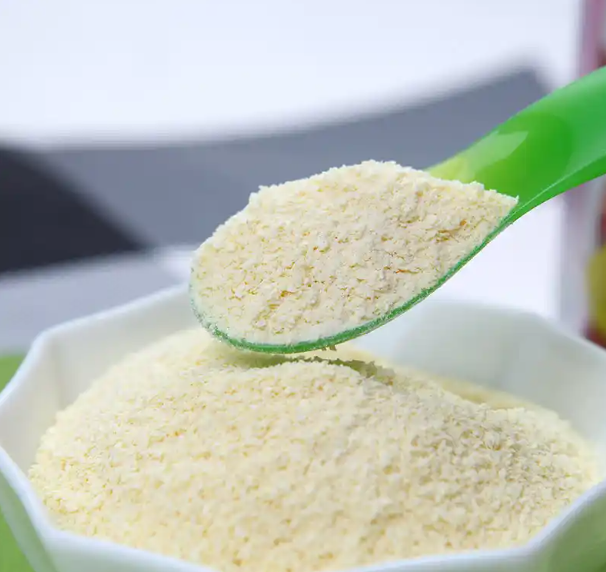
- Instant puddings, soups, and sauces that thicken without heating
- Bakery mixes and batter systems requiring rapid hydration
1.4 Meat and Fish Products
Modified starches improve water-binding capacity and texture in processed meats:
- They reduce cooking loss and improve juiciness in sausages and ham
- Provide stable gel networks during thermal processing
1.5 Encapsulation and Delivery Systems
Porous starch, a novel modified starch variant characterized by numerous surface pores penetrating to the central cavity, exhibits exceptional absorption capacity without heating . Applications include:
- Bio-carrier for flavors, vitamins, and unsaturated fatty acids
- Protection of sensitive bioactives during processing and storage
- Controlled release systems in functional foods
1.6 Resistant Starch and Health Benefits
Enzymatic modification can produce starch derivatives resistant to human digestive enzymes due to ordered crystalline structures, higher branch density, and longer chain length . These resistant starches function as dietary fiber, promoting gut health and glycemic control.
2. Papermaking Industry
The paper sector represents one of the largest non-food consumers of modified starch .
2.1 Wet-End Additives
Cationic starch—starch etherified with quaternary ammonium groups—carries positive charges that bind strongly to negatively charged cellulose fibers and fillers. It significantly improves:
- Fiber retention and drainage rates
- Internal bond strength of paper
- Filler retention, reducing raw material costs
2.2 Surface Sizing
Oxidized starch and hydroxyethylated starch are applied to paper surfaces to:
- Enhance surface strength and reduce dusting
- Improve printability and ink holdout
- Provide smoother surface finish
2.3 Coating Binders
Enzyme-converted starches with precisely controlled viscosity serve as co-binders in paper coating formulations, partially replacing synthetic latex.
3. Textile Industry
Modified starch has been a traditional textile auxiliary for decades .
3.1 Warp Sizing
Acid-thinned starch and oxidized starch provide:
- Uniform, flexible films that protect warp yarns from abrasion during weaving
- Easy desizing with hot water after weaving
- Cost-effective alternative to synthetic sizing agents
3.2 Printing Thickeners
Carboxymethyl starch and other etherified derivatives serve as thickeners in textile printing pastes, providing sharp pattern definition and easy wash-off.
4. Pharmaceutical and Biomedical Applications
The pharmaceutical industry increasingly adopts modified starch for its biocompatibility, biodegradability, and versatile functionality .
4.1 Tablet Excipients
Pre-gelatinized starch functions as:
- Binder: Provides cohesive properties for tablet compression
- Disintegrant: Promotes rapid tablet breakup upon contact with gastrointestinal fluids
- Diluent/filler: Cost-effective bulking agent
4.2 Plasma Expanders
Hydroxyethyl starch (HES) is chemically modified to resist rapid enzymatic degradation in blood. It serves as an effective plasma volume substitute in hypovolemic shock treatment, though usage has declined due to safety concerns .
4.3 Surgical Products
Highly cross-linked starch derivatives have historically replaced talc in surgical glove powders, providing lubricity without the granuloma risks associated with talc .
4.4 Tissue Engineering and Regenerative Medicine
Emerging applications position modified starch as a biomaterial scaffold:
- 3D-printed starch-based constructs for cell culture
- Biodegradable implants for drug-eluting stents and bone fillers
- Next-generation applications enabled by nanotechnology
5. Cosmetic and Personal Care Industry
Modified starch contributes sensory and functional benefits in cosmetics .
5.1 Face Powders and Dry Shampoos
Hydrophobically modified starches (e.g., aluminum starch octenylsuccinate) provide:
- Silky, lubricious feel on skin
- Sebum absorption without caking
- Improved pigment adhesion and spreadability
5.2 Creams and Lotions
Modified starches function as texture modifiers and stabilizers in emulsions, reducing greasiness while providing pleasant skin feel.
6. Construction and Building Materials
High-viscosity pre-gelatinized starch finds substantial application in construction-related industries :
- Wallboard and corrugated board manufacturing: As adhesive and binder
- Cement and gypsum formulations: As rheology modifier and water retention agent
- Ceramic binders: Improving green strength before firing
7. Adhesives and Binders
7.1 Corrugated Board Adhesives
Carrier starches—typically pre-gelatinized or caustic-treated starch—provide initial tack and viscosity control in corrugating adhesives, one of the largest volume applications for modified starch .
7.2 Foundry Binders
In metal casting, pre-gelatinized starch serves as a temporary binder in sand molds, providing sufficient strength for mold handling while burning out cleanly during casting .
8. Oil Drilling Industry
Modified starch functions as a fluid loss control agent in water-based drilling muds:
- Pre-gelatinized starch forms a thin, impermeable filter cake on wellbore walls
- Reduces filtration of drilling fluid into permeable formations
- Protects hydrocarbon-bearing zones from damage
- Thermally stable grades withstand downhole conditions
9. Emerging and Next-Generation Applications
Contemporary research identifies several frontier domains for modified starch :
9.1 Sustainable Packaging
With global pressure to reduce plastic waste, starch-based films and coatings are gaining momentum:
- Biodegradable packaging films incorporating modified starch
- Edible coatings for fresh produce preservation
- Starch-fiber composites for rigid containers
9.2 3D Printing Inks
Modified starch-based gels with precisely controlled rheology serve as extrusion-based 3D printing materials for both food and biomedical scaffolds .
9.3 Nanotechnology Applications
Starch nanoparticles and nanocrystals derived from modified starch exhibit unique mechanical and barrier properties for high-performance composites.
9.4 Medicine and Food Homologous Products
Traditional medicinal plants (kudzu root, yam tuber, coix seed) are increasingly processed into modified starches with enhanced functional properties, bridging traditional medicine and modern food science .
Заключение
Modified starch exemplifies how a humble, renewable agricultural commodity can be transformed into sophisticated functional ingredients serving virtually every industrial sector. From improving the texture of your morning yogurt to stabilizing drilling fluids miles underground, from enabling biodegradable packaging to serving as scaffolds for regenerating human tissues—modified starch applications are remarkably diverse and continue to expand.
Current market intelligence indicates that modified starch commands 2.7 times the value of native starch, with growth anticipated through next-generation applications enabled by 3D printing and nanotechnology . As sustainability concerns drive the search for bio-based alternatives to petroleum-derived polymers, modified starch stands poised for even broader adoption. The ongoing research into non-conventional starch sources and environmentally benign modification techniques will further expand its application horizon .
 Russian
  English
  Spanish
  Italian
  Arabic
  Portuguese
  German
  French
  Japanese
  Moroccan Arabic
  Persian
  Belarusian