
Puffed snacks, ranging from extruded corn curls and potato puffs to expanded rice cakes, owe their global popularity not just to their satisfying crunch but to the symphony of flavors coating their surfaces. The process of applying that flavor is a sophisticated interplay of material science, engineering, and culinary chemistry. It is a delicate operation where the goal is to achieve optimal adhesion, uniform coverage, and intense flavor perception without compromising the product’s signature texture.
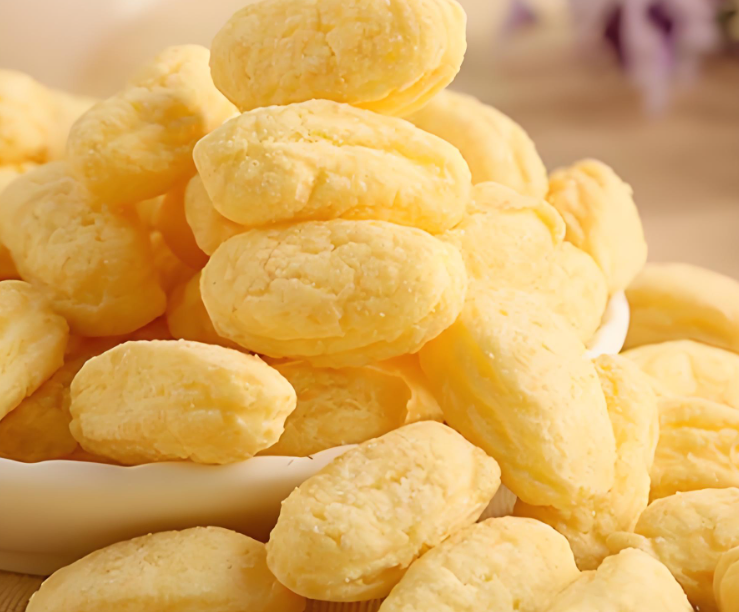
The seasoning process can be broadly divided into three critical stages: pre-conditioning, application, and post-application treatment.
1. Pre-conditioning: Preparing the Canvas
Before any seasoning is applied, the surface of the puffed snack must be prepared. The effectiveness of seasoning adhesion is directly related to the surface characteristics of the base product.
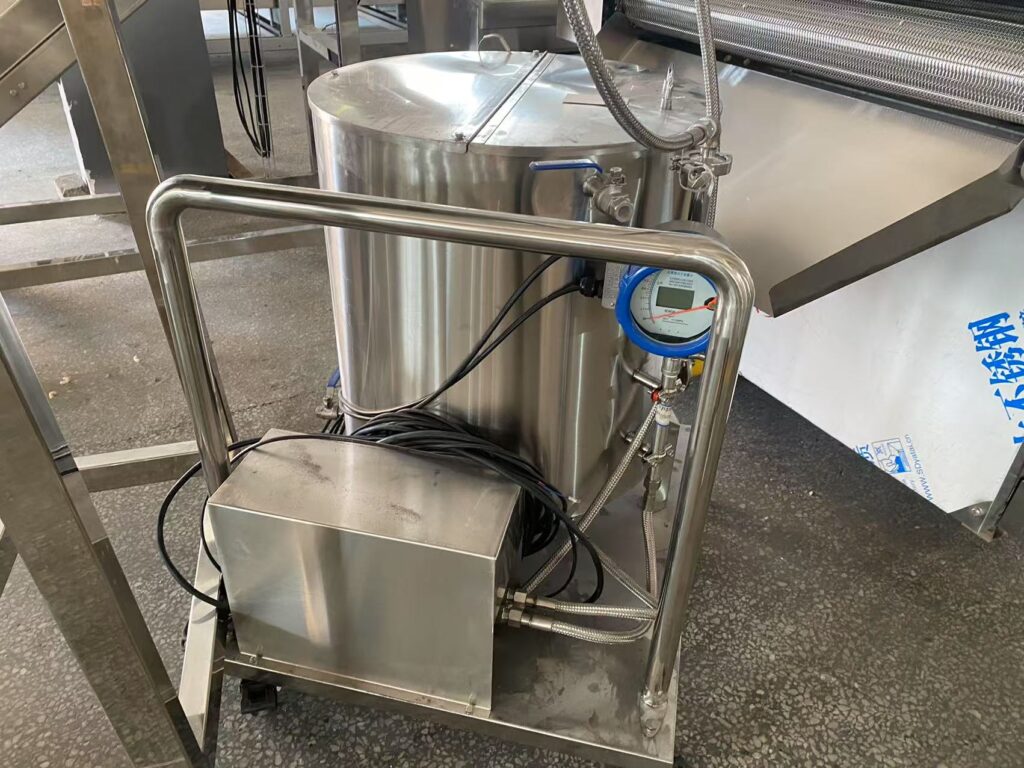
- Oil Application: For most fried or baked extruded snacks, oil is the primary adhesive. Hot oil is often sprayed onto the product as it tumbles in a rotating drum. The oil serves a dual purpose: it acts as a glue for the powdered seasoning and contributes to the product’s mouthfeel and flavor richness. The temperature, viscosity, and type of oil (e.g., palm, sunflower, or high-oleic oils) are carefully controlled to ensure a uniform, thin film that maximizes adhesion without making the product greasy.
- Surface Texture: The physical structure of the snack also plays a role. A slightly porous or rough surface, created during extrusion or frying, provides mechanical keying points for the oil and seasoning particles, allowing for a stronger bond than a perfectly smooth surface.
2. The Application Process: Precision Coating
The heart of the seasoning operation lies in the application system. The industry standard is the continuous rotary drum coater. These large, inclined cylinders rotate at a controlled speed, gently tumbling the snacks to ensure each piece is exposed to the seasoning delivery system.
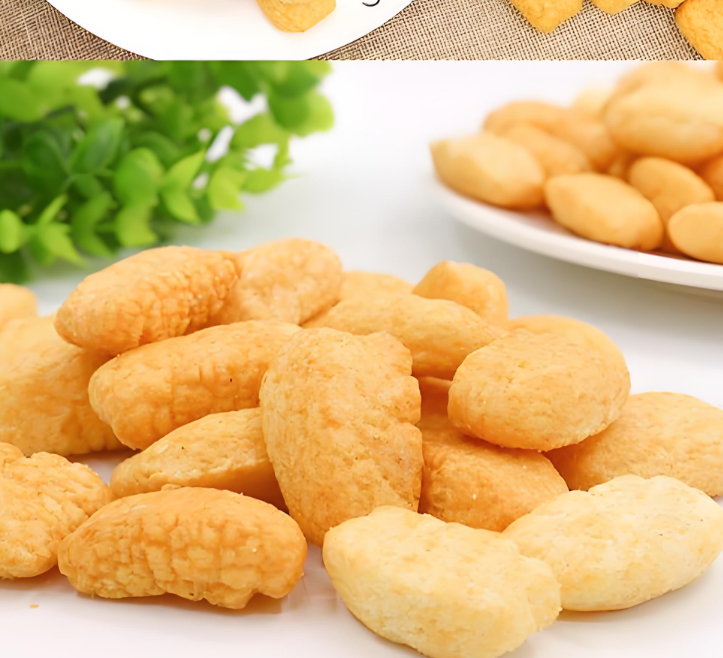
There are two primary methods for applying the flavoring:
- Dry Seasoning Application: This is the most common method for powdered flavors. The seasoning blend—a complex mixture of salt, sugars, maltodextrin, spices, flavor carriers, and anti-caking agents—is metered into the rotating drum via a dosing system. The tumbling action, combined with the pre-applied oil, causes the powder to adhere to the snack’s surface. Key challenges in this method include controlling dust (fines that don’t adhere) and ensuring even distribution to prevent some pieces from being overly salty while others are bland.
- Slurry or Liquid Application: For flavors that are heat-sensitive or where a “wet” flavor profile (like a savory glaze or a sweet, sticky coating) is desired, a liquid or slurry is used. This involves dissolving or suspending the flavor ingredients in a carrier such as oil, water, or a syrup solution. The liquid is applied via a system of fine spray nozzles within the drum. While this method is excellent for complex flavors and can reduce dust, it requires precise drying or cooling zones downstream to set the coating and prevent the product from becoming soggy.
3. Post-Application: Fixing the Flavor
After the seasoning is applied, the product often undergoes a final processing step to stabilize the coating.
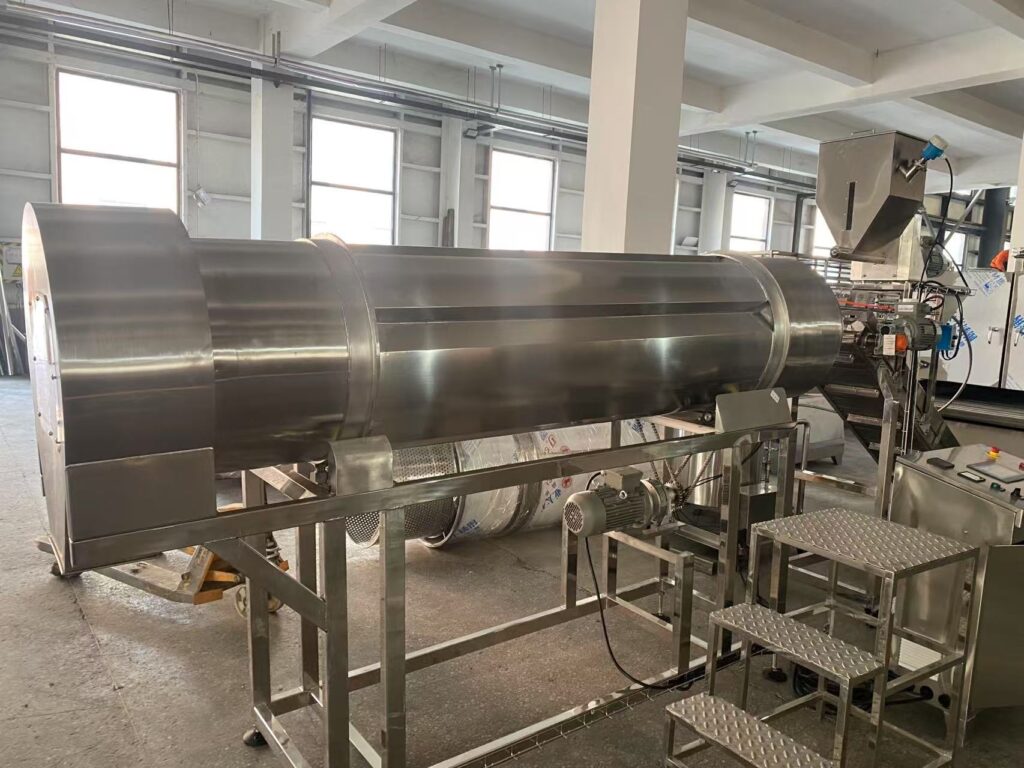
- Cooling: For oil-based coatings, a cooling zone after the seasoning drum helps solidify the oil, locking the seasoning particles in place. This is critical for preventing the flavor from rubbing off inside the packaging.
- Drying: For water-based slurries, a gentle drying stage is essential. This removes the excess moisture introduced during application, restoring the snack’s crispness and ensuring microbiological stability.
The Chemistry of Seasoning Formulation
Beyond the machinery, the success of a seasoned snack lies in its formulation. Flavorists and food scientists carefully design seasoning blends with several key components:
- Adhesion Agents: Maltodextrin, starches, and gums are often included in dry seasoning blends. They work synergistically with the oil to improve stickiness and build the overall “loading” (the amount of seasoning that stays on the snack).
- Flavor Carriers: Ingredients like salt and sugar do more than provide taste; they act as carriers for volatile aroma compounds, helping to deliver the initial flavor impact and the longer-lasting taste notes.
- Acidulants: Citric, malic, and lactic acids are crucial for sour flavors (e.g., Salt & Vinegar) but are also used in small amounts in savory blends to provide a flavor “pop” and balance richness.
- Anti-caking Agents: Silicon dioxide or tricalcium phosphate are added in minute quantities to ensure the powdered seasoning flows freely through the dosing equipment and doesn’t clump on the product’s surface.
Emerging Trends and Challenges
The field of snack seasoning is constantly evolving in response to consumer demands and industrial challenges.
- Clean Label: There is a growing demand for seasonings made with recognizable, simple ingredients. This pushes manufacturers to move away from artificial colors, flavors, and MSG, opting instead for natural extracts, yeast-based flavors, and vegetable powders. However, natural flavors are often more heat-sensitive and expensive, posing a formulation challenge.
- Reduced Oil and Fat: To meet health-conscious consumer trends, manufacturers are developing low-oil or baked snacks. This creates a significant adhesion challenge. In response, new technologies like electrostatic seasoning are emerging. This method uses an electrostatic charge to attract dry powder seasoning directly to the snack surface without the need for a heavy oil pre-coat, allowing for a significant reduction in total fat.
- Sustainability: Efforts are being made to reduce seasoning waste. Closed-loop systems that collect and recycle dust (fines) are becoming more sophisticated, improving yield and reducing environmental impact.
In conclusion, the seasoning of puffed snacks is far more than simply shaking on some flavor. It is a precisely engineered process that combines physical chemistry, mechanical engineering, and sensory science. From the moment the base snack emerges from the extruder or fryer to the final spin in a coating drum, every variable is meticulously controlled to ensure that the first bite delivers the perfect burst of flavor that consumers have come to expect. If you are interested in the puffed snack food flavouring machine , you can contact me , i will give you good advice and solutions .
1.Will you help us with the installation ?
Yes , We will send engineers to install and debug the equipment, and assist in training your staff.
2.Are you a factory or trading company?
We are a factory.
3.What certificate do you have?
We have ISO and CE certificate.
4.How long is the warranty period?
All of our machines have one year warranty.
5.What’s the main market of your company?
Our customers all over the world.
6.How much production capacity of your company one year?
This depends on your needs.
 Russian
  English
  Spanish
  Italian
  Arabic
  Portuguese
  German
  French
  Japanese
  Moroccan Arabic
  Persian
  Belarusian