
Processing Technology of Soy Protein Texturates (Textured Soy Protein, TSP/TVP)
1. Introduction
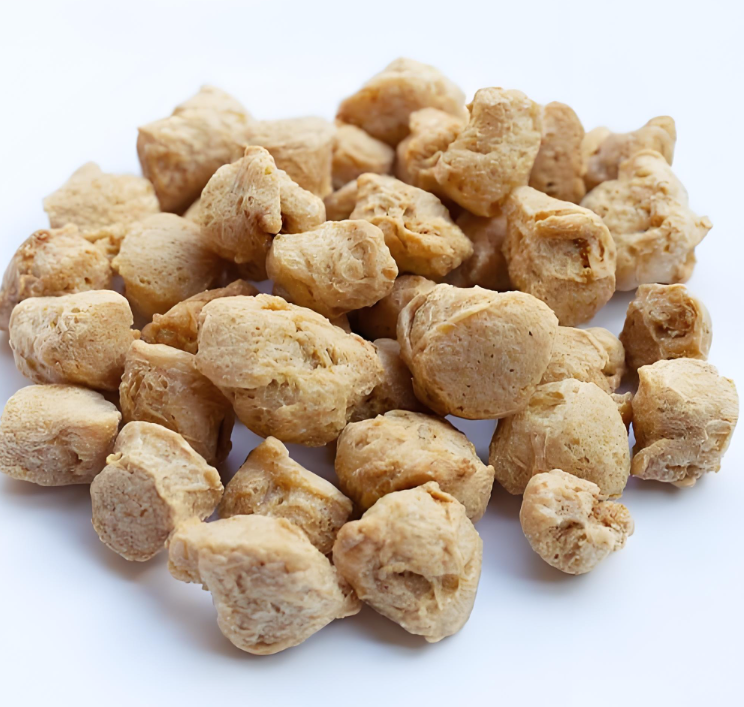
Soy protein texturates—commonly referred to as textured soy protein (TSP) или textured vegetable protein (TVP)—are structured protein ingredients designed to mimic the fibrous bite and water-holding behavior of meat. They are widely used in plant-based meat analogs, hybrid meat products, ready meals, and convenience foods due to their high protein content, neutral flavor base, and excellent rehydration and binding properties.
Industrial production of soy protein texturates relies mainly on thermo-mechanical extrusion, where controlled heat, shear, and pressure transform soy proteins into anisotropic, porous structures.
2. Raw Materials and Formulation
The most common soy-based feedstocks include:
- Defatted soy flour (DSF): cost-effective, moderate protein (typically 50–55%).
- Soy protein concentrate (SPC): higher protein (about 65–70%), lower soluble sugars, reduced beany notes.
- Soy protein isolate (SPI): very high protein (≥90%), cleaner flavor, often used for premium or high-moisture products.
Typical formulations may include small amounts of:
- Carbohydrates (e.g., starch) to influence expansion and bite
- Fibers to enhance texture and water retention
- Mineral salts to affect protein functionality
- Flavor precursors depending on downstream application
The key functional drivers are protein content, degree of denaturation, water absorption capacity, and particle size distribution.
3. Core Process Flow
A standard TSP/TVP manufacturing process generally includes:
- Raw material receiving and storage
- Grinding and sieving (if needed)
- Dry blending (formulation)
- Preconditioning (hydration + heating)
- Extrusion cooking (texturization)
- Shaping through dies
- Drying (for low-moisture products)
- Cooling and stabilization
- Milling or sizing (optional)
- Packaging and storage
Among these, preconditioning and extrusion determine most of the final texture.
4. Preconditioning: Hydration and Thermal Preparation
Preconditioning prepares the feed for consistent extrusion by adjusting moisture content, temperature, and mixing uniformity.
- Moisture is typically raised to support protein plasticization and controlled expansion.
- Steam and/or water addition improves energy efficiency and reduces mechanical load in the extruder.
- Proper residence time ensures uniform hydration, which is critical for stable flow and consistent structure.
Well-controlled preconditioning helps reduce fines, improve throughput, and stabilize product density.
5. Extrusion Texturization Mechanism
Extrusion cooking combines high temperature, pressure, and shear to restructure soy proteins. Key transformations include:
- Protein unfolding (denaturation) under heat and shear
- Alignment of protein chains under directional flow
- Aggregation and network formation via hydrophobic interactions and disulfide bonding
- Rapid pressure drop at the die, causing water flash-off and expansion (especially in low-moisture TVP)
The resulting structure depends strongly on moisture level and die design.
6. Low-Moisture vs. High-Moisture Texturates
Soy protein texturates are often grouped into two categories:
6.1 Low-Moisture Textured Soy Protein (LM-TSP / TVP)
- Produced at lower moisture conditions and typically dried after extrusion.
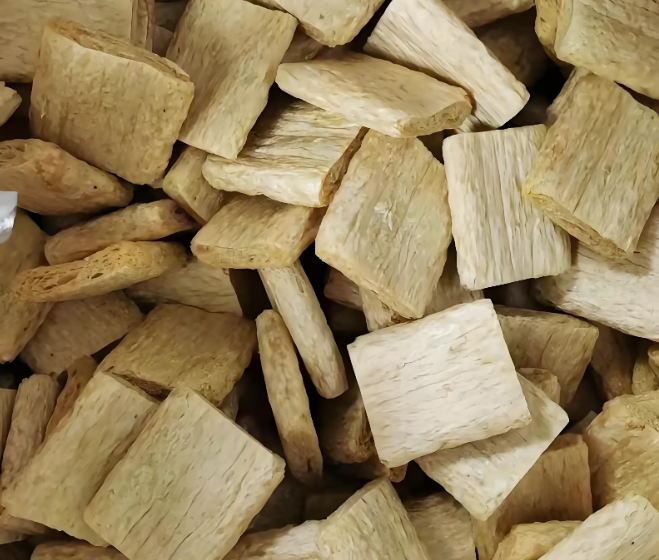
- Forms porous granules, chunks, or flakes that require rehydration.
- Common in soups, sauces, minced-meat analogs, and shelf-stable mixes.
- Texture arises from expansion and internal porosity.
6.2 High-Moisture Textured Soy Protein (HM-TSP / HME)
- Produced at higher moisture and generally not dried, often using a cooling die.
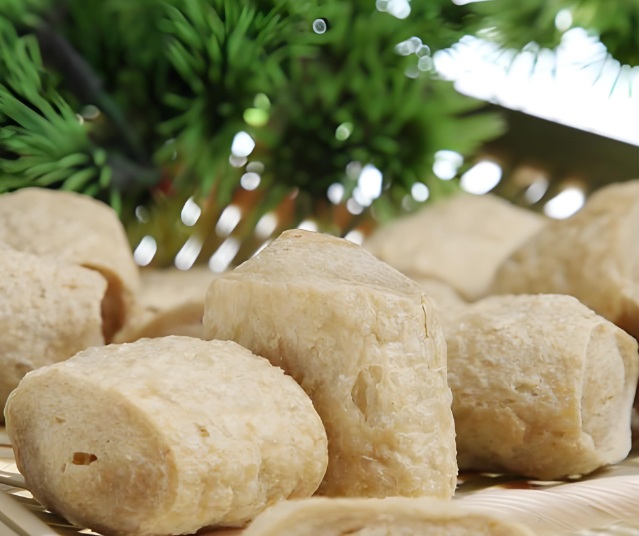
- Creates dense, fibrous, meat-like layers suitable for whole-cut analogs.
- Requires precise control of cooling, shear, and flow to build anisotropy.
In practice, high-moisture extrusion is more sensitive to processing conditions but delivers superior fibrous structure.
7. Critical Process Parameters
Key variables that govern product quality include:
- Moisture content: affects viscosity, expansion, and fiber formation
- Barrel temperature profile: controls protein denaturation and melt behavior
- Screw configuration and speed: determines shear intensity, mixing, and residence time
- Feed rate: influences fill level, pressure stability, and texture uniformity
- Die geometry: affects orientation, pressure drop, and final shape
- Cooling conditions (for HME): stabilizes anisotropic structure and prevents collapse
Balancing these parameters is essential to achieve target attributes such as chewiness, hardness, rehydration rate, and bite.
8. Drying, Cooling, and Post-Processing
For low-moisture products, drying is used to ensure shelf stability and prevent microbial growth. Drying conditions must be selected to avoid:
- Case hardening (surface drying too fast, trapping internal moisture)
- Texture brittleness or excessive fines
- Color darkening due to thermal reactions
After drying, products are cooled to prevent condensation in packaging. Sizing operations (cutting, milling, screening) can produce consistent granulation for specific customer needs.
9. Quality Control and Functional Testing
Typical quality targets include:
- Moisture content (finished goods)
- Bulk density and expansion ratio
- Water absorption capacity (WAC) and rehydration time
- Texture profile analysis (TPA): hardness, chewiness, resilience
- Particle size distribution and fines content
- Microbiological limits and shelf-life stability
- Sensory attributes: beany notes, cooked flavor, off-odors
For meat analog applications, functional testing may also include binding, fat retention, and cooking yield.
10. Challenges and Future Trends
Current development focuses on improving:
- Fibrous realism (whole-cut texture, layered structure)
- Cleaner flavor via better raw material selection and deodorization strategies
- Nutritional optimization, including reducing anti-nutritional factors and improving digestibility
- Sustainability and energy efficiency through optimized preconditioning and heat recovery
- Hybrid structuring with fibers, polysaccharides, and fermentation-derived ingredients
Advances in die design, process control, and protein ingredient engineering continue to expand the performance range of soy protein texturates.
11. Conclusion
The processing of soy protein texturates is a mature yet rapidly evolving technology centered on controlled extrusion texturization. By selecting appropriate soy protein ingredients and precisely managing moisture, heat, shear, and cooling, manufacturers can tailor product structure from porous TVP granules to dense, fibrous high-moisture textures. As demand for plant-based foods grows, soy protein texturates will remain a key platform for scalable, functional, and cost-effective protein structuring.
 Russian
  English
  Spanish
  Italian
  Arabic
  Portuguese
  German
  French
  Japanese
  Moroccan Arabic
  Persian
  Belarusian