
1. Introduction
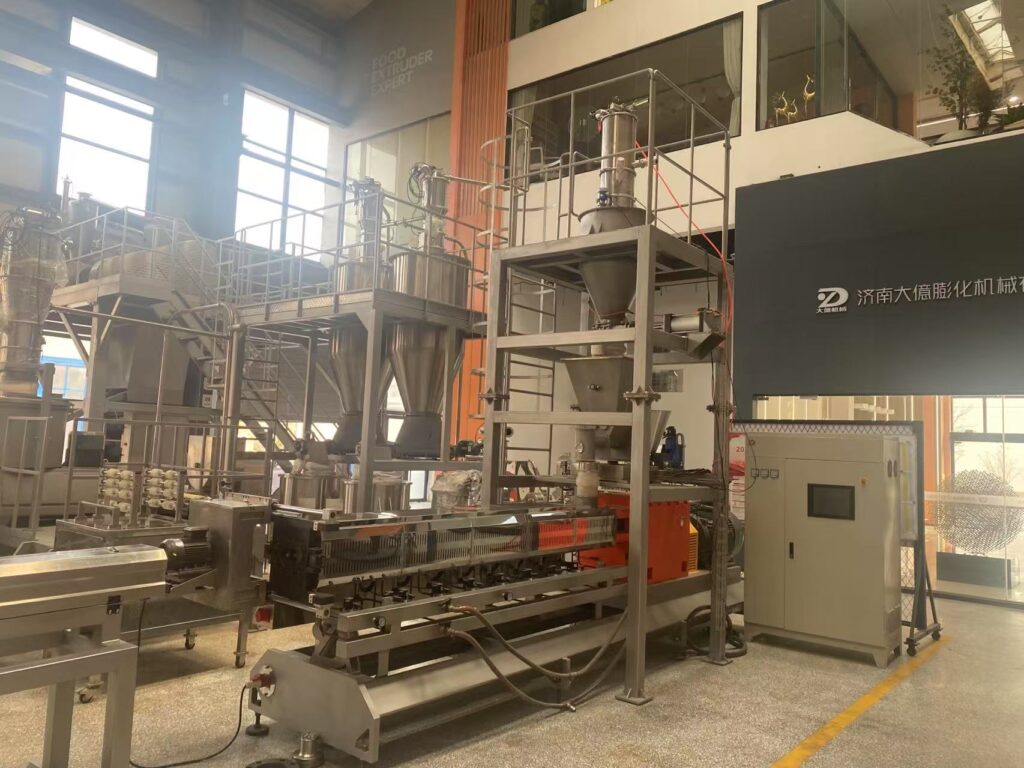
A twin-screw extrusion cooking system (often called a twin-screw extruder for puffed or expanded foods) is used to continuously mix, cook, and shape formulations such as cereal snacks, breakfast cereals, and texturized ingredients. Successful operation depends on controlling feed rate, moisture, screw speed, temperature profile, and die conditions to achieve stable flow, target expansion, and consistent texture.
2. Pre-Start Preparation
Before starting the machine, operators typically confirm that the extruder and auxiliary systems are ready.
- Mechanical inspection: Check fasteners, guards, lubrication points, gearbox oil level, cooling water lines, and that screws rotate freely.
- Barrel and die assembly: Verify correct screw configuration, barrel sections, die plate, breaker plate (if used), and knife alignment.
- Utilities: Confirm availability and pressure of electricity, compressed air (if needed), steam/hot water (if used), and cooling water.
- Instrumentation: Ensure temperature, pressure, and motor load sensors are functioning and properly calibrated.
- Raw materials: Confirm ingredient quality, particle size consistency, and that the feeder and hopper are clean and dry.
Good preparation reduces the risk of start-up surges, plugging, excessive torque, and unstable expansion.
3. Start-Up Procedure
Start-up is usually performed gradually to warm the system and establish a stable material flow.
- Heat-up of barrel zones and die
Set barrel temperature zones according to the product recipe. Allow temperatures to stabilize. Heating the die helps prevent premature cooling and flow instability. - Start screw rotation at low speed
Begin with a low screw speed to confirm smooth operation and avoid sudden torque spikes. - Introduce a start-up material (if required)
Many plants use a simple starch-based mix or recycled product to establish flow and protect the screws and barrel from running empty under high heat. - Begin feeding and adjust water addition
Start the main feeder at a low rate, then slowly increase. If water or steam injection is used, adjust moisture to reach a stable, plasticized dough or melt in the barrel. - Stabilize pressure and extrusion at the die
Once product begins exiting the die, adjust screw speed, feed rate, and moisture until die pressure, motor load, and product appearance become steady.
4. Key Operating Parameters and Their Effects
4.1 Feed Rate
- Higher feed rate increases throughput but can raise torque and die pressure.
- Overfeeding may cause surging, poor mixing, incomplete cooking, or plugging.
4.2 Moisture Content (Water/Steam Addition)
Moisture strongly controls viscosity and expansion behavior.
- Lower moisture: Higher viscosity, higher shear heating, often greater expansion—but higher risk of burning, torque overload, and rough surface.
- Higher moisture: Lower viscosity, smoother flow, reduced expansion, and potentially denser texture.
4.3 Screw Speed
Screw speed affects shear, mixing intensity, residence time, and mechanical energy input.
- Higher speed: More shear and mechanical energy, often finer cell structure and higher expansion (depending on formulation), but can increase wear and temperature.
- Lower speed: Longer residence time and gentler shear, which may improve shape stability for some products but can reduce expansion.
4.4 Barrel Temperature Profile
Temperature zones are typically set to support progressive heating and cooking.
- Insufficient temperature can lead to undercooked product, poor expansion, and weak structure.
- Excessive temperature can cause overcooking, burning flavors, or excessive stickiness and die build-up.
4.5 Die Design and Die Pressure
Die hole diameter, land length, and die open area determine flow restriction.
- Higher restriction raises die pressure and can improve cooking and expansion, but also raises load and plugging risk.
- Stable die pressure is a key indicator of stable operation.
4.6 Knife Speed and Cutting
The cutter determines piece length and appearance.
- Faster cutting typically produces shorter pieces and can reduce sticking at the die face.
- Poor knife alignment can create tailing, deformation, or uneven size distribution.
5. Steady-State Production (Normal Running)
Once stable, the operator focuses on keeping the process within defined limits.
- Monitor critical signals: Motor load/torque, die pressure, barrel temperatures, product moisture, and product dimensions.
- Control consistency: Maintain constant feeder rates and moisture addition; small fluctuations can cause visible changes in expansion and density.
- Product checks: Regularly measure bulk density, piece size, texture (crispness), color, and moisture.
- Housekeeping: Keep the die face clean, manage fines and dust, and ensure smooth conveying to dryers or seasoning systems.
6. Common Operating Issues and Adjustments
- Low expansion / dense product: Reduce moisture slightly, increase screw speed, adjust temperature upward (carefully), or increase die restriction.
- Excessive expansion / fragile product: Increase moisture, reduce screw speed, or reduce temperature to limit over-expansion.
- Surging flow: Check feeder consistency, bridging in the hopper, moisture injection stability, and venting performance.
- High torque / overload: Lower feed rate, increase moisture, reduce screw speed, inspect for partial blockage, or confirm barrel temperature is not too low (cold dough increases torque).
- Die build-up or sticking: Optimize moisture/temperature balance, ensure die heating, review formulation (sugars and fats can increase sticking), and clean die face as needed.
7. Shutdown and Cleaning
Shutdown should prevent material from hardening inside the barrel and die.
- Stop ingredient feeding and run the extruder with a purge material (e.g., plain starch or dedicated purge mix).
- Reduce screw speed gradually while keeping temperature in a safe range to avoid burning residual material.
- Stop screws and heaters following plant safety procedures.
- Disassemble die and cutter for cleaning if product is prone to build-up.
- Routine maintenance: Inspect screw elements, barrel liners, seals, and bearings for wear.
Proper shutdown extends equipment life and reduces start-up problems on the next run.
8. Safety Considerations
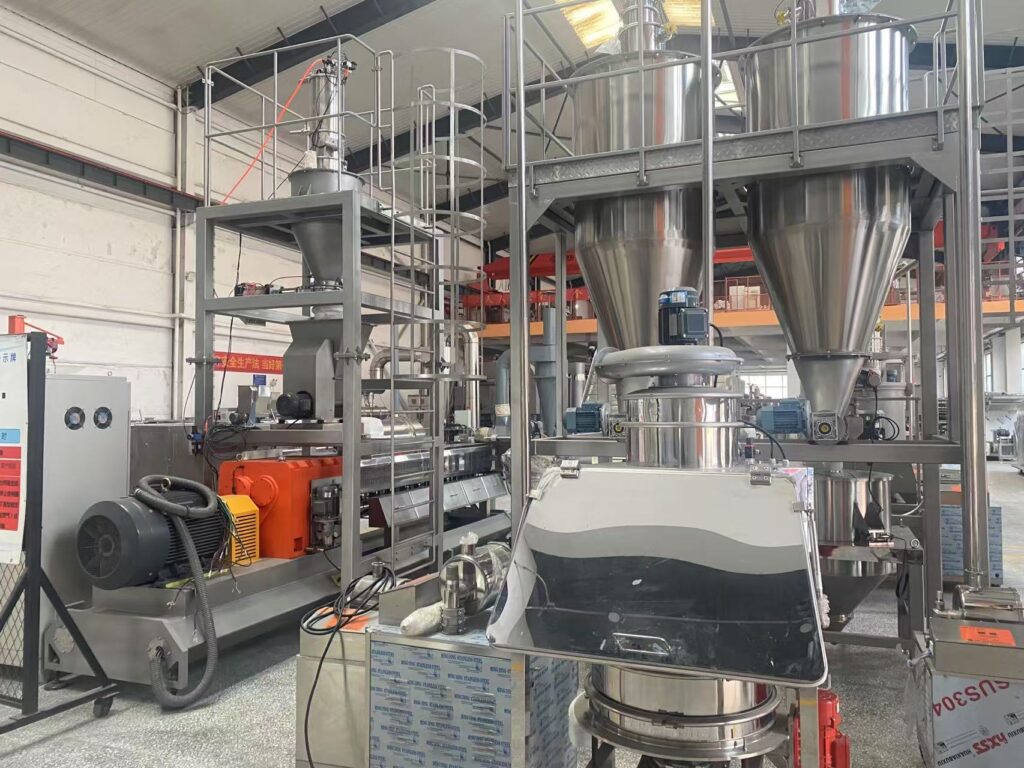
Twin-screw extrusion involves high temperature, high pressure, and rotating equipment.
- Never open barrel or die components under pressure.
- Use lockout/tagout procedures for maintenance.
- Keep guards in place and avoid reaching near the rotating cutter.
- Handle hot surfaces and discharged product with appropriate protective equipment.
Operating a twin-screw extruder for expanded products is a controlled balance of formulation, moisture, thermal profile, screw speed, and die conditions. Stable feeding and consistent moisture addition are often the foundation of steady operation, while careful monitoring of torque and die pressure helps prevent upsets. With disciplined start-up, steady-state control, and proper shutdown/cleaning, a twin-screw extrusion line can reliably produce expanded foods with consistent density, texture, and shape.
 Russian
  English
  Spanish
  Italian
  Arabic
  Portuguese
  German
  French
  Japanese
  Moroccan Arabic
  Persian
  Belarusian