
The production of aquafeed with precise, variable particle sizes (often referred to as granules or pellets) is a critical science in modern aquaculture. Different life stages and species of fish have specific mouth gape sizes and nutritional requirements, making customized feed particle size essential for efficient growth, minimized waste, and optimal water quality. Here’s a comprehensive look at how this is achieved industrially and at smaller scales.
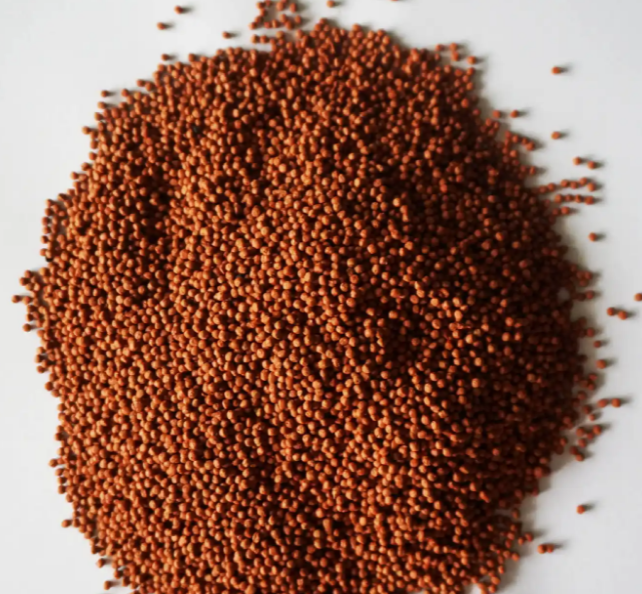
1. The Foundation: Formulation and Grinding
The process begins with a meticulously balanced formula of ingredients: fishmeal, plant proteins (soy, wheat), binders, lipids, vitamins, and minerals. These raw materials are first ground into a fine meal.
- Key Principle: The fineness of this initial powder is crucial. To create a strong, water-stable pellet of a specific size, you must start with particles significantly smaller than the final product. A uniform, fine powder allows for even hydration, proper binding, and consistent extrusion through dies.
- Equipment: Hammer mills or pin mills are typically used to achieve a uniform particle size distribution in the powder, often measured in microns.
2. The Transformation: Conditioning and Pelleting
The ground meal is then conditioned in a mixer where steam and water are injected.
- Purpose: Conditioning gelatinizes the starches (from wheat, corn, etc.), activates natural binders, and increases the plasticity and temperature (typically to 70-85°C) of the mixture. This “dough” is now ready for shaping.
The heart of size differentiation lies in the pelleting press, specifically the умереть.
- The Die: This is a thick, metal ring or plate perforated with cylindrical holes of a specific diameter. The conditioned mash is forced through these holes under high pressure by rollers.
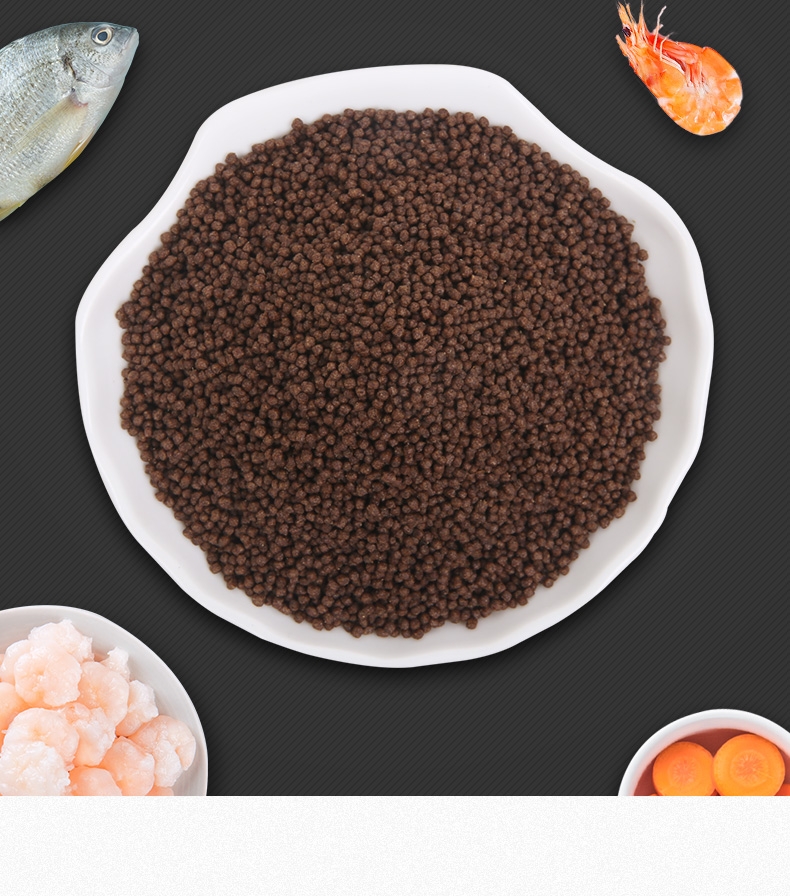
- Determining Size: The diameter of the final pellet is determined solely by the diameter of the die holes. Common diameters range from:
- Micro-diets (0.1 – 0.6 mm): For larval fish and fry.
- Small (0.8 – 1.5 mm): For fingerlings.
- Medium (1.5 – 3.0 mm): For grow-out stages of many species.
- Large (3.0 – 6.0 mm+): For large juvenile and adult fish (e.g., salmon, large cichlids).
- The Emerging Strand: As the dough is extruded, it emerges from the other side of the die as long, continuous strands of uniform diameter.
3. The Sizing Step: Cutting and Classification
The continuous strands are immediately cut to length.
- The Cutter: A rotating knife assembly, positioned a fixed distance from the die face, slices the strands.
- Determining Length: The length of the pellet is controlled by the speed of the cutter relative to the extrusion speed. Faster cutting yields shorter pellets; slower cutting yields longer, more cylindrical pellets. The ideal length-to-diameter ratio is usually targeted to be close to 1:1 for most applications.
For producing a batch with a range of sizes, or for removing undersized “fines,” the pellets then pass through vibrating screens or sieve classifiers.
- Screening: Pellets are tumbled over a series of screens with different mesh sizes. This separates them into distinct size categories (e.g., 1.0mm, 1.5mm, 2.0mm). Fines are removed and often recycled back to the conditioner.
- Post-Crumbling (For Small Sizes): To produce the very smallest sizes (e.g., for fry), larger pellets are sometimes made first and then carefully crumbled and sieved into precise size fractions. This can be more efficient than extruding through extremely fragile micro-dies.
4. Stabilization: Drying, Cooling, and Coating
The soft, hot pellets are now fragile and contain high moisture.
- Drying: Pellets are conveyed through a multi-stage dryer (often a belt dryer) where controlled hot air reduces the moisture content to a stable level (~10%). This hardens the pellet and prevents mold.
- Cooling: They are then cooled to near ambient temperature to stop the cooking process and prepare for coating.
- Post-Pelleting Liquid Application (PPLA): This is a vital step for adding heat-sensitive nutrients (like vitamins, enzymes, and especially fish oils). The hard, porous pellets are tumbled in a vacuum or atmospheric coater, which draws lipids and other liquids into the pores, creating nutrient-dense, high-energy feed.
Small-Scale and Alternative Methods
- Extrusion (For Floating Feeds): The process for floating feeds involves high-temperature, high-shear extrusion cookers. Particle size is similarly controlled by the die hole size and cutter speed, but the expanded, porous structure allows it to float.
- Laboratory/Batch Production: For experimental or very small-scale needs, a simple meat grinder or pasta maker with interchangeable die plates can be used to form dough into strands, which are then hand-cut and oven-dried. Particle size is manually sorted using sieves.
Quality Control: The Final Check
Throughout the process, but especially at the end, particle size is rigorously monitored using standard testing sieves (mesh sizes). A sample is shaken on a stack of sieves, and the weight retained on each screen is measured. This ensures the final product meets the specified size range (e.g., “95% of pellets between 1.8mm and 2.2mm”).
Заключение
Producing aquafeed of varying particle sizes is a controlled sequence of size reduction (grinding), size formation (extrusion through a die), and size classification (cutting and screening). The diameter is fixed by the die, the length by the cutter, and the final, precise distribution by sieving. Mastering this granulation technology is fundamental to creating species-specific, life-stage-appropriate feeds that drive the efficiency and sustainability of global aquaculture.
 Russian
  English
  Spanish
  Italian
  Arabic
  Portuguese
  German
  French
  Japanese
  Moroccan Arabic
  Persian
  Belarusian