
Rice enrichment is a sophisticated industrial process designed to restore vital nutrients lost during milling. It transforms ordinary polished rice into a powerful vehicle for addressing micronutrient deficiencies. Here is a detailed look at how enriched rice is manufactured.
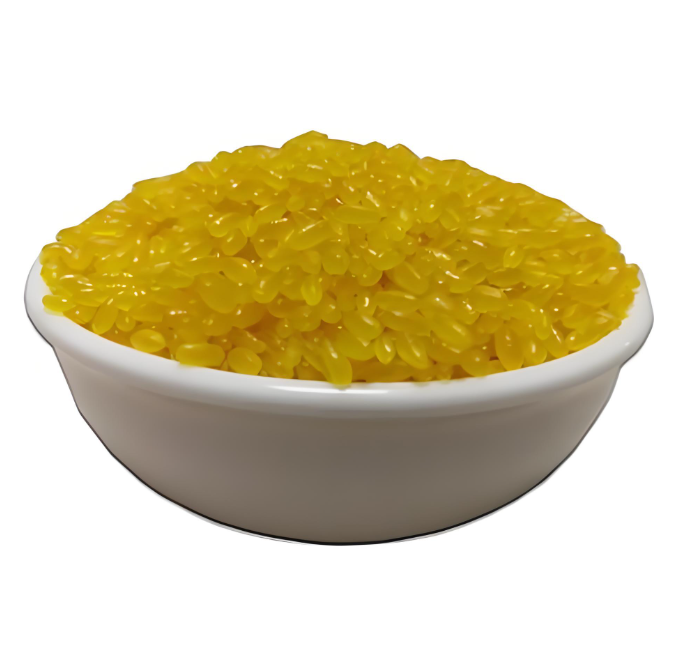
1. The Starting Point: Nutrient-Deficient Polished Rice
The process begins with white milled rice. The milling and polishing stages remove the husk, bran, and germ to improve shelf life and texture, but this also strips away approximately 75-90% of naturally occurring vitamins and minerals like iron, zinc, and B-vitamins.
2. Core Fortification Methods: Three Technical Approaches
Manufacturers use one of three primary methods to add nutrients back, each with different costs and technical characteristics.
A. Coating or Dusting (The Most Common Method)
This surface-level application is cost-effective and widely used.
- Процесс: Rice kernels are tumbled in a large, rotating drum mixer.
- Application: A fine powder or slurry—containing the nutrient premix (iron, folic acid, thiamine, niacin) and a food-grade adhesive (like gelatin, gum, or waxes)—is sprayed onto the tumbling grains.
- Outcome: The adhesive causes the nutrient powder to form a thin, uniform coating on each grain.
- Limitation: Nutrients remain on the surface, making them susceptible to loss through rinsing, washing, or abrasive handling.
B. Hot Extrusion (The “Artificial Grain” Method)
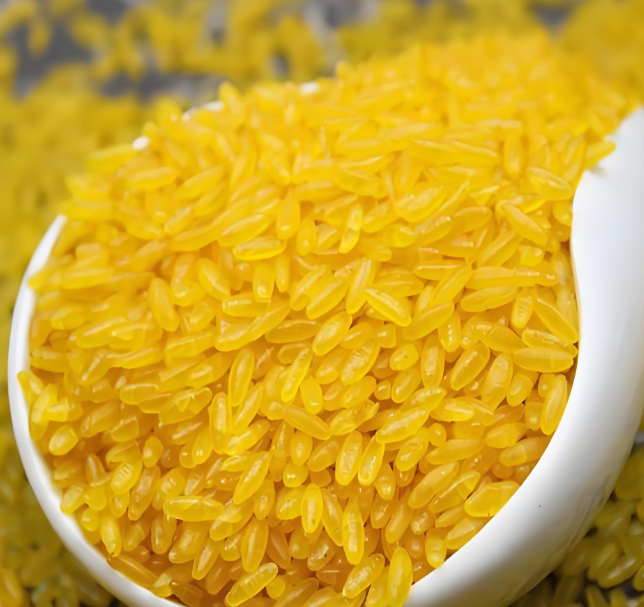
This advanced method creates nutrient-dense grains that are blended with regular rice.
- Процесс:
- Dough Formation: Rice flour is combined with the full spectrum of vitamin and mineral powders and water to form a dough.
- Экструзия: The dough is forced through an extruder—a machine that uses high heat and pressure. This process cooks the dough and shapes it into small pellets.
- Drying & Shaping: The pellets are dried and cut to precisely match the size, shape, and density of natural rice kernels.
- Key Advantage: Nutrients are embedded inside the artificial grain structure, making them highly resistant to washing and cooking losses.
- Final Blend: These fortified grains (typically making up 0.5% to 2% of the final product) are physically blended with non-fortified rice. The blend ensures each serving contains the target nutrient levels.
C. Cold Extrusion
A similar but lower-temperature alternative to hot extrusion.
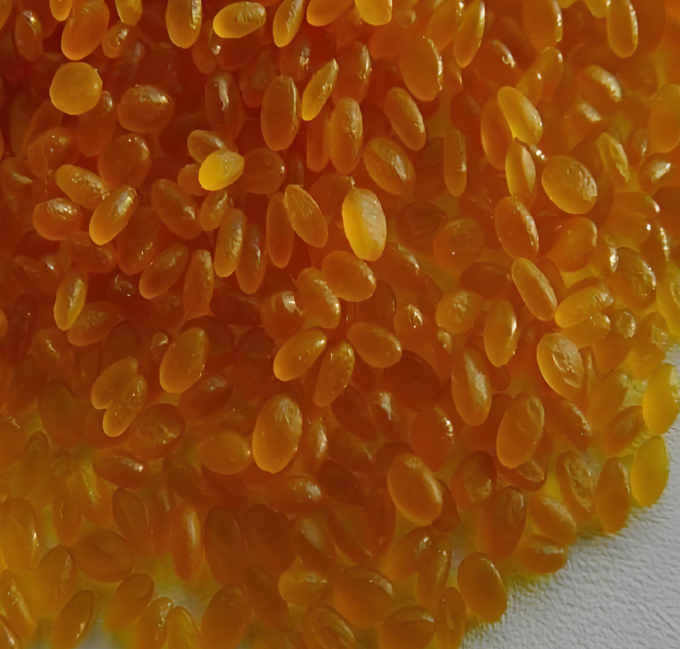
- Процесс: A nutrient-rich dough is formed using a binding solution and passed through an extruder at low or ambient temperatures, then dried.
- Benefit: It better preserves heat-sensitive nutrients like some B-vitamins. The resulting fortified grains are also blended with regular rice.
3. Critical Production Stages: Ensuring Quality & Stability
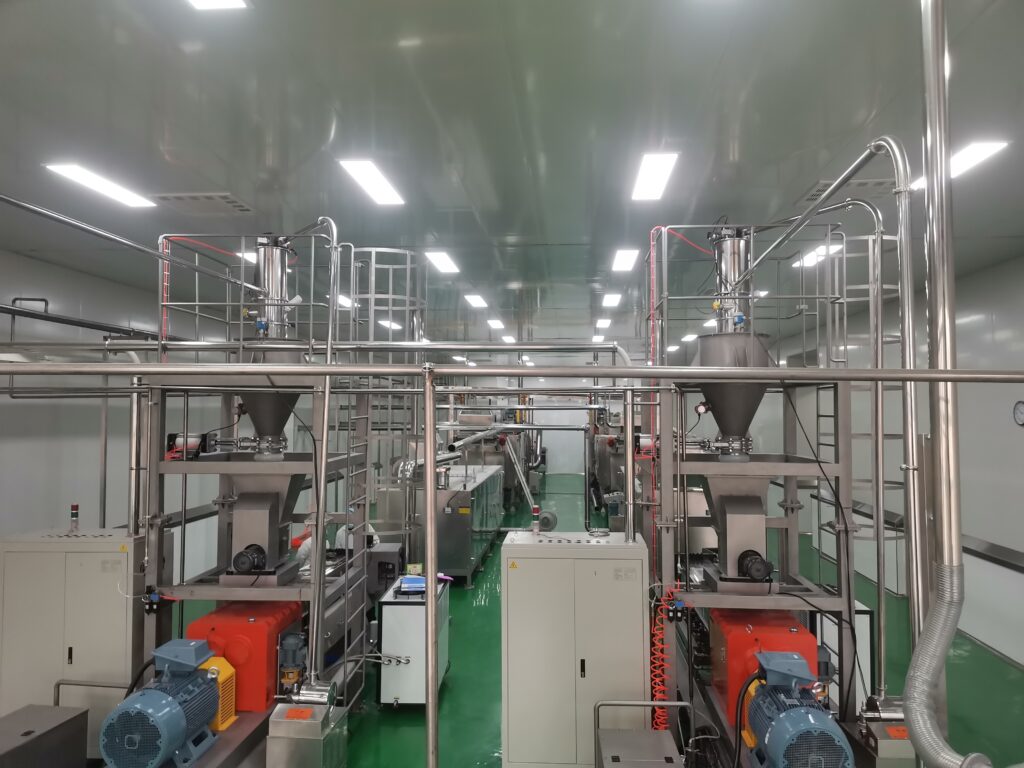
- Premix Formulation: This is a scientific step. Micronutrients are carefully selected for stability and bioavailability. For example, iron may be used in a compound like ferric pyrophosphate, chosen because it is less likely to discolor the rice or cause off-flavors.
- Mixing & Uniformity: Achieving a perfectly even distribution of the coating or fortified grains is paramount. Advanced mixing equipment ensures every 1-gram sample of the final product meets the required nutrient specifications.
- Sealing (for Coated Rice): After coating, a very thin layer of an edible sealant (e.g., cellulose) may be applied to “lock in” the powder, reduce dust, and offer minor protection against rinsing.
- Drying & Cooling: Coated rice undergoes controlled drying to set the coating and prevent clumping. The rice is then cooled to ambient temperature before packaging.
- Rigorous Quality Control (QC): QC labs continuously test:
- Nutrient Assay: Verifying that vitamin and mineral levels meet strict national or international standards.
- Color & Sensory Analysis: Ensuring the process hasn’t altered the rice’s appearance, taste, or smell.
- Grain Integrity: Checking for breakage and ensuring the coating or blended grains do not separate during handling.
4. Final Packaging
The finished enriched rice is packaged in sturdy, moisture-resistant bags. Packaging is designed to protect the product during transport and storage, shielding it from humidity, pests, and physical abrasion that could damage the nutrient layer.
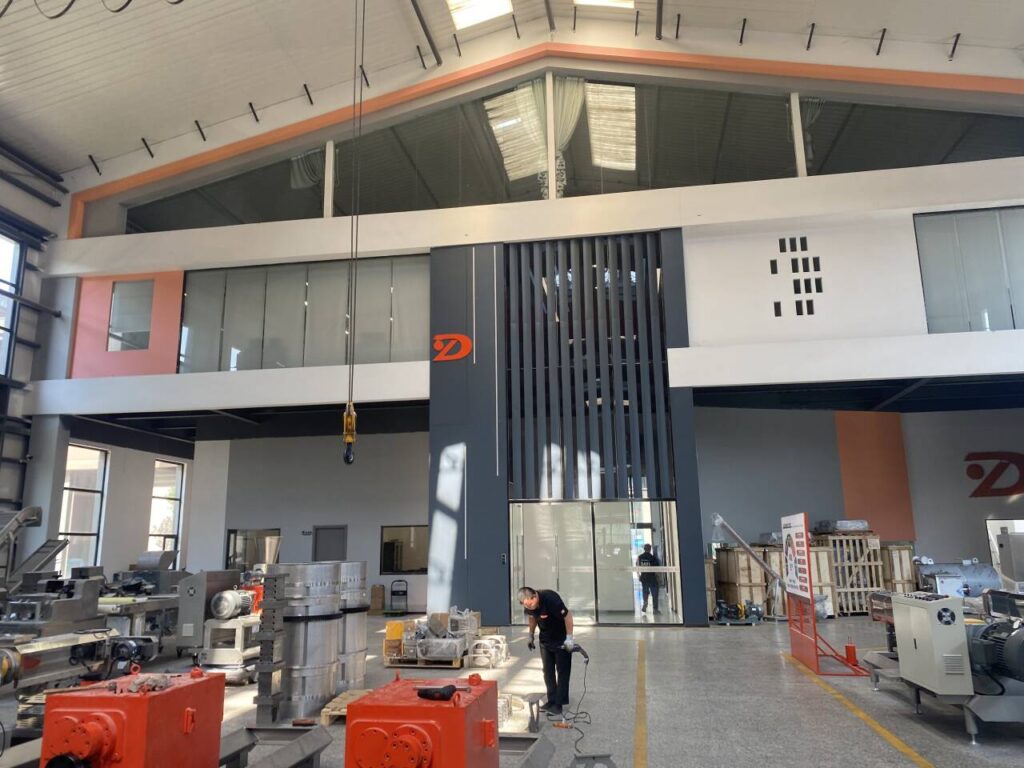
The manufacturing of enriched rice is not a simple coating operation; it is a precise intersection of public health nutrition, food chemistry, and process engineering. While coating offers an affordable solution, extrusion technologies provide superior nutrient retention. The chosen method balances cost, technical capacity, and dietary habits of the target population. Ultimately, this process creates a staple food that looks, cooks, and tastes like regular rice but carries a hidden payload of essential micronutrients, making it a cornerstone of global food fortification programs.
 Russian
  English
  Spanish
  Italian
  Arabic
  Portuguese
  German
  French
  Japanese
  Moroccan Arabic
  Persian
  Belarusian