
Moisture content is the single most critical factor determining the texture, shelf life, flavor, and structural integrity of breakfast cereal corn flakes. breakfast cereal making machine Precise control at every processing stage is essential to produce a consistently crisp, stable, and high-quality product. Here is a detailed guide on how moisture is controlled throughout the corn flake manufacturing process, particularly in extrusion-based production.
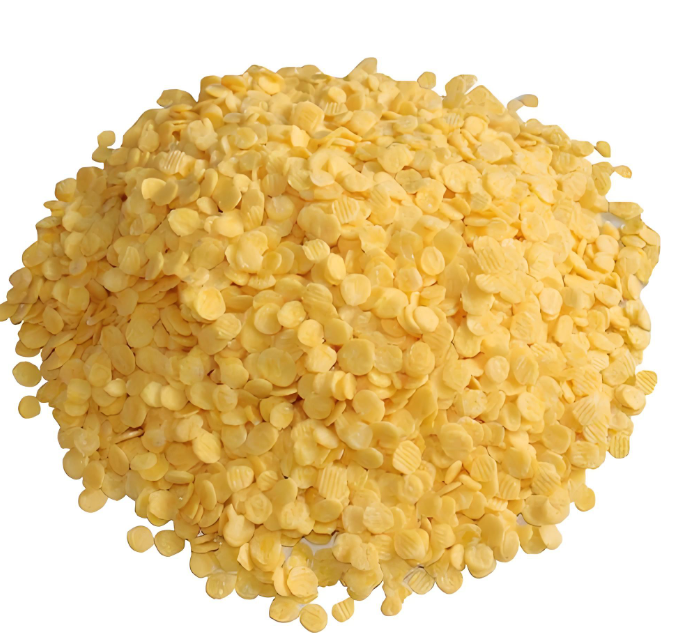
1. Target Specifications & Why Moisture Matters
- Final Product Target: Typically 1.5% – 3.0% moisture content (wet basis).
- Key Impacts:
- Texture: Moisture >4% leads to loss of crispness, a chewy or soft texture, and increased breakage.
- Shelf Life: Excess moisture promotes microbial growth (mold), rancidity, and staling. It is the primary driver of shelf-life reduction.
- Flavor: Higher moisture can mute flavors and accelerate off-flavor development.
- Package Integrity: High moisture can migrate into the package atmosphere, reducing its protective gas flush (if used) and accelerating oxidative changes.
2. Stage-by-Stage Control Points & Methods
A. Ingredient Preparation & Mixing (Pre-Conditioning)
- Objective: Achieve a uniform and precise initial moisture content for consistent cooking.
- Control Points:
- Raw Material Testing: Incoming corn grits/meal must be tested for moisture (typically 10-12%). Batch formulations are adjusted based on this baseline.
- Pre-Conditioner Water Injection: The amount of water (and steam) added to the dry mix in the pre-conditioner is precisely metered. This brings the total moisture of the feed material to a target range, usually 12-18%.
- Mixing Time & Efficiency: Ensuring homogeneous moisture distribution before the mix enters the extruder is crucial to prevent uneven cooking and texture defects.
B. Extrusion Cooking
- Objective: Use moisture as a plasticizer and cooking medium, then initiate moisture removal.
- Control Points:
- Barrel Temperature Profile: Heat, along with mechanical shear, breakfast cereal making machine flashes some moisture into steam within the barrel. Controlling temperature zones manages the rate of water vaporization and the degree of starch gelatinization.
- Die Pressure & Expansion: The pressure at the die and the subsequent expansion (puffing) of the extrudate as it exits begins the rapid initial moisture reduction. The size and shape of the die opening influence this flash-off.
C. Drying (The Most Critical Moisture Reduction Stage)
- Objective: Reduce moisture from the extruded ribbon (~20-25%) down to a low, stable level (~3-5%) before flaking.
- Control Systems:
- Multi-Zone Conveyor Dryer: This is the primary control unit. Dryers have multiple independently controlled zones.
- Key Parameters: Temperature (typically 120-150°C / 250-300°F inlet air), Airflow Volume, Air Humidity, and Residence Time (belt speed).
- Process Control: Modern dryers use Feedback Control Loops. Online Moisture Analyzers (e.g., NIR sensors) placed at the dryer exit continuously measure the moisture of the exiting product. This data is fed back to a PLC (Programmable Logic Controller) that automatically adjusts dryer parameters (e.g., heat input, belt speed) in real-time to maintain the set point.
- Target Post-Dryer: Ribbons must be dry enough to snap, not bend. This “glassy state” is essential for proper flaking without sticking to the rolls.
D. Flaking & Toasting
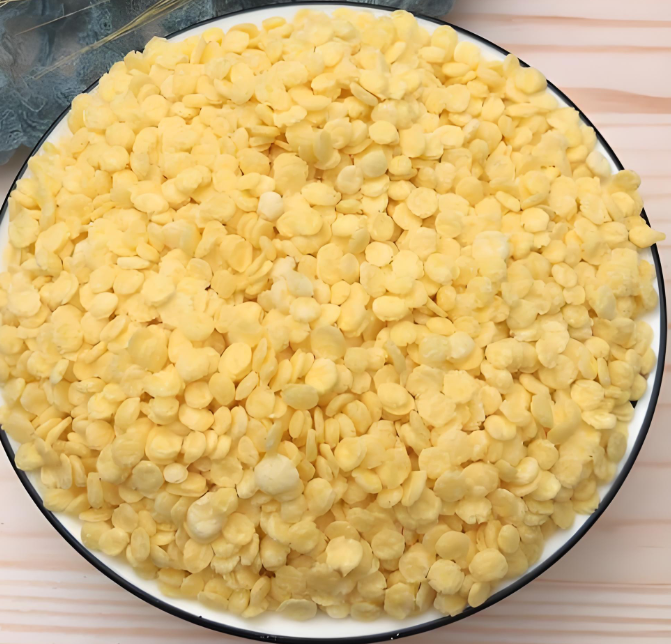
- Objective: Achieve final moisture content and set texture.
- Control Points:
- Flaking Roll Temperature: Cool, tempered ribbons are essential. If ribbons are too warm or have high moisture pockets, breakfast cereal making machine they will stick to the flaking rolls, causing a production shutdown.
- Toasting Oven: The toasting oven provides the final moisture bake-out. Control of oven temperature profile and residence time is critical to driving moisture to the final 1.5-3.0% target while achieving the correct color and flavor. Over-toasting creates a bitter flavor and low moisture; under-toasting leaves the flakes soggy and pale.
E. Cooling & Post-Process Handling
- Objective: Stabilize the product and prevent moisture pick-up.
- Control Points:
- Охлаждающие конвейеры: Flakes must be cooled to near ambient temperature before packaging. Packaging hot flakes leads to condensation inside the bag/box, causing immediate sogginess and clumping.
- Environmental Control: The Relative Humidity (RH) of the packaging room is strictly controlled (often to 30-40% RH). This prevents hygroscopic flakes from absorbing atmospheric moisture between toasting and sealing.
F. Packaging
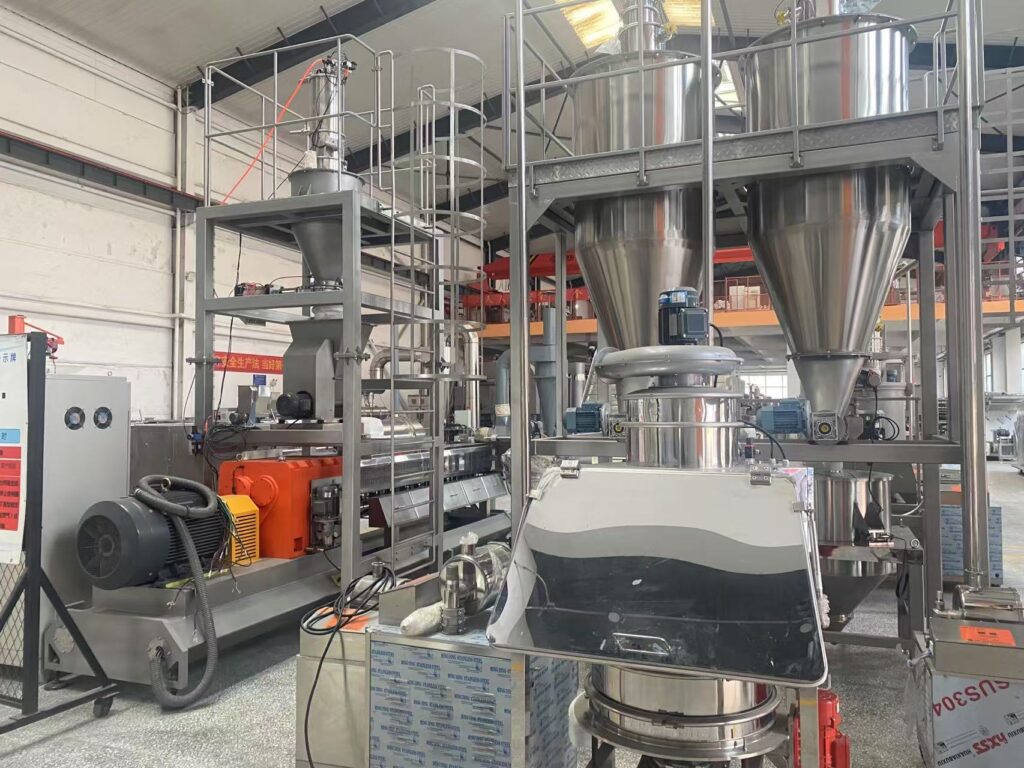
- Objective: Lock in the achieved low moisture content for the product’s shelf life.
- Control Systems:
- Barrier Packaging: Use of metallized film or high-barrier polymer laminates with a very low Water Vapor Transmission Rate (WVTR).
- Gas Flushing: The package is flushed with an inert gas (like Nitrogen) before sealing. This displaces oxygen and also removes moist air from the headspace, creating a dry internal atmosphere.
3. Quality Assurance & Monitoring
- Laboratory Testing: Frequent loss-on-drying (LOD) или Karl Fischer titration tests are performed on samples from each production lot to validate online sensor readings.
- Water Activity (a𝘸) Testing: While moisture content measures total water, Water Activity (a𝘸) measures the “free” water available for microbial growth and chemical reactions. Final product a𝘸 is typically targeted below 0.30, which inhibits all microbial growth and ensures crispness.
- Shelf-Life Testing: Storage studies under accelerated conditions (elevated temperature and humidity) are conducted to model moisture migration and texture changes over time.
Controlling moisture in corn flakes is a dynamic process that requires integration from raw material intake to final packaging. It hinges on precision in preconditioning, strict automation in drying and toasting, controlled environmental handling, and high-barrier packaging. Modern cereal plants rely on closed-loop process control systems with real-time moisture sensors to maintain this control, ensuring every box delivers the expected signature crunch.
 Russian
  English
  Spanish
  Italian
  Arabic
  Portuguese
  German
  French
  Japanese
  Moroccan Arabic
  Persian
  Belarusian