
Applications of Twin-Screw Extruders: A Versatile Processing Tool
The twin-screw extruder (TSE), particularly the co-rotating intermeshing type, has evolved from a simple compounding machine into a cornerstone of modern industrial processing. Its unique design—featuring two parallel screws rotating inside a barrel—provides unparalleled control over shear, residence time, mixing, and thermal energy input. extruder snacks This makes it exceptionally versatile for transforming raw materials across numerous industries. Here are its primary applications.
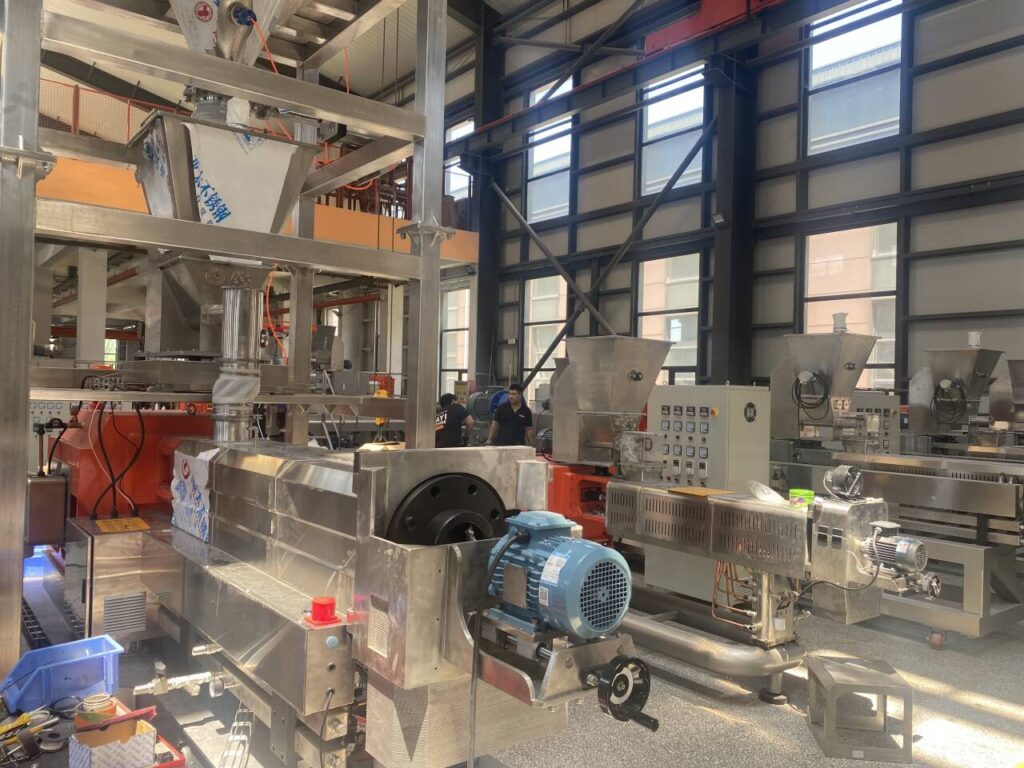
1. Food Processing & Human Nutrition
This is one of the largest and most innovative application areas.
- Ready-to-Eat (RTE) Cereals and Snacks: Production of corn balls, curls, breakfast cereals, and protein bars. The extruder cooks, shapes, and textures starches and proteins in a single continuous step.
- Texturized Vegetable Protein (TVP): Creating meat analogs from soy, pea, or wheat gluten. The TSE’s high shear and temperature create a fibrous, meat-like texture.
- Baby Food & Instant Foods: Precooking and sterilizing grains, legumes, and powders for instant noodles, soups, and infant formulas, ensuring digestibility and shelf stability.
- Кондитерские изделия: Processing candy masses, chewing gum base, and licorice.
- Functional Foods: Incorporating heat-sensitive ingredients (vitamins, probiotics) downstream via side feeders and using gentle screw configurations to minimize degradation.
2. Pet Food & Animal Feed
- Dry Expanded Pet Food (Kibble): The dominant application. extruder snacks TSEs precisely cook starch and protein, control density, and shape pellets for dogs, cats, fish, and birds, ensuring nutritional balance and palatability.
- Aquafeed: Producing floating or sinking feeds with high water stability.
- Feed Pre-Conditioning: Gelatinizing starches to improve digestibility for livestock and poultry.
3. Polymer & Plastics Processing
The traditional and still critical domain for TSEs.
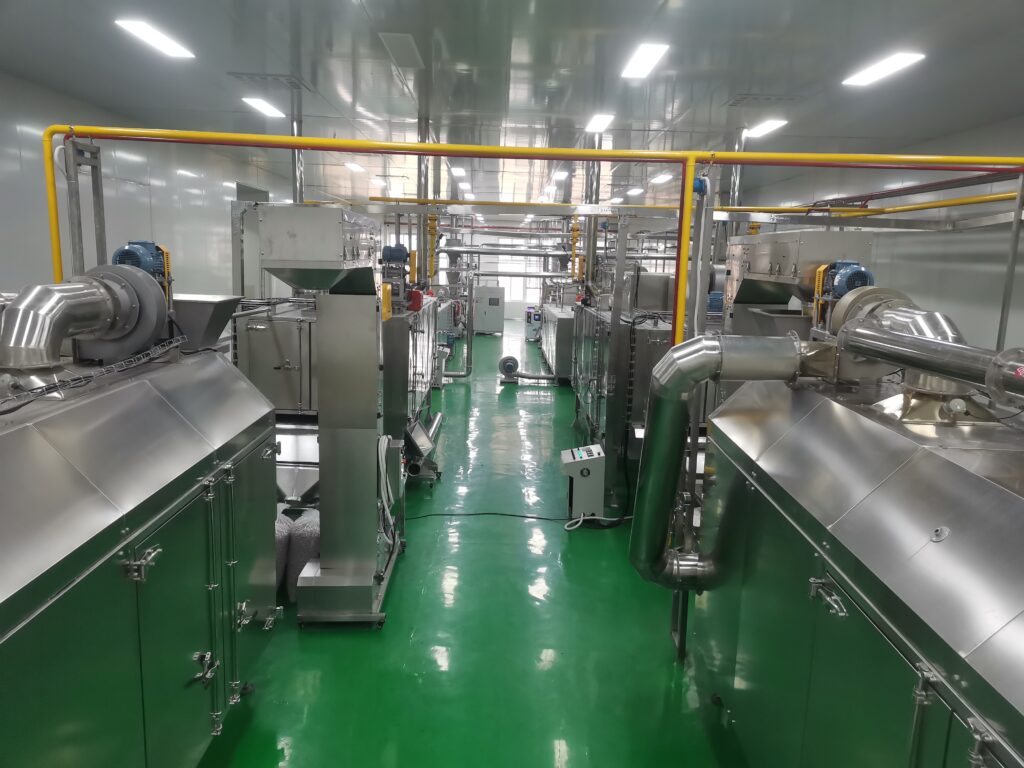
- Compounding: The flagship application. Excellently disperses fillers (glass fiber, minerals), colorants, and additives (flame retardants, stabilizers) into polymer melts (PP, PA, PC, etc.).
- Alloying/Blending: Creating polymer blends (e.g., PC/ABS, PPE/PA) with controlled phase morphology for enhanced properties.
- Devolatilization: Efficiently removing solvents, monomers, or moisture through multiple vent ports under vacuum.
- Reactive Extrusion: Conducting chemical reactions (polymerization, grafting, chain extension, hydrolysis) in-situ within the extruder barrel.
4. Pharmaceuticals
A rapidly growing field leveraging the TSE’s precision and compliance potential.
- Solid Dispersion Formation: Enhancing the bioavailability of poorly water-soluble drugs by creating molecular dispersions in polymer matrices.
- Controlled Release Formulations: Embedding APIs into carriers to tailor release profiles.
- Granulation: Continuous wet granulation for tablet production, offering advantages over batch processes.
- Tissue Engineering: Processing biocompatible polymers into scaffolds.
5. Biochemical & Green Technology
- Biomass Pretreatment: Breaking down lignocellulosic structures (straw, wood) for biofuel production (e.g., 2nd generation ethanol).
- Biopolymer Processing: Starch-based plastics, polylactic acid (PLA), and other biodegradable polymers often require specific thermal and shear profiles provided by TSEs.
6. Other Specialty Applications
- Chemicals & Catalysts: Producing catalyst supports, adsorbents, or chemical intermediates.
- Electronics: Compounding conductive polymers for EMI shielding or battery electrodes.
- Cosmetics: Producing soap bases, pigment dispersions, and textured products.
Key Advantages Enabling These Applications
- Modularity: Barrels and screw elements (kneading blocks, conveyors, reverse elements) can be configured to create the exact processing environment needed.
- Flexibility: Easily handles viscous, sticky, powdery, or wet materials. Feed streams can be added at multiple points (main feed, side stuffers, liquid injectors).
- Intensive Mixing: Provides both distributive and dispersive mixing for uniform products.
- Self-Cleaning Action: Intermeshing screws provide a self-wiping effect, crucial for product changes and hygienic applications like food and pharma.
- Process Control: Precise independent control over temperature, shear, and pressure in different barrel zones.
The twin-screw extruder is more than just a machine; it is a highly adaptable continuous reactor and processor. Its ability to integrate multiple unit operations (feeding, mixing, cooking, reacting, venting, shaping) into one streamlined, extruder snacks automated process makes it indispensable for innovation and efficiency. From the cereal in your breakfast bowl and the plastic in your car, to life-saving pharmaceuticals and sustainable biofuels, the twin-screw extruder plays a vital, often unseen, role in shaping modern products and industries. Its application scope continues to expand as process understanding and machine technology evolve.
 Russian
  English
  Spanish
  Italian
  Arabic
  Portuguese
  German
  French
  Japanese
  Moroccan Arabic
  Persian
  Belarusian