
A Guide to Manufacturing Floating Fish Feed
Floating fish feed, also known as extruded or expanded feed, is a cornerstone of modern aquaculture, particularly for surface-feeding species like tilapia, catfish, and carp. Its key characteristic—the ability to remain buoyant on the water surface for an extended period—allows for direct observation of feeding behavior, reduces waste, and improves feed management. Manufacturing this type of feed involves a specific process centered around high-temperature, high-pressure extrusion.
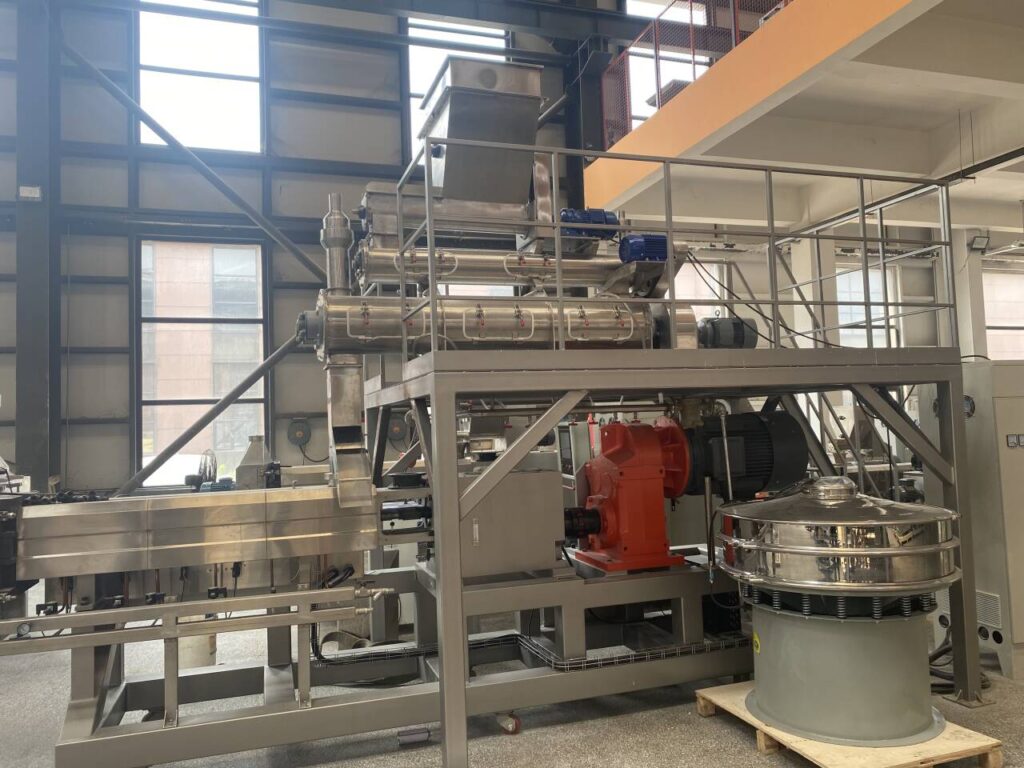
1. Raw Material Selection and Grinding
The process begins with a nutritionally balanced formula containing proteins (e.g., fishmeal, soybean meal), carbohydrates (e.g., corn, wheat flour), lipids, vitamins, and minerals. A high starch content (typically 20-30%) is crucial, as starch is the primary agent for expansion. All raw materials are ground into a very fine, uniform powder (meal). This fine grind ensures a homogeneous mixture, complete starch gelatinization, and a smooth, stable final pellet.
2. Pre-conditioning (Optional but Recommended)
The dry mixture is often first introduced into a pre-conditioner. Here, it is mixed with live steam and water to achieve partial hydration and heating. This step initiates starch gelatinization, improves mixing efficiency, and reduces mechanical wear on the main extruder. It also enhances the dough’s plasticity, leading to more stable and consistent expansion in the next stage.
3. High-Shear Twin-Screw Extrusion: The Heart of the Process
This is the defining step that creates the floating pellet. The conditioned (or dry) meal is fed into a twin-screw extruder. The process inside the extruder barrel is precisely controlled:
- Cooking: The material is subjected to intense mechanical shear from the rotating screws, high pressure (20-40 bar), and high temperature (110-150°C or 230-300°F) through direct steam injection and friction.
- Starch Gelatinization: Under this combination of heat, moisture, and pressure, the starch granules swell, rupture, and gelatinize completely. This transforms the mixture into a hot, viscous, plasticized dough.
- Expansion: The cooked dough is forced through a die plate with shaped holes at the end of the extruder barrel. As it exits the high-pressure environment into atmospheric pressure, the superheated water in the dough instantly flashes into steam. The gelatinized starch matrix traps this steam, causing the pellet to puff up or expand, creating a porous, sponge-like internal structure. This porous structure, filled with countless tiny air cells, gives the pellet its buoyancy.
- Size Control: The pellet diameter is determined by the die hole size. The length is controlled by a high-speed rotary cutter located just outside the die face.
4. Сушка
The newly extruded pellets are soft, moist (≈25-30%), and must be stabilized. They are conveyed to a multi-pass or belt dryer, where hot air (70-110°C) circulates to reduce the moisture content to below 10%. Drying hardens the pellet’s structure, fixes its expanded shape, and ensures shelf stability. Proper drying is critical; under-drying leads to mold, while over-drying can compromise buoyancy.
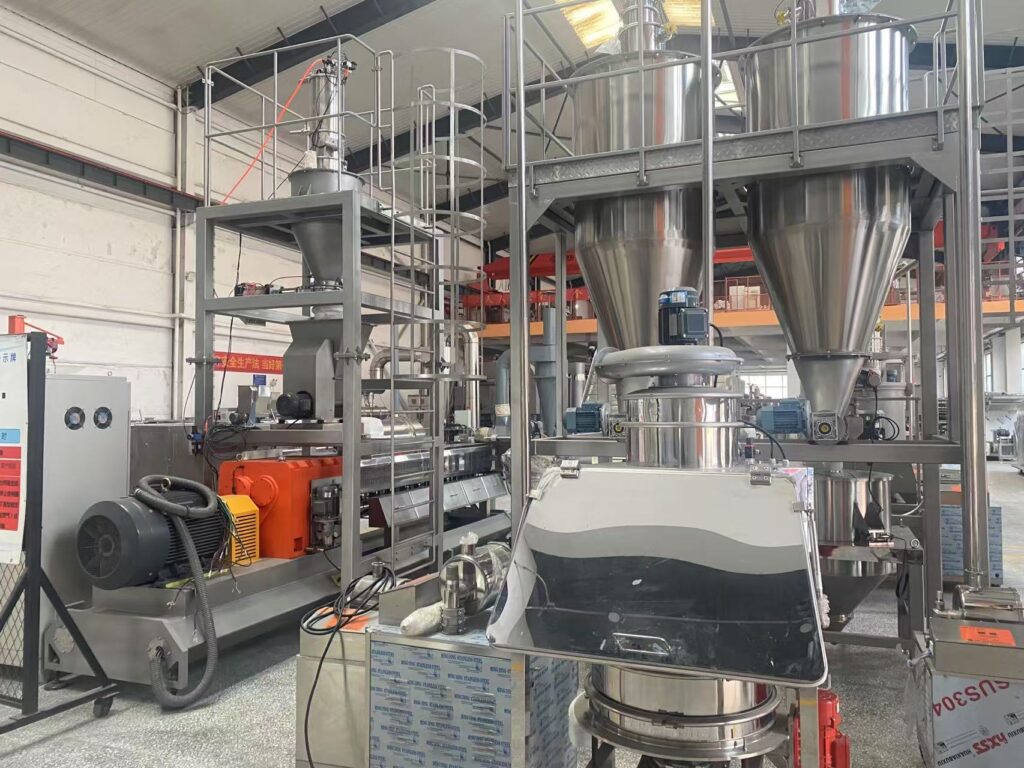
5. Cooling
After drying, pellets are hot and must be cooled to near ambient temperature using ambient air. Cooling prevents condensation in the bags and finishes the hardening process.
6. Fat / Nutrient Coating (Post-Aplication)
The expansion and drying process can degrade heat-sensitive nutrients like vitamins and certain amino acids. Therefore, these elements, along with fish oils or other lipid sources, are often applied after extrusion. The cool, dry pellets enter a vacuum coater or fat drum, where a liquid coating is applied. The vacuum can help pull the coating into the pellet’s porous structure. This post-extrusion coating ensures high nutritional value and palatability without interfering with the expansion process.
7. Screening and Packaging
The pellets are screened to remove fines and broken pieces (which are recycled). The uniform, floating pellets are then weighed and packaged in airtight bags to preserve freshness and prevent moisture re-absorption.
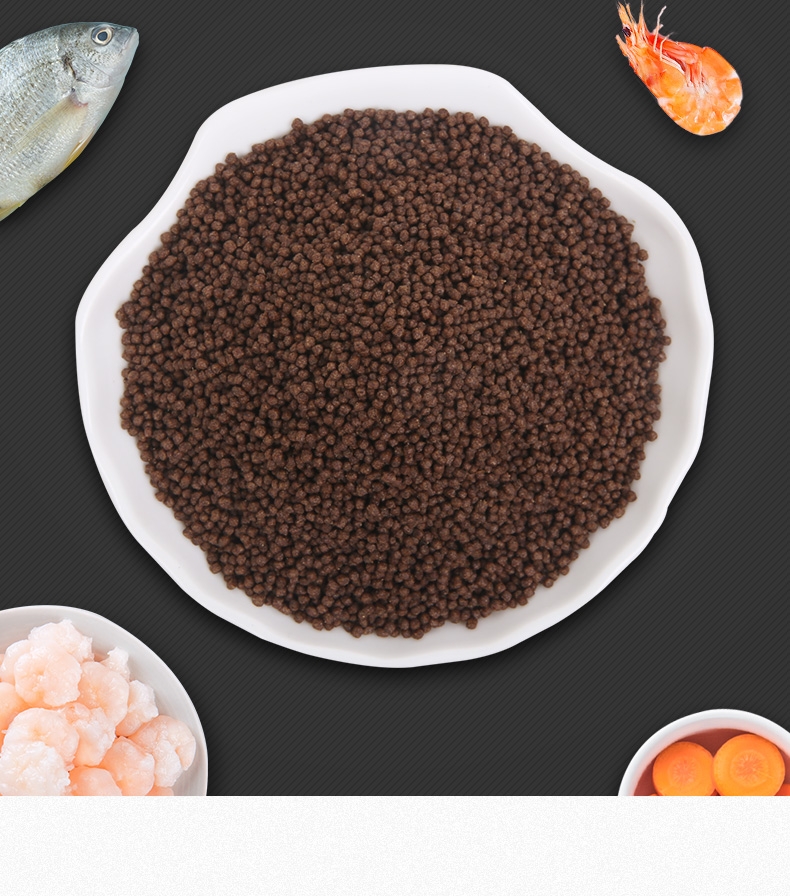
Key Factors Controlling Buoyancy:
- Starch Content & Gelatinization: Sufficient, fully gelatinized starch is non-negotiable to form the elastic matrix that traps steam.
- Expansion Ratio: Controlled by extrusion parameters: higher temperature, higher shear, and higher pressure generally increase expansion. Lower moisture in the dough also promotes greater expansion.
- Porosity & Density: The more porous and less dense the pellet, the better it floats. Density is also influenced by raw material composition.
- Drying Protocol: Gentle yet thorough drying preserves the air cell structure without collapsing it.
In summary, manufacturing floating fish feed is an advanced thermal-mechanical process. It relies on transforming starch through high-shear extrusion cooking to create an expanded, low-density, porous pellet. This allows it to float, providing aquaculturists with a manageable and observable feed that promotes efficient growth and reduces environmental impact.
 Russian
  English
  Spanish
  Italian
  Arabic
  Portuguese
  German
  French
  Japanese
  Moroccan Arabic
  Persian
  Belarusian