Introduction
Food extrusion has become a cornerstone of modern food processing, responsible for creating a vast array of products ranging from breakfast cereals and puffed snacks to texturized vegetable protein and pet food. At the heart of every extruder lies its power source: the drive system. This critical assembly is responsible for generating, transmitting, and controlling the immense mechanical power required to turn raw ingredients into a cooked and formed product. The efficiency, reliability, and precision of the drive system directly impact product quality, throughput, and operational costs.
Core Components of the Extruder Drive System
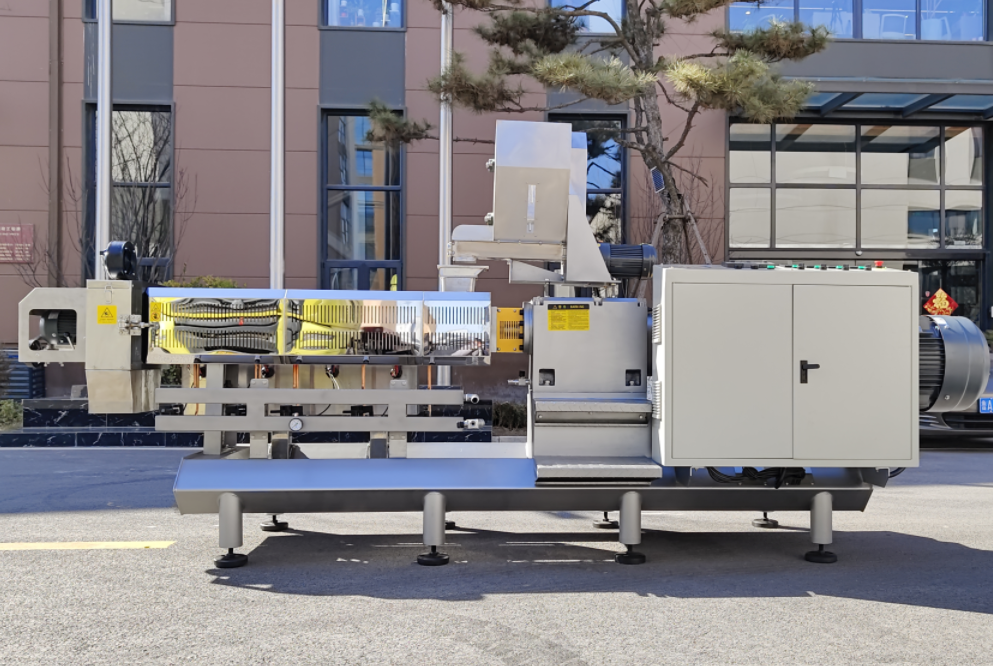
A typical food extruder drive system is comprised of several key components working in unison:
- Prime Mover (The Electric Motor): The vast majority of modern food extruders utilize electric motors as their primary power source. These are most commonly AC induction motors or, increasingly, permanent magnet synchronous motors. The motor converts electrical energy into rotational mechanical energy (torque and speed). The selection of motor power (measured in kilowatts or horsepower) is a fundamental design parameter, determined by the extruder’s size, the type of products being made, and the desired throughput. High-torque capabilities are essential for handling viscous, starchy doughs under high pressure.
- Power Transmission and Speed Control: The motor’s output speed is typically too high and its torque too low for the direct requirements of the extruder screw. Therefore, a transmission system is employed to modify these characteristics. This can be achieved through:
- Gearboxes: A heavy-duty gearbox, often incorporating multiple stages of reduction gears, reduces the high rotational speed of the motor to the lower, more useful speed required by the extruder screw (typically ranging from 200 to 500 RPM for single-screw extruders, and potentially higher for twin-screw configurations). This speed reduction simultaneously multiplies the torque, providing the necessary “twisting force” to convey and work the material.
- Variable Frequency Drives (VFDs): In conjunction with AC motors, VFDs are indispensable for precise control. They allow operators to finely adjust the motor’s speed (and thus the screw speed) by varying the frequency of the electrical supply. This speed control is the primary method for influencing residence time, shear rate, and throughput within the extruder. VFDs also offer soft-start capabilities, reducing mechanical stress on the system during startup, and contribute to significant energy savings by matching motor speed to the actual load demand.
- Thrust Bearing Assembly: The extrusion process generates immense pressure as material is forced towards and through the die. This pressure creates a powerful reactive force that pushes back against the extruder screw. The thrust bearing assembly is a critical component designed to absorb this axial (backward) force and transfer it safely to the extruder frame, preventing damage to the gearbox and other drive components. For high-pressure applications, robust thrust bearings are paramount for long-term reliability.
Drive System Configurations by Extruder Type
The specific implementation of the drive system varies between different classes of extruders:
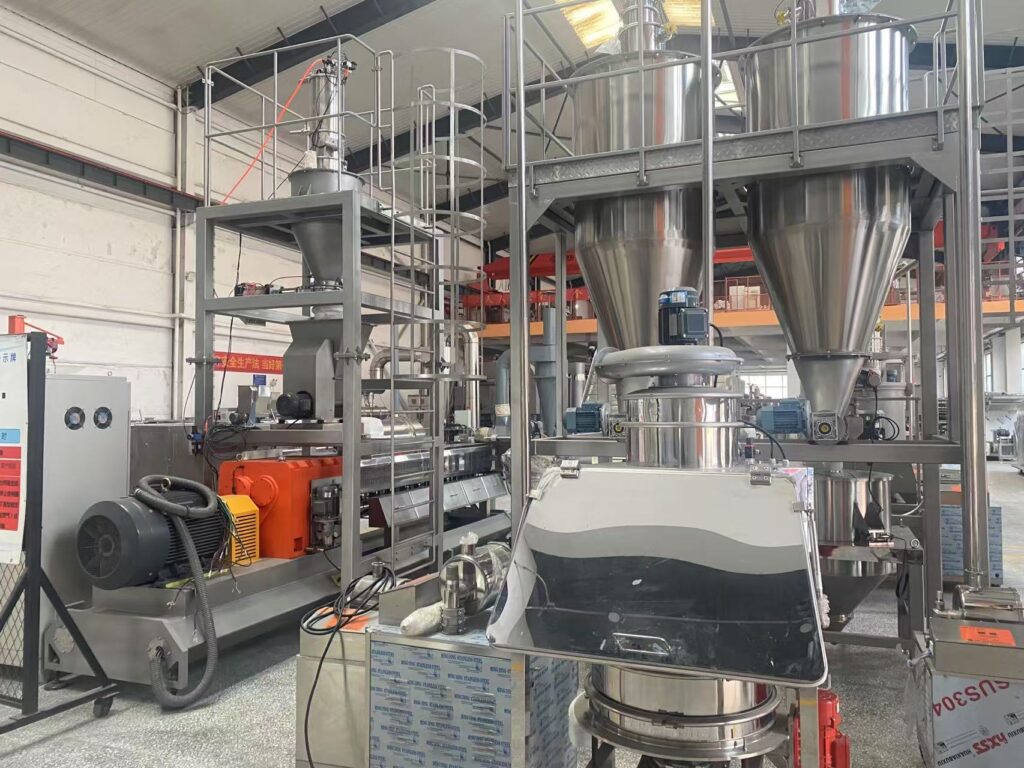
- Single-Screw Extruders: These typically feature a simpler, more robust drive system. The motor connects to a gearbox that directly drives a single screw. Power transmission is straightforward, and control focuses on maintaining a consistent screw speed. The drive must provide ample torque to overcome the resistance of the viscous melt as it is conveyed and pressurized.
- Twin-Screw Extruders: These machines require more sophisticated drive systems. They must not only provide high torque but also precisely synchronize the rotation of two parallel screws. The drive train includes a distribution gearbox that splits the power from the motor and transmits it to both screw shafts. Twin-screw extruders can be co-rotating (screws turn in the same direction) or counter-rotating (screws turn opposite each other), and the gearbox design must be tailored to the specific kinematic requirements. The increased complexity allows for greater control over mixing, shear, and conveying, enabling a wider range of product textures and formulations. High-torque, high-speed twin-screw extruders represent the pinnacle of drive system engineering in food extrusion.
Заключение
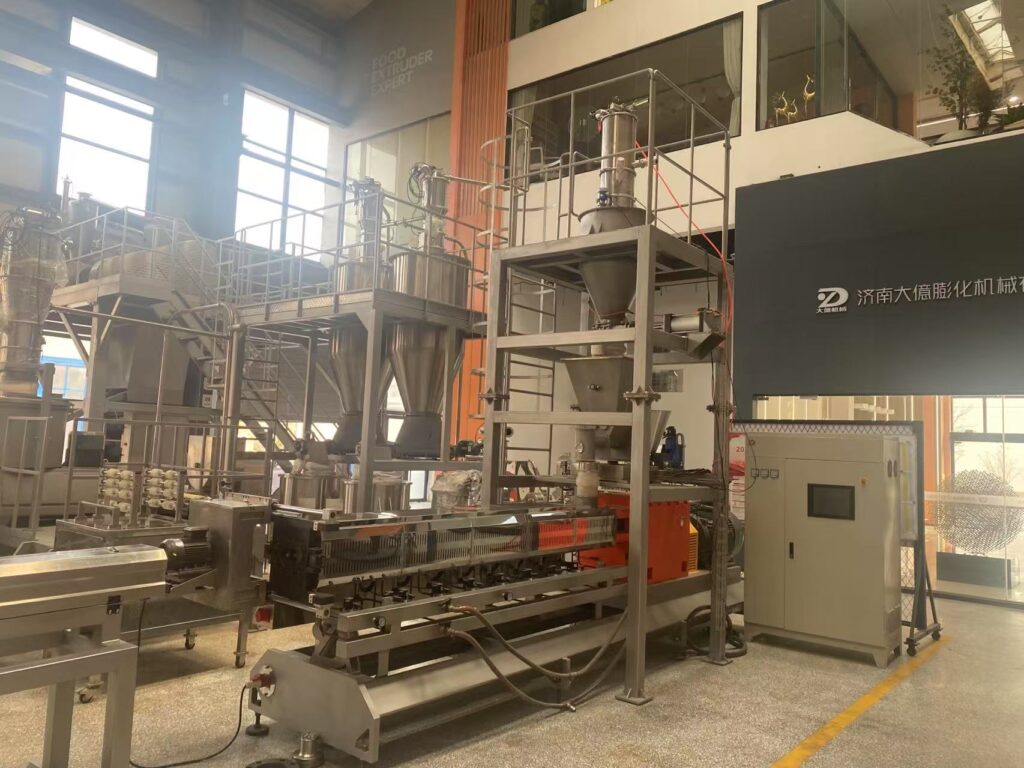
The drive system is far more than just a motor; it is the meticulously engineered powerhouse of the food extruder. From the initial conversion of electrical energy by the motor, through the torque multiplication and speed control provided by the gearbox and VFD, to the absorption of immense axial forces by the thrust bearing, each component is vital. As the food industry demands greater efficiency, flexibility, and product innovation, the drive systems of extruders will continue to evolve, incorporating advanced motor technologies, more precise control algorithms, and more robust mechanical designs to power the future of food processing. If you are interested in the snack food extruder machine , you can contact me , i will give you good advice and solutions .
1.Will you help us with the installation ?
Yes , We will send engineers to install and debug the equipment, and assist in training your staff.
2.Are you a factory or trading company?
We are a factory.
3.What certificate do you have?
We have ISO and CE certificate.
4.How long is the warranty period?
All of our machines have one year warranty.
5.What’s the main market of your company?
Our customers all over the world.
6.How much production capacity of your company one year?
This depends on your needs.
 Russian
  English
  Spanish
  Italian
  Arabic
  Portuguese
  German
  French
  Japanese
  Moroccan Arabic
  Persian
  Belarusian