
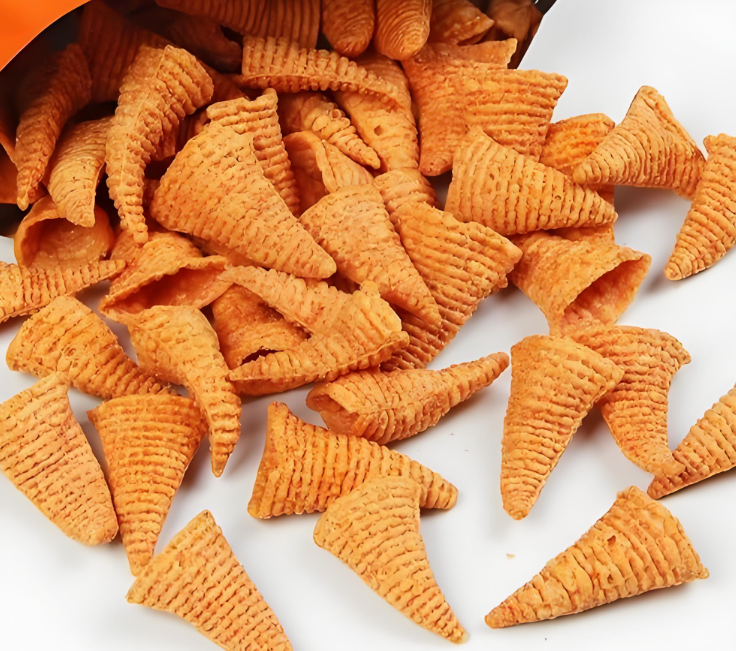
The iconic Bugles snack—those crisp, corn-based cones designed to perch on fingertips—is a marvel of food engineering. Achieving that perfect saddle shape with a satisfying crunch requires more than just a good recipe; it demands precise control over a multi-stage manufacturing process. Unlike simple puffed snacks, Bugles belong to a category known as three-dimensional extruded snacks, which require a unique “sheet-and-fold” production method .
This article reveals the step-by-step process of how to produce perfectly shaped, consistently crunchy Bugles.
The Core Principle: A 3D Snack Architecture
Before diving into the steps, it’s essential to understand why Bugles are different. Traditional puffed snacks are often simply extruded and cut. Bugles, however, start as a flat sheet. The iconic cone shape is achieved by folding two sheets together around a forming guide, creating a hollow, three-dimensional structure that puffs up during frying .
Step-by-Step Production Process for Perfect Bugles
1. The Foundation: Precision Mixing
The journey to a perfect shape begins with the raw materials. The primary ingredients are starches, typically a blend of corn starch, rice starch, and potato starch . The specific ratio is critical:
- Corn starch (60-70%) provides the base structure and good expansion.
- Rice starch (10-15%) contributes to a lighter, crisper texture and reduces oiliness.
- Potato starch helps bind the mixture and adds tenderness.
These dry ingredients are fed into a high-capacity mixer, where they are combined with water to achieve a specific moisture content, typically 28% to 35% . This precise hydration is the first critical control point; incorrect moisture here will lead to poor sheet formation later.
2. Pre-conditioning and Extrusion
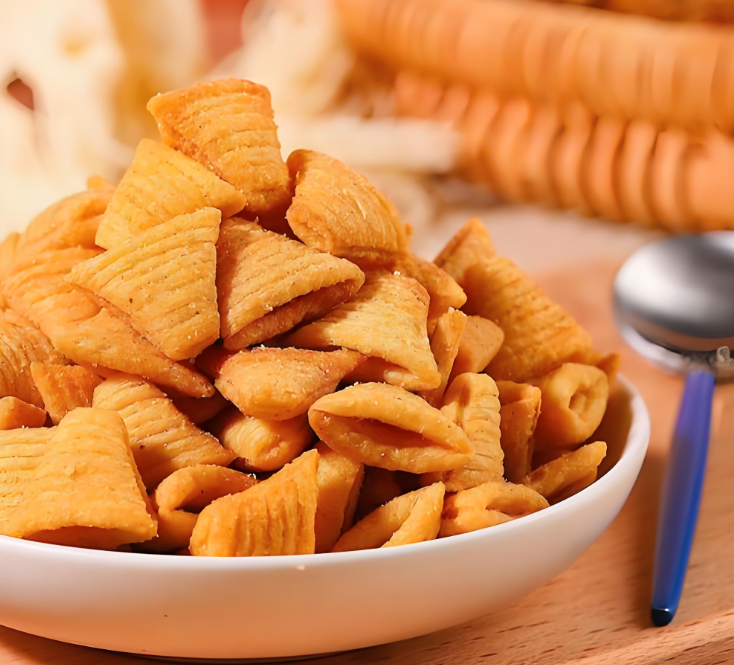
The moistened mixture is then fed into a preconditioner and a twin-screw extruder.
- Pre-conditioning: The material is steamed and heated to initiate starch gelatinization. The temperature is raised to 100–120°C under a pressure of 2–3 atmospheres . This creates a plastic, molten dough with no residual stress.
- Low-Shear Extrusion: The pre-cooked dough is then gently conveyed by a low-shear screw to the die. The temperature is carefully reduced to 70–80°C at this stage . This prevents premature expansion and maintains the dough’s integrity for the next step.
3. Forming the Primary Sheet
Instead of a die that forms the final shape, the dough is forced through a wide, flat die. This extrudes a continuous, semi-transparent sheet of dough, typically 200mm wide and 0.8 to 1.0mm thick . The die must be equipped with a pressure-balancing mechanism to ensure the sheet has a perfectly uniform thickness—a crucial factor for even folding and final product consistency.
4. Cooling and Stabilizing
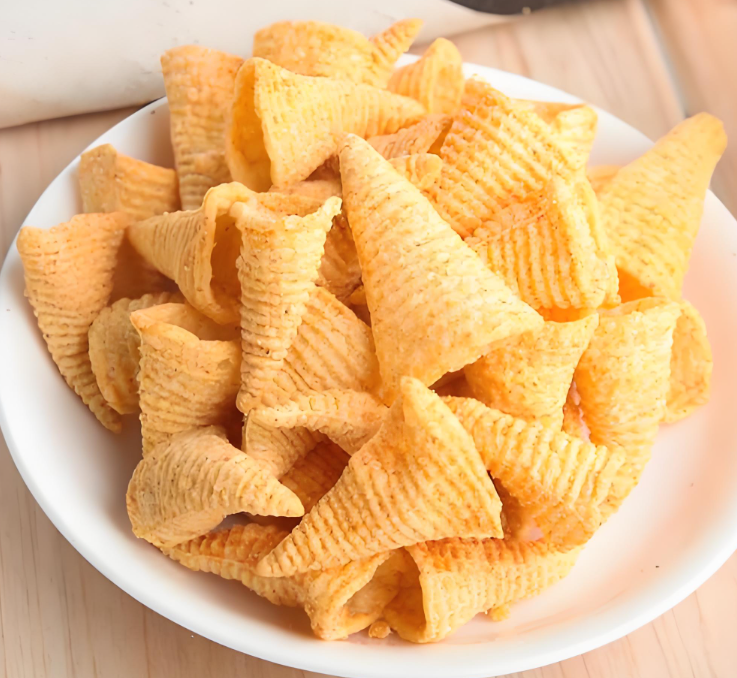
The freshly extruded sheet is hot and pliable. It must be cooled immediately to stabilize its structure before it can be handled. The sheet is run through a long cooling conveyor, typically 8 to 12 meters in length, often arranged in a serpentine pattern to save floor space . This cooling step ensures the sheet is firm enough to be cleanly cut and folded without sticking to the machinery.
5. The Magic: Laminating and Forming
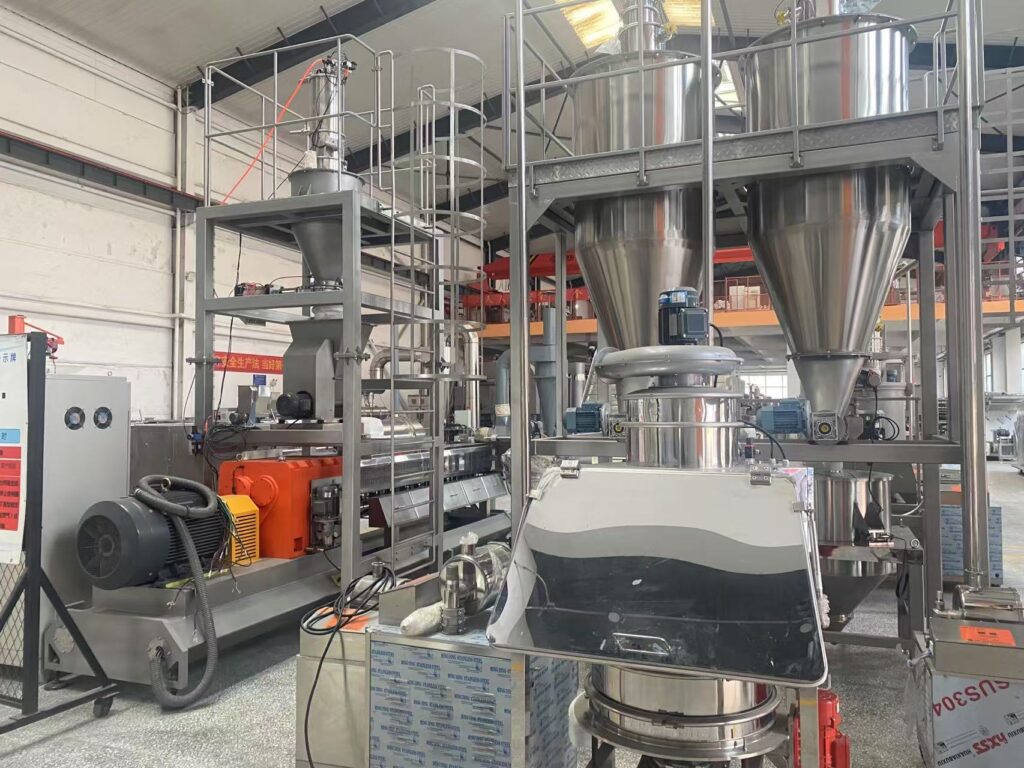
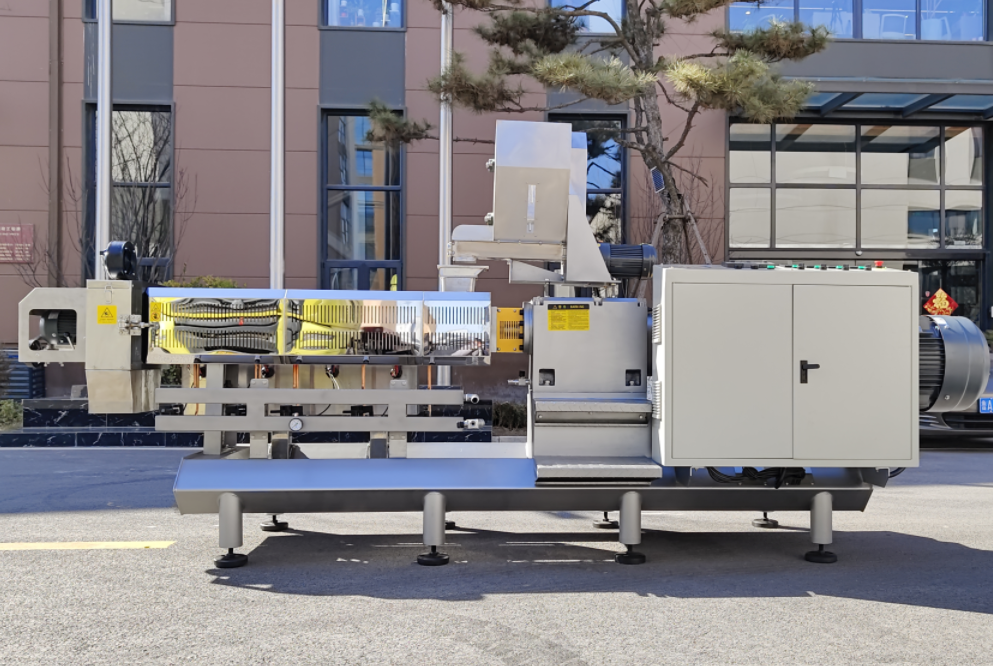
This is the most critical stage for achieving the classic Bugles shape. The cooled sheet is fed into a laminating and forming machine, which performs three actions in sequence :
- Embossing: The sheet passes through embossing rollers. These rollers can imprint a decorative pattern (like the fine grid on Bugles) and, most importantly, they create weak points that will later allow the piece to separate cleanly. They also serve to pull the sheet forward.
- Folding: Two of these sheets are then guided together and passed over a forming guide. As they converge, they are folded around the guide, creating a continuous tube or a series of connected cone shapes.
- Cutting and Sealing: A composite roller presses the two layers together, sealing the edges of the nascent Bugles. Simultaneously, the pieces are cut into their final, individual cone shapes. Any scrap trimmings from the edges are pneumatically conveyed back to the extruder to be recycled, ensuring zero waste .
6. Controlled Drying (The Pre-Fry Set)
At this stage, the raw Bugles pieces are fragile and have a high moisture content of 20-30% . They cannot be fried immediately, as rapid moisture loss would distort their delicate shape. Instead, they are sent to a dryer.
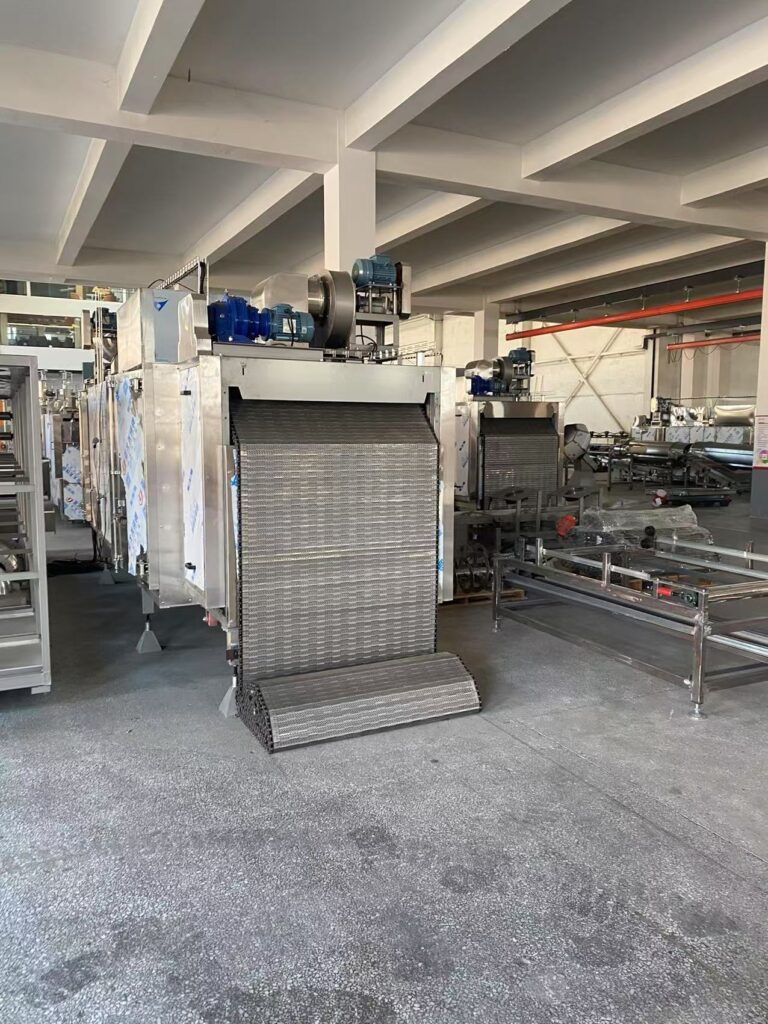
- Temperature: A low temperature, typically around 60°C, is used.
- Time: The drying process is gentle and lengthy, reducing the moisture content slowly and evenly to about 12% .
- Vibration: The dryer often uses a vibrating bed to keep the pieces from sticking together as they dry and stabilize.
This controlled drying step “sets” the starch structure, ensuring the pieces will hold their shape during the violent expansion of frying.
7. The Transformation: Frying
The semi-dried pellets are now ready for their final transformation. They are submerged in hot oil using a continuous fryer.
- Oil Temperature: The oil is maintained at a precise temperature, typically between 165°C and 175°C .
- Frying Time: The pieces fry for a short duration, usually 30 to 60 seconds .
- The Puff: As the residual water inside the pellet turns to steam, it creates immense pressure. The piece rapidly expands (2 to 3 times its original size), and the hollow center inflates, locking in the three-dimensional cone shape and creating a light, crispy texture . The final moisture content drops to just 2-3% .
After frying, the Bugles pass through a de-oiling tunnel (often a centrifuge or air-knife) to remove excess surface oil, preventing a greasy mouthfeel .
8. Flavoring and Packaging
The hot, porous Bugles are then tumbled in a large rotating drum, where liquid oil or slurry is sprayed on, followed by a dusting of powdered seasonings (like the classic sour cream & onion or nacho cheese) . The warmth of the product helps the seasonings adhere. Finally, the perfectly shaped, crunchy cones are conveyed to the packaging line, ready to find their way onto consumers’ fingertips.
Key Factors for Success
To consistently achieve that perfect shape and crunch, manufacturers must vigilantly control several variables:
- Raw Material Consistency: The quality and particle size of the starches must be uniform.
- Moisture Control: From mixing (35%) to drying (12%) to final frying (2-3%), moisture is the primary driver of texture and shape.
- Temperature Profiling: The precise heating and cooling throughout the extruder and dryer dictate the starch transformation.
- Sheet Uniformity: A perfectly even sheet thickness (0.8-1.0mm) is non-negotiable for even folding and expansion.
- Oil Quality: Maintaining fresh, clean oil at the correct temperature prevents off-flavors and ensures even browning.
By mastering this intricate dance of ingredients, temperature, and mechanics, food engineers can consistently produce the iconic, crunchy, and perfectly shaped Bugles that have delighted snack lovers for decades.
 Russian
  English
  Spanish
  Italian
  Arabic
  Portuguese
  German
  French
  Japanese
  Moroccan Arabic
  Persian
  Belarusian