
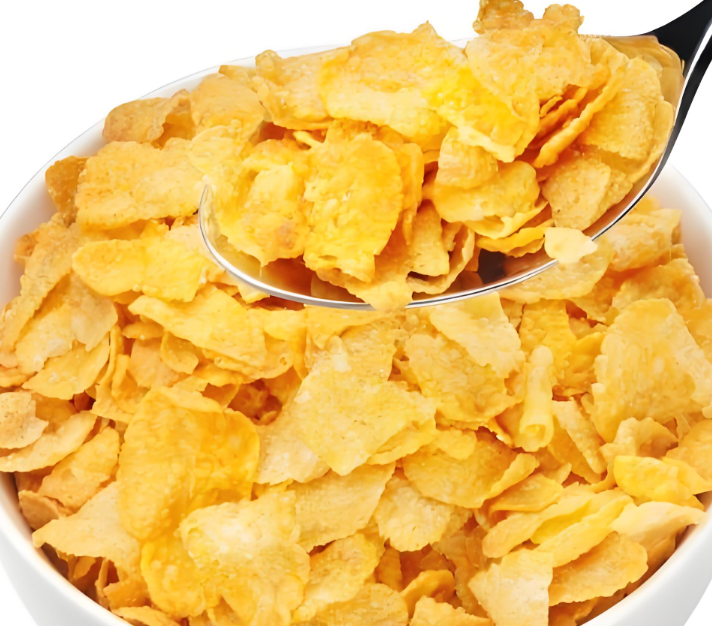
The humble corn flake, a staple on breakfast tables worldwide, is a marvel of food processing technology. What begins as simple corn grits or flour is transformed through a series of precise mechanical and thermal operations into crispy, golden flakes. corn flake making machine While the classic corn flake was originally made using a batch cooking process, modern manufacturing increasingly relies on the efficiency and versatility of twin-screw extrusion technology . This article explores the step-by-step processing technology behind this beloved breakfast cereal.
A Tale of Two Processes: Traditional vs. Extrusion
Before diving into the modern method, it is helpful to understand that there are two primary ways to make corn flakes. The traditional process begins with corn dry-milled into larger particles called “flaking grits.” These grits are cooked in batch vessels with steam, dried, tempered, and then passed through heavy flaking rollers . The extrusion process, which is the focus of this article, uses finer materials like corn flour and a continuous cooking extruder to form the base “pellets” that are then flaked .
flowchart TD
    A[Raw Material Preparation<br>Corn Flour, Sugar, Salt, Malt] --> B[Mixing & Hydration]
    B --> C[Extrusion Cooking<br>Twin-Screw Extruder]
    C --> D[Pellet Forming & Cutting]
    D --> E[Pellet Drying & Tempering]
    E --> F[Flaking<br>Flaking Rollers]
    F --> G[Toasting & Drying]
    G --> H[Coating & Cooling]
    H --> I[Packaging]
Step 1: Raw Material Preparation and Mixing
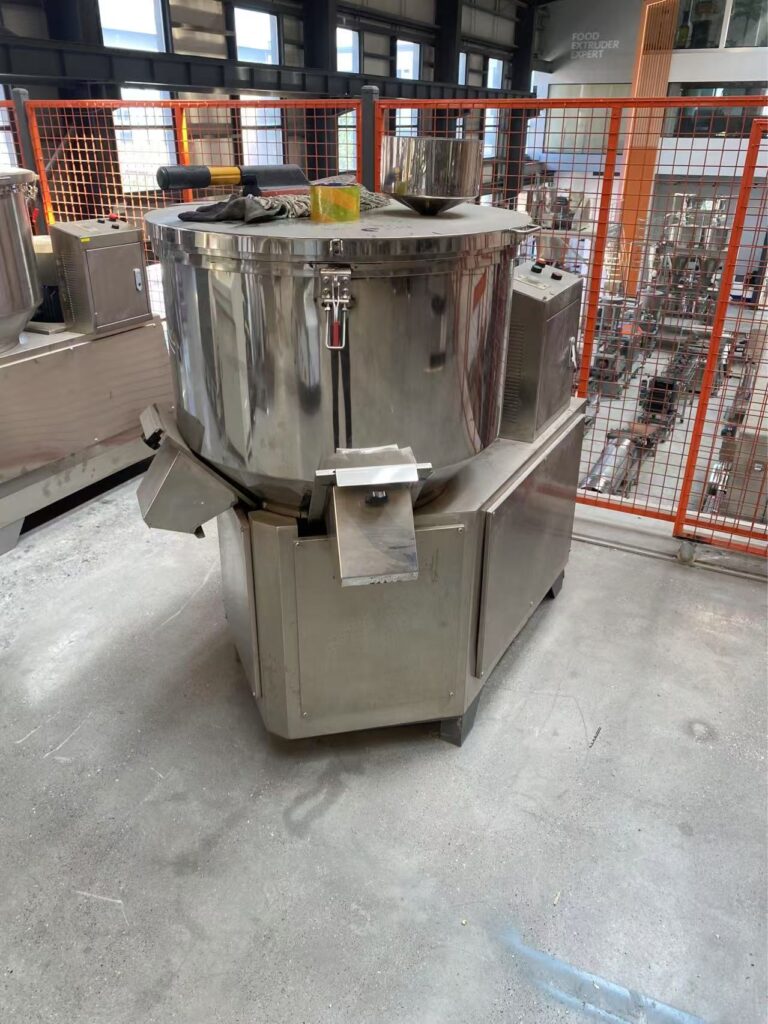
The foundation of a good corn flake is the quality of its ingredients. The primary raw material is corn flour, often mixed with other grains like wheat, rice, or oats to create multigrain varieties . Dry ingredients such as sugar, salt, malt extract, and various vitamins and minerals are also incorporated at this stage . These components are fed into a flour mixer, corn flake making machine where they are thoroughly blended with a precise amount of water to create a uniform, hydrated mixture ready for extrusion .
Step 2: Extrusion Cooking
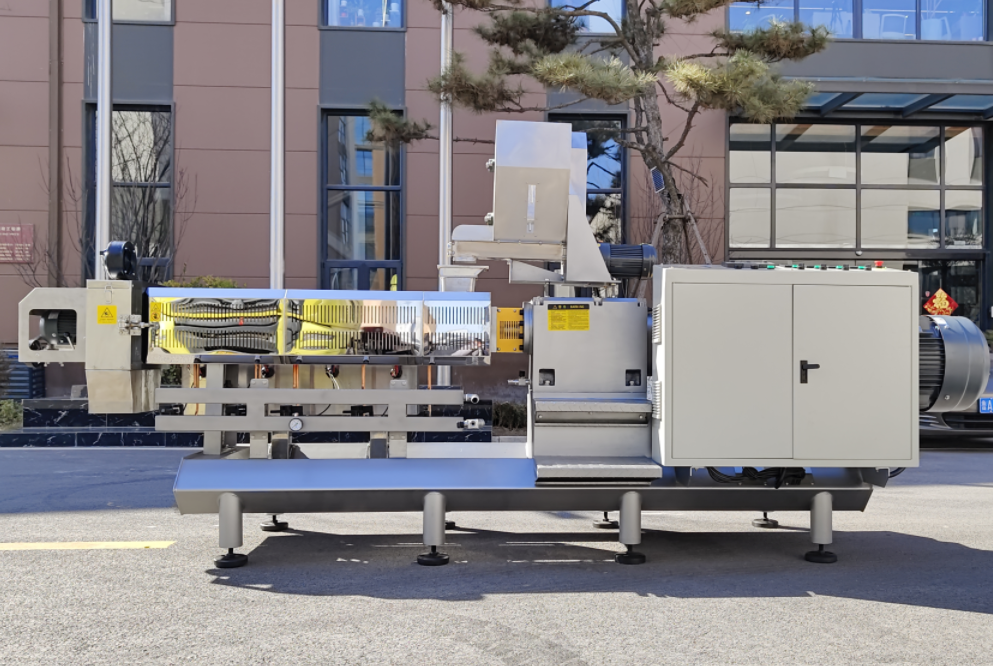
This is the heart of the modern process. The prepared mixture is fed into the barrel of a twin-screw extruder . Inside this barrel, a series of rotating screws convey, compress, and shear the material . The barrel is divided into zones that are precisely heated. Through a combination of this external heat and the intense friction (mechanical shear) generated by the screws, the temperature of the material rises rapidly . corn flake making machine This cooks the starch, causing it to gelatinize—a process where the starch granules absorb water and swell, creating a cooked, plastic-like dough. At the end of the barrel, the dough is forced through a die with specific openings .
Step 3: Pellet Forming and Cutting
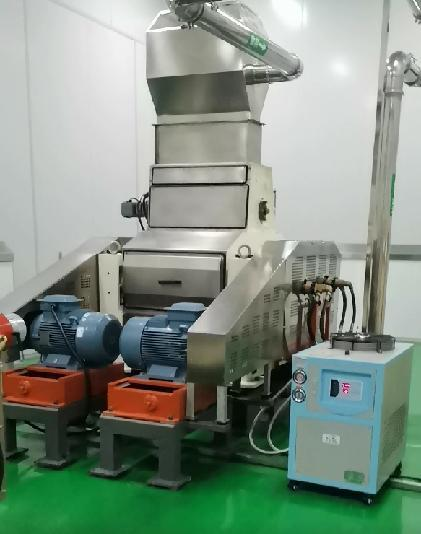
As the cooked dough emerges from the extruder die, it is in the form of continuous ropes or ribbons. A rotating blade cuts these ribbons into small, uniform pellets, each one destined to become a single corn flake . In some advanced systems, the processes of cooking, cooling, and pellet forming are combined in a single, extended-barrel extruder, which creates a more compact production line .
Step 4: Pellet Drying and Tempering
The freshly cut pellets are too soft and moist to be flaked effectively. They are therefore conveyed to a dryer to reduce their moisture content to a specific level . corn flake making machine After this initial drying, the pellets are often allowed to rest or “temper.” This conditioning step allows the moisture within each pellet to equalize, making them pliable and ensuring they will not shatter during the next critical stage .
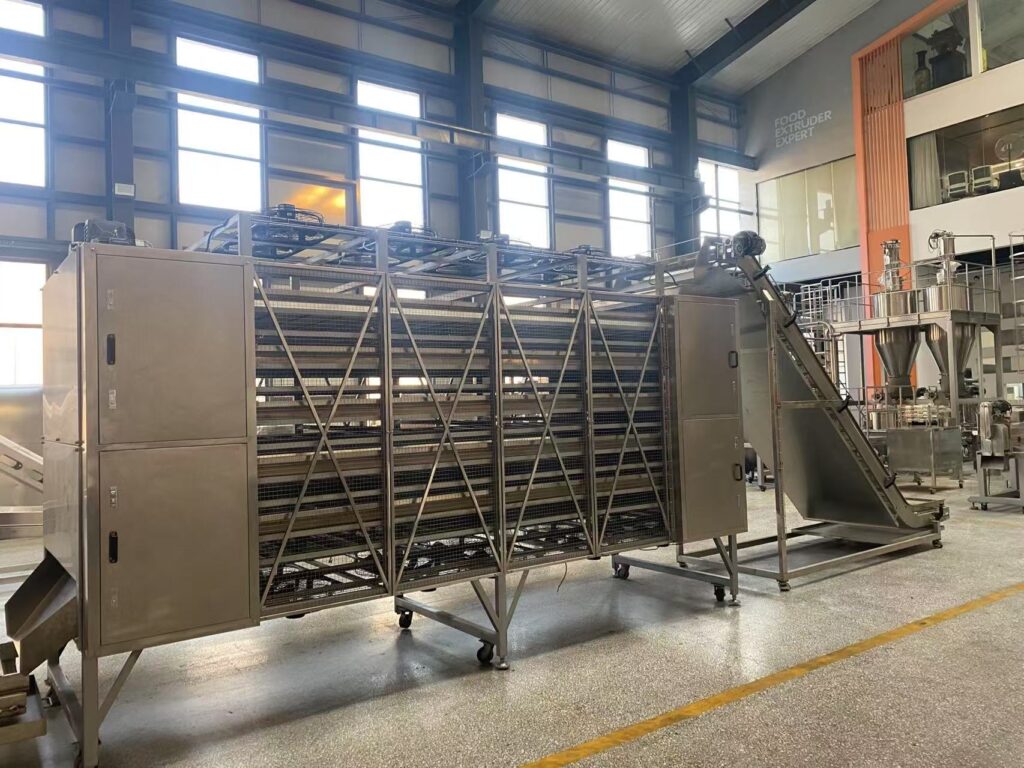
Step 5: Flaking
The tempered pellets are now ready to be transformed into flakes. They are fed between two large, heavy counter-rotating rollers known as flaking rolls . The immense pressure flattens each pellet into a thin, delicate flake. The gap between the rollers precisely controls the final thickness of the corn flake.
Step 6: Toasting and Drying
The flattened flakes are still pale and have a high moisture content. They are transferred into a large oven or toaster, often a fluidized bed system where hot air suspends and dries them rapidly . corn flake making machine This final, critical step has several effects:
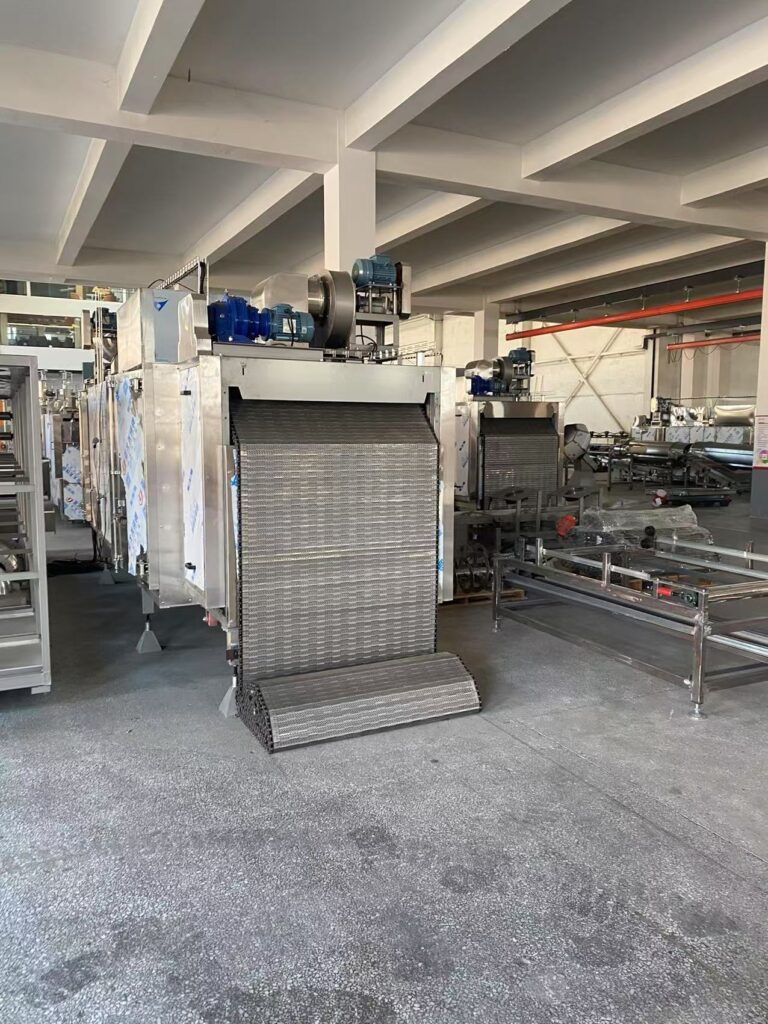
- It removes the remaining moisture, creating the characteristic crisp texture.
- It induces browning (Maillard reaction) and develops the deep, roasted, and slightly sweet flavor of the corn flake .
- It sets the final curl and shape of the flake.
Step 7: Coating and Cooling
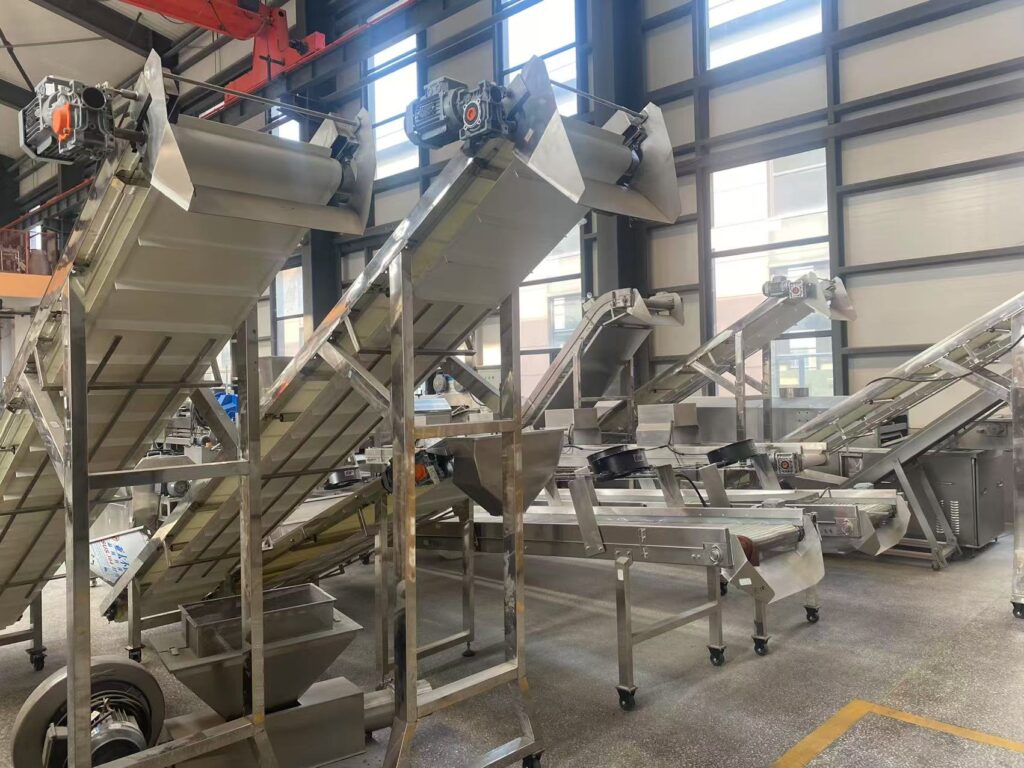
Once toasted, the hot flakes may be conveyed to a coating drum. Here, a fine mist of a vitamin and mineral solution is often sprayed onto the flakes to restore nutrients lost during processing or to fortify the cereal . corn flake making machine For sweetened varieties, a sugar or syrup slurry may also be applied at this stage . Finally, the flakes are cooled to room temperature in a cooler, which ensures they remain crisp and prevents moisture from condensing inside the package .
Step 8: Packaging
The finished, cooled corn flakes are gently conveyed to the packaging line, where they are weighed and filled into bags or boxes, ready to be shipped to stores and ultimately enjoyed with a splash of cold milk .
In conclusion, the journey of a corn flake from grain to bowl is a fascinating example of precise food engineering. While the traditional batch process still exists, the twin-screw extrusion method offers unparalleled control, efficiency, and flexibility, allowing manufacturers to create a consistent, high-quality product while also innovating with new shapes, grains, and flavors to meet the evolving demands of consumers .
 Russian
  English
  Spanish
  Italian
  Arabic
  Portuguese
  German
  French
  Japanese
  Moroccan Arabic
  Persian
  Belarusian