
When people hear “dog food formula,” they often imagine a kitchen-style recipe: chicken, rice, carrots, then bake it. In real pet-food manufacturing, a formula is closer to an engineering specification—a set of targets (nutrition, texture, cost, shelf life) translated into ingredient percentages that will run reliably on equipment like mixers, extruders, dryers, and coaters.
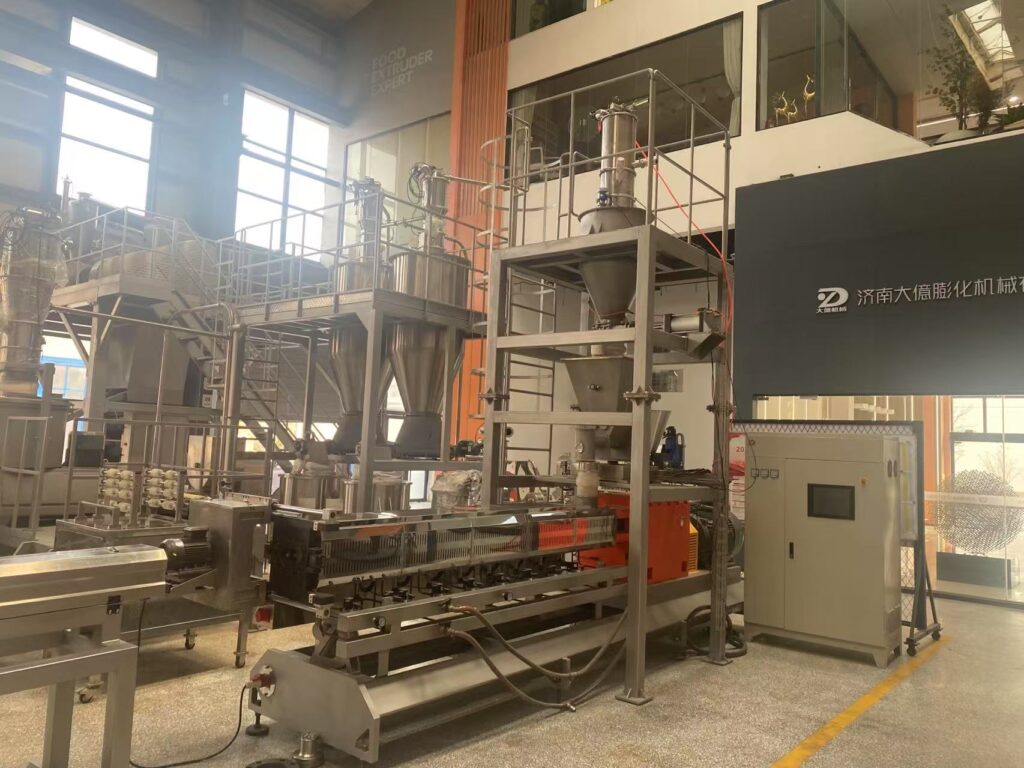
This article explains what a typical dog food processing formula includes, dry dog food making machine how manufacturers build it, and why the final recipe looks the way it does.
1) The real purpose of a manufacturing formula
A commercial formula must do more than “sound healthy.” It must:
- meet complete-and-balanced nutrition targets (life stage, size, special needs)
- be safe (microbial control, stable shelf life)
- be manufacturable (flows, mixes, extrudes, dries, and coats consistently)
- be palatable (dogs will actually eat it)
- hit a cost and supply-chain reality (ingredients must be available year-round)
So the “processing formula” is built around both nutrition and process behavior.
2) The main building blocks of a kibble formula
Most dry dog foods contain five functional ingredient groups:
A) Protein base
Used to reach amino acid targets and support muscle maintenance.
Common options:
- animal meals (chicken meal, fish meal, lamb meal)
- fresh meats (often partially for marketing and some functional value)
- plant proteins (pea protein, soy, gluten meals)
Processing note: high fresh-meat inclusion can make extrusion trickier (more moisture/fat variability), so formulas often balance fresh meats with meals.
B) Starch/structure system
Starch is not just a filler—during extrusion it helps create:
- expansion (“puff”)
- binding and kibble integrity
- consistent texture
Common starch sources:
- corn, wheat, rice, barley
- potatoes, tapioca, sorghum
C) Fat and energy system
Fats increase calories, improve coat quality, and boost flavor.
Sources:
- poultry fat, beef tallow
- fish oil (often added carefully due to oxidation risk)
- vegetable oils
Processing note: too much fat in the main mix can reduce expansion and cause crumbly kibble. Many plants add a large share of fat after drying via coating.
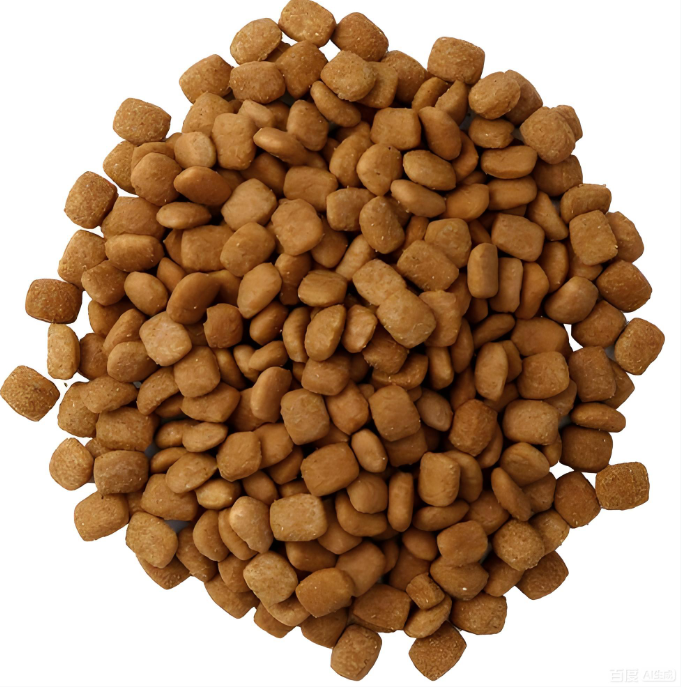
D) Fiber and functional ingredients
Fiber supports stool quality and gut function and can adjust energy density.
Примеры:
- beet pulp, cellulose, bran
- prebiotics (e.g., inulin, MOS/FOS)
Fiber also affects extrusion behavior and kibble hardness.
E) Micro-ingredient premix
This is where “complete and balanced” is often achieved precisely:
- vitamins and minerals
- trace elements
- amino acids (if needed)
- salt, choline chloride
- antioxidants/preservatives
Premixes are small in percentage but high in importance.
3) A typical dry dog food formula: how it’s expressed
Manufacturers usually specify formulas as percent inclusion rates (as-fed), dry dog food making machine plus processing targets like moisture and density.
A simplified example structure (not a recommendation, just a common pattern):
- Protein base (meals + optional fresh meat): 20–40%
- Starch/cereal/flour fraction: 30–60%
- Fiber sources: 2–10%
- Added fat/oil: 3–15% (often split between in-mix and post-coat)
- Vitamin/mineral premix + additives: <1–5%
- Palatant/coating system: 1–5% (post-extrusion for many kibbles)
Exact numbers vary widely by price tier, processing method, and nutritional goals.
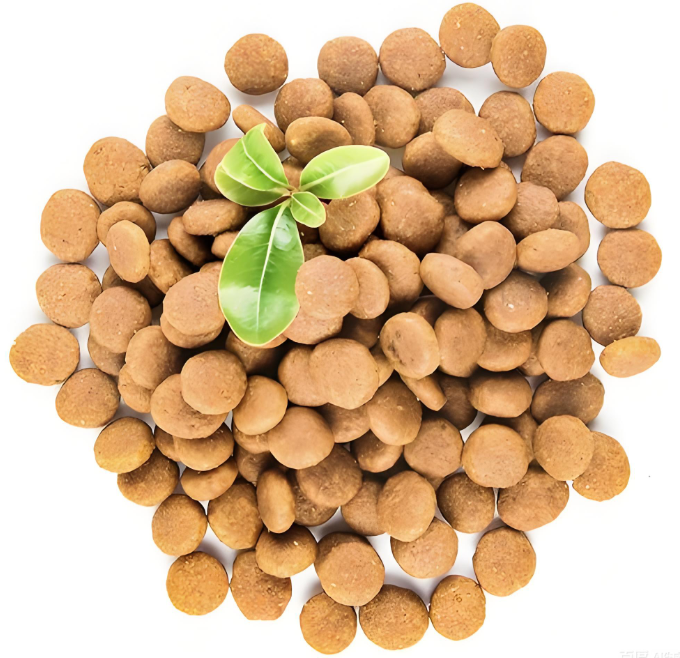
4) How processing requirements shape the recipe
Extrusion needs “the right dough”
To run smoothly, the mix must have:
- predictable moisture absorption
- the right starch gelatinization potential
- stable flow into the extruder
- controlled fat level (too high can reduce expansion)
That’s why some formulas include ingredient choices that look “unromantic” but are highly functional.
Drying and shelf stability impose limits
After extrusion, kibble must be dried to a stable moisture level. Recipes that are too sticky, too fatty, or too hygroscopic can:
- dry unevenly
- crack or crumble
- spoil faster
- require more antioxidant protection
Coating is often where palatability is built
Even if the core kibble is nutritionally correct, it may not smell appetizing after high-heat processing. Post-coating adds:
- fats for aroma and calories
- palatants for taste
- sometimes heat-sensitive nutrients
5) Wet food formulas are different
Canned foods often have:
- higher meat inclusion and moisture
- gelling systems (e.g., gums) depending on texture
- retort cooking constraints (nutrient retention and texture after sterilization)
So “processing formula” depends strongly on whether the product is kibble, baked, air-dried, semi-moist, or canned.
6) What “good formulation” looks like in practice
A well-built processing formula has:
- clear nutritional targets (protein, fat, fiber, calories, minerals)
- ingredient specs and substitution rules (what happens if a supplier changes)
- processing parameters (mix time, conditioning moisture, extrusion settings, dryer profile, coating rate)
- QA checkpoints (moisture, density, aw, microbiology, oxidation indicators)
In other words, it’s not just a list of ingredients—it’s a controlled system.
Заключение
A dog food processing formula is designed to satisfy nutrition + manufacturability + shelf stability + palatability at the same time. That’s why commercial recipes often rely on functional starches, carefully managed fat addition, and precise premix systems—especially for extruded kibble.
If you tell me which type you want to focus on (extruded kibble, baked biscuits, air-dried, or canned), I can rewrite this as a more concrete “factory recipe workflow” and include an example spec sheet layout (ingredient table + process targets + QC checks).
 Russian
  English
  Spanish
  Italian
  Arabic
  Portuguese
  German
  French
  Japanese
  Moroccan Arabic
  Persian
  Belarusian