
Fortified Rice: A Technical Examination of Process and Purpose
Fortified rice is a public health intervention designed to combat “hidden hunger” – micronutrient deficiencies that persist even when caloric needs are met. fortified rice making machine While often framed as a simple nutritional boost, its industrial manufacturing process involves sophisticated technology with specific benefits and limitations. This article provides a technical, non-sensationalized examination of how rice is fortified.
1. The Core Challenge and Solution
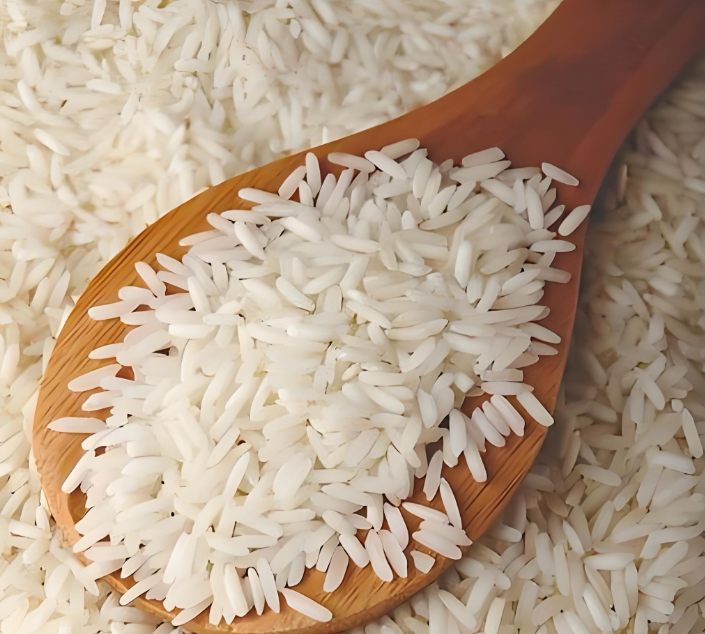
Unlike wheat flour, which can be uniformly blended with nutrient powders, rice presents a unique problem: it is washed and often cooked in excess water by consumers, fortified rice making machine which would leach out any surface-applied nutrients. The solution is the creation of fortified rice kernels (FRKs), also known as “hot extrusion” or “artificial grains.”
2. The Primary Manufacturing Process: Hot Extrusion
This is the most common and scalable method used globally.
Step 1: Creating the Nutrient Premix (“Dough”)
- A powder blend is created from rice flour (often from broken rice kernels), a precise combination of micronutrients (e.g., iron, folic acid, vitamin B12, vitamin A, zinc), and a binding agent.
- The choice of iron compound is critical. Electrolytic iron is widely used but has lower bioavailability. More advanced compounds like ferric pyrophosphate или sodium iron EDTA are better absorbed but more expensive. Vitamin A and other heat-sensitive nutrients require protective encapsulation.
Step 2: Extrusion and Shaping
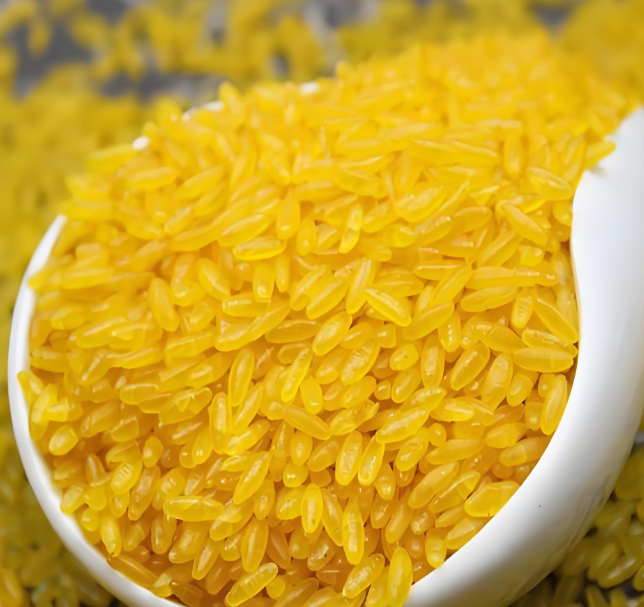
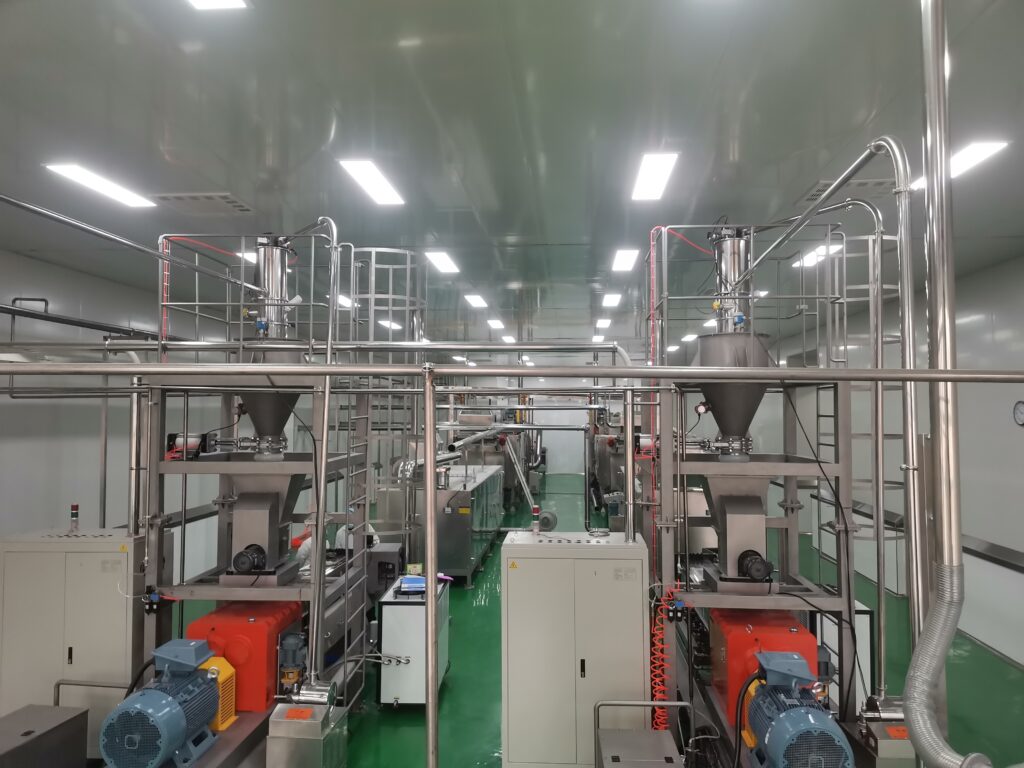
- The premix is combined with water to form a dough, which is then cooked and forced through an industrial extruder – machinery similar to that used for pasta or pet food.
- Under high heat and pressure, the dough is gelatinized and forced through a die that shapes it into small, dense pellets or grains resembling natural rice kernels.
Step 3: Blending with Natural Rice
- The final, critical step is the blending of these dense, nutrient-packed FRKs with regular, milled white rice.
- The blending ratio is typically 1:100 (1 kg of FRKs to 99 kg of regular rice) или 1:200. This requires highly precise, computer-controlled blending equipment to ensure uniform distribution. Improper blending can lead to clusters of over-fortified or non-fortified rice.
3. Alternative & Emerging Technologies
- Coating Technology: This method involves spraying a vitamin-mineral mix, along with an edible coating (like a food-grade wax or gum), fortified rice making machine onto the surface of regular rice grains. While cheaper, this method is less resistant to washing and rinsing unless the coating is specifically engineered to be water-insoluble (which raises other formulation challenges).
- Dusting/Powder Mixing: A simple method where a nutrient powder is blended with rice. It is only suitable for rice that is not rinsed before cooking and is cooked using the absorption method (where all water is absorbed, as in a rice cooker). This method is highly susceptible to nutrient loss through washing.
4. Key Technical & Nutritional Considerations
- Nutrient Stability: Heat-stable nutrients (like B vitamins) fare well in extrusion. Iron and Vitamin A are more challenging. Iron can catalyze oxidation, leading to off-colors or tastes. Vitamin A degrades with heat, light, and air. Effective fortification requires stabilized or encapsulated forms of these nutrients.
- Sensory Preservation: The FRKs must be nearly indistinguishable from natural rice in color, taste, texture, and cooking behavior. Any noticeable difference can lead to consumer rejection – a phenomenon known as “sorting,” where people pick out the unfamiliar grains.
- The “Empty Vehicle” Problem: Fortification typically targets rice that has already been milled and polished – a process that removes the naturally nutritious bran and germ layer, leaving primarily starch. Thus, the process first strips away nutrients, then adds back a specific set in synthetic form. This is a pragmatic public health approach but highlights a nutritional paradox.
5. The Broader Context: Merits and Limitations
Merits:
- A highly effective, population-scale tool for reducing deficiencies of iron, folic acid, and other key nutrients where rice is a staple.
- Cost-effective for governments and aid programs.
- Requires no change in consumer cooking or eating habits when well-executed.
Limitations & Critiques (Presented Factually):
- Bioavailability: Not all fortified iron forms are equally absorbed by the body, especially in plant-based diets with inhibitors like phytates.
- Narrow Scope: Addresses only the specific micronutrients added, not the broader spectrum of phytonutrients and fiber lost in milling.
- Industrial Dependency: Creates a reliance on centralized processing and blending infrastructure, which can be a point of failure in supply chains.
- Alternative Paradigm: Critics argue that promoting whole grain (brown) rice or diverse diets represents a more holistic, though often less scalable, nutritional solution.
Заключение
The processing of fortified rice is not a simple enrichment but a deliberate, industrial-scale food engineering operation. Its goal is to make essential micronutrients invisible and unavoidable in the daily diet of millions. fortified rice making machine While it stands as a significant achievement in food technology and public health, understanding its technical complexities—from extrusion and encapsulation to precise blending—allows for a more informed assessment of its role. It is a powerful technological fix within a specific nutritional and economic context, rather than a wholesale replacement for a naturally diverse and minimally processed diet.
 Russian
  English
  Spanish
  Italian
  Arabic
  Portuguese
  German
  French
  Japanese
  Moroccan Arabic
  Persian
  Belarusian