
The modern pet food industry transforms a diverse array of raw ingredients into safe, nutritious, and palatable products tailored to the needs of companion animals. pet food making machine The manufacturing process is a sophisticated blend of food science, engineering, and stringent quality control, ensuring every kibble, pouch, or can meets precise nutritional standards. This article outlines the core processing methods for the three primary forms of commercial pet food: dry, wet, and semi-moist.
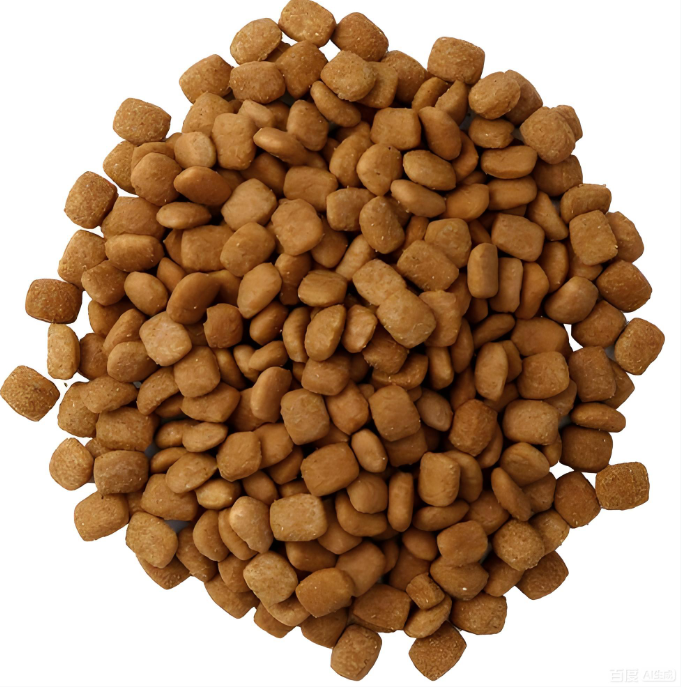
1. Dry Food (Kibble) Production via Extrusion
Extrusion is the most common method for producing dry pet food, capable of creating a vast range of shapes, sizes, and densities.
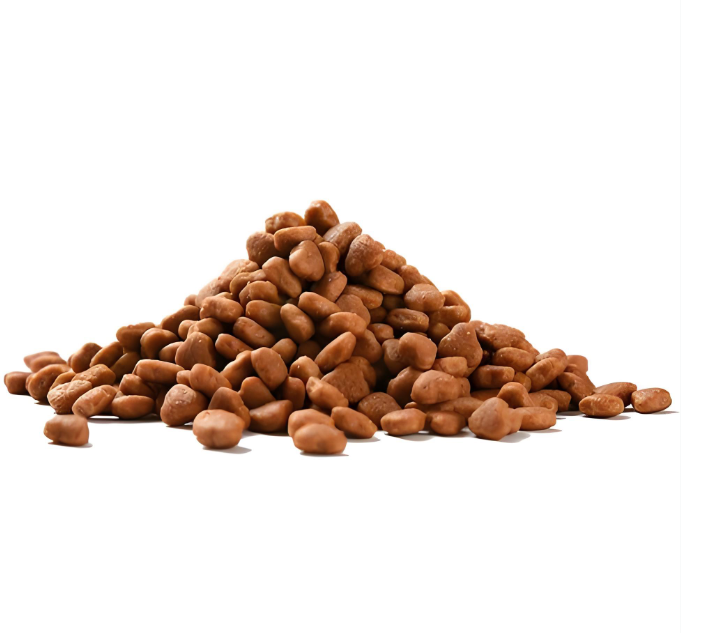
- Ingredient Reception and Grinding: Raw materials—including animal meals, whole grains, vitamins, and minerals—are first ground into a fine powder or meal. This ensures a uniform mixture and facilitates the cooking process.
- Mixing and Preconditioning: The ground ingredients are blended in precise proportions according to a “recipe” or formula. Water, steam, and sometimes liquid fats are added in a preconditioner to create a consistent, dough-like mass with a moisture content of approximately 25-30%.
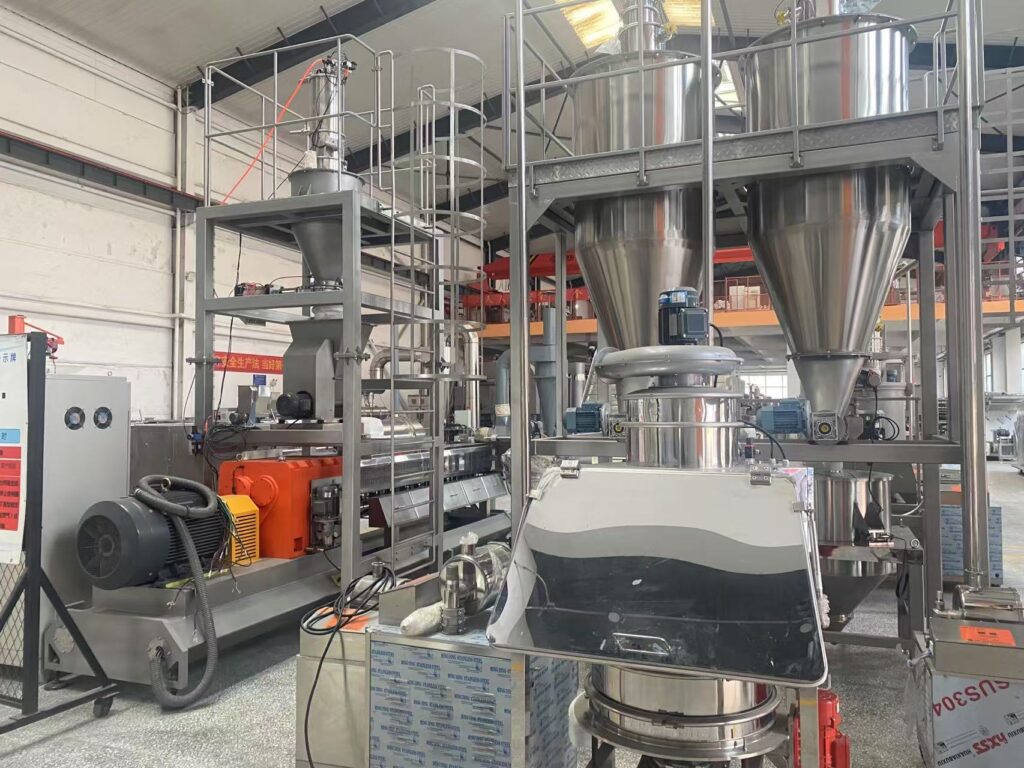
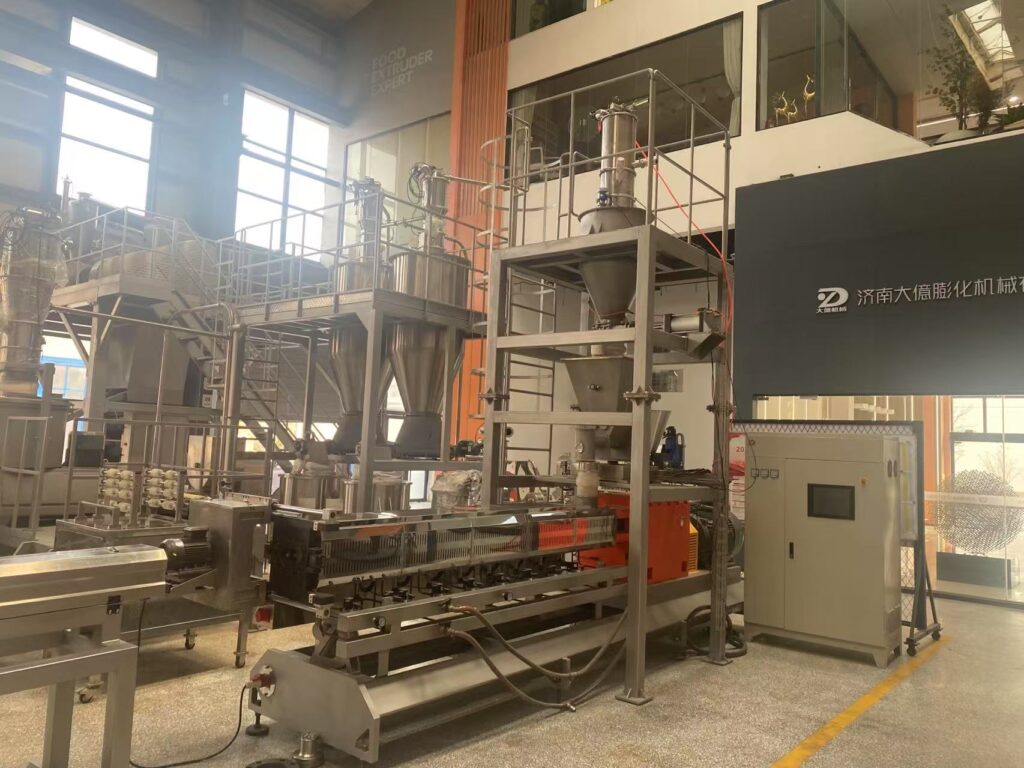
- Экструзия: The preconditioned dough is fed into an extruder—a large, screw-driven machine inside a barrel. As the mixture is forced through the barrel under high pressure and temperature (90-150°C), it becomes thoroughly cooked. The hot, malleable dough is then pushed through a die at the end of the barrel, which cuts it into the specific kibble shape.
- Сушка и охлаждение: The soft, expanded kibbles are conveyed to a multi-stage dryer, where hot air reduces the moisture content to about 8-10% for shelf stability. A subsequent cooling stage brings the kibble to ambient temperature.
- Coating (Enrobing): To enhance palatability and add supplemental fats or heat-sensitive nutrients, the cooled kibbles are often coated in a rotating drum with a fine mist of digestible fats, oils, or flavor palatants. pet food making machine This step is also known as enrobing or top dressing.
- Упаковка: The finished kibble is weighed and packaged in bags with barrier properties to protect against moisture and oxygen, preserving freshness and crunch.
2. Wet Food Production via Retorting
Wet food, typically found in cans, pouches, or trays, undergoes a thermal sterilization process to achieve commercial sterility.
- Приготовление ингредиентов: Fresh or frozen meats, poultry, or fish are ground or chopped. Broths, gravies, vitamins, minerals, and gelling agents like starches are prepared separately.
- Mixing and Filling: The solid ingredients and liquid components are combined (often with minimal mixing to maintain a chunky texture) and precisely filled into containers.
- Sealing: The cans, pouches, or trays are hermetically sealed to create a vacuum inside, which is crucial for preventing microbial growth during and after processing.
- Retorting (Thermal Sterilization): The sealed containers are placed in a large pressure cooker called a retort. They are subjected to high-temperature steam (usually 115-125°C) for a scientifically determined time. This process destroys all pathogenic microorganisms and spores, rendering the product shelf-stable at room temperature for years. pet food making machine The precise time-temperature combination is critical to ensure safety while minimizing nutrient degradation and preserving texture.
- Cooling and Labeling: After retorting, the containers are cooled with water. Once dry, they are labeled and packed into boxes.
3. Semi-Moist Food Production
Semi-moist products, with a moisture content of 15-30%, rely on humectants and pH control rather than severe heat for preservation.
- Dough Formation: Ingredients such as meat by-products, textured vegetable protein, grains, sugars, and humectants (e.g., glycerin, sorbitol) are mixed into a cohesive dough. Humectants bind water, making it unavailable for microbial growth.
- Shaping and Cooking: The dough is formed into shapes (like patties or chunks) through extrusion or molding. It may be cooked via steam or a brief baking process to set the structure and add flavor.
- Preservation: The primary preservation comes from the combination of low water activity (achieved through humectants and sugars) and acidification. The product’s pH is often adjusted to a level inhospitable to most bacteria.
- Упаковка: Due to their intermediate moisture content, these products require airtight, moisture-proof packaging, often with individual serving packets.
Critical Cross-Cutting Processes
Across all product types, two elements are paramount:
- Quality Control & Safety: This begins with raw material inspection and continues at every step. Critical Control Points (CCPs) under a Hazard Analysis and Critical Control Point (HACCP) system are monitored. This includes testing for pathogens, mycotoxins, and verifying nutritional composition through laboratory analysis.
- Nutritional Fortification: To ensure a “complete and balanced” diet, precise amounts of vitamins, minerals, and amino acids (like taurine for cats) are added, often in premixes, at stages where their stability is maximized.
Заключение
Pet food manufacturing is a highly engineered process designed to deliver consistent nutrition, safety, and taste. Whether through the high-heat, high-pressure extrusion for kibble, the sterile retorting for wet food, or the controlled moisture science for semi-moist products, each method prioritizes the health of pets and the confidence of their owners. Continuous innovation in processing technology and nutritional science drives the industry toward ever-higher standards of quality and variety.
 Russian
  English
  Spanish
  Italian
  Arabic
  Portuguese
  German
  French
  Japanese
  Moroccan Arabic
  Persian
  Belarusian