
Puffed snacks—from cheese balls to corn curls to rice crisps—are a marvel of food science and culinary art. Achieving that perfect, light, melt-in-your-mouth texture requires a delicate balance of ingredients, machinery, and precision. Whether you’re a home enthusiast or a commercial producer, mastering these six elements is the key to creating a truly superior puff.
1. The Foundation: Raw Material & Formulation
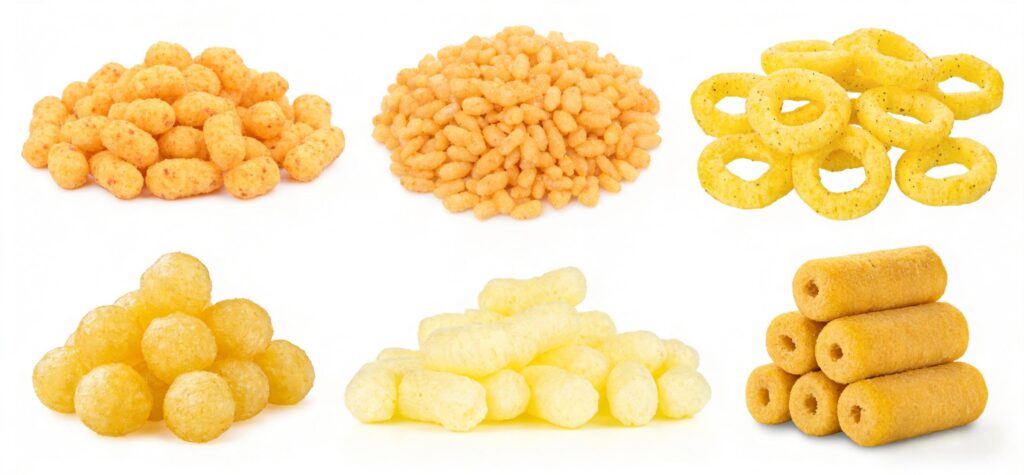
The journey to a perfect puff begins long before the extruder heats up. The choice of raw materials is paramount. Starches and proteins are the building blocks of the snack’s structure.
- Starch Source: Corn, rice, wheat, and potato are the most common bases. The type of starch dictates the expansion. For instance, cornmeal with a specific granulation will yield a classic crunchy curl, while rice flour produces a more delicate, airy crisp.
- Moisture Content: The initial moisture level of the dry mix is critical. Too much moisture, and the product will be dense and tough; too little, and it won’t gelatinize properly, leading to poor expansion and a gritty texture. Precise formulation ensures the starch is ready to undergo its transformation.
- Additives: Emulsifiers, oils, and colorants are often added at this stage. A small amount of sugar can aid in browning, while an emulsifier like lecithin can help bind fats and improve the final texture.
2. The Engine: Extrusion Technology
Extrusion is the heart of puffing. This process uses a combination of heat, pressure, and mechanical shear to cook and shape the raw material. The extruder screw configuration and barrel temperature profile are crucial.
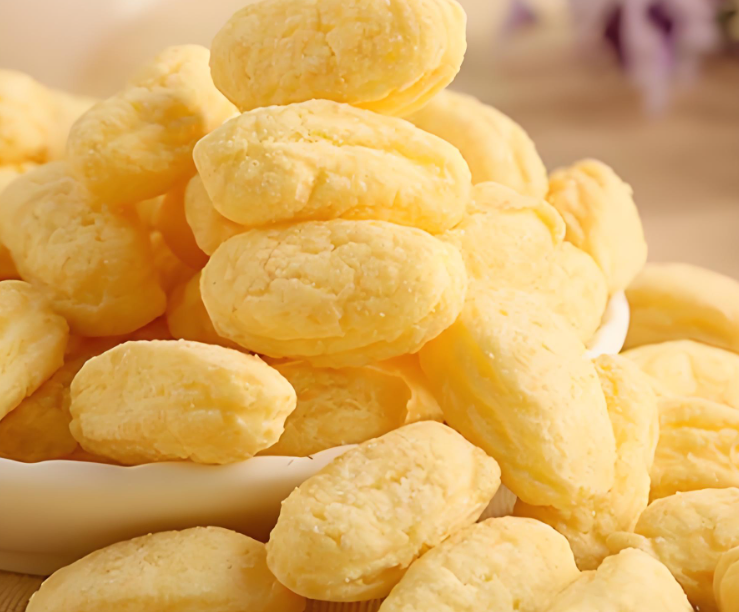
- Shear & Heat: As the screw turns, it generates friction (shear) that cooks the starch. This mechanical energy, combined with heated barrels, gelatinizes the starch, breaking down its crystalline structure into a molten, pliable dough.
- Pressure: The extruder is a high-pressure environment. The screw forces the dough toward a die, building immense pressure. The key is to maintain consistent pressure; fluctuations result in uneven expansion and density.
- Screw Design: Different screw profiles (e.g., single-screw vs. twin-screw) and configurations (mixing elements, reverse flights) determine the level of shear and mixing. Twin-screw extruders offer superior control for complex formulations.
3. The Catalyst: Water & Steam
Water is not merely an ingredient; it is a key processing tool. The management of water in the form of steam is what creates the signature porous structure of a puff.
Inside the extruder, water is a plasticizer, helping to create a homogeneous dough. However, the true magic happens at the die. As the hot, pressurized dough (which can reach 120-180°C or 250-350°F) is forced through the die and into the atmosphere, the superheated water within instantly flashes to steam. This sudden phase change causes the dough to expand dramatically. Controlling the “superheat”—the energy stored in the water—is the primary factor determining the final expansion ratio.
4. The Sculptor: The Die & Cutters
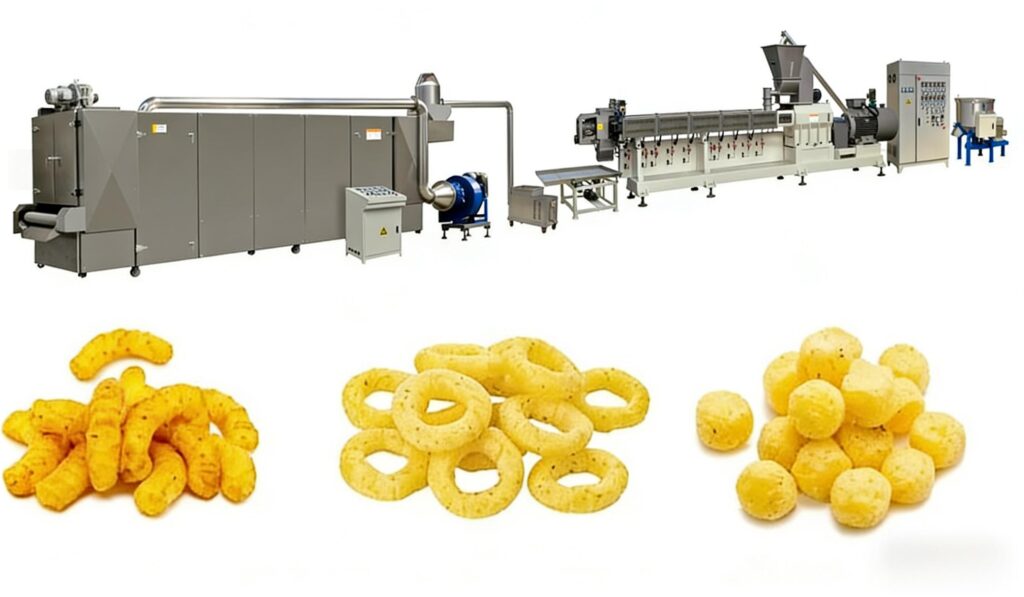
If the extruder is the engine, the die is the sculptor. The die plate at the end of the barrel gives the snack its final shape and influences its expansion pattern.
- Die Design: The shape, size, and number of holes in the die determine the product’s cross-section—be it a star, a tube, or a simple ring. A properly designed die ensures even flow and consistent expansion.
- Face Cutting: For many direct-expanded snacks, a rotating knife assembly cuts the product as it exits the die. The speed of the cutter must be perfectly synchronized with the extrusion rate. A slow cut will create long, heavy pieces; a fast cut will produce small, dense pellets. The goal is a clean, precise cut that doesn’t crush the expanding puff.
5. The Finisher: Drying & Toasting
Freshly extruded puffs are often still soft and have residual moisture. While they may appear done, they are not yet stable. The post-extrusion processes of drying and toasting are critical for texture and shelf life.
- Drying: A carefully controlled drying oven removes excess moisture evenly. If dried too quickly, the exterior will become hard while the interior remains moist, leading to a chewy, unpleasant texture and a risk of spoilage. Slow, convective drying ensures the puff becomes uniformly crispy.
- Toasting: Some products benefit from a toasting step after drying. This adds a layer of roasted, nutty flavor and further crisps the exterior, creating a more robust texture that can better withstand the application of coatings and oils.
6. The Appeal: Seasoning & Coating
Finally, the naked puff becomes a finished snack through the application of oil, flavor, and seasoning. This step defines the consumer’s sensory experience.
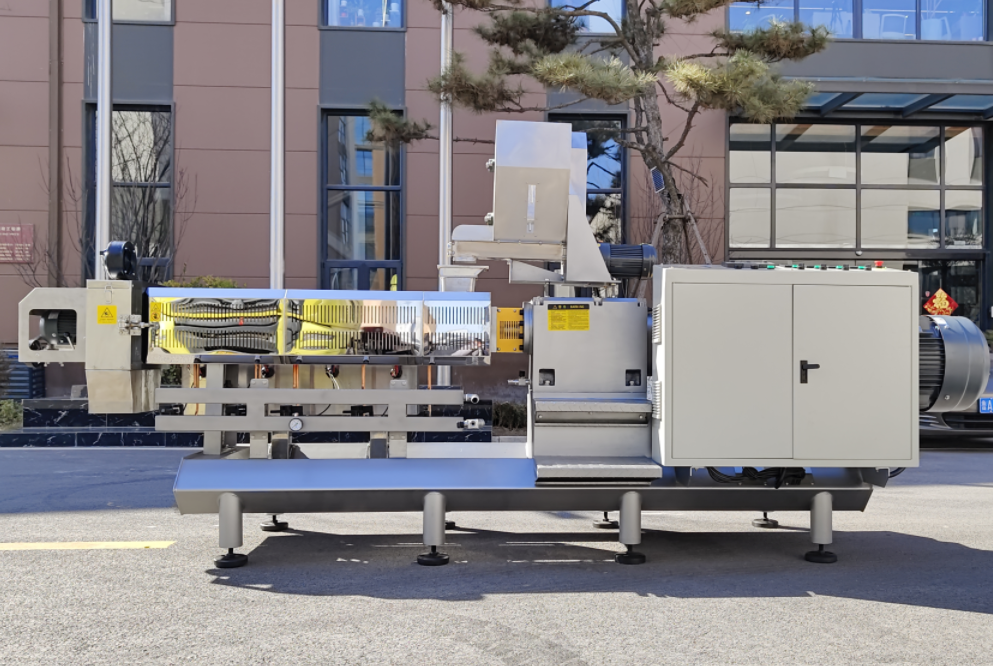
- Oil Application: A light spray or tumble of oil not only adds mouthfeel but also acts as an adhesive for powdered seasonings. The type of oil (e.g., high-oleic sunflower for stability) and the application rate must be precise to avoid a greasy product.
- Seasoning Adhesion: The goal is to achieve a uniform, flavorful coating. Using a tumbler or drum ensures that every piece is evenly coated. Particle size of the seasoning matters—fine powders adhere best to low-oil snacks, while larger particulates require a heavier oil coating.
- Flavor Balancing: A great puff is a symphony of taste, not a single note. The seasoning must complement the base notes of the grain, balancing salt, acid, sweetness, and savory (umami) elements to create a craveable profile.
Conclusion
Making a great puffed snack is a masterclass in precision engineering and culinary science. From the careful selection of grains to the final dusting of flavor powder, each of these six elements must work in harmony. A miscalculation in one area—be it the moisture content of the base, the temperature of the extruder, or the speed of the cutter—can cascade through the entire process. By mastering these fundamentals, you can transform simple starches into the light, crispy, and flavorful snacks that delight consumers around the world. If you are interested in the puffed snack food making machine , you can contact me , i will give you good advice and solutions .
1.Will you help us with the installation ?
Yes , We will send engineers to install and debug the equipment, and assist in training your staff.
2.Are you a factory or trading company?
We are a factory.
3.What certificate do you have?
We have ISO and CE certificate.
4.How long is the warranty period?
All of our machines have one year warranty.
5.What’s the main market of your company?
Our customers all over the world.
6.How much production capacity of your company one year?
This depends on your needs.
 Portuguese
  English
  Russian
  Spanish
  Italian
  Arabic
  German
  French
  Japanese
  Moroccan Arabic
  Persian
  Belarusian