
Starting a dog food manufacturing plant is a complex but potentially rewarding venture. The global pet food market continues to grow, with increasing consumer demand for high-quality, nutritious products. However, success requires navigating stringent regulations, making significant capital investments, and implementing robust quality control systems. This comprehensive guide walks you through every stage of the process.
Phase 1: Market Research & Business Planning
Understand the Market Landscape
The pet food industry has evolved dramatically. Today’s consumers view their pets as family members and demand the same quality and safety standards they expect from their own food . Key market trends include:
- Premiumization: Growing demand for natural, organic, and grain-free formulations
- Functional ingredients: Products targeting specific health concerns (joint health, digestion, skin and coat)
- Novel proteins: Venison, rabbit, and insect-based proteins for allergy-prone dogs
- Processing variety: Freeze-dried, gently cooked, fresh, and air-dried segments are growing alongside traditional kibble
Define Your Product Category
Your manufacturing approach depends entirely on what you plan to produce. The main categories are:
| Product Type | Description | Key Equipment |
|---|---|---|
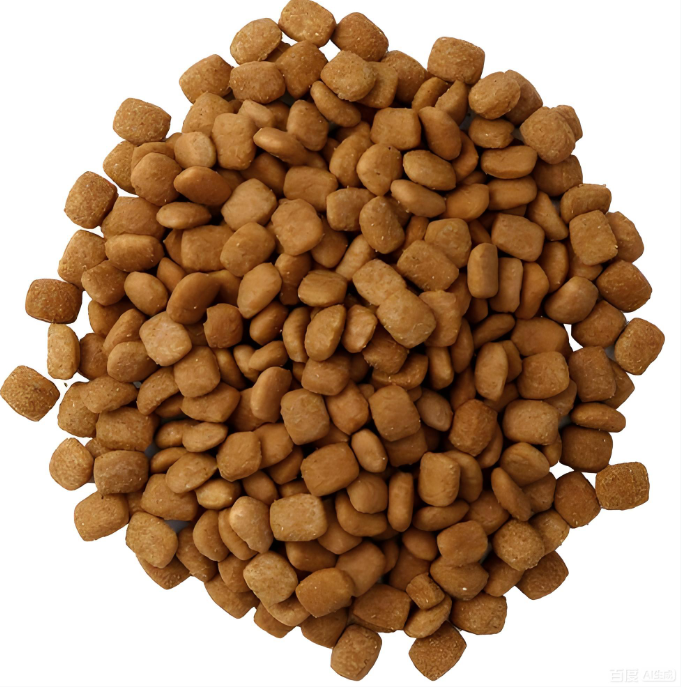
| Dry Kibble (Extruded) | Shelf-stable, high-temperature processed | Extruder, dryer, coating system |
| Canned/Wet Food | High moisture, retort-processed | Emulsifier, filler, retort sterilizer |
| Freeze-Dried / Dehydrated | Raw or cooked, low-temperature processed | Freeze dryer, dicer, packaging line |
| Treats & Chews | Baked, molded, or extruded snacks | Mixer, molder, oven or extruder |
| Frozen/Refrigerated | Fresh, minimally processed | Blender, former, freezer/cooler |
Develop Your Business Plan
A comprehensive business plan should address:
- Target market: Who are your customers (premium brands, private label, direct-to-consumer)?
- Production capacity: What scale will you start with? (e.g., 2.5 tons/hour minimum for pet food lines)
- Capital requirements: Initial investments range from $3,000 for a tabletop freeze dryer to over $1 million for commercial systems . A typical 2.5-5 ton/hour kibble line requires significant capital investment.
- Distribution strategy: Will you sell direct, through distributors, or as a contract manufacturer?
Phase 2: Regulatory Compliance & Licensing
Understand the Regulatory Framework
Pet food regulation varies by country, but generally involves both national and regional authorities.
United States:
- FDA (Food and Drug Administration): Oversees pet food safety at the federal level. Manufacturers must register facilities and ensure products are safe and properly labeled .
- AAFCO (Association of American Feed Control Officials): Provides model regulations and ingredient definitions that most states adopt. Ingredients listed in the AAFCO Official Publication are recognized for interstate commerce .
- State Authorities: Individual states license and inspect pet food facilities.
European Union:
- EC Regulations: Regulation (EC) 767/2009 governs the placing on the market of feed. Regulation (EC) 183/2005 establishes feed hygiene requirements .
- FEDIAF: The European Pet Food Industry Federation provides nutritional guidelines widely used as reference standards .
Other Regions:
- Check local agriculture or veterinary authorities for specific registration and licensing requirements.
Registration and Licensing Steps
- Register as a Feed Business: Notify the competent authority (e.g., BAES in Austria, FDA in the US) of your manufacturing activities .
- Obtain Animal By-Product Approval: If your products contain meat, offal, or other animal-derived materials, you typically need approval from veterinary authorities. Facilities using animal by-products cannot share space with human food preparation areas .
- Facility Inspection: Veterinary authorities will inspect your premises before granting operating licenses.
- Implement HACCP: You are legally required to implement Hazard Analysis and Critical Control Points (HACCP) principles. This involves:
- Identifying potential contamination risks (biological, chemical, physical)
- Establishing critical control points
- Defining monitoring procedures and corrective actions
Phase 3: Facility Design & Layout
Site Selection Requirements
Your facility must meet specific criteria:
- Independent site: Separate from residential or unrelated commercial activities
- No contamination sources: Surrounding area must not pose contamination risks
- Adequate size: Production area must match your planned capacity
Zoning and Flow Design
Modern pet food facilities emphasize linear flow and segregation:
RAW MATERIAL RECEIVING
        ↓
    RAW STORAGE
        ↓
   PRE-TREATMENT (if using fresh meat)
        ↓
   KILL STEP (cooking/extrusion)
        ↓
  POST-KILL HANDLING (high hygiene zone)
        ↓
     PACKAGING
        ↓
   FINISHED GOODS
Critical design principles:
- Physical separation: Raw materials (especially raw meat) must be strictly separated from post-kill and packaging areas
- Positive air pressure: Post-kill areas should maintain higher pressure to prevent contamination from lower-hygiene zones
- Temperature control: Refrigerated areas for raw materials; climate-controlled post-kill zones
- Drainage: Complete drainage systems with entry covers to prevent pest intrusion
Required Facility Areas
| Area | Purpose | Requirements |
|---|---|---|
| Raw Material Storage | Dry ingredients, refrigerated/frozen meats | Climate-controlled, pest-proof, segregated |
| Production Floor | Processing equipment | Washable surfaces, proper ventilation, safety guards |
| Packaging Area | Final product packing | High-hygiene zone, positive air pressure |
| Finished Goods Warehouse | Storage of packaged products | Clean, dry, pest-proof |
| Quality Lab | Testing raw materials and finished products | Separate from production, dedicated equipment |
| Employee Amenities | Changing rooms, lockers, restrooms | Separate from production areas |
Safety Features
Mandatory safety installations include :
- Explosion-proof electrical fixtures in high-dust areas
- Protective guards on all moving equipment
- Safety railings on platforms and elevated areas
- Fire suppression systems
- First aid stations and PPE for workers
Phase 4: Equipment Selection & Processing Lines
Core Equipment by Product Type
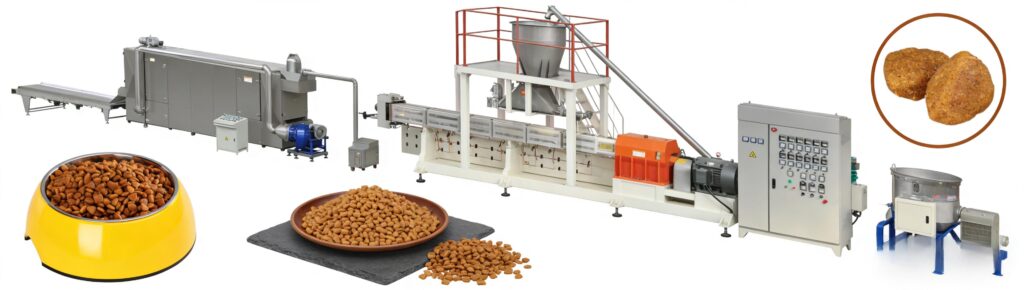
Dry Kibble (Extruded) Production Line
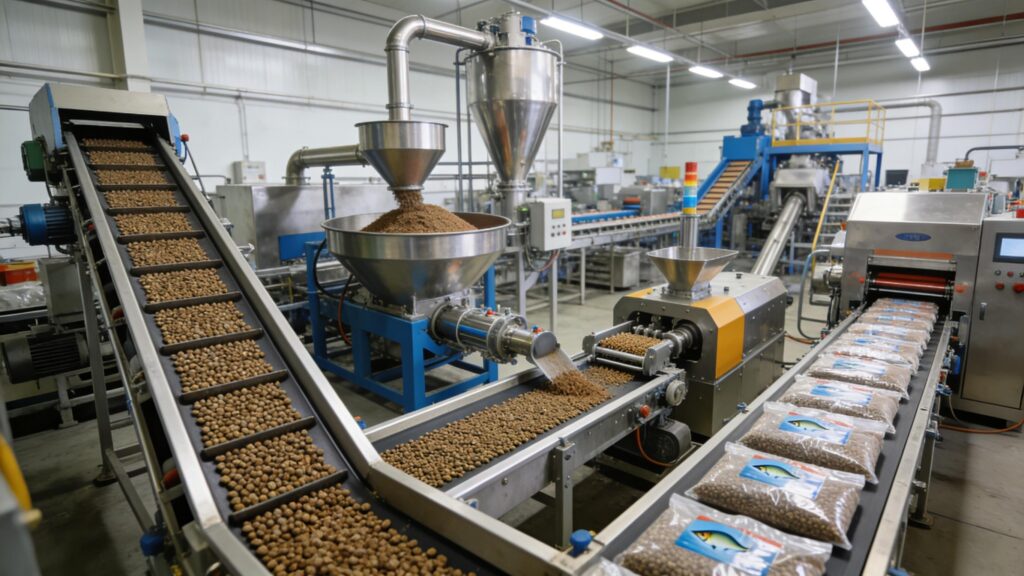
This is the most common and capital-intensive process:
- Raw Material Handling
- Receiving hoppers with dust collection
- Magnets and screens for foreign material removal
- Weighing and batching systems
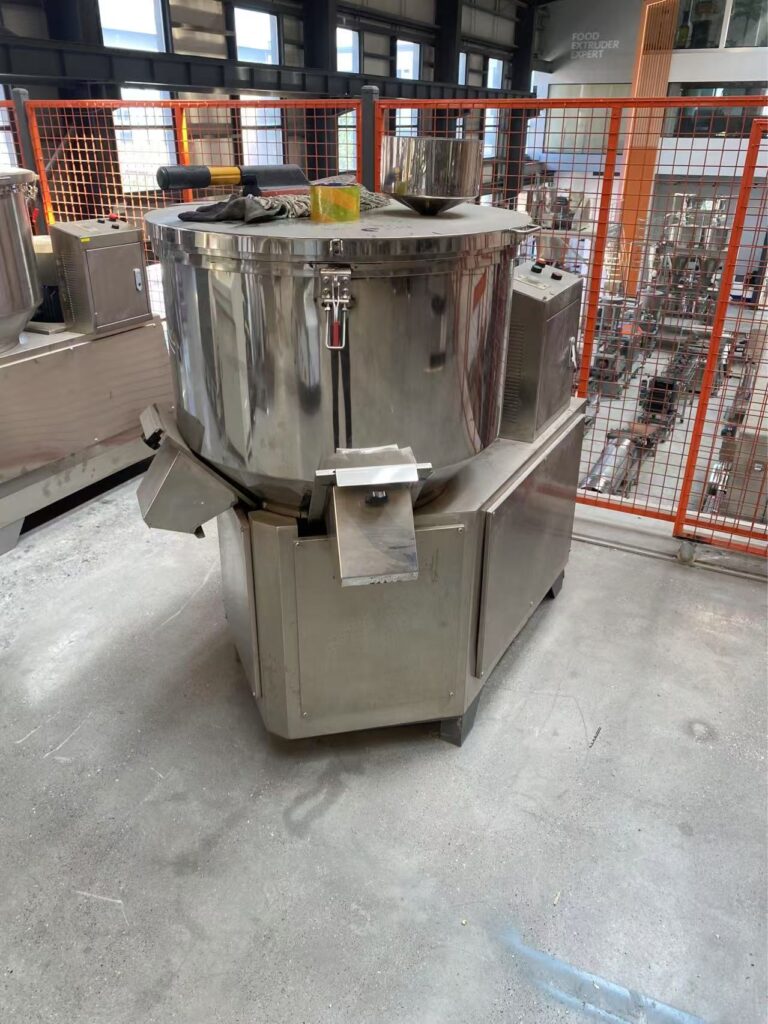
- Grinding & Mixing
- Hammer mills or roller mills
- Batch mixers (must achieve CV ≤7% uniformity)
- Micro-ingredient addition systems
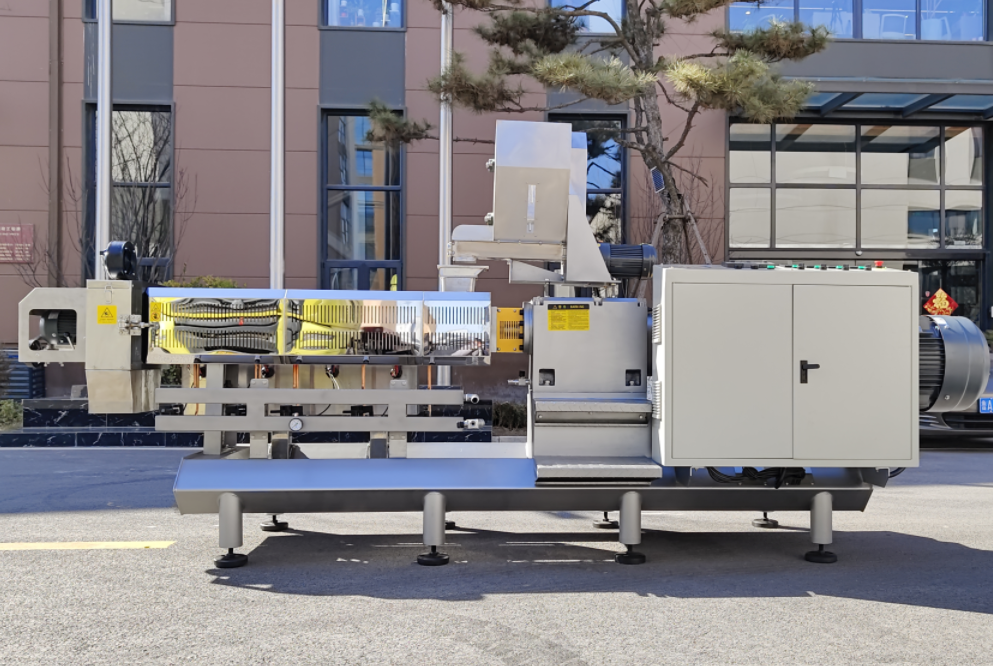
- Extrusion (The Heart of Kibble)
- Pre-conditioner for steam and moisture addition
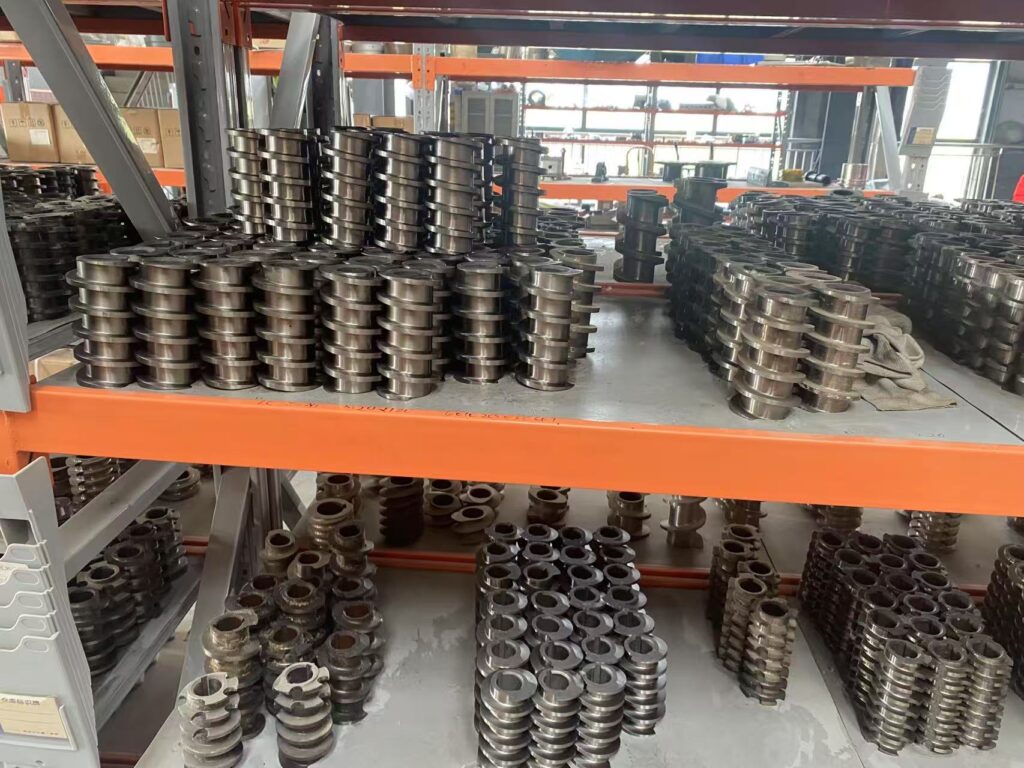
- Extruder (single or twin-screw) for cooking and shaping
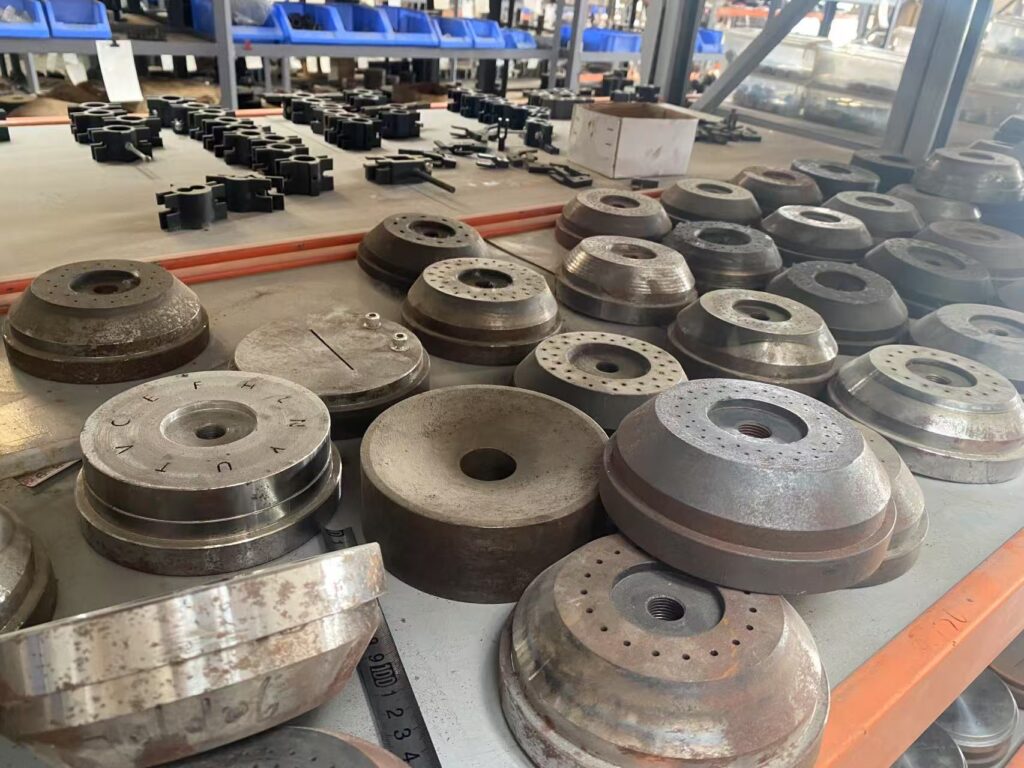
- Die plates for kibble shape formation
- Modern innovations: The ANDRITZ ExMax S1021 extruder features patented DensiFlex™ for precise density control and stainless steel hygienic design for easier cleaning
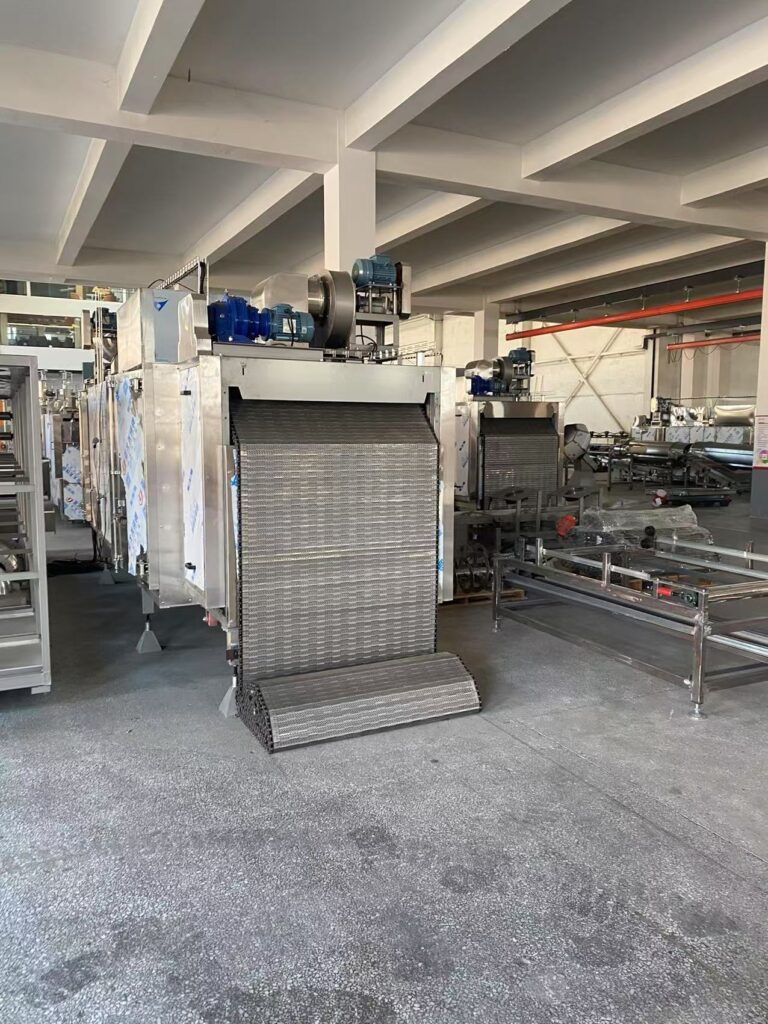
- Drying & Coating
- Dryers to reduce moisture to safe levels (typically 8-12%)
- Coating drums for fat and palatant application
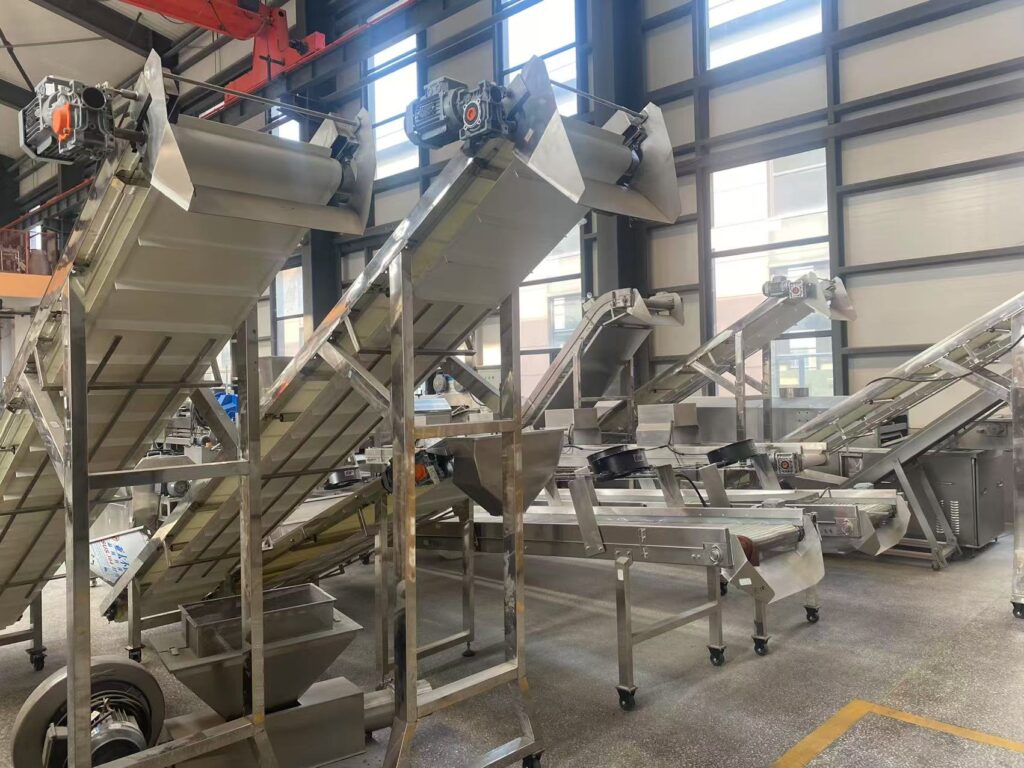
- Cooling conveyors
- Packaging
- Weighing and filling systems
- Vertical form fill seal (VFFS) machines
- Metal detectors and checkweighers
Freeze-Dried Production Line
Freeze-drying requires significant ancillary equipment beyond the dryer itself :
- Freeze dryers: Commercial units range from $75,000 to over $1 million
- Dicing/grinding equipment: To achieve uniform particle sizes
- Freezers: For pre-freezing raw materials
- Pan washing systems: Commercial operations may need to wash thousands of pans daily
- Packaging systems: Often with desiccant insertion and vacuum sealing
Key considerations: Commercial freeze dryers offer recipe programming that can reduce cycle times by 50% compared to tabletop units and are designed for 360+ days of continuous operation .
Canned/Wet Food Production Line
- Emulsifiers or grinders for texture control
- Filling machines with precise portion control
- Retort sterilizers for commercial sterility
- Labeling and case packing equipment
Computer Control & Automation
Modern facilities require:
- Computerized配料 systems: Dynamic accuracy ≤3%, static accuracy ≤1%
- SCADA systems: For monitoring and control across the line
- Data logging: For traceability and quality records
Investment Scale Examples
- Entry-level freeze-dry operation: $75,000 – $150,000 for a single commercial dryer plus ancillaries
- Small kibble line (2.5 tons/hour): $1-3 million depending on automation level
- Full-scale commercial facility: $5-15 million+ for complete turnkey operation
Phase 5: Quality Control & Laboratory Setup
Mandatory Laboratory Requirements
You must have an on-site, independent quality control laboratory separated from production areas .
Laboratory Equipment by Product Type
| Equipment | Dry Kibble | Wet Food | Freeze-Dried |
|---|---|---|---|
| Analytical balance (0.0001g) | ✓ | ✓ | ✓ |
| Drying oven | ✓ | ✓ | ✓ |
| Muffle furnace | ✓ | ✓ | ✓ |
| Kjeldahl apparatus (protein) | ✓ | ✓ | ✓ |
| Fat extraction apparatus | ✓ | ✓ | ✓ |
| Spectrophotometer | ✓ | ✓ | ✓ |
| HPLC (vitamins, additives) | As needed | As needed | As needed |
| Atomic absorption (minerals) | As needed | As needed | As needed |
| Microbiological lab | ✓ | ✓ | ✓ |
| Moisture analyzer | ✓ | ✓ | ✓ |
| Water activity meter | Optional | Optional | ✓ |
For products containing vitamins or minerals, you must have HPLC or atomic absorption capabilities to verify nutritional claims .
Laboratory Functional Areas
Your lab must include :
- Balance room: Vibration-free for analytical balances
- Wet chemistry area: Fume hoods for digestions and extractions
- Instrument room: For spectrophotometers, HPLC, etc.
- Microbiology suite: Preparation area, buffer room, sterile work area with laminar flow hood
- Sample retention area: For retaining samples for appropriate shelf life
Testing Requirements
You are legally required to conduct regular self-monitoring tests on both raw materials and finished products :
| Test Type | Frequency | Purpose |
|---|---|---|
| Nutritional analysis | Per batch/lot | Verify protein, fat, fiber, moisture meet label claims |
| Microbiological | Per batch (especially with animal ingredients) | Salmonella, Enterobacteriaceae, other pathogens |
| Heavy metals | Periodic | Lead, arsenic, cadmium, mercury |
| Mycotoxins | Periodic | Aflatoxins, vomitoxin, etc. |
| Pesticides | As needed (plant ingredients) | Ensure compliance with limits |
Staffing Requirements
Regulations typically require :
- Technical manager: Animal science, veterinary, or related degree
- Production manager: Engineering or food science background
- Quality manager: Food science or related degree
- At least 2 full-time qualified laboratory technicians
These positions cannot be held by the same person .
Phase 6: Ingredient Sourcing & Formulation
Ingredient Compliance
All ingredients must be:
- Listed in AAFCO Official Publication (US) or FEDIAF guidelines (EU)
- Safe and suitable for animal consumption
- Traceable to their source
Important: If using Category 3 animal by-products (offal, tissues from animals fit for human consumption), these must come from approved facilities and meet strict hygiene standards .
Nutritional Formulation
Products labeled as “complete and balanced” must meet the nutritional levels established by AAFCO (US) or FEDIAF (EU) . This requires:
- Formulation by a qualified nutritionist
- Laboratory verification of nutritional content
- Feeding trials (for some claims) or formulation substantiation
Formulation Considerations for Freeze-Dried Products
For freeze-dried products, water activity measurement (not just moisture content) is the standard for determining shelf stability. Properly freeze-dried products typically achieve 18-month shelf life without preservatives .
Phase 7: Food Safety Programs
HACCP Implementation
Your HACCP plan must identify critical control points where hazards can be prevented, eliminated, or reduced to safe levels:
Typical Critical Control Points in Dog Food:
| CCP | Hazard | Critical Limit | Monitoring |
|---|---|---|---|
| Extruder/Cooker | Pathogen survival | Minimum temperature/time | Continuous temperature recording |
| Retort | C. botulinum | Time/temperature/pressure | Recording thermometers |
| Metal detector | Metal fragments | No detectable metal | Continuous with reject mechanism |
| Ingredient receiving | Mycotoxins, pathogens | Supplier certification | COA review |
New Safety Considerations
In 2025, the FDA added a requirement that dog and cat food manufacturers consider H5N1 (avian influenza) in their food safety plans . This reflects the evolving nature of food safety risks.
Hygiene Programs
- Sanitation Standard Operating Procedures (SSOPs): Documented cleaning procedures
- Allergen control: If producing both allergen-containing and allergen-free products
- Pest control: Contract with licensed pest control provider
- Employee hygiene: Handwashing stations, hairnets, uniforms, footwear policies
Phase 8: Labeling & Packaging
Label Requirements
Pet food labels must comply with regulations that vary by jurisdiction. Key elements include:
| Element | Requirement |
|---|---|
| Product name | Must accurately describe the product |
| Net weight | Metric and imperial units |
| Intended species | “For dogs” clearly stated |
| Guaranteed analysis | Minimum percentages of crude protein, crude fat; maximum percentages of crude fiber, moisture |
| Ingredient statement | Listed in descending order by weight |
| Nutritional adequacy statement | “Complete and balanced for…” or “For intermittent feeding…” |
| Feeding directions | Guidelines for daily intake |
| Manufacturer information | Name and address of responsible party |
| Lot number/date code | For traceability |
Label Modernization
In 2025, AAFCO’s Pet Food Label Modernization (PFLM) model regulations are being implemented, which may change label requirements . The PURR Act (Pet Food Uniform Regulatory Reform Act) has been introduced in the US Congress to create a unified federal framework .
Packaging Considerations
- Shelf life validation: Conduct stability testing to establish expiration dates
- Desiccants: Often used in freeze-dried products, especially those not vacuum-sealed
- Sustainable packaging: Increasing consumer demand for recyclable and compostable materials
Phase 9: Operations & Production Management
Personnel & Training
Your workforce requires:
- Initial and ongoing training in food safety and GMPs
- Records of all training activities
- Clearly defined responsibilities for each role
Production Records
Maintain comprehensive records including:
- Batch production records: Ingredients used, processing parameters, yields
- Quality control records: Test results for each batch
- Shipping records: Lot numbers, quantities, destinations
- Cleaning logs: Equipment cleaning dates and verification
Traceability
You must maintain:
- One-step forward traceability: Where each batch was shipped
- One-step backward traceability: Source of each ingredient used
- Ability to initiate a recall within 24 hours of a safety concern
Phase 10: Scaling & Growth Considerations
Common Scaling Challenges
From industry experts’ experience, scaling a pet food business often involves underestimating :
- Space requirements: Within 6 months of startup, operations often exceed planned square footage
- Ancillary equipment needs: Dishwashing, forklifts, freezers, and dicers add significant costs
- Labor costs: Additional staff for expanded shifts and operations
Single-Source Equipment Integration
Major equipment suppliers now offer integrated solutions across entire production lines. Companies like Coperion have unified brands including Baker Perkins, Kemutec, and Shick Esteve to provide single-source responsibility from ingredient handling through final packaging .
Advantages of Scale
- Commercial extruders: Reduce changeover time and increase consistency
- Automation: Reduces labor costs and human error
- Bulk purchasing: Lower ingredient costs
Compliance Checklist
Before opening your doors, verify:
| Area | Status |
|---|---|
| Facility registration with competent authority | ☐ |
| Veterinary approval (if using animal by-products) | ☐ |
| HACCP plan documented and implemented | ☐ |
| Laboratory equipped and staffed | ☐ |
| All key personnel hired and trained | ☐ |
| Equipment installed and validated | ☐ |
| Formulations developed and tested | ☐ |
| Supplier approval program in place | ☐ |
| Labeling compliant with current regulations | ☐ |
| Traceability system operational | ☐ |
| Recall plan documented | ☐ |
| Insurance obtained | ☐ |
Conclusion
Starting a dog food manufacturing plant is a significant undertaking that requires careful attention to regulatory compliance, facility design, equipment selection, and food safety systems. The industry continues to evolve with increasing consumer expectations for quality and safety, creating opportunities for well-prepared entrants.
Success requires not only capital investment but also expertise in food science, regulatory affairs, and operations management. Partnering with experienced equipment suppliers, consultants, and regulatory experts can help navigate the complexities of bringing a pet food facility online.
Disclaimer: This guide provides general information for educational purposes. It does not constitute legal or regulatory advice. Pet food regulations vary by country and are subject to change. Consult with qualified legal and regulatory professionals before starting manufacturing operations. If you are interested in the dog food making machine , you can contact me , i will give you good advice and solutions .
1.Will you help us with the installation ?
Yes , We will send engineers to install and debug the equipment, and assist in training your staff.
2.Are you a factory or trading company?
We are a factory.
3.What certificate do you have?
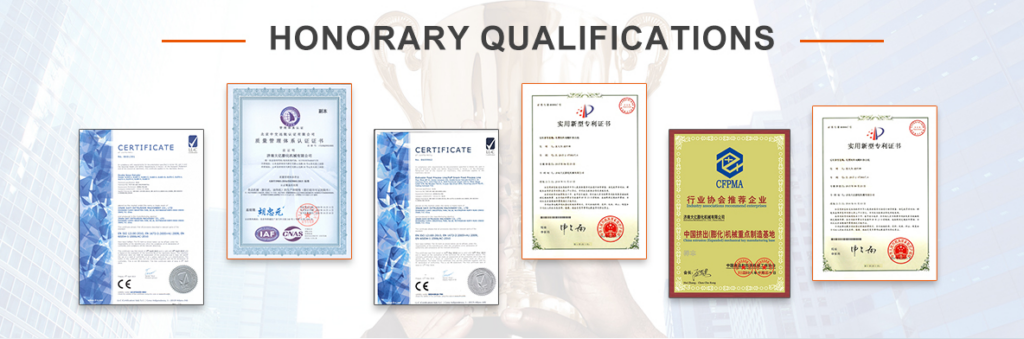
We have ISO and CE certificate.
4.How long is the warranty period?
All of our machines have one year warranty.
5.What’s the main market of your company?
Our customers all over the world.
6.How much production capacity of your company one year?
This depends on your needs.
 Portuguese
  English
  Russian
  Spanish
  Italian
  Arabic
  German
  French
  Japanese
  Moroccan Arabic
  Persian
  Belarusian