
Key Considerations in Baked Dog Food Production
Baking represents a premium processing method for dry dog food, often perceived as a gentler, more natural alternative to high-heat extrusion. However, achieving consistent quality, safety, and nutritional integrity requires meticulous control throughout the process. Here are the critical factors to monitor in baked dog food manufacturing.
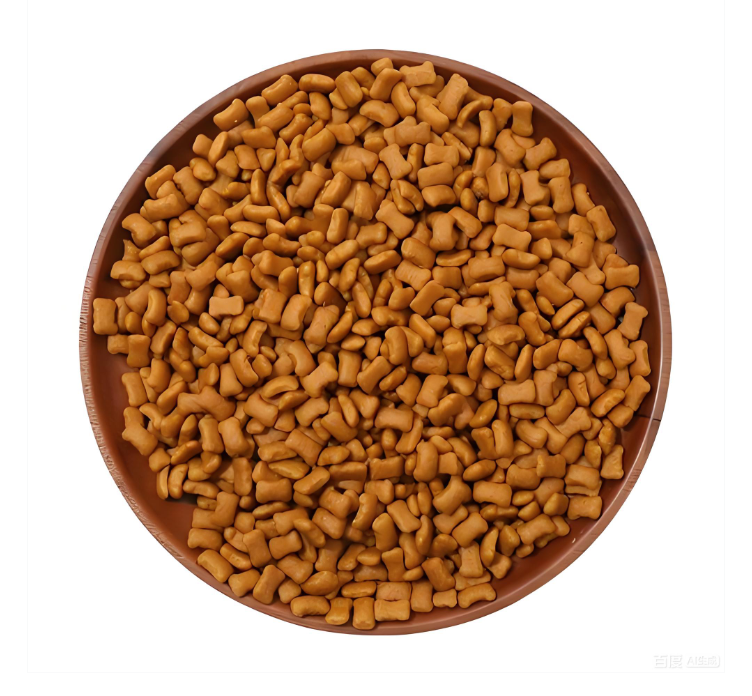
1. Ingredient Selection & Pre-Mixing
- Particle Size Uniformity: All dry ingredients (flours, meals, grains) must be ground to a consistent, fine particle size. This ensures even water absorption, uniform heat transfer during baking, and prevents dough density variations that lead to uneven cooking.
- Liquid & Fat Integration: The uniform distribution of liquids (water, broth, eggs) and fats (oils) in the dry mix is crucial. Emulsifiers or pre-mixing stages may be required to create a homogenous dough with consistent texture and moisture content. Poor integration results in spots of excessive dryness or oiliness.
2. Dough Formation & Shaping
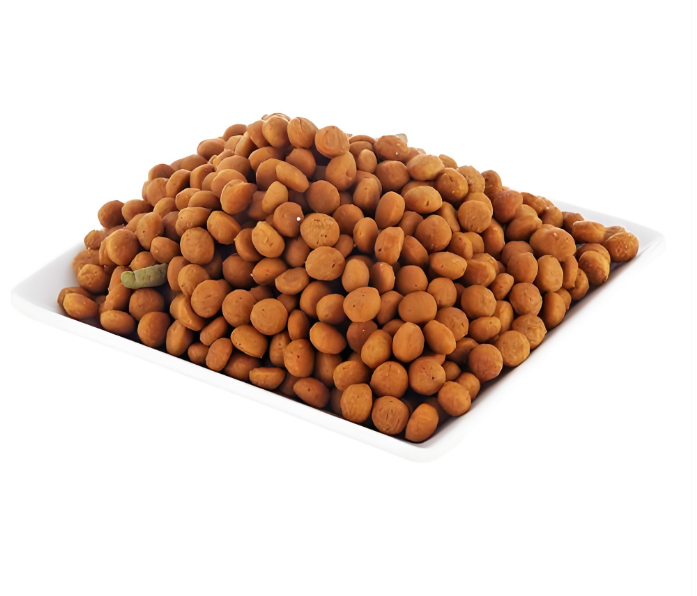
- Moisture Content & Dough Rheology: The dough’s moisture level directly impacts the final product’s texture—too dry, and it becomes brittle; too wet, and it loses shape or develops a hard, dense crumb. The dough must have the correct plasticity for efficient molding or cutting into precise shapes.
- Shaping Consistency: Whether using a rotary mold or a cutter, shapes must be uniform in size and thickness. Inconsistent shapes bake at different rates, leading to a final batch where some pieces are undercooked (a food safety risk) while others are over-browned or dry.
3. The Baking Process: Time & Temperature Profile
This is the most critical control point.
- Multi-Zone Oven Control: Industrial baking occurs in tunnel ovens with consecutive zones. The profile typically follows:
- Zone 1 (Setting): Higher initial heat (e.g., 150-160°C/300-320°F) to rapidly set the outer structure, trap moisture inside, and initiate starch gelatinization.
- Zone 2 (Baking/Cooking): Moderate, steady heat (e.g., 130-140°C/265-285°F) to cook the product through to its core, ensuring pathogen destruction and developing flavor via Maillard reactions.
- Zone 3 (Drying/Coloring): Lower heat (e.g., 100-120°C/210-250°F) to slowly reduce the internal moisture to a safe shelf-stable level (<10%) and achieve the desired final color.
- Avoiding the “Flash Bake”: Excessive initial heat can cause a hard, impermeable crust to form too quickly. This traps internal steam, which later condenses, creating a soggy center or causing the product to crack upon cooling—a defect known as “checking.”
- Core Temperature Validation: It is not enough to monitor air temperature. The core temperature of the product must reach and maintain a minimum of 82-88°C (180-190°F) for a validated time to ensure the destruction of Salmonella, E. coli, and other pathogens.
4. Cooling & Stabilization
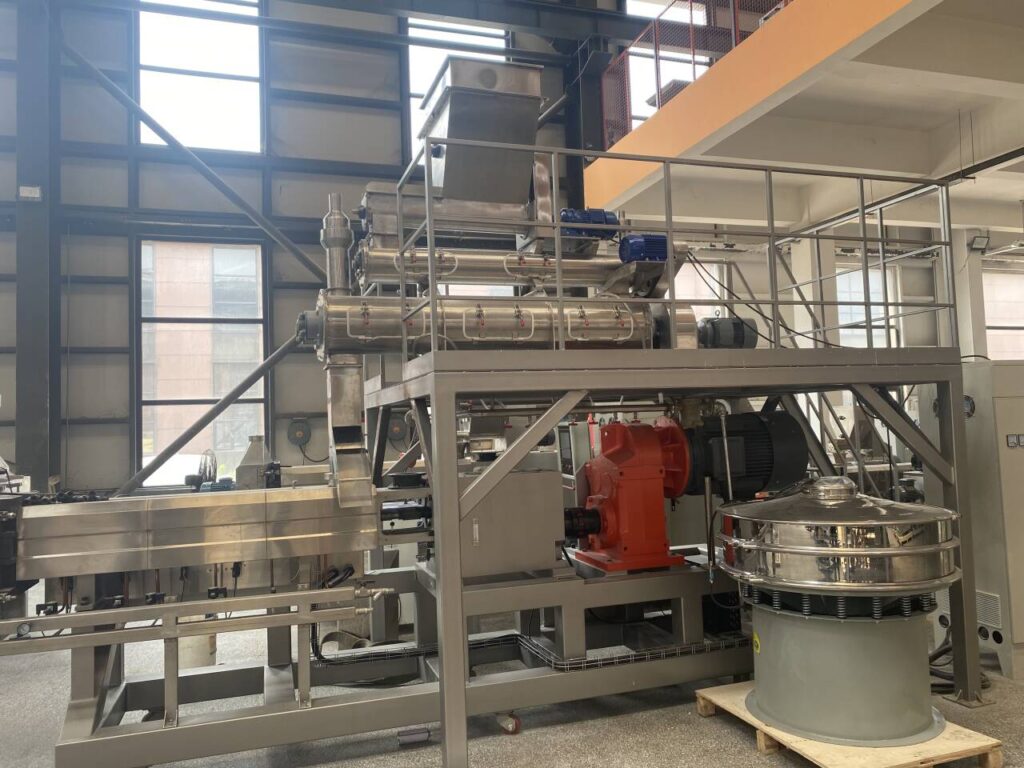
- Gradual Cooling: Baked kibble must be cooled slowly and evenly in a controlled environment. Rapid, uneven cooling (e.g., with high-velocity ambient air) causes stress cracking and moisture migration, leading to textural defects and microbial vulnerability.
- Final Moisture Equilibrium: After cooling, the product must be held briefly to allow residual internal moisture to distribute evenly throughout the piece, stabilizing the texture.
5. Post-Baking Applications
- Coating (Enrobing): As baking can degrade heat-sensitive nutrients and some flavors, a post-baking coating is often applied. This involves tumbling the cooled kibble with a mist of oils, digest palatants, probiotics, or a vitamin/mineral premix. The coating must adhere uniformly without making the product greasy or clumping.
- Fat Stability: Baked goods, especially those coated with unsaturated fats, are prone to oxidative rancidity. The inclusion of natural preservatives (e.g., mixed tocopherols, rosemary extract) and the use of nitrogen-flush packaging are essential to maintain freshness.
6. Quality Control & Safety Checks
- Water Activity (Aw): The final product’s Aw must be below 0.70 to inhibit mold and bacterial growth. This is a more critical safety metric than moisture percentage alone.
- Texture & Structure: Finished pieces should have a consistent, crunchy but not rock-hard bite. They should not crumble excessively into “fines” during handling, indicating proper starch gelatinization and protein binding.
- Color & Smell: Color should be even, without pale (undercooked) or burnt spots. The smell should be pleasant and characteristic of the ingredients, with no sour, rancid, or “off” odors.
Conclusion
Successful baked dog food production hinges on balancing gentle cooking with rigorous process control. The appeal of baking lies in its perceived naturalness and the development of complex flavors, but it demands a deep understanding of food science and bakery engineering. By meticulously managing moisture, heat profile, and cooling, manufacturers can produce a safe, palatable, and high-quality product that justifies its premium position in the pet food market.
 Portuguese
  English
  Russian
  Spanish
  Italian
  Arabic
  German
  French
  Japanese
  Moroccan Arabic
  Persian
  Belarusian