
Effective lubrication is critical for the reliable, efficient, and safe operation of twin-screw extruders used in the production of expanded snacks, pet food, and textured proteins. Proper lubrication minimizes wear, prevents premature failure of costly components, manages heat, and ensures consistent product quality. This guide outlines key principles and best practices.
1. Understanding Lubrication Points
A twin-screw extruder has two primary lubrication systems:
- The Barrel/Screw System (Processing Section): This zone is NOT lubricated by traditional oils or greases. The “lubrication” here is provided by the food formulation itself. The fat, moisture, and starch in the recipe create the necessary slip within the barrel. Over-lubrication here (e.g., excessive oil injection) can severely compromise shear, starch gelatinization, and product texture.
- The Mechanical Drive System: This is the focus of traditional lubrication and includes:
- Gearbox: The heart of the drive system, containing gears and bearings under high torque.
- Thrust Bearing Assembly: Absorbs the immense axial force generated by pumping pressure at the die.
- Screw Shaft Seals: Prevent product or cleaning fluids from entering the drive mechanism and gear oil from contaminating the product.
- Motor Bearings.
2. Lubrication of the Mechanical Drive System
a) Gearbox Lubrication:

- Oil Selection: Use only the high-quality, extreme-pressure (EP) gear oil specified by the extruder manufacturer. Key properties include:
- Viscosity Grade: Correct viscosity (e.g., ISO VG 320 or 460) is vital for maintaining a protective film under high load.
- Additive Package: Includes anti-wear, anti-foam, and oxidation inhibitors.
- Food-Grade Status: While not in contact with product, NSF H1-registered incidental contact lubricants are often mandated for safety in food plants.
- Maintenance Practices:
- Level Checks: Monitor oil levels daily via sight glasses. Maintain the level within the recommended range.
- Oil Analysis Program: Implement a quarterly or semi-annual oil analysis. Tests for viscosity, water content, total acid number (TAN), and wear metals (iron, copper) can predict failures before they occur.
- Oil Change Intervals: Adhere strictly to the manufacturer’s schedule (typically every 3,000-5,000 operating hours). Change filters simultaneously.
- Temperature Control: Ensure gearbox cooling systems (internal coils or external heat exchangers) are functional. High oil temperature (>70°C) accelerates degradation.
b) Thrust Bearing Lubrication:
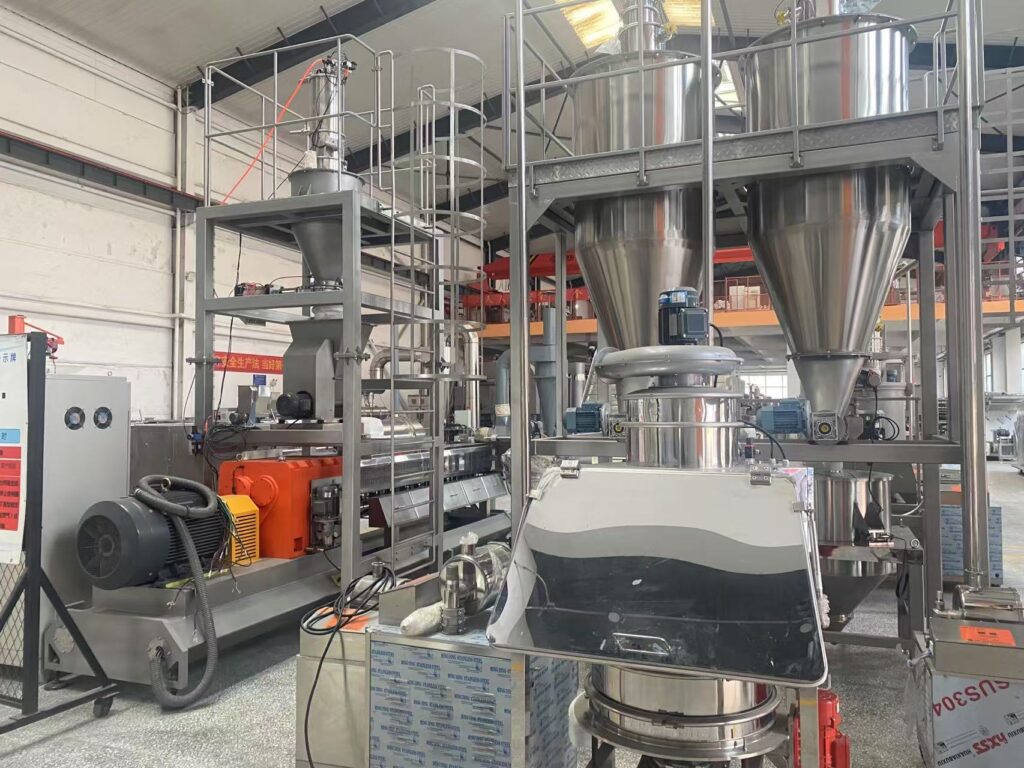
- Modern extruders typically use an oil-circulation system for the thrust bearing.
- Monitor flow indicators and pressure gauges. No flow is an emergency stop condition.
- Ensure the dedicated oil cooler is clean and functioning.
c) Grease-Points (Slew Bearings, Couplings):
- Use the recommended high-temperature, high-load grease (often an NLGI 2 grade with lithium or polyurea thickener).
- Apply grease during scheduled maintenance or as indicated by ultrasonic bearing monitors. Avoid over-greasing, which can cause seals to fail and attract debris.
3. Critical Considerations for Food Safety & Product Integrity
- Barrier Seals: The screw shaft seals (often labyrinth or lip seals) are the critical barrier between the gearbox and the process section. Their integrity is paramount.
- Monitor for leaks. A stream of grease/air (a “barrier leak-off”) is often part of the seal design to prevent product ingress—understand what is normal for your machine.
- Any sign of food material in the seal area or gear oil indicates immediate seal failure.
- Lubricant Contamination: Strictly enforce a “no food-grade oils/greases in the maintenance shop” policy. Only H1 lubricants should be present on the production floor. Use dedicated, labeled tools for each lubricant type.
- Cleanliness: Wipe down grease fittings before and after lubrication to prevent contamination from entering bearings or the product zone.
4. Operational & Process Impact
- Start-up Procedure: Always allow the gearbox oil circulation system to run for 10-15 minutes before rotating screws, especially in cold environments. This ensures oil reaches all bearings.
- Load Management: Avoid sudden, extreme spikes in production rate or die pressure, which create shock loads on the thrust bearings and gears. Use a controlled ramp-up.
- The “Process Lubricant”: Remember that your recipe’s fat content directly impacts wear in the barrel. Running very low-fat, high-fiber, or abrasive mineral-fortified formulations will increase wear on screw elements and barrel liners. Monitor motor load and product quality for signs of excessive wear.
5. Maintenance Schedule Summary
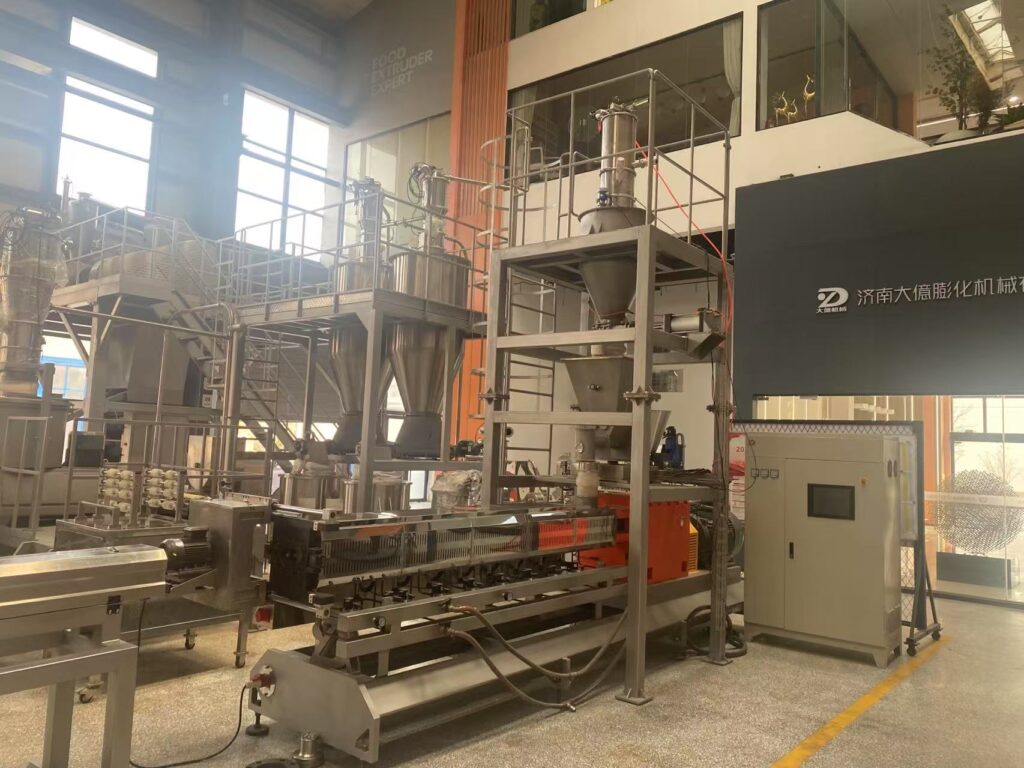
- Daily: Visual inspection for leaks, check oil levels and circulation, listen for unusual noises.
- Weekly: Check grease points, inspect seal areas.
- Quarterly/Bi-Annually: Take oil samples for analysis.
- Annually/Per OEM Hours: Complete oil and filter change, thorough inspection of drive components.
Conclusion:
Lubricating a twin-screw extruder is less about greasing moving parts and more about a disciplined, data-driven program focused on the gear drive and thrust systems. It combines the precise application of high-performance lubricants with vigilant monitoring and a steadfast commitment to preventing contamination. By treating the lubrication system as a critical component of both machine health and food safety, operators can achieve the ultimate goals: maximizing uptime, protecting capital investment, and ensuring consistent product quality.
 Portuguese
  English
  Russian
  Spanish
  Italian
  Arabic
  German
  French
  Japanese
  Moroccan Arabic
  Persian
  Belarusian