
Introduction: The Importance of Shape in Fortified Rice
Fortified rice represents one of the most significant advancements in public health nutrition, offering a vehicle to deliver essential vitamins and minerals to populations worldwide. Fortified rice making machine According to the World Food Programme and national food fortification programs, rice fortification can address micronutrient deficiencies in regions where rice is a dietary staple. However, the success of fortified rice depends critically on one factor that often receives insufficient attention: shape .
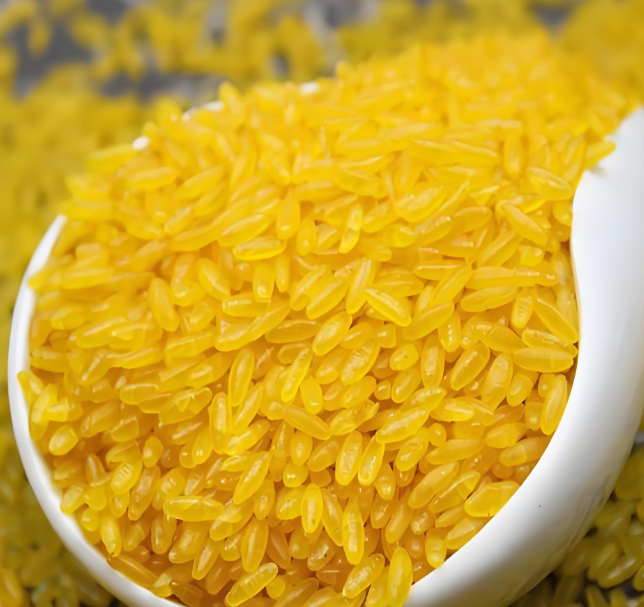
The shape of fortified rice kernels—also known as extruded rice, artificial rice, reconfigured rice, or engineered rice—determines consumer acceptance, cooking performance, and ultimately, the nutritional impact of fortification programs. Fortified rice making machine If fortified kernels do not closely resemble natural rice in appearance, consumers will reject them, sorting them out before cooking or avoiding the product entirely . This comprehensive guide explores the science, technology, and art of achieving optimal shape in fortified rice production.
Part One: Understanding Rice Shape Fundamentals
1.1 What Defines Rice Shape?
Before we can master the production of fortified rice shapes, we must understand what constitutes rice shape in natural grains. Rice shape is not a single parameter but a combination of geometric features that collectively create the visual identity of a rice grain .
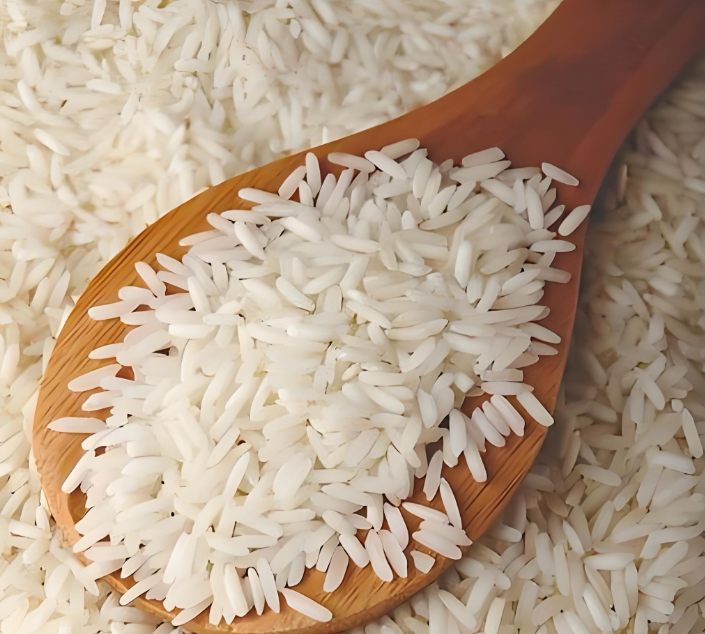
Research on japonica rice varieties has established that the following geometric features are essential for quantifying grain shape :
| Geometric Feature | Symbol | Definition |
|---|---|---|
| Comprimento | L | The longest dimension of the grain |
| Largura | W | The dimension perpendicular to length in the horizontal plane |
| Depth/Thickness | D | The third dimension, perpendicular to both length and width |
| Area | A | The two-dimensional projected area of the grain |
| Perimeter | P | The outline length of the two-dimensional projection |
From these basic measurements, researchers have developed shape parameters that more accurately describe grain morphology than simple length-to-width ratios :
- S2 = L/A: Describes the relationship between length and projected area
- S5 = 4A/πLW: A measure of roundness or circularity
- S6 = W/L: The traditional length-to-width ratio (inverse)
- S7 = (L+W)/2D: A three-dimensional parameter incorporating thickness
These parameters provide the quantitative targets that fortified rice producers must aim to replicate .
1.2 Rice Shape Classification Systems
Traditional rice classification divides grains into three categories based on length-to-width ratio :
- Long-grain rice: Slender grains with high length-to-width ratio (typically >3.0)
- Medium-grain rice: Shorter, plumper grains with moderate ratio (2.1-3.0)
- Short-grain rice: Almost round grains with low ratio (<2.1)
However, modern image analysis systems require more sophisticated quantification. The research by Lu et al. demonstrates that using multiple shape parameters (S2, S5, and S6 for two-dimensional analysis, plus S7 for three-dimensional analysis) provides complete shape characterization that can distinguish subtle differences between varieties .
1.3 Why Shape Matters in Fortified Rice
The shape of fortified rice kernels influences multiple aspects of product performance and acceptance:
Consumer Acceptance: Studies on artificial rice production consistently report that the greatest challenge is achieving shapes that consumers accept as “rice.” Research using sorghum, corn, and cassava composites found that extruded products often had “heterogen shapes and was not similar to rice in shape,” directly impacting consumer appeal .
Mixing Uniformity: Fortified rice is typically blended with natural rice at ratios ranging from 1:50 to 1:200. If fortified kernels differ significantly in shape from natural kernels, they will segregate during handling, transport, and storage, leading to inconsistent nutrient delivery .
Cooking Performance: Shape affects water absorption, heat transfer, and cooking time. Kernels that are too thick may remain hard when natural rice is fully cooked; kernels that are too thin may overcook and disintegrate. The goal is to achieve similar cooking behavior through similar shape and density .
Sensory Experience: The texture of cooked rice—including hardness, stickiness, and chewiness—relates directly to grain structure and shape. Fortified rice making machine Research on cooked rice texture identifies attributes such as “springiness” (degree grains return to original shape after partial compression) and “uniformity of bite” that depend on consistent grain morphology .
Part Two: Raw Materials and Their Influence on Shape
2.1 Base Materials for Fortified Rice
The shape-forming process begins with raw material selection. Fortified rice can be produced from various base materials :
| Material Type | Examples | Shape Implications |
|---|---|---|
| Rice flour | Milled rice flour, broken rice powder | Best shape replication due to identical composition |
| Rice by-products | Bran, middlings, broken grains | Requires careful formulation to achieve proper binding |
| Composite flours | Sorghum, corn, cassava blends | May produce darker colors and less rice-like shapes |
| Starches | Rice starch, corn starch, tapioca | Affects gelatinization and expansion behavior |
Research on artificial rice from composite flours demonstrates that raw material selection directly impacts final shape quality. When sorghum flour was used without germination pretreatment, the resulting artificial rice had darker color and “heterogen shapes” compared to rice. Germination of sorghum improved appearance but still fell short of natural rice morphology .
2.2 Pretreatment Effects on Shape-Forming Properties
The physical and chemical state of raw materials before extrusion significantly influences their ability to form rice-like shapes :
Particle Size: Flour particle size affects water absorption, dough consistency, and flow through the extruder. Finer flours generally produce smoother surfaces and more precise shape replication. The research on sorghum-based artificial rice emphasized the importance of milling and sieving to achieve uniform particle size before extrusion .
Moisture Conditioning: The initial moisture content of raw materials must be adjusted before extrusion. Materials that are too dry will not plasticize properly, leading to rough surfaces and incomplete shape formation. Materials that are too wet may become sticky and difficult to cut cleanly .
Pre-gelatinization: Some processes incorporate pre-cooked or pre-gelatinized flour components to improve dough handling and shape retention. The presence of pre-gelatinized starch affects the rheological properties of the dough and its behavior during extrusion .
Germination Treatment: For alternative grains like sorghum, germination pretreatment (soaking 72 hours, germinating 36 hours) can improve the color and acceptability of artificial rice, though shape uniformity remains challenging .
2.3 Additives for Shape Enhancement
Various additives can be incorporated to improve shape formation and retention :
Binding Agents: Natural rice lacks gluten, so artificial rice requires binders to maintain integrity. Common binders include starches, hydrocolloids (gums), and proteins. Patent literature describes the use of alginate gums and ionic gelatinizing agents to provide cohesion similar to gluten in wheat products .
Plasticizers: These improve dough flow and reduce extrusion pressure, allowing more precise shape formation. Water is the primary plasticizer, but other food-grade plasticizers may be used.
Emulsifiers: These can improve fat distribution and reduce stickiness during cutting and drying.
Color Adjustments: Since fortified rice may appear different from natural rice due to added nutrients or alternative flours, colorants may be added to achieve the desired appearance. However, the goal remains to match the color of target rice varieties .
The patent by Cerda and Calderón specifically notes that their process “allows adding additives to give different flavors and colors, as well as nutritional additives and modifiers” during the reconfiguration process .
Part Three: Extrusion Technology for Shape Formation
3.1 Principles of Extrusion for Rice Shaping
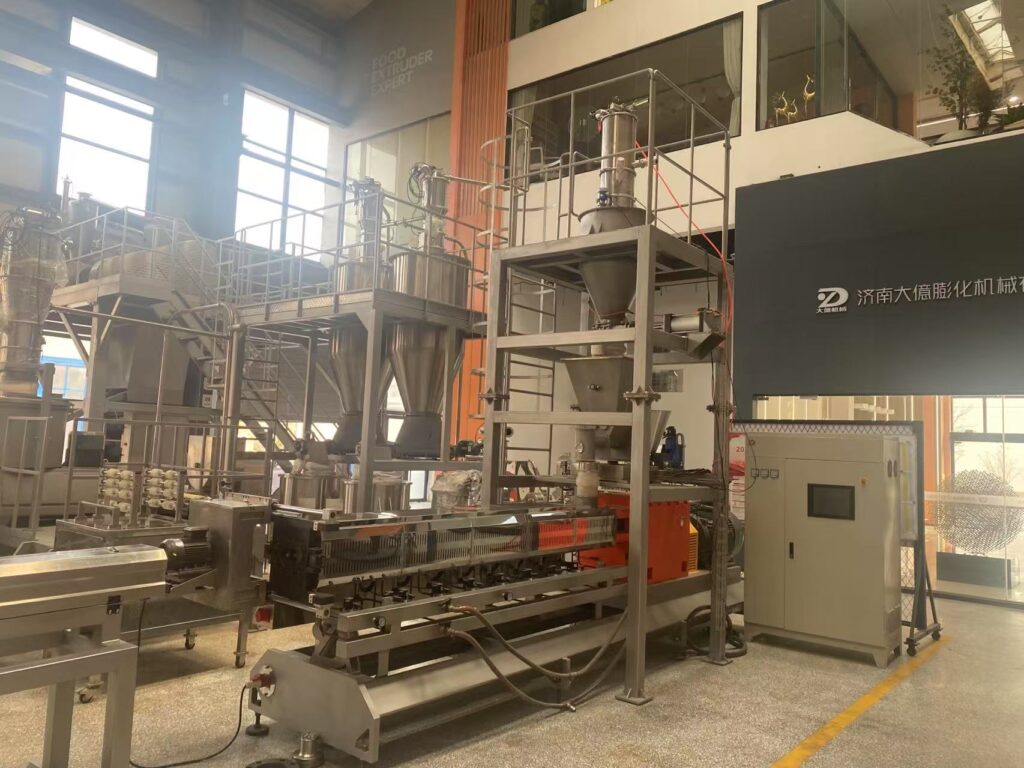
Extrusion is the primary technology for producing fortified rice. The process transforms flour mixtures into rice-like kernels through controlled application of heat, pressure, and mechanical shear .
The Basic Extrusion Process:
- Raw material preparation: Flours are blended, moisture-adjusted, and preconditioned
- Extrusion: Material is fed into an extruder barrel where heat and pressure plasticize the starch
- Shaping: The plasticized dough is forced through a die with apertures shaped like rice grains
- Cutting: Emerging strands are cut into lengths matching rice grain dimensions
- Drying: Cut kernels are dried to stable moisture content
- Cooling and finishing: Kernels are cooled and may be polished or coated
3.2 Types of Extruders for Rice Shaping
Single-Screw Extruders: These are simpler and less expensive but offer less control over shape formation. The research on mini extruders for artificial rice noted that equipment improvement was necessary to achieve better results, as the mini extruder produced shapes that were not sufficiently rice-like .
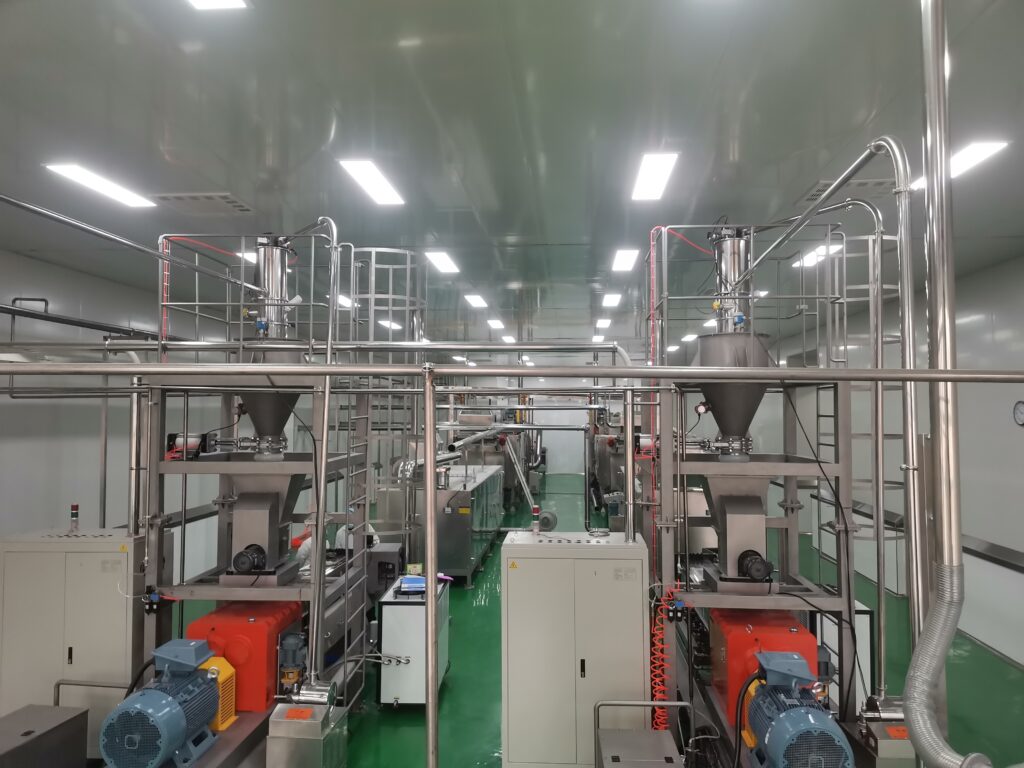
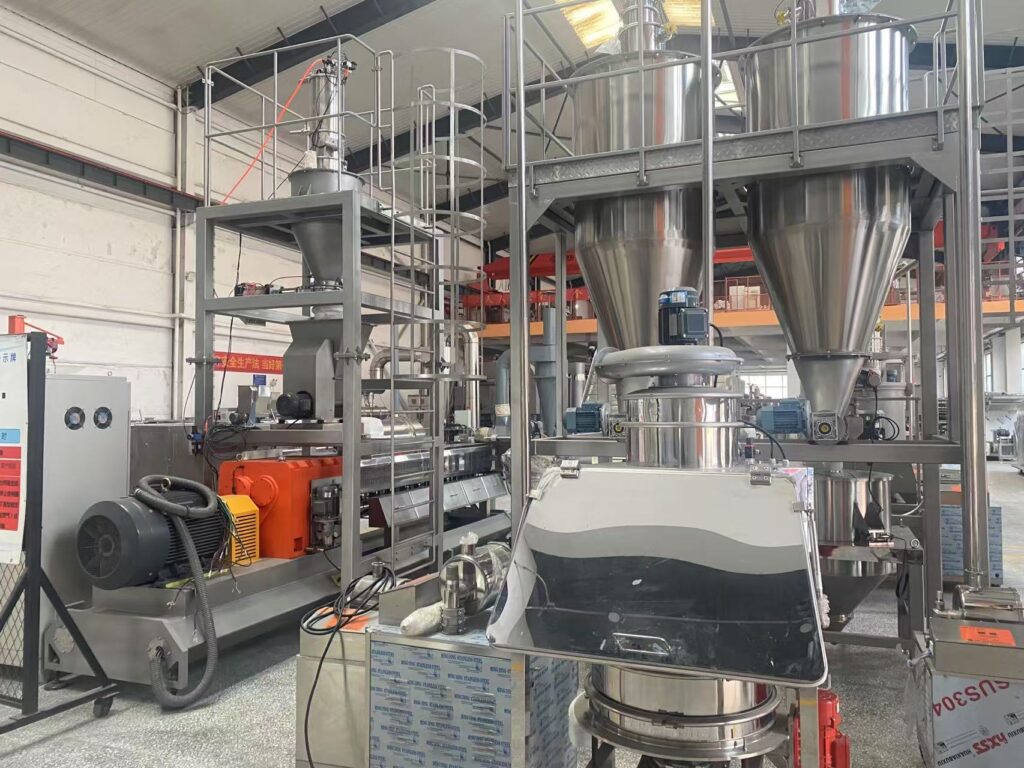
Twin-Screw Extruders: These provide superior mixing, more precise temperature control, and better shape replication. Most commercial fortified rice production uses twin-screw extrusion. The patent by Cerda and Calderón specifies a “double-screw extruder” operating at 60-70°C with 34-40% humidity to generate “continuous, flexible, and humid filaments” that can be cut into rice-like segments .
Research on low protein texturized rice used twin-screw extrusion technology to produce kernels with appearance described as (complete grains, uniform color, smooth and rounded, clearly outlined, with compact structure) .
3.3 Critical Extrusion Parameters for Shape Control
The shape of extruded rice is determined by multiple interacting parameters. Research has identified the following as most critical :
| Parameter | Typical Range | Effect on Shape |
|---|---|---|
| Feed moisture | 31-40% | Higher moisture produces smoother surfaces but may cause sticking |
| Barrel temperature | 60-120°C | Affects starch gelatinization and dough viscosity |
| Screw speed | 30-350 rpm | Influences shear rate and residence time |
| Die temperature | 65-75°C | Critical for final shape setting |
| Die design | Grain-shaped apertures | Determines cross-sectional profile |
Optimal Conditions from Research:
For low protein texturized rice from japonica rice starch, the optimal parameters were :
- Feed moisture: 35%
- Screw speed: 30 r/min
- Barrel temperature (gelatinization zone): 120°C
For brown rice extrusion, optimal parameters were :
- Screw speed: 350 r/min
- Moisture content: 31%
- Die temperature: 75°C
- Drying temperature: 65°C
For reconfigured rice from by-products, the patent specifies :
- Temperature: 60-70°C
- Humidity: 34-40%
3.4 Die Design: The Shape Definition Tool
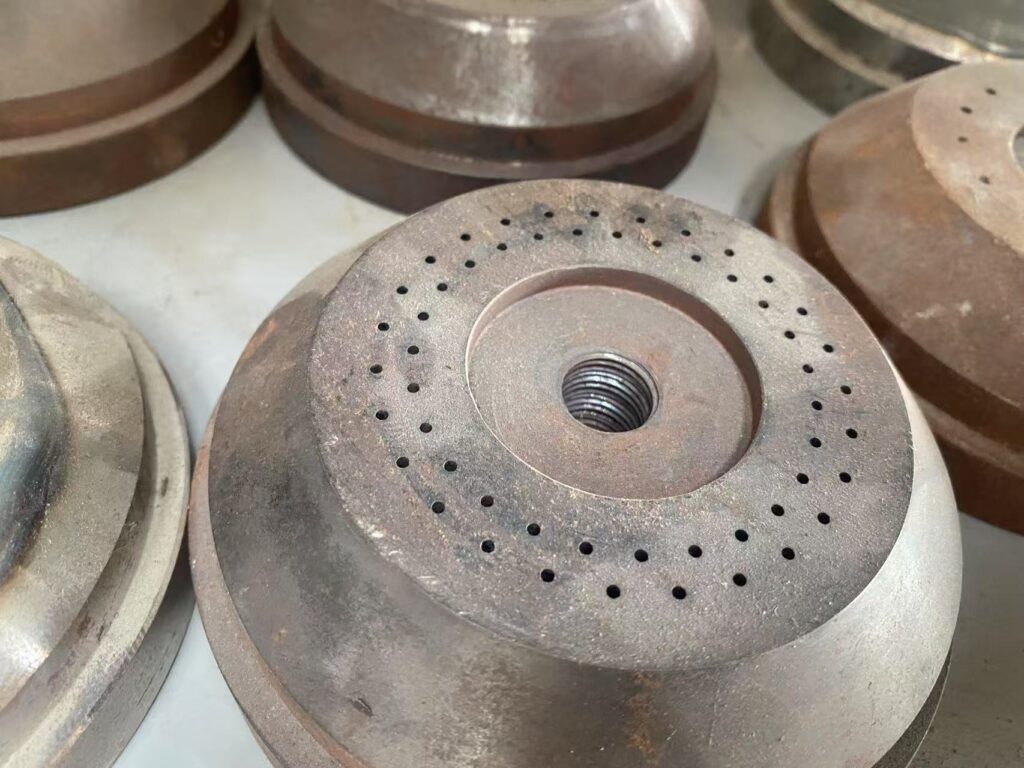
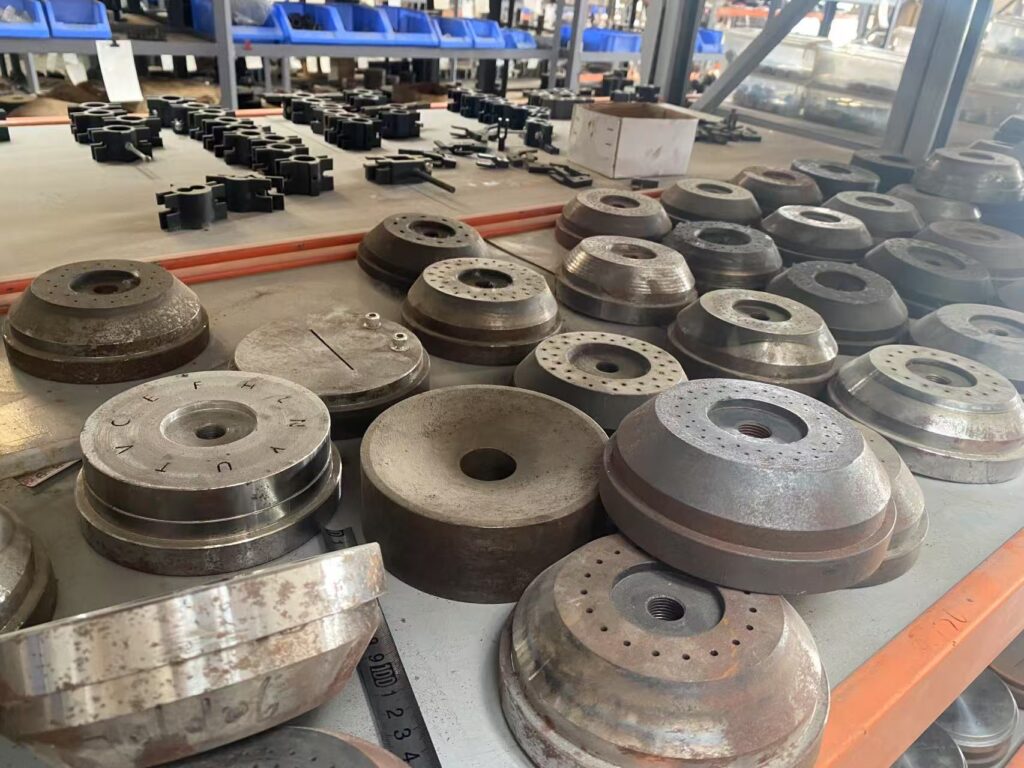
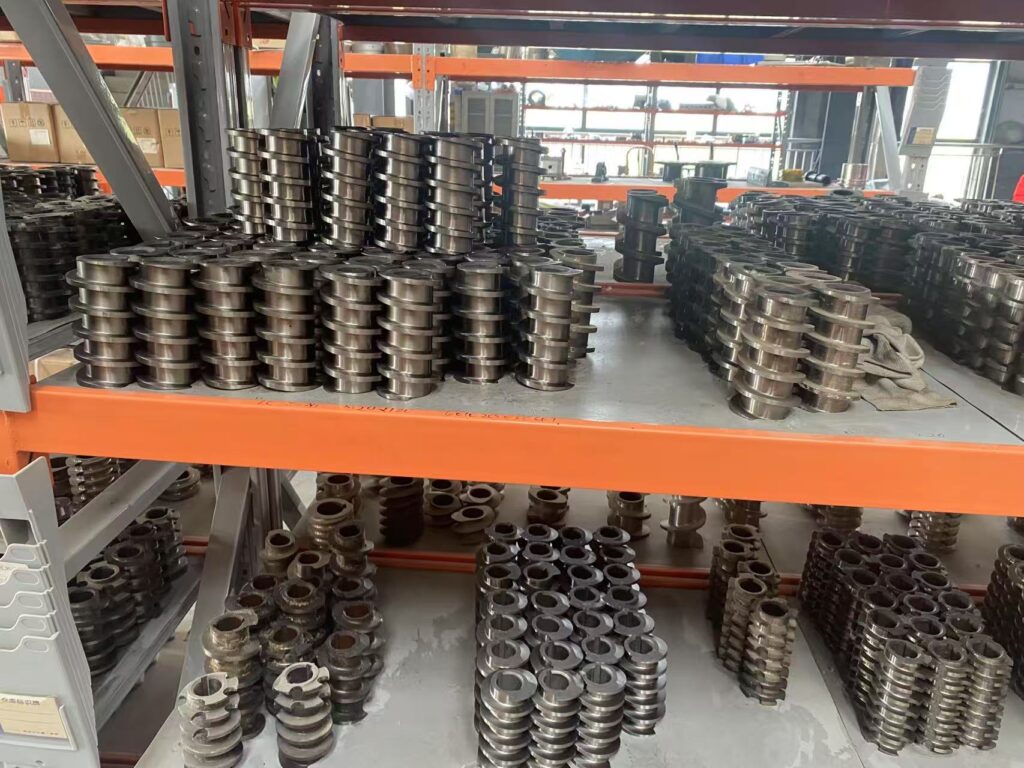
The die is the most critical component for shape formation. Dies for fortified rice production contain multiple apertures machined to the exact cross-sectional dimensions of target rice grains .
Die Aperture Design Considerations:
- Cross-sectional shape: Must match the width and depth profile of natural rice grains
- Surface finish: Smooth surfaces prevent dough sticking and produce clean kernel surfaces
- Comprimento: Affects pressure drop and flow uniformity
- Temperature control: Dies may be heated or cooled to optimize shape formation
The patent by Cerda and Calderón describes passing the extruded mixture “through a matrix to generate continuous, flexible, and humid filaments” . This matrix is the die that defines the cross-sectional shape.
3.5 Cutting Technology
After extrusion through the die, the continuous strands must be cut into individual kernels of appropriate length .
Cutting Considerations:
- Cutting speed: Must synchronize with extrusion rate to achieve consistent length
- Cutting mechanism: Rotary blades, guillotine cutters, or wire cutters
- Cutting timing: Cutting at the die face or after a cooling conveyor
- Kernel length control: Typically 5-8 mm depending on rice variety
The patent specifies that “filaments are cut into small segments” before drying .
Part Four: The Drying Stage and Shape Stability
4.1 The Critical Role of Drying
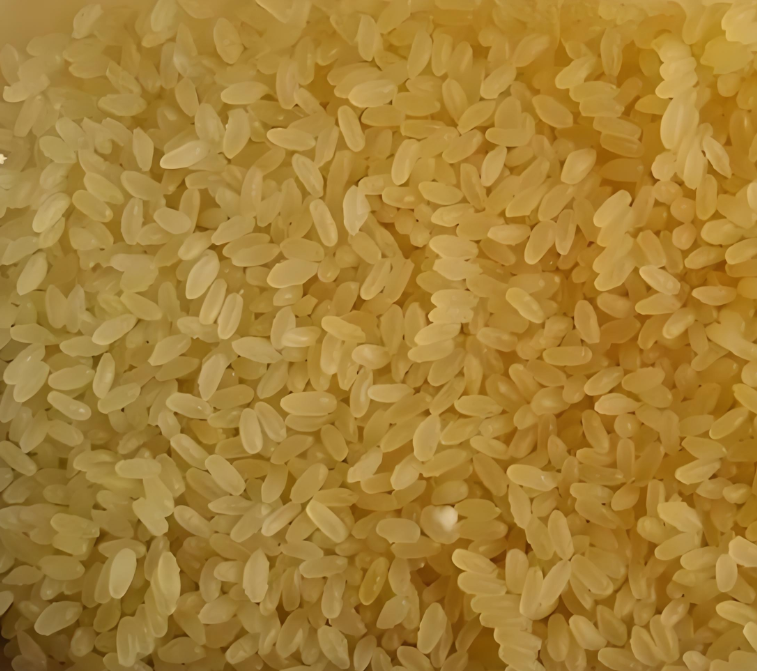
Drying transforms moist, flexible extruded kernels into stable, shelf-stable products. However, drying is also when shape distortion most commonly occurs.Fortified rice making machine Improper drying can cause warping, cracking, surface defects, and dimensional changes that destroy the rice-like appearance .
4.2 Drying Parameters and Shape Retention
Research on brown rice extrusion identified drying temperature as a critical parameter affecting final product quality. The optimal drying temperature was 65°C for achieving both texture quality and rehydration properties .
Drying Effects on Shape:
| Drying Condition | Effect on Shape |
|---|---|
| Too rapid | Surface hardening with internal moisture; causes cracking and warping |
| Too slow | Extended exposure to moisture; allows shape relaxation and deformation |
| Too hot | Excessive shrinkage; darkening; possible case hardening |
| Too cool | Incomplete drying; microbial risk; sticky surfaces |
4.3 Moisture Content Targets
The final moisture content of fortified rice affects both shape stability and shelf life :
- After extrusion (before drying): 34-40% moisture (flexible filaments)
- After drying: No higher than 15% moisture (stable kernels)
- Typical target: 10-12% moisture for shelf stability
The patent specifies drying “to a humidity no higher than 15%” to achieve kernels with “the appearance, shape, and consistency of peeled and polished rice grains” .
4.4 Drying Technology Options
Hot Air Drying: Most common method, using heated air in fluidized bed or belt dryers. Temperature and humidity control are essential.
Two-Stage Drying: Some processes use an initial high-temperature stage to set the surface, followed by lower-temperature finishing to equalize moisture without stress.
Tempering Periods: Allowing kernels to rest between drying stages allows moisture equilibration and reduces stress cracking.
Part Five: Quality Control and Shape Evaluation
5.1 Quantitative Shape Analysis
Modern fortified rice production should employ quantitative methods to evaluate shape quality. Drawing from research on rice grain analysis, the following approach is recommended :
Image Analysis Systems:
- High-resolution cameras capture images of kernel samples
- Software measures length, width, area, and perimeter
- Shape parameters (S2, S5, S6) are calculated
- Results are compared to target rice varieties
Implementation Steps :
- Image acquisition: Uniformly spread kernels on contrast background
- Image processing: Noise reduction, contrast enhancement, kernel segmentation
- Feature extraction: Measure geometric features of each kernel
- Statistical analysis: Calculate means, distributions, and shape parameters
- Comparison: Compare to reference standards or target specifications
5.2 Sensory Evaluation Methods
While instrumental analysis provides objective measurements, sensory evaluation ensures that products meet consumer expectations. Research on nutritional composite rice has validated sensory evaluation methods .
Sensory Attributes for Shape Evaluation:
- Morphological similarity: Visual comparison to natural rice
- Color uniformity: Consistency across kernels
- Surface characteristics: Smoothness, absence of cracks or rough spots
- Size consistency: Uniformity of length and width
Evaluation Methods :
- Ranking test: Multiple samples ranked by shape quality
- Scoring test: Each sample scored against defined criteria
- Difference testing: Comparison to reference rice varieties
5.3 Correlation Between Instrumental and Sensory Measures
The ultimate goal is to establish correlations between instrumental measurements and sensory acceptance. Research has shown that shape parameters S2, S5, and S6 effectively quantify grain shape in ways that correspond to visual classification . Similarly, the study on nutritional composite rice found that “米粒形状” (rice grain shape) was one of the key attributes that accurately reflected overall quality .
5.4 Common Shape Defects and Their Causes
| Defect | Likely Cause | Corrective Action |
|---|---|---|
| Irregular length | Inconsistent cutting speed | Synchronize cutter with extrusion rate |
| Rough surface | Insufficient moisture; worn die | Increase moisture; replace/repair die |
| Warped kernels | Uneven drying | Adjust drying temperature profile |
| Cracks | Thermal stress; too-rapid drying | Reduce drying rate; add tempering stage |
| Color variation | Raw material inconsistency; scorching | Improve mixing; check temperature control |
| Surface stickiness | Insufficient drying; high humidity | Extend drying; control ambient humidity |
| Broken kernels | Brittle structure; mechanical damage | Optimize formulation; reduce handling impact |
5.5 Texture Profile Analysis for Shape-Related Properties
Texture Profile Analysis (TPA) provides instrumental measurement of properties that relate to shape and structure. Research on low protein texturized rice used TPA to measure :
- Hardness: Force required to compress kernels (target: ~9,000g for japonica rice)
- Adhesiveness: Stickiness (target: -600 to -1,000 g·s)
- Springiness: Recovery after compression (target: 0.6-0.7)
These parameters help ensure that the internal structure, which depends on shape and density, matches natural rice behavior during cooking and eating .
Part Six: Advanced Techniques for Shape Optimization
6.1 Two-Dimensional vs. Three-Dimensional Shape Control
Research by Lu et al. demonstrates that different shape parameters are optimal depending on whether two-dimensional or three-dimensional analysis is used :
For 2D shape control (imaging systems, visual inspection):
- Focus on S2 (L/A), S5 (4A/πLW), and S6 (W/L)
- These parameters effectively quantify the projected shape of kernels
For 3D shape control (full morphological matching):
- Add S7 ((L+W)/2D) to capture thickness relationships
- This ensures that kernels have appropriate depth as well as length and width
Advanced production systems should target both 2D and 3D parameters to achieve complete shape replication.
6.2 Multiple Die Designs for Variety-Specific Shapes
Different rice varieties have distinct shape profiles. Fortified rice producers serving diverse markets should maintain multiple die designs matched to target varieties:
| Rice Type | Length (mm) | L/W Ratio | Die Design Priority |
|---|---|---|---|
| Long-grain Indica | 6-8 | >3.0 | Slender profile, pointed ends |
| Medium-grain Japonica | 5-6 | 2.1-3.0 | Plumper, more oval |
| Short-grain | 4-5 | <2.1 | Almost round, short and wide |
6.3 Post-Extrusion Polishing and Shaping
Some processes incorporate post-extrusion treatments to refine shape :
Polishing: Gentle abrasion removes surface irregularities and mimics the polished appearance of milled rice. This can improve consumer acceptance by creating the smooth, translucent surface characteristic of high-quality rice.
Color Sorting: Optical sorting equipment can remove misshapen or off-color kernels, improving uniformity of the final blend.
6.4 Coating Technologies
Surface coatings can serve multiple purposes :
- Appearance enhancement: Creating the glossy surface of polished rice
- Protection: Reducing moisture absorption and oxidation
- Nutrient retention: Preventing vitamin migration during washing
6.5 Computer Modeling and Simulation
Advanced manufacturers are increasingly using computational fluid dynamics (CFD) and finite element analysis to model dough flow through dies and predict shape formation. These tools allow virtual optimization of die geometry and process parameters before physical trials.
Part Seven: Integrating Shape Control with Nutritional Fortification
7.1 Nutrient Effects on Shape-Forming Properties
The addition of vitamins and minerals can significantly affect dough rheology and shape formation:
| Nutrient Type | Potential Effect | Mitigation Strategy |
|---|---|---|
| Iron compounds | May affect color; can interfere with binding | Use encapsulated forms; optimize particle size |
| Zinc salts | Can affect pH and starch gelation | Select appropriate zinc compounds |
| B vitamins | Heat-sensitive; may degrade during extrusion | Post-extrusion coating preferred |
| Vitamin A | Highly heat-sensitive; oxidation risk | Always use encapsulated; post-extrusion addition |
7.2 Balancing Nutrient Load with Shape Quality
Higher nutrient concentrations generally increase formulation challenges. The goal is to achieve target nutrient levels while maintaining shape quality through:
- Premix optimization: Selecting nutrient forms with minimal impact on rheology
- Encapsulation technologies: Protecting nutrients and isolating them from the starch matrix
- Split addition: Incorporating heat-stable nutrients during extrusion, heat-sensitive nutrients after drying
7.3 The Shape-Nutrient Distribution Relationship
Kernel shape affects how nutrients are distributed within the final product. Uniform shape ensures consistent nutrient delivery because each kernel represents a consistent portion of the final blend. Irregular shapes lead to:
- Variable nutrient content per kernel
- Segregation during handling
- Inconsistent dosing in the final consumer portion
Part Eight: Troubleshooting Shape Problems
8.1 Systematic Problem-Solving Approach
When shape problems arise, a systematic investigation should follow:
Step 1: Characterize the defect
- Use image analysis to quantify deviation from target
- Identify whether problem affects all kernels or sub-populations
- Determine if defect is consistent or variable
Step 2: Trace to process stage
- Raw material: Inconsistent flour properties? Batch variation?
- Extrusion: Temperature fluctuations? Pressure variations?
- Cutting: Speed synchronization? Blade condition?
- Drying: Temperature profile? Airflow distribution?
- Handling: Mechanical damage post-drying?
Step 3: Implement corrective actions
- Adjust parameters based on root cause
- Verify improvement through quality control measurements
- Document changes for future reference
8.2 Common Shape Problems and Solutions
Problem: Irregular kernel length
Causes: Inconsistent cutting speed, extruder surging, die flow variation
Solutions: Synchronize cutter drive, stabilize feed rate, check die temperature uniformity
Problem: Surface roughness
Causes: Low moisture, worn die, flour particle size too large
Solutions: Increase feed moisture, replace die, improve flour milling
Problem: Warping during drying
Causes: Uneven drying, internal stress, excessive drying rate
Solutions: Reduce drying temperature, add tempering stage, improve air distribution
Problem: Broken kernels
Causes: Brittle structure, mechanical impact, over-drying
Solutions: Optimize formulation for flexibility, improve handling systems, control final moisture
Problem: Color variation
Causes: Raw material inconsistency, temperature variation, scorching in extruder
Solutions: Improve blending, stabilize temperature control, clean extruder regularly
Part Nine: Case Studies in Shape Optimization
9.1 Case Study: Low Protein Texturized Rice
Researchers at Nanchang University successfully produced low protein texturized rice using improved extrusion technology. Their optimization process demonstrates the importance of systematic parameter control .
Objective: Produce rice with texture matching natural japonica rice but with very low protein content
Method: Response surface methodology to optimize feed moisture, screw speed, and barrel temperature
Results:
- Optimal parameters: 35% moisture, 30 rpm screw speed, 120°C barrel temperature
- Achieved hardness: 9,122g (target: 8,996g)
- Achieved springiness: 0.67 (target: 0.62)
- Product description: “米粒完整,颜色均一,圆润光滑,轮廓分明,米质结构紧密” (complete grains, uniform color, smooth and rounded, clearly outlined, compact structure)
Key Learning: Systematic optimization can achieve shapes and textures nearly identical to natural rice, even with modified formulations .
9.2 Case Study: Brown Rice Extrusion
Researchers at the Heilongjiang Academy of Agricultural Sciences optimized brown rice extrusion for improved texture and rehydration .
Objective: Produce extruded brown rice with acceptable eating quality
Method: Response surface methodology for screw speed, moisture, die temperature, and drying temperature
Results:
- Optimal parameters: 350 rpm screw speed, 31% moisture, 75°C die temperature, 65°C drying temperature
- Texture comprehensive score: 75.6
- Rehydration rate: 82.8%
Key Learning: Die temperature and drying temperature are critical for achieving proper kernel structure and cooking performance .
9.3 Case Study: Reconfigured Rice from By-Products
The patent by Cerda and Calderón describes a process for producing reconfigured rice from rice processing by-products .
Objective: Transform low-value rice by-products (bran, broken grains, middlings) into rice-like kernels
Method: Twin-screw extrusion at 60-70°C with 34-40% moisture, followed by cutting and drying to <15% moisture
Result: Kernels with “the appearance, shape, and consistency of peeled and polished rice grains”
Key Learning: Even low-value materials can be transformed into acceptable rice shapes with proper extrusion technology and parameter control .
Part Ten: Future Directions in Rice Shape Technology
10.1 Precision Extrusion Systems
Emerging technologies promise even greater control over kernel shape:
- Servo-driven extruders: Precise control of screw speed and torque
- Multi-zone temperature control: Independent temperature zones along barrel and die
- Real-time shape monitoring: In-line imaging systems with feedback to process controls
10.2 3D Printing Approaches
While not yet commercial for rice production, 3D food printing offers theoretical potential for creating kernels with precisely controlled shapes and internal structures. This could enable:
- Custom shapes for specific applications
- Controlled density gradients for optimized cooking
- Novel nutrient distribution patterns
10.3 Artificial Intelligence for Shape Optimization
Machine learning algorithms can analyze relationships between process parameters and shape outcomes, predicting optimal settings for new formulations without extensive trial-and-error.
10.4 Consumer Preference Mapping
Advanced sensory research can quantify consumer preferences for specific shape attributes in different markets, allowing producers to optimize shape for specific target populations rather than simply mimicking one reference rice.
Conclusion: The Art and Science of Rice Shape
Mastering the shape of fortified rice requires integration of multiple disciplines: food science for understanding raw material behavior, engineering for extrusion and drying control, analytical science for shape measurement, and sensory science for consumer acceptance.
The research reviewed in this article demonstrates that achieving rice-like shape is both challenging and achievable. Studies on low protein texturized rice achieved kernels that were “圆润光滑,轮廓分明” (smooth and rounded, clearly outlined) . Research on artificial rice from composite flours showed that while mini extruders produced “heterogen shapes” , more sophisticated equipment and parameter optimization can overcome these limitations.
Key principles for success include:
- Understand your target: Quantify the shape parameters of the rice varieties your consumers expect
- Control your materials: Select and prepare raw materials for optimal shape-forming properties
- Optimize your process: Use systematic methods to identify optimal parameters for your specific formulation
- Measure systematically: Employ both instrumental and sensory evaluation to verify shape quality
- Troubleshoot methodically: When problems arise, trace them to root causes in materials or process
The ultimate goal—producing fortified rice kernels indistinguishable from natural rice in appearance, shape, consistency, and use —is achievable through careful application of these principles. As fortification programs expand globally to address micronutrient malnutrition, mastery of rice shape becomes not just a technical objective but a public health imperative. Consumers who cannot distinguish fortified from natural rice will accept the product, ensuring that essential nutrients reach the populations that need them most.
 Portuguese
  English
  Russian
  Spanish
  Italian
  Arabic
  German
  French
  Japanese
  Moroccan Arabic
  Persian
  Belarusian