
Cornflakes are one of the world’s most beloved breakfast cereals, prized for their distinctive crispiness, golden color, and toasted flavor. Behind this seemingly simple product lies a complex manufacturing process where precision and attention to detail are paramount. From raw material selection to the final toasting stage, each step presents potential pitfalls that can compromise quality. This article outlines the key considerations and challenges that processors must manage to produce consistently high-quality cornflakes.
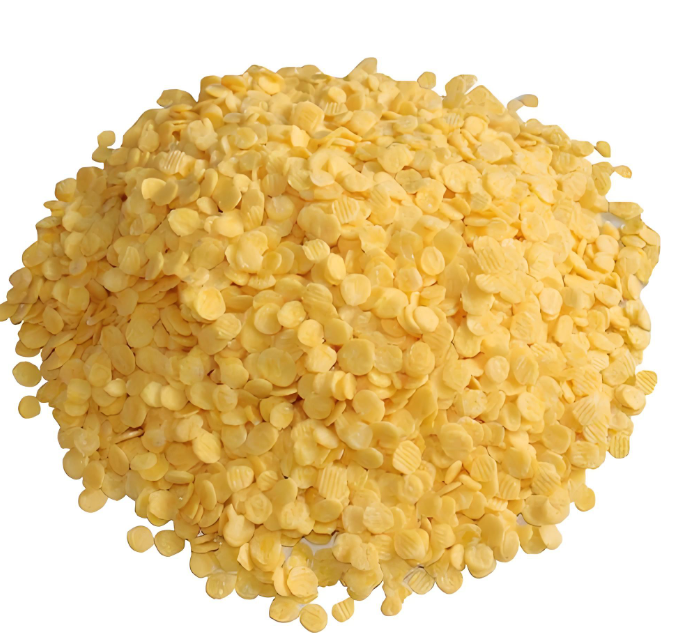
1. Raw Material Selection and Preparation
The journey to a perfect cornflake begins long before the grain enters the processor.
- Corn Variety and Quality: Not all corn is created equal for flaking. Manufacturers typically select specific varieties of dent corn (Zea mays indentata) with a high starch content and the right proportion of hard and soft endosperm . The grain must be sound, free from mold, insect damage, and foreign material. Inconsistent raw material quality is a primary source of variability in the final product .
- Tempering and Degermination: The corn must be properly tempered (conditioned with moisture) to facilitate the removal of the germ and hull. Effective degermination is critical, as residual fat from the germ can lead to rancidity and off-flavors during storage. The goal is to obtain clean, uniform grits (large pieces of endosperm) with a consistent particle size.
2. The Cooking Phase: Achieving the Right Gelatinization
Cooking is arguably the most critical step, where the corn grits are transformed into a cookable mass.
- Moisture Management: The grits are cooked with water, malt (for flavor and enzymatic activity), sugar, salt, and other ingredients in batch or continuous cookers. The target moisture content after cooking is typically between 28% and 35% . Insufficient moisture will lead to incomplete starch gelatinization, resulting in hard, undeveloped flakes. Excessive moisture, on the other hand, can make the mass too sticky and difficult to handle in subsequent steps .
- Cooking Time and Temperature: The time-temperature profile must be carefully controlled. The goal is to fully gelatinize the starch granules without over-cooking, which can cause excessive browning (Maillard reaction) at this early stage, leading to a burnt flavor later. Undercooking, conversely, yields a raw, chalky texture in the final flake.
- Enzymatic Activity: If malt is used, its enzymes (amylases) begin breaking down some of the starch into simpler sugars. This step is crucial for flavor development during toasting and for creating the desired texture. The duration and temperature of this enzymatic resting period must be precisely managed to achieve the right sugar profile without making the mass too liquefied.
3. Drying and Tempering: Preparing for Lamination
After cooking, the agglomerated mass must be conditioned.
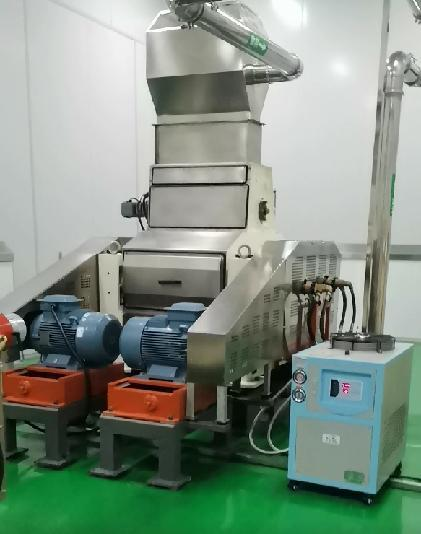
- Lump Breaking and Drying: The cooked mass is broken into smaller, individual clumps and passed through a drying system to reduce the moisture content to a more manageable level (typically 18-22%) . corn flakes making machine Drying must be gradual and uniform to prevent the outer surfaces from becoming too hard (case hardening) while the interior remains wet. This would cause stress cracks later.
- Tempering (Equilibration): This is a crucial resting period, often lasting several hours to a full day. The dried pellets are held in bins to allow the moisture to equilibrate evenly throughout each particle. Inadequate tempering results in uneven moisture distribution, which leads to non-uniform flaking and a high percentage of broken or misshapen flakes during the next step .
4. Flaking: The Art of the Thin, Uniform Flake
The tempered pellets are now ready to be transformed into thin flakes.
- Particle Size and Consistency: The pellets must be of uniform size before entering the flaking rolls. A mix of large and small pellets will result in flakes of inconsistent thickness, as larger pieces will be flattened more than smaller ones under the same roll pressure .
- Roll Gap and Pressure: The gap between the large, heavy flaking rolls must be precisely set and maintained to produce flakes of the target thickness (typically around 0.5-1.0 mm) . Inconsistent pressure or roll wear will lead to variations in flake thickness, which directly impacts toasting uniformity and final texture.
- Moisture at Flaking: The moisture content of the pellets at the point of flaking is critical. If they are too dry, they will shatter and produce excessive fines. If too wet, they may stick to the rolls or produce dense, tough flakes rather than light, crisp ones. The ideal moisture is carefully determined for each formulation .
5. Toasting: The Final Transformation
Toasting is where the raw, pale flakes develop their characteristic color, flavor, and crispiness.
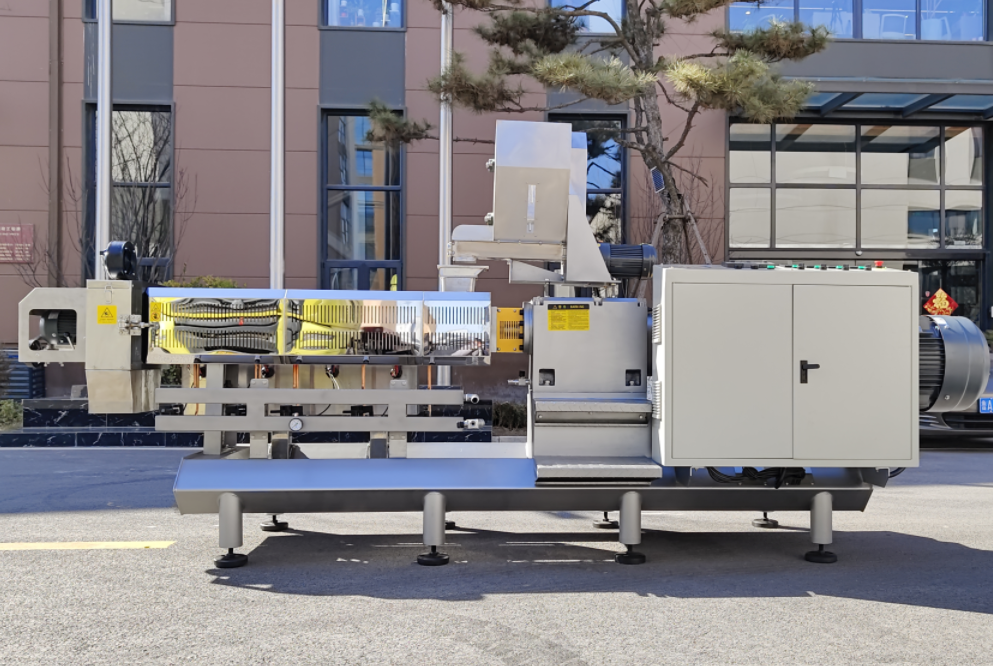
- Heat Transfer and Uniformity: The flakes are conveyed through a high-temperature oven (often a rotary or fluidized bed toaster). Achieving uniform toasting is a major challenge. Flakes on the edges of the belt may toast faster than those in the middle, and all flakes must be exposed to consistent heat to develop a uniform golden-brown color .
- Moisture Removal and Crispiness: The intense heat drives off the final moisture, reducing the flake’s water content to around 1-3% . corn flakes making machine This step also causes the starch to dextrinize and sugars to caramelize, creating the final toasted flavor and the characteristic crisp, brittle texture. Over-toasting leads to scorching and bitter flavors; under-toasting results in a soft, chewy, or “soggy” cereal.
- Cooling and Tempering: Immediately after toasting, the hot, fragile flakes must be cooled gently to set their structure and prevent them from becoming soggy from residual steam. This cooling also tempers the flakes, making them strong enough for packaging without excessive breakage.
6. Fortification and Coating
Many cornflakes are sprayed with vitamins and minerals to replace those lost during milling or to enhance nutritional value. This step requires precision:
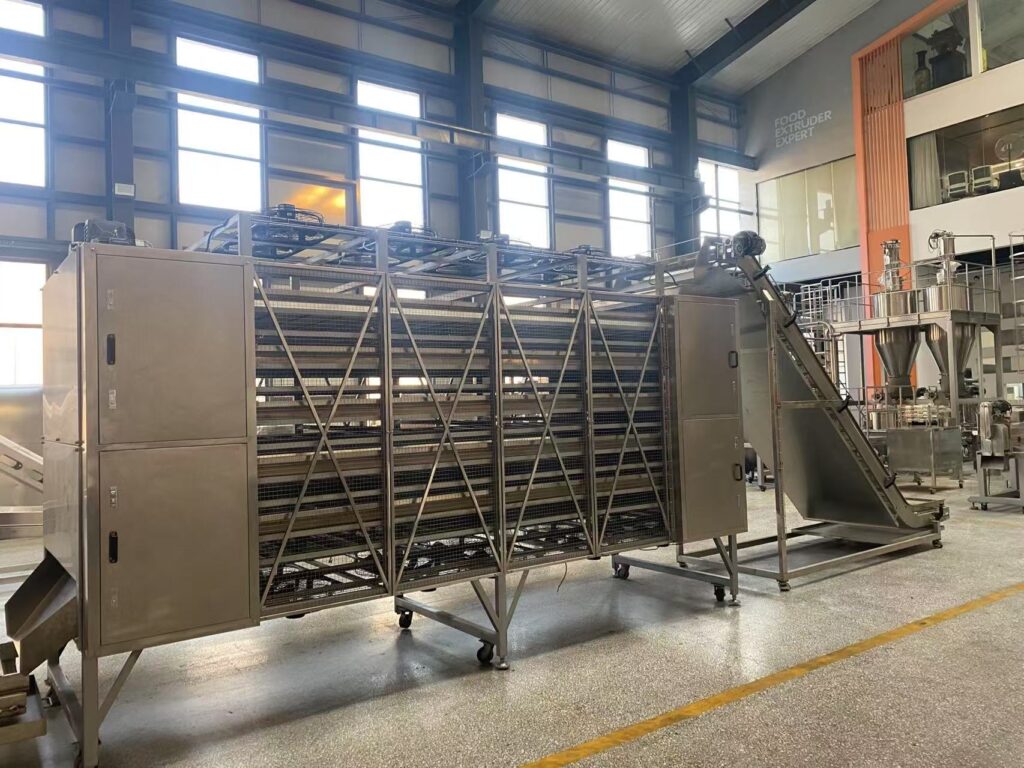
- Application Uniformity: The vitamin solution must be applied as a fine, even mist to ensure every flake receives the correct dosage.
- Adhesion and Drying: The coating must be applied in a way that allows it to dry quickly without making the flakes sticky or causing them to clump together.
In summary, the production of high-quality cornflakes is a delicate balance of art and science. By carefully controlling each of these critical steps—from raw material selection to toasting—manufacturers can ensure a consistently crispy, flavorful, and visually appealing product that meets consumer expectations every time.
 English
  Russian
  Spanish
  Italian
  Arabic
  Portuguese
  German
  French
  Japanese
  Moroccan Arabic
  Persian
  Belarusian