
For decades, Bugles corn snacks have been a staple in pantries and lunchboxes, instantly recognizable by their iconic horn shape and satisfying, airy crunch. Marketed as a fun, whimsical treat, their advertising often focuses on playful consumption—sliding them onto fingertips. But the journey from a simple kernel of corn to that perfectly uniform, salty cone is a fascinating and highly engineered process, far removed from traditional snack-making. Let’s pull back the curtain on the industrial magic behind Bugles.
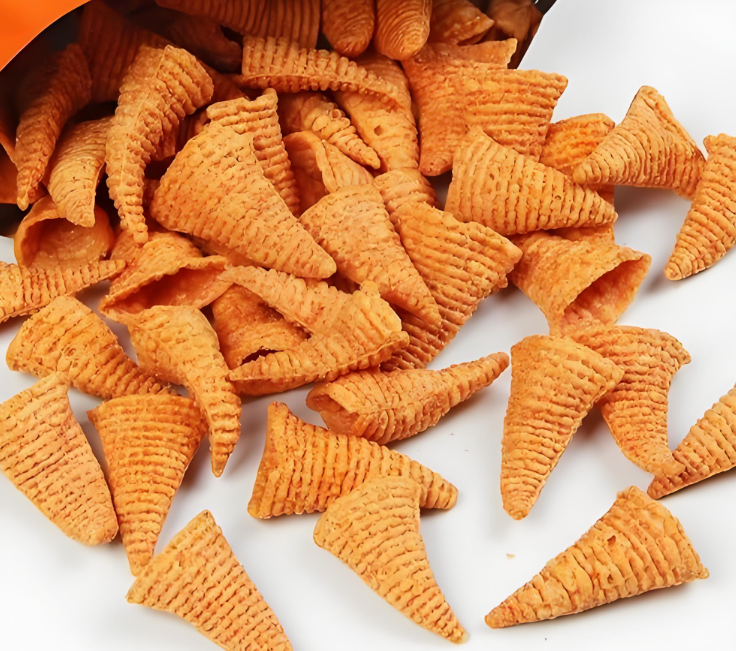
From Kernel to Cornmeal: The Foundation
It begins with corn, though not the sweet corn we eat off the cob. Bugles are primarily made from degerminated cornmeal. bugles making machine This means the oily germ and fibrous hull of the corn kernel have been removed, leaving mostly the starchy endosperm. This results in a finer, more stable flour that creates a consistent texture and extends shelf life—a crucial first step in mass production.
The Engineered Dough and the Magic of Extrusion
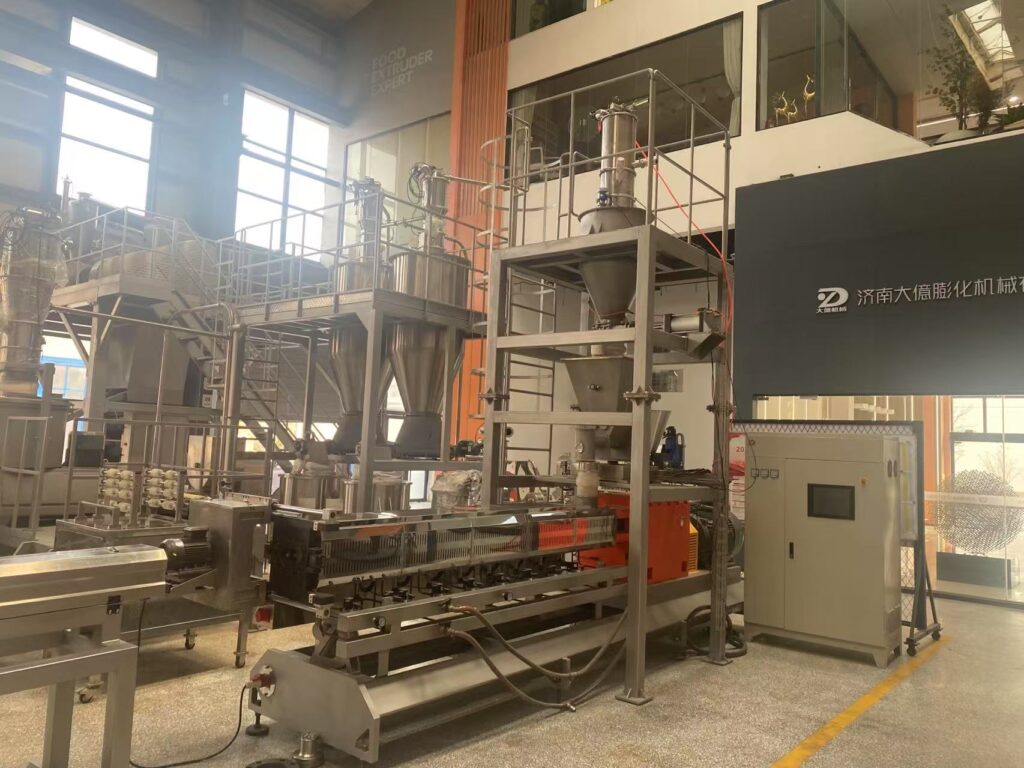
The true secret to Bugles’ unique shape and texture lies in a process called high-heat, high-pressure extrusion. The cornmeal is mixed with water, oil, salt, and various seasonings to form a moist dough. This dough is then fed into a massive extruder.
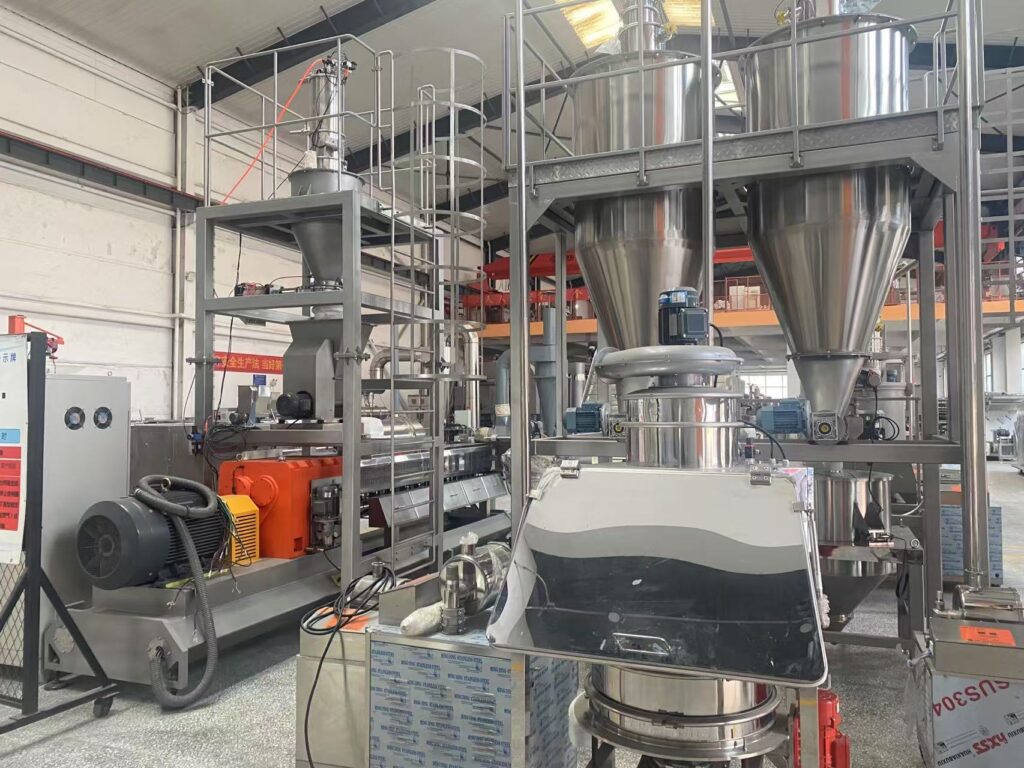
Inside this machine, the dough is subjected to intense pressure and heat, cooking it instantly. It is then forced through specially designed die plates. The dies for Bugles are not simple holes; they are intricate, trumpet-shaped molds. As the superheated dough blasts through these dies, the sudden drop in atmospheric pressure causes it to expand rapidly, like popcorn, while simultaneously setting into its now-familiar three-dimensional form. This “puffing” action is what gives Bugles their characteristically light and airy structure.
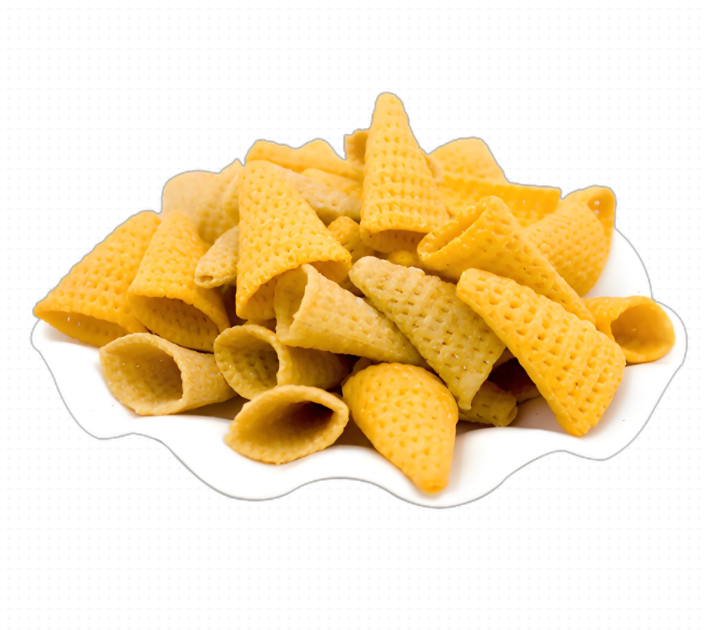
The Fryer: Where Crunch is Born
Unlike many puffed snacks that are baked, traditional Bugles take a quick bath in hot oil. This frying stage is critical. It drives off remaining moisture, sets the shape permanently, bugles making machine and creates the signature crisp, glassy crunch throughout the entire structure. The frying also adds that foundational savory flavor upon which all seasonings build. The oil used is typically a highly refined vegetable oil, chosen for its neutral taste and high smoke point.
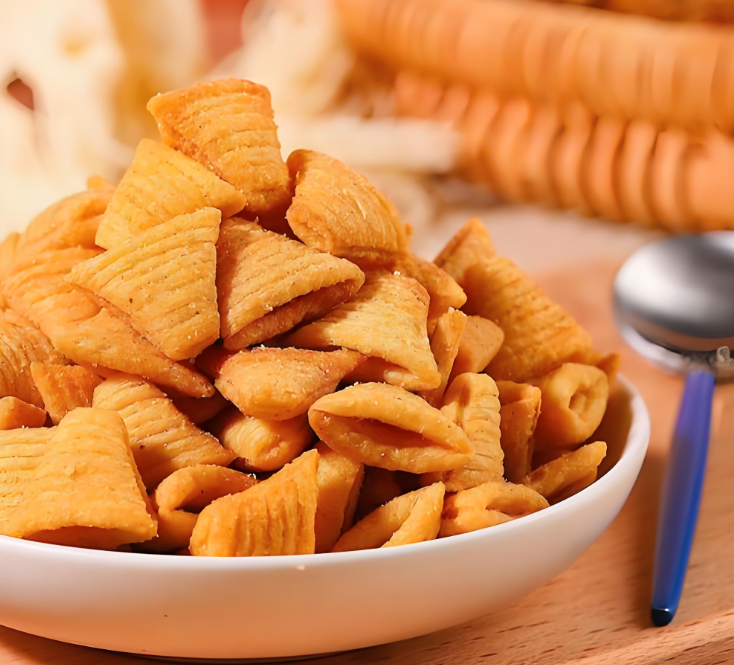
The Flavor Cascade
Fresh out of the fryer, the plain Bugles are essentially blank slates. They move on a conveyor belt into a rotating drum, often called a tumbling seasoner. bugles making machine Here, a precise mist of seasoned oil or a fine powder (depending on the flavor—from Nacho Cheese to Original) is applied. The constant tumbling ensures an even coating on every nook and cranny of the intricate shape. The seasoning mix contains not just cheese or spice powders, but also flavor enhancers like monosodium glutamate (MSG), yeast extract, and a careful balance of salt and sweeteners to create that notoriously “more-ish” quality.
Engineering for Consistency and Shelf Life
Every aspect of this process is controlled for absolute uniformity. The size, thickness, and even the curl of each Bugle are calibrated by the die design, extrusion pressure, and frying time. bugles making machine To prevent the staleness that plagues many snacks, the finished Bugles are immediately packed in foil-lined bags. This material provides an excellent barrier against moisture and oxygen, the twin enemies of crunch, locking in the factory-fresh texture (and the slight residual moisture from frying) until the moment the bag is torn open.
The Unavoidable Byproduct: The Greasy Finger
This highly engineered process explains the snack’s most notorious trait: the greasy residue. The combination of being fried and then coated in oil-based seasoning means each piece carries a fine layer of oil. This is not an accident or a flaw, but a direct result of the process that delivers the desired flavor and mouthfeel.
Conclusion: A Marvel of Food Science
Bugles are less a “crafted” snack and more a masterpiece of modern food engineering. They represent a triumph of consistency, shape, and texture—a product that could not exist without industrial-scale extrusion and frying technology. While the ingredient list features cornmeal and oil, their creation relies on physics and chemistry as much as agriculture.
Knowing this process doesn’t necessarily diminish the fun of sliding a Bugle onto your finger. But it does reveal that the “magic” behind that perfect crunch isn’t culinary wizardry—it’s the precise, calculated, and fascinating science of snack food manufacturing. The next time you hear that crunch, you’ll know it’s the sound of cornmeal, pressure, heat, and oil orchestrated on a grand industrial scale.
 Japanese
  English
  Russian
  Spanish
  Italian
  Arabic
  Portuguese
  German
  French
  Moroccan Arabic
  Persian
  Belarusian