
Abstract: Puffed snack foods represent a major segment of the global snack industry, characterized by their light, crispy texture, diverse shapes, and broad flavor adaptability. The core processing technology involves subjecting a starch-based mixture to high temperature and pressure, followed by a sudden pressure release, causing rapid expansion and formation of a porous structure. This article details the primary production methods, unit operations, and key technological considerations involved in manufacturing extruded and fried puffed snacks.
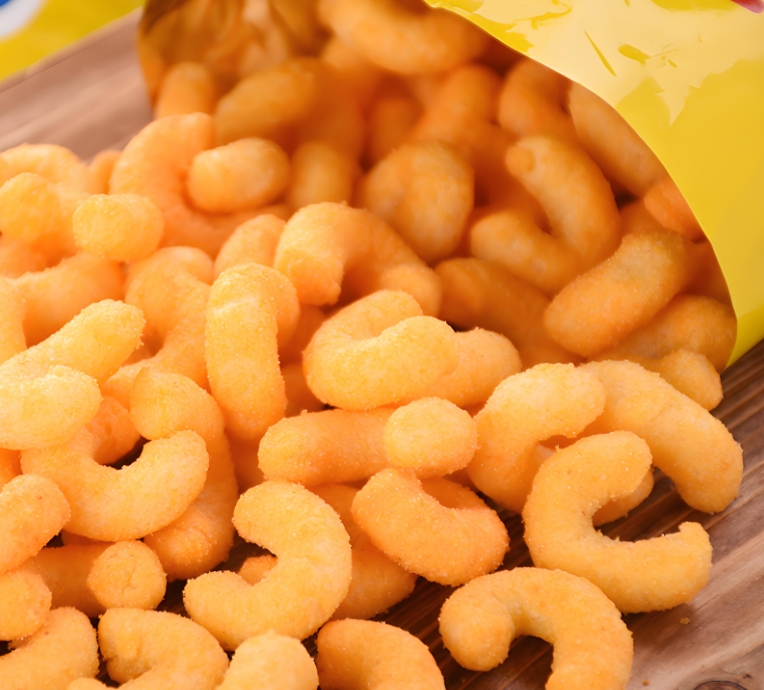
1. Introduction & Classification
Puffed snacks are broadly categorized by their processing method:
- Extrusion-Puffed: The dominant technology, using either single-screw or twin-screw extruders to cook and shape dough, which puffs as it exits the die.
- Frying-Puffed (Direct Expansion): Raw pellets or formulated dough are expanded instantly in hot oil (e.g., prawn crackers, pork rinds).
- Oven-Puffed (Baked): Used for certain starch-based snacks or protein foams (e.g., rice cakes, pita chips, cheese puffs), where steam and heat in an oven cause expansion.
This article focuses primarily on extrusion puffing, the most versatile and widely used industrial method.
2. Raw Material Selection & Preparation
The base formulation determines texture, expansion, and nutritional profile.
- Starch Sources: Corn (grits, meal), rice, wheat, potatoes, and oats are common. Their amylose/amylopectin ratio critically affects expansion. High amylopectin (waxy maize) yields larger, more uniform bubbles but a softer crunch; higher amylose creates a harder, crisper texture.
- Protein Addition: Whey, soy, or pulse flours can be incorporated but may limit expansion if levels exceed 8-10%.
- Water: Acts as a plasticizer and conversion medium. Moisture content (typically 12-18% in pre-mix) is precisely controlled.
- Other Ingredients: Leavening agents (e.g., baking soda), emulsifiers, and minor amounts of oil or sugar may be added to modify texture and mouthfeel.
3. The Extrusion Puffing Process
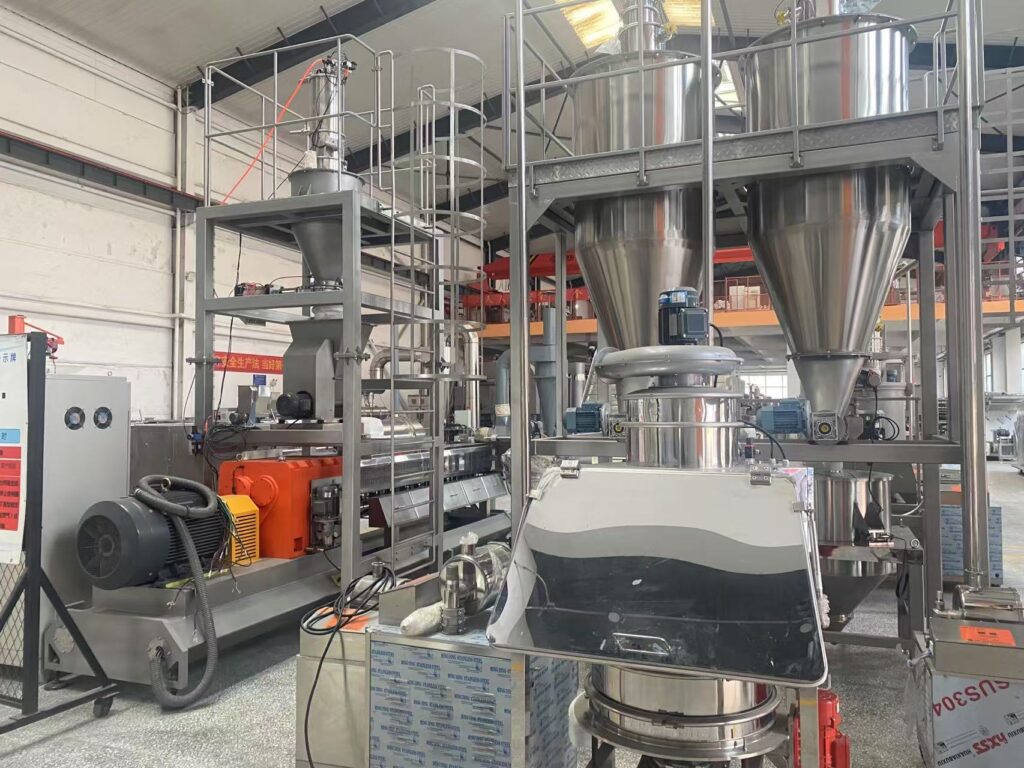
Modern production primarily utilizes co-rotating twin-screw extruders for superior mixing, control, and versatility. The process occurs in distinct zones within the extruder barrel:
Step 1: Feeding & Mixing
Dry ingredients are volumetrically or gravimetrically fed into the preconditioner, where steam and water are added to begin hydration.
Step 2: Cooking & Gelatinization
In the extruder barrel, the mixture is subjected to:
- High Mechanical Shear: From the rotating screws.
- High Temperature (120-180°C / 250-355°F): Generated via friction and/or external barrel heaters.
- High Pressure (up to 40 bar / 600 psi): Developed as the viscous mass is conveyed forward.
This combination fully gelatinizes the starch, creating a homogeneous, plasticized dough or melt.
Step 3: Forming & Expansion
The hot, pressurized dough is forced through a precision die at the end of the barrel.
- Sudden Pressure Drop: As the product exits the die into atmospheric pressure, superheated water within the dough instantly vaporizes.
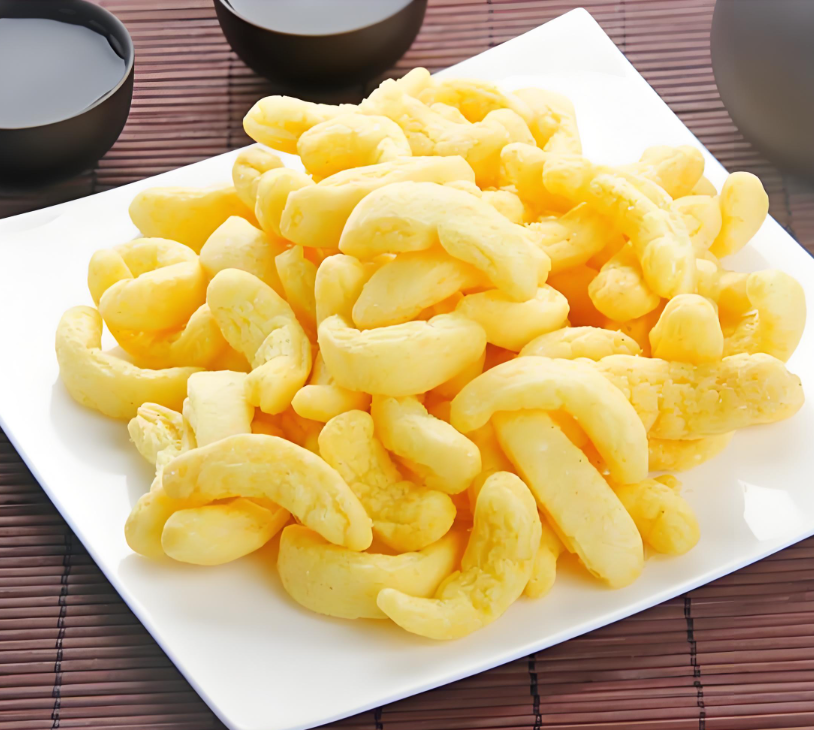
- Expansion: The vapor rapidly expands, stretching the gelatinized starch matrix into a foam-like structure with numerous air cells. The size and shape of the die orifice directly determine the product’s two-dimensional form (e.g., circles, stars, curls).
Step 4: Cutting & Drying
A high-speed rotary cutter slices the extruded rope into pieces. These pieces, still moist (≈8-10%), are then conveyed through a multi-pass dryer to reduce moisture to a crisp 1-3% and set their structure.
4. Post-Extrusion Processing: Flavoring & Coating
This stage defines the final taste and sensory appeal.
Step 1: Coating Application
Dry, cooled puffs enter a rotating drum (seasoning tumbler).
- Oil/Slurry Application: A light spray of vegetable oil (or a water-oil emulsion) acts as an adhesive for dry seasoning.
- Seasoning Adhesion: A blend of powdered flavors (cheese, barbecue, sour cream & onion), salt, acids (citric, malic), and spices is added. The tumbling action ensures an even coating.
Step 2: Final Drying/Cooling
The seasoned product may pass through a final, mild drying or cooling stage to set the coating and ensure crispness before packaging.
5. Key Quality Control & Technological Parameters
- Expansion Ratio: The ratio of final product volume to dough volume at the die. Controlled by moisture content, melt temperature, die design, and recipe.
- Bulk Density: Critical for filling packaging consistently; inversely related to expansion.
- Texture (Hardness, Crispness): Measured by texture analyzers. Influenced by ingredient selection, degree of cook, and final moisture.
- Water Activity (a_w): Must be maintained below 0.3 to ensure microbial stability and prolonged crispness.
- Die Design & Shear: The configuration of the die land length and inserts influences expansion, shape definition, and surface texture.
6. Advanced Trends & Variations
- Third-Generation Snacks (Pellet-to-Puff): Producing half-products (pellets) via extrusion, which are then expanded later by frying, hot air, or microwave, offering extended shelf-life and distribution flexibility.
- Functional Snacks: Fortification with fiber, protein, vitamins, and minerals, or the use of whole grains and ancient grains.
- Clean Label: Removal of artificial colors, flavors, and synthetic antioxidants, using natural seasonings and identity-preserved ingredients.
- High-Protein/Low-Carbohydrate Snacks: Utilizing soy, whey, or novel protein isolates, requiring significant adjustments to extrusion parameters to achieve acceptable expansion.
7. Conclusion
The manufacture of puffed snack foods via extrusion is a sophisticated, continuous process that transforms simple starch blends into light, crispy, and flavorful products through the precise application of heat, shear, and pressure. Success hinges on the intricate interplay between recipe formulation, extruder configuration (especially screw profile and die design), and precise control of process variables like moisture, temperature, and screw speed. Continuous innovation in ingredients, processing, and coating technologies ensures this category remains dynamic and responsive to evolving consumer demands for taste, texture, and nutrition.
 Japanese
  English
  Russian
  Spanish
  Italian
  Arabic
  Portuguese
  German
  French
  Moroccan Arabic
  Persian
  Belarusian