
Fish feed plays an essential role in aquaculture, providing the nutrients needed for healthy fish growth and efficient farming. In addition to nutritional value, the shape of fish feed pellets can also affect feeding behavior, feed utilization, and product attractiveness in the market. Modern feed processing technology allows manufacturers to produce fish feed in a variety of shapes and sizes to meet different aquaculture needs. This article explains how different shapes of fish feed are produced and the key factors involved in the process.
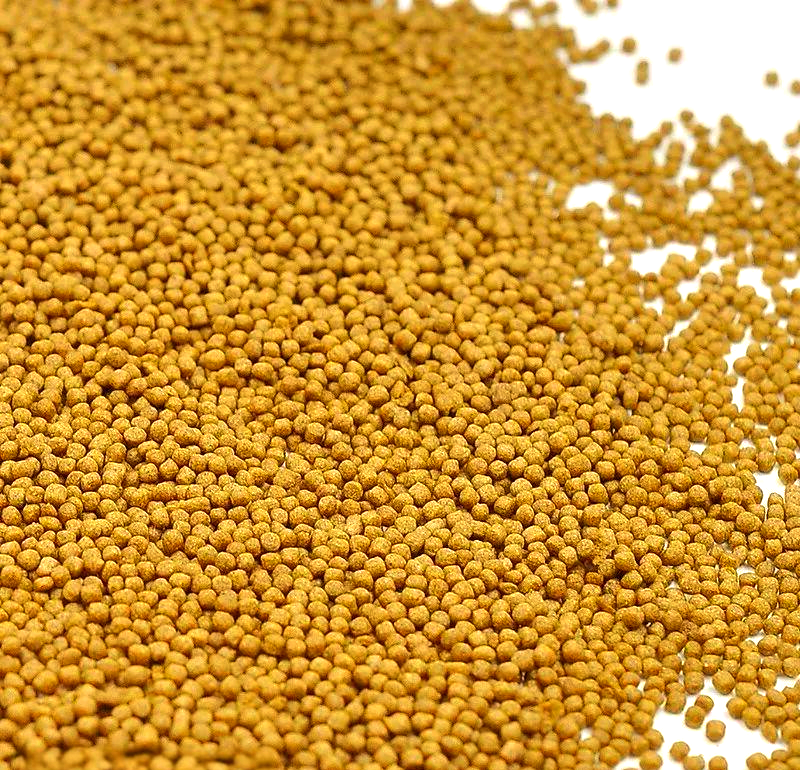
1. Why Fish Feed Shape Matters
The shape of fish feed is not only important for appearance but also for feeding efficiency. Different fish species have different feeding habits. Some fish feed at the surface, some in the middle layers of water, and others at the bottom.
Producing feed in different shapes can offer several benefits:
- Improve feed intake by fish
- Reduce feed waste in water
- Enhance product variety in the market
- Meet the feeding requirements of different fish species
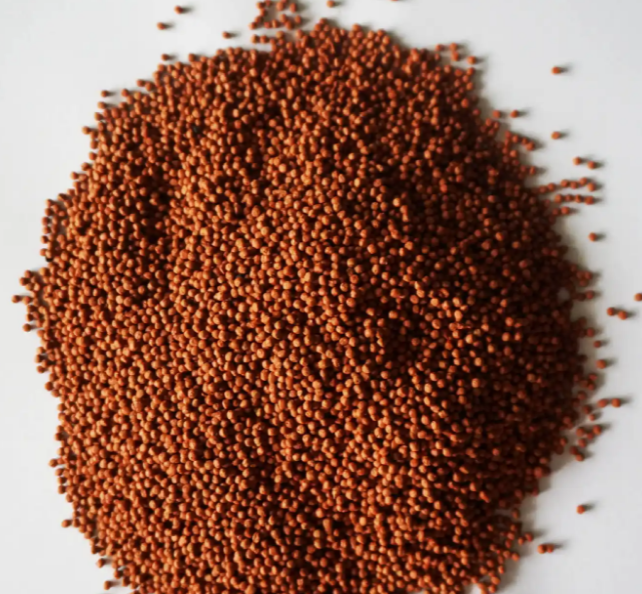
Common fish feed shapes include pellets, sticks, granules, and decorative shapes for ornamental fish.
2. Using Extrusion Technology
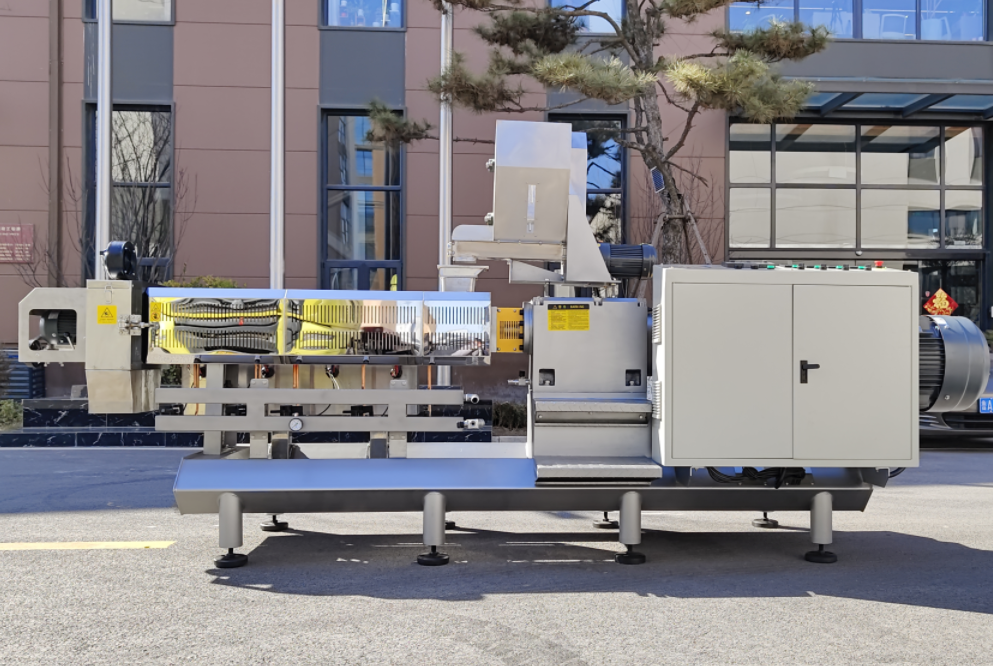
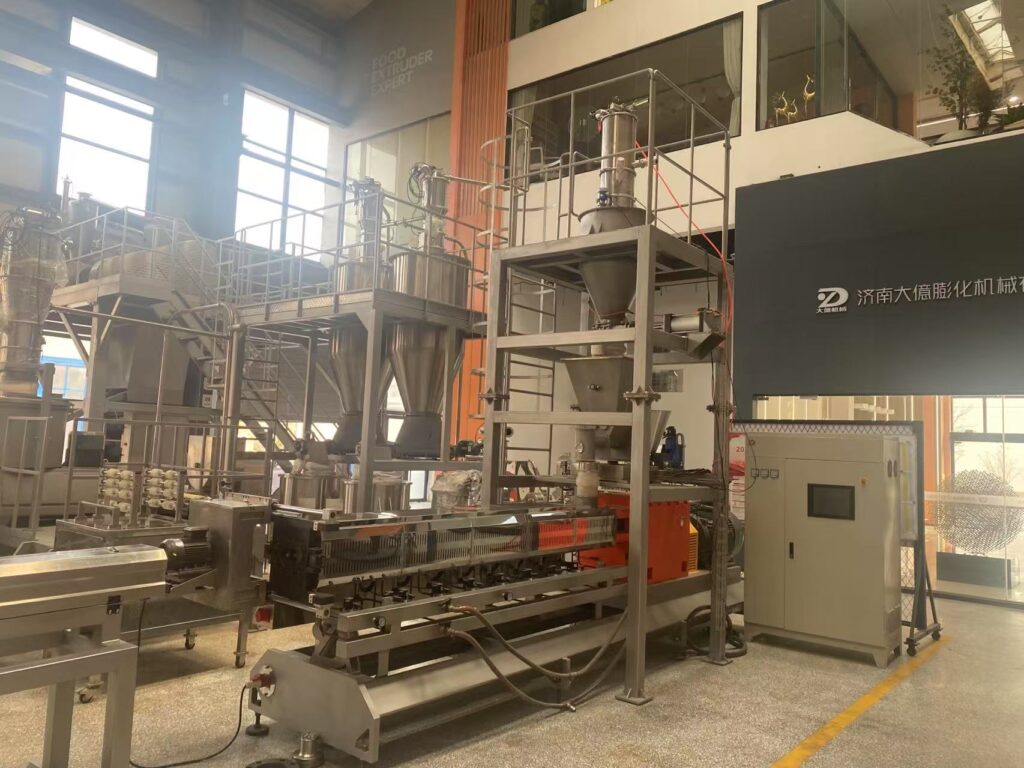
The most common method for producing fish feed in various shapes is extrusion technology. A fish feed extruder processes the mixed raw materials under high temperature and pressure, forming a cooked dough-like material that is forced through a die.
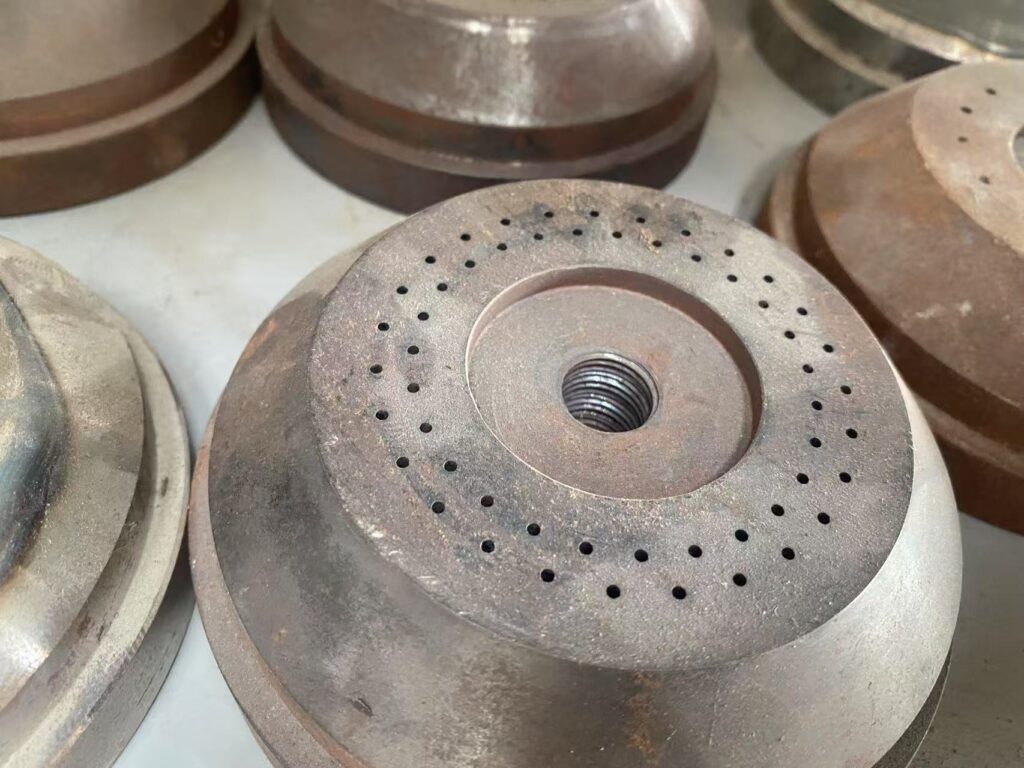
The die mold at the end of the extruder determines the final shape of the feed. By changing the die mold, manufacturers can easily produce different shapes of fish feed.
Common die shapes include:
- Round pellets
- Hollow pellets
- Cylindrical sticks
- Ring shapes
- Small decorative shapes
Extrusion technology also allows the production of floating or sinking feed depending on processing conditions.
3. Adjusting the Cutting System
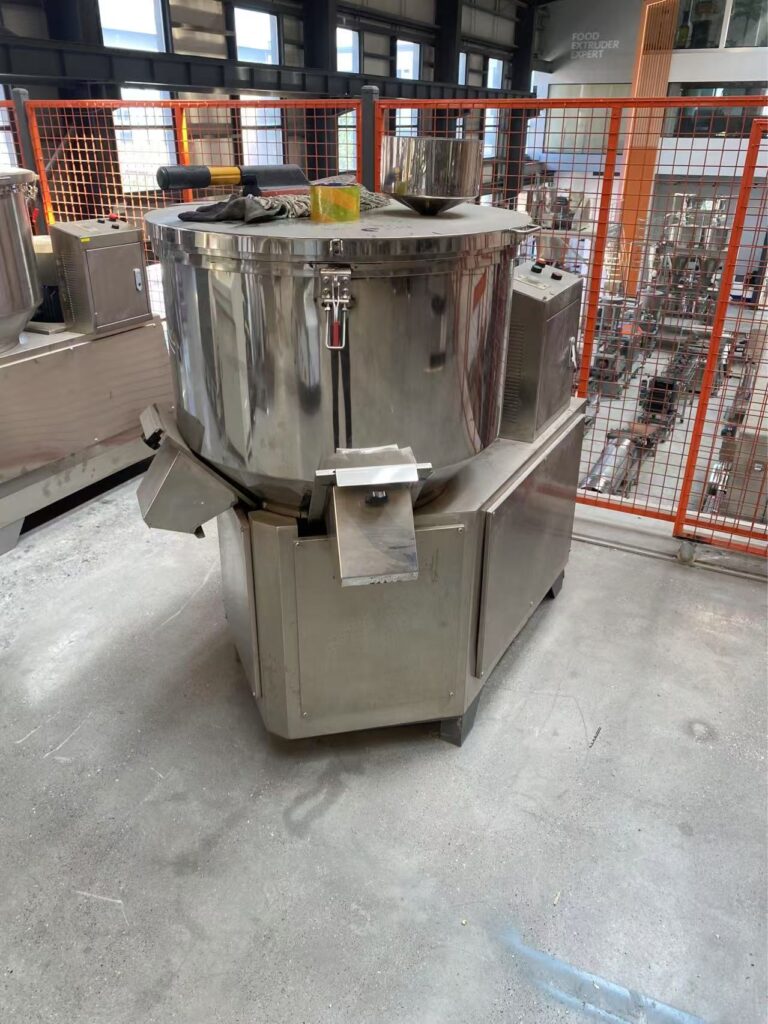
After the feed material exits the extruder die, it is usually cut by a rotating cutter. The cutting speed and blade position determine the length and final appearance of the pellets.
For example:
- Faster cutter speed produces shorter pellets.
- Slower cutter speed produces longer sticks.
- Adjusting blade angles can create different shapes and textures.
Proper cutting control helps maintain uniform product size and consistent quality.
4. Using Different Die Molds
One of the easiest ways to produce multiple fish feed shapes is by changing the die molds. Different molds can create pellets with various diameters and structures.
Examples include:
- Small pellets for juvenile fish
- Large pellets for adult fish
- Hollow pellets that float easily
- Special shapes for ornamental fish
Die molds can be replaced quickly, allowing manufacturers to switch between different product types without major equipment changes.
5. Controlling Raw Material Formulation
The feed formula also affects the final shape and structure of the pellets. Ingredients such as starch, protein, and oil influence the expansion behavior during extrusion.
For example:
- Higher starch content usually improves expansion and helps produce lighter pellets.
- Adjusting moisture levels helps maintain stable shapes.
- Adding binders can improve pellet strength.
A well-designed formulation ensures that the pellets maintain their shape during drying, packaging, and storage.
6. Drying and Stabilizing the Feed
After shaping and cutting, the fish feed pellets must be dried to reduce moisture content. Drying stabilizes the pellet structure and prevents deformation.
A proper drying process ensures that the feed maintains its shape, texture, and durability during transportation and storage.
7. Adding Coating and Flavor
In some cases, oil or liquid nutrients are sprayed onto the pellets after drying. This coating process improves nutritional value and enhances the attractiveness of the feed to fish.
For ornamental fish feed, additional color or flavor coatings may also be applied to create more visually appealing products.
Conclusion
Producing fish feed in various shapes is achievable through modern extrusion technology, flexible die molds, and precise cutting systems. By adjusting processing parameters, raw material formulations, and equipment settings, manufacturers can create a wide range of feed shapes suitable for different fish species and market demands. Offering multiple shapes and sizes of fish feed not only improves feeding efficiency but also increases product competitiveness in the aquaculture industry. If you are interested in the fish food production line , you can contact me , i will give you good advice and solutions .
1.Will you help us with the installation ?
Yes , We will send engineers to install and debug the equipment, and assist in training your staff.
2.Are you a factory or trading company?
We are a factory.
3.What certificate do you have?
We have ISO and CE certificate.
4.How long is the warranty period?
All of our machines have one year warranty.
5.What’s the main market of your company?
Our customers all over the world.
6.How much production capacity of your company one year?
This depends on your needs.
 Japanese
  English
  Russian
  Spanish
  Italian
  Arabic
  Portuguese
  German
  French
  Moroccan Arabic
  Persian
  Belarusian