
Most dry dog food (kibble) is produced using extrusion, a high-throughput cooking and shaping process that turns a blended “dough” into uniform, shelf-stable pieces. Below is a practical, step-by-step look at how a typical extruded kibble line works—from raw materials to packaged bags.
1) Ingredient preparation and receiving
A kibble formula usually combines:
- Protein sources: meat meals (e.g., chicken meal), fish meal, plant proteins (pea protein, soy, etc.)
- Starches: corn, wheat, rice, potatoes, tapioca (key for expansion and structure)
- Fibers: beet pulp, cellulose, bran
- Fats/oils: poultry fat, fish oil, vegetable oils
- Micro-ingredients: vitamins, minerals, amino acids, preservatives, probiotics (if used)
Ingredients arrive in bulk trucks, totes, or bags, then are sampled and tested (common checks include moisture, protein/fat, and contamination screening depending on the plant’s QA program).
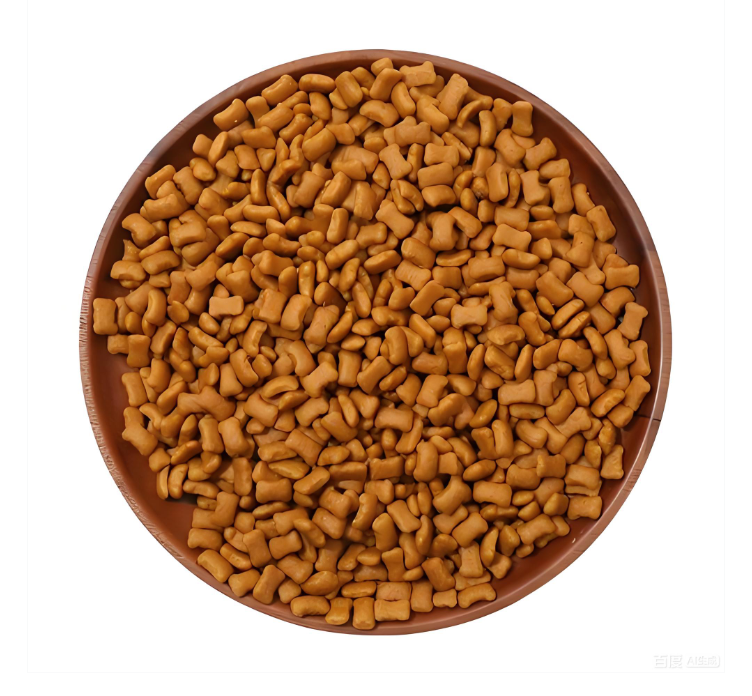
2) Grinding (particle size control)
Many dry ingredients are run through a hammer mill or grinder to achieve consistent particle size. This matters because:
- uniform particles mix better
- stable flow improves feeding into the extruder
- expansion and texture are more consistent
3) Batching and mixing
A batching system weighs ingredients according to the recipe and sends them to a mixer.
- Dry blend is mixed first for uniformity.
- Some lines add liquids (water, fats) during mixing, but many add most water/steam later during conditioning.
The goal is a consistent “meal” that feeds smoothly.
4) Preconditioning (hydration and pre-cook)
Before extrusion, the blend often enters a preconditioner (a steam-and-water mixing chamber). Here the mix is:
- hydrated to a target moisture level
- heated with steam
- partially gelatinized (starch begins to cook)
This step improves throughput and helps produce a stable kibble structure. Typical preconditioners use paddles to control residence time and mixing intensity.
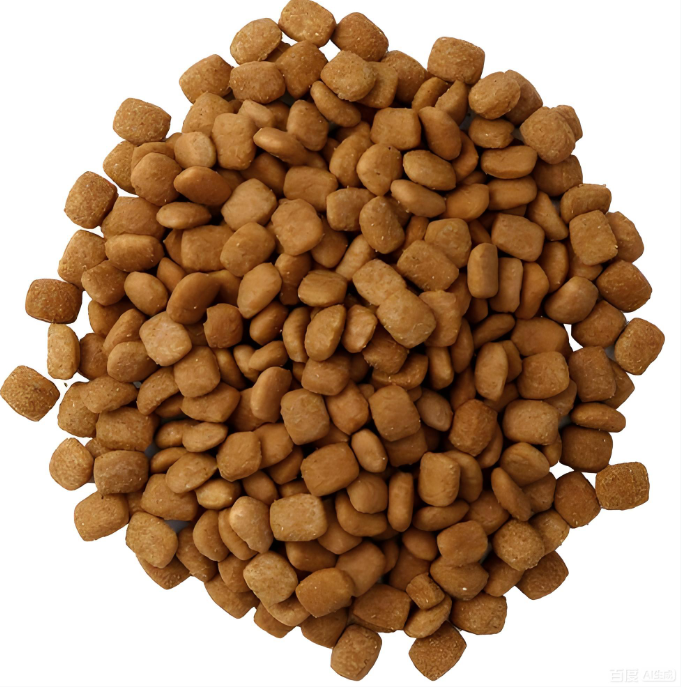
5) Extrusion: cooking under pressure and shear
The conditioned mash is fed into the extruder barrel, where one or two screws convey it forward.
Inside the extruder, the product experiences:
- mechanical shear from screw action
- heat from steam injection and/or barrel heaters
- pressure buildup as it approaches the die
During this stage:
- starch gelatinizes more fully (important for expansion and binding)
- proteins denature
- the mass becomes a cooked, plastic-like dough
Single-screw vs. twin-screw
- Single-screw extruders are common and cost-effective for many kibbles.
- Twin-screw extruders offer more control over mixing, shear, and processing of higher-fat or more difficult formulas.
6) Die and knife: shaping the kibble
At the end of the barrel, the cooked dough is forced through a die plate with openings shaped for the desired kibble size.
As it exits the die:
- pressure drops rapidly
- water flashes into steam
- the product expands (creating a porous structure)
A rotating knife cuts the expanded rope into pieces. Cut speed and die design control kibble length and shape.
7) Drying (making it shelf-stable)
Fresh extrudate is too moist to store safely, so it goes through a multi-pass dryer (often conveyor dryers).
Drying targets a moisture level low enough to inhibit microbial growth and prevent spoilage. Drying also:
- hardens structure
- reduces breakage in packaging and transport
8) Cooling (preventing condensation and quality defects)
After drying, kibble is hot. It’s cooled in a cooler to near room temperature before coating and packaging. Proper cooling prevents:
- condensation inside bags
- mold risk from trapped moisture
- clumping and texture issues
9) Post-extrusion coating (fat + palatants)
Many formulas apply fats and flavors after drying using a coating drum (sometimes vacuum coating):
- fats/oils improve energy density and mouthfeel
- palatants/digests improve aroma and taste acceptance
- heat-sensitive additives (some vitamins, probiotics) may be added here if the process supports it
This step is one reason kibble can smell much “meatier” than the base cooked pellet.
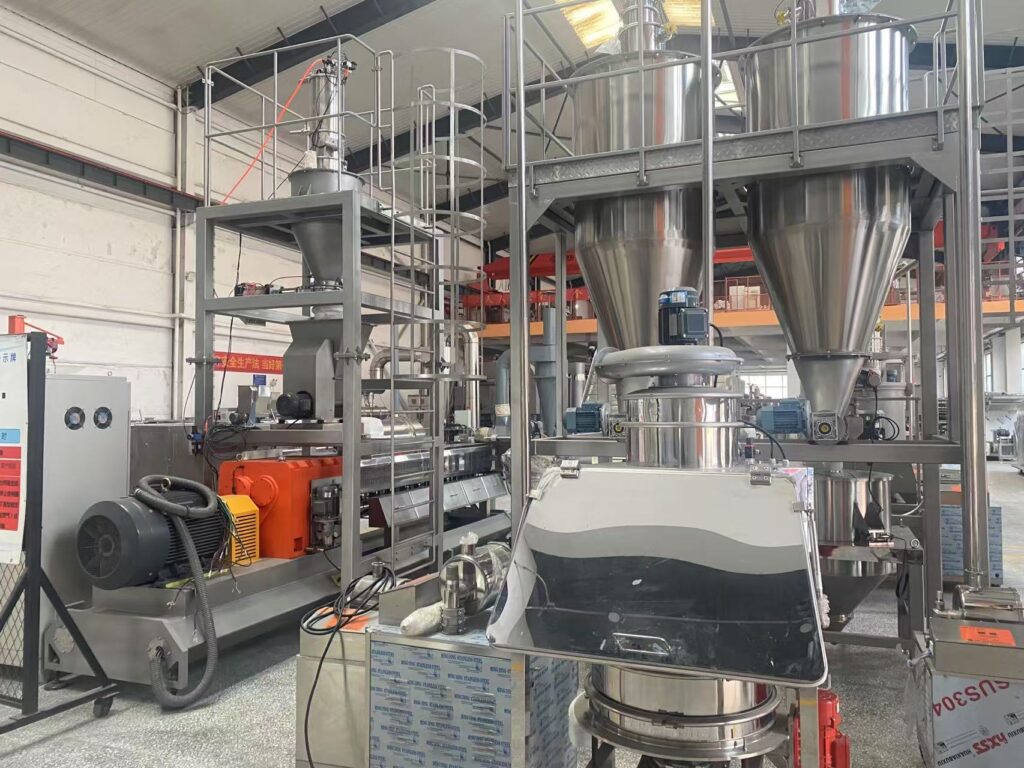
10) Packaging and storage
Finally, kibble is weighed and packed into bags with features such as:
- oxygen/moisture barriers
- resealable closures (consumer convenience)
- lot codes for traceability
Finished product is stored and shipped under conditions meant to protect fats from oxidation and prevent moisture pickup.
Key process controls manufacturers watch closely
Extruded kibble quality depends on controlling a few critical variables:
- Moisture (too low = poor cook; too high = weak structure)
- Starch level/type (drives expansion and texture)
- Screw speed and configuration
- Barrel temperature and pressure
- Die design and knife speed
- Dryer time/temperature profile
- Fat coating rate and uniformity
These controls determine density, crunch, durability, and palatability—along with nutritional consistency.
 Japanese
  English
  Russian
  Spanish
  Italian
  Arabic
  Portuguese
  German
  French
  Moroccan Arabic
  Persian
  Belarusian