
The extrusion expander, commonly known as an extruder, is a cornerstone machine in multiple industrial sectors, transforming raw materials into structured, expanded products through a process combining heat, pressure, and mechanical shear. extruder machine Its principle is elegantly efficient yet powerful, enabling the production of everything from breakfast cereals to biodegradable packaging.
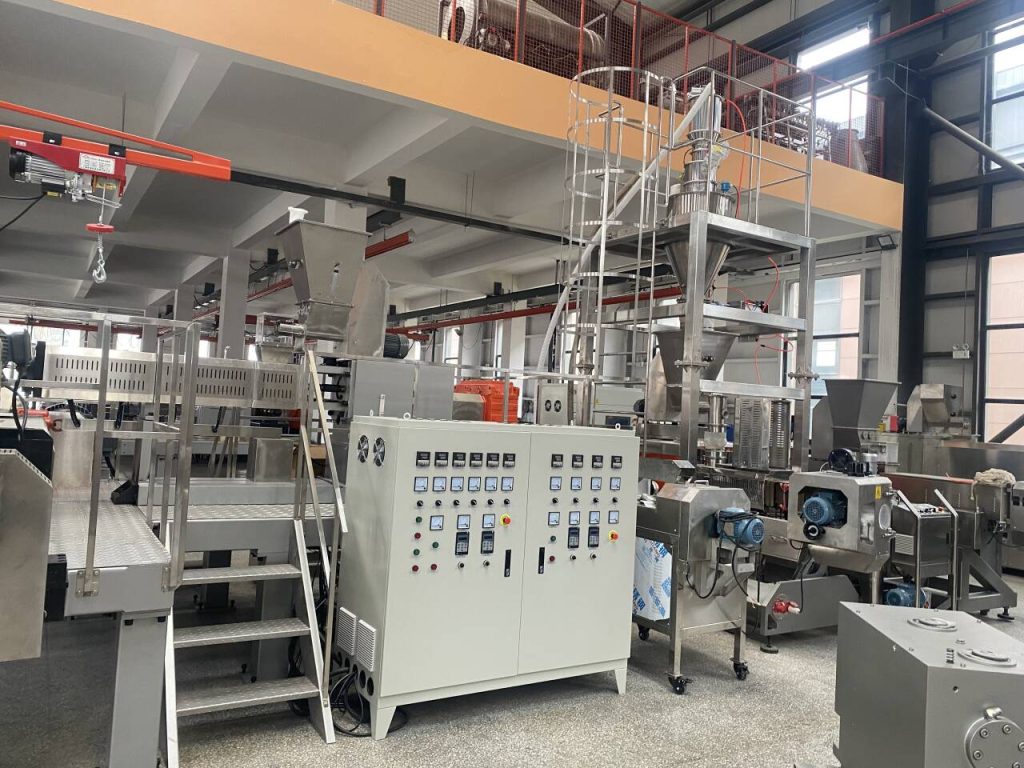
Core Working Principle
At its heart, the machine consists of a barrel housing one or two intermeshing, specially designed screws. The raw material – often a powdered or granular mix containing starch, protein, or polymers – is fed into the barrel. extruder machine As the screws rotate, they convey the material forward through a series of zones:
- Feeding & Conveying: The material is drawn in and transported.
- Compression & Kneading: The screw design (e.g., changing pitch, inclusion of kneading blocks) compresses the mix. Mechanical energy from the rotating screws and, in many cases, external barrel heating, plasticizes the material into a viscous dough.
- Melting & Cooking: Under high pressure and temperature (typically 120-200°C), the mixture undergoes thermal and mechanical “cooking,” where its components gelatinize or melt.
- Expansion & Shaping: The hot, pressurized melt is forced through a die at the barrel’s end. The instant pressure drop causes the superheated moisture within to flash into steam, rapidly expanding the product. The die shape dictates the final form—be it pellets, rings, sheets, or intricate profiles.
Key Advantages
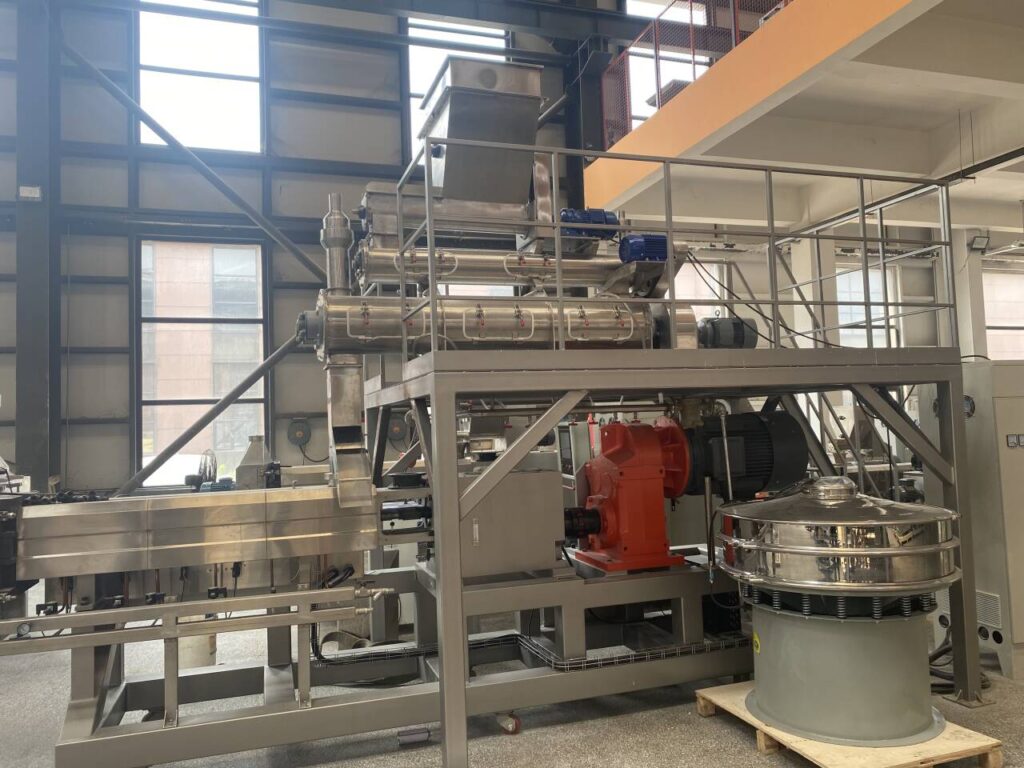
- Versatility: Capable of processing a vast array of ingredients (cereals, soy, plastics, etc.) into diverse shapes and textures.
- Efficiency: A continuous, high-throughput process with relatively short cooking times.
- Product Control: Precise adjustment of screw speed, extruder machine temperature, and moisture allows fine-tuning of product density, texture (crispness), and functional properties.
- Sterilization: The high-temperature process effectively destroys pathogens and anti-nutritional factors, enhancing food and feed safety.
- Functionality: Can modify nutritional value (e.g., improving starch digestibility), create porous structures for instant products, or impart unique textures.
Primary Applications
- Food Industry: Production of ready-to-eat cereals, snack foods (cheese puffs, breadsticks), textured vegetable protein (meat analogs), baby food, and pre-cooked flours.
- Feed Industry: Manufacturing of expanded pet food, aquafeed, and livestock feed, improving digestibility and pellet durability.
- Biomass & Recycling: Processing biomass into fuel pellets and recycling plastics or rubber.
- Chemical & Polymer Industries: Compounding plastics and producing starch-based biodegradable foams and packaging materials.
Variants and Evolution
Modern extruders come in various configurations. Single-screw extruders are robust and common for simpler tasks, while twin-screw extruders (co-rotating or counter-rotating) offer superior mixing, heat transfer, and control for complex recipes. Today’s machines are increasingly automated, featuring sophisticated process control systems for consistent, high-quality output.
In summary, the extrusion expander is a master of transformation. Its ability to efficiently convert raw, often mundane materials into valuable, functional, and appealing products solidifies its status as an indispensable piece of engineering in the food, feed, and manufacturing worlds.
 Japanese
  English
  Russian
  Spanish
  Italian
  Arabic
  Portuguese
  German
  French
  Moroccan Arabic
  Persian
  Belarusian