
Extruded breadcrumbs, a staple in the food industry for coatings and toppings, are manufactured through a continuous, high-efficiency thermo-mechanical process. bread crumb machine manufacturers Unlike traditional methods that involve baking and grinding bread, this method transforms raw flour directly into finished crumbs. Here is a detailed, step-by-step breakdown of the complete production process.
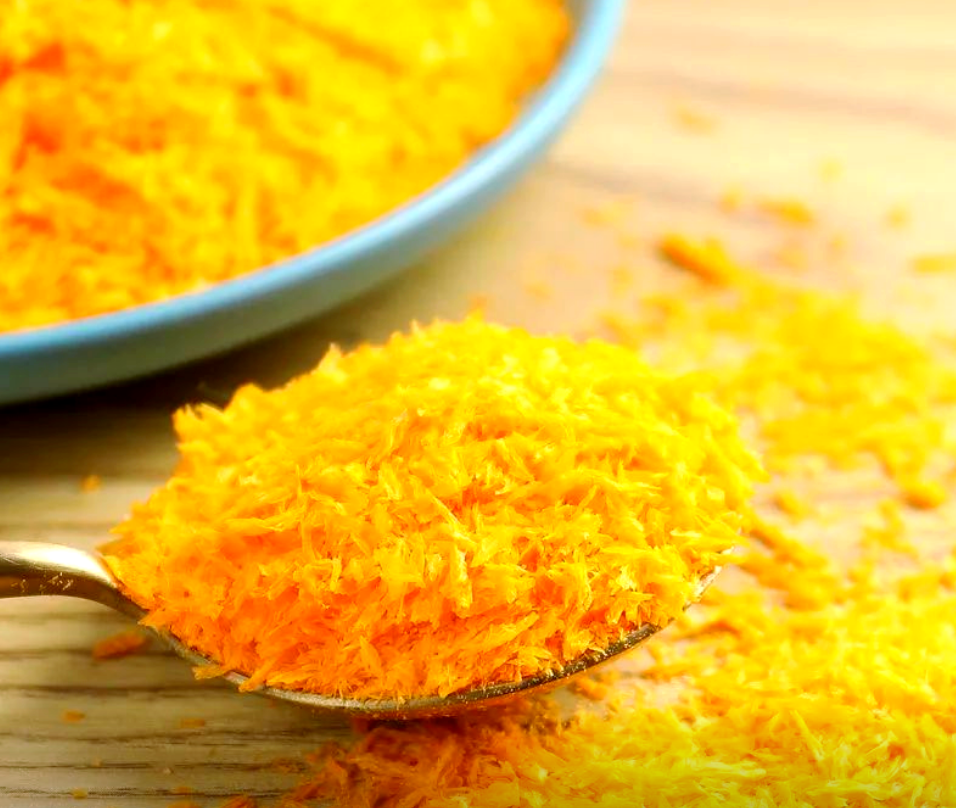
Stage 1: Raw Material Handling and Mixing
1.1 Ingredient Selection & Storage:
- Base Flour: The primary ingredient is wheat flour, typically of medium protein content (9-11%), selected for consistent quality and functionality. It is stored in silos.
- Minor Ingredients: Other dry ingredients—including starches (potato, corn), salt, sugar, yeast extract (for flavor), and emulsifiers (e.g., lecithin)—are stored in dedicated bins or bags.
1.2 Dry Blending:
- Precisely weighed quantities of all dry ingredients are discharged into a high-speed ribbon mixer or paddle mixer.
- The mixer operates for a fixed time (e.g., 5-10 minutes) to achieve a perfectly homogeneous dry pre-mix. Uniformity here is critical for stable extrusion.
Stage 2: Dough Conditioning & Feeding
2.1 Transfer to Feeder:
- The dry blend is conveyed (via screw conveyor or pneumatic system) to a live-bottom hopper mounted above the extruder’s feed inlet.
2.2 Liquid Addition & Pre-conditioning (Optional but Common):
- Water is metered into the stream via a precision liquid pump. The moisture content at this stage is crucial, typically ranging from 20% to 28%.
- Many modern lines employ a pre-conditioner—a cylindrical mixing chamber where the flour blend is mixed with hot water and/or low-pressure steam. bread crumb machine manufacturers This initiates starch hydration and partial gelatinization, improving extruder stability and efficiency.
Stage 3: Thermo-Mechanical Cooking & Forming (The Heart of the Process)
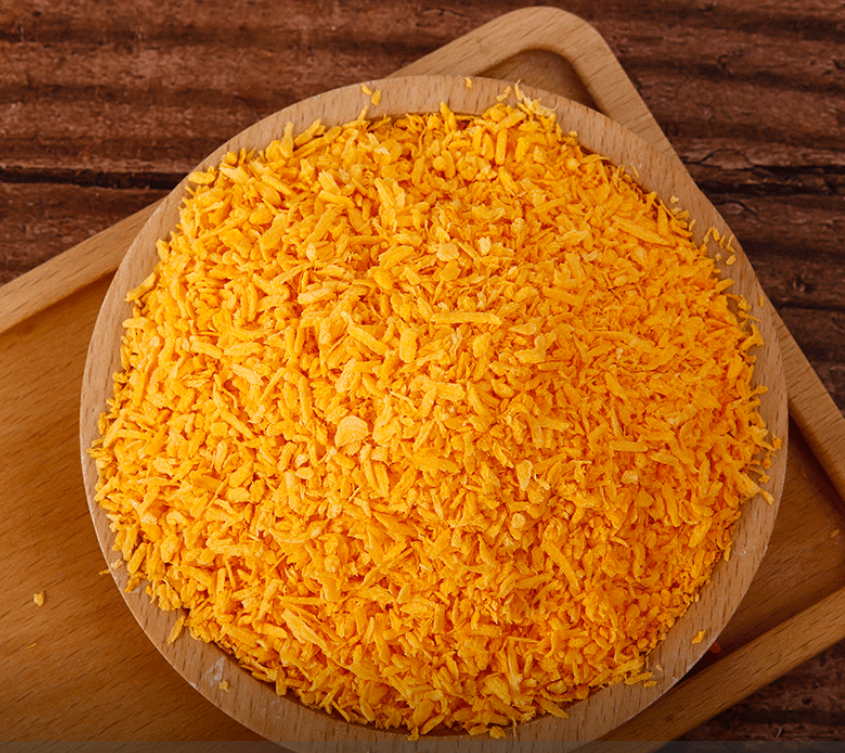
3.1 Extrusion Cooking:
- The conditioned mix enters the barrel of a twin-screw extruder (the preferred machine for its superior control and mixing).
- As the material is conveyed by the intermeshing screws, it is subjected to:
- Intense Mechanical Shear from the screw elements (especially kneading blocks).
- Conductive Heat from electrically heated barrel zones.
- This combination rapidly cooks the dough, achieving full starch gelatinization at temperatures between 130°C and 160°C (266–320°F). The material transforms into a viscous, plasticized melt.
3.2 Forming & Shaping:
- The cooked dough is forced through a specialized forming die mounted at the end of the barrel.
- For Needle-Style Crumbs: The die plate has hundreds of small, bread crumb machine manufacturers round holes (1.0–1.5 mm diameter). The emerging continuous strands are immediately cut into short lengths (3–6 mm) by a high-speed rotary cutter spinning against the die face.
- For Flake-Style Crumbs: A wider, slit-shaped die may be used to produce thin sheets, which are then cut or broken into flakes.
Stage 4: Drying & Toasting
4.1 Multi-Zone Conveyor Drying:
- The soft, moist extrudates are evenly spread onto the first belt of a multi-pass conveyor dryer.
- Zoned Drying:
- Zone 1 (Falling Rate Drying): High humidity, moderate temperature (~80–100°C) to gently remove surface moisture without case-hardening.
- Zones 2 & 3 (Constant Rate & Toasting): Higher temperature (~110–140°C) to remove internal moisture, crisp the structure, and develop color. Residence time is carefully controlled.
4.2 Moisture Reduction & Color Development:
- The final moisture content is reduced to 4–8% for shelf stability.
- The golden-brown color is achieved through Maillard reactions and caramelization during this stage, not from traditional baking.
Stage 5: Cooling & Classification
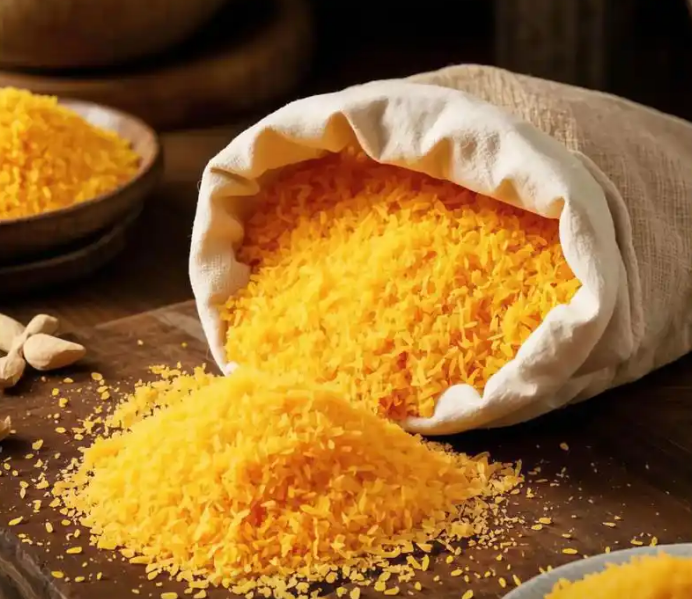
5.1 Cooling:
- The hot, dried crumbs are transferred to a cooling conveyor (often with ambient or forced-air cooling) to reduce their temperature to near-ambient levels (~30°C). This prevents condensation and caking in the packaging.
5.2 Sizing & Screening:
- The cooled product passes over a series of vibratory screens or sifters.
- Fines (dust) are removed and may be recycled into the process.
- Oversized agglomerates are separated and may be crushed and re-screened.
- This step ensures a uniform, consistent particle size distribution.
Stage 6: Optional Coating & Flavoring
- For seasoned or oil-coated varieties, crumbs enter a rotating drum coater.
- A fine mist of vegetable oil is sprayed to help seasoning adhesion and enhance browning during end-use frying.
- Dry seasoning blends (paprika, garlic powder, etc.) are added and uniformly distributed by the tumbling action.
Stage 7: Packaging & Storage
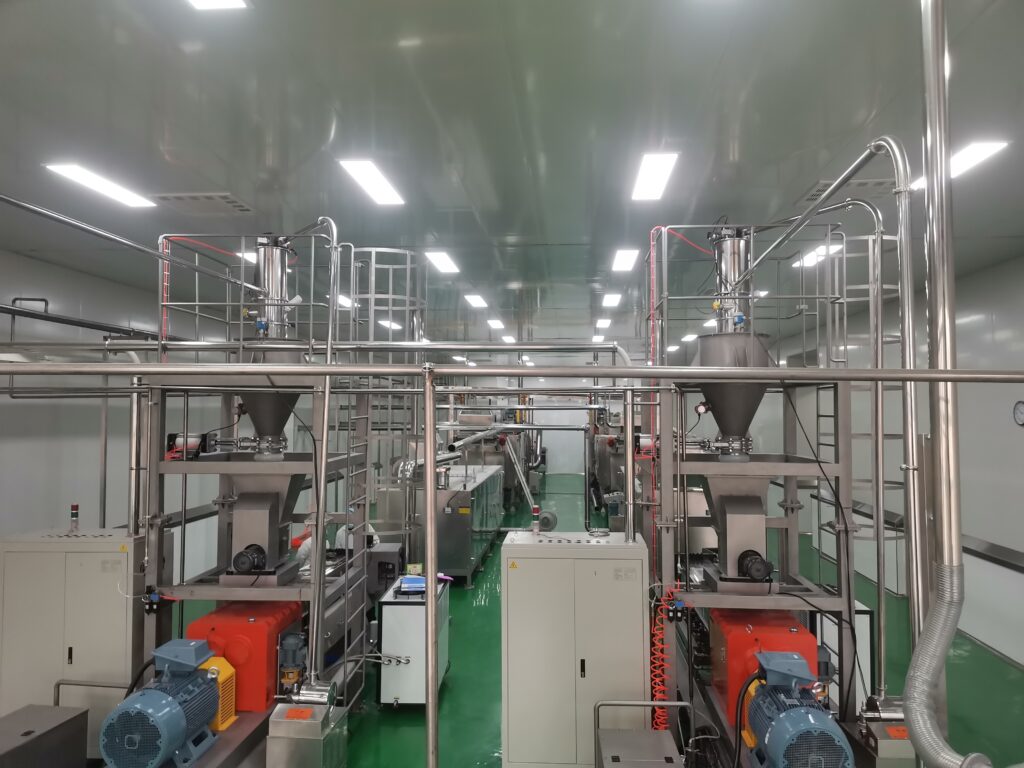
7.1 Weighing and Filling:
- Crumbs are fed into an automatic weighing and bagging machine (e.g., a multi-head weigher).
- Pre-set weights (e.g., 5 kg, 25 kg) are filled into bags made of moisture-barrier packaging (e.g., polypropylene or metallized film).
7.2 Gas Flushing & Sealing:
- For extended shelf life, bags are often flushed with nitrogen to displace oxygen before sealing. This prevents oxidative rancidity and maintains crispness.
7.3 Palletizing and Storage:

- Sealed bags are cartoned, then automatically stacked onto pallets.
- Pallets are stored in a cool, dry warehouse awaiting shipment.
Key Advantages of the Extrusion Process:
- Efficiency: A continuous process from flour to finished product in minutes.
- Consistency: Unmatched control over size, shape, color, and texture.
- Functionality: Engineered to have superior crispness, oil absorption, and coating adhesion.
- Cost-Effectiveness: High throughput with minimal labor and energy compared to traditional baking and grinding.
The production of extruded breadcrumbs is a sophisticated integration of food science and engineering. It is designed not to replicate the traditional method, but to produce a highly functional, bread crumb machine manufacturers consistent, and shelf-stable coating ingredient at an industrial scale. Understanding this complete process explains why extruded crumbs are the dominant choice for global food manufacturers and food service operations.
 Italian
  English
  Russian
  Spanish
  Arabic
  Portuguese
  German
  French
  Japanese
  Moroccan Arabic
  Persian
  Belarusian