
The Future of Aquaculture: Market Prospects for Fish Feed
The global fish feed market is at the heart of one of the most significant transformations in the food industry. As wild fish stocks plateau and global demand for protein surges, aquaculture has become the fastest-growing food production sector . Consequently, the fish feed market is not just growing; it is evolving into a high-tech, sustainability-driven industry essential for global food security. This article explores the market prospects for fish feed, examining the drivers of growth, key innovations, regional dynamics, and the challenges that lie ahead.
1. Market Growth and Valuation
The economic outlook for the fish feed market is robust. Multiple industry reports project strong growth over the next decade, driven by the relentless expansion of aquaculture.
- Market Size: The global aquafeed market was valued at approximately $71.28 to $73.5 billion in 2025 .
- Growth Projections: The market is projected to reach between $131.07 billion and $136.8 billion by 2034-2036, growing at a compound annual growth rate (CAGR) of 5.7% to 7.15% from 2026 onwards .
This growth is underpinned by a fundamental shift in protein consumption. Global per capita seafood consumption is expected to reach 21.8 kg by 2034, up from 21.1 kg in recent years, and aquaculture is projected to supply 61% of this food fish by the end of the decade, up from 58% .
2. Key Drivers of Market Growth
Several factors are converging to create a fertile ground for the fish feed market’s expansion.
- Rising Global Seafood Demand: Seafood is increasingly recognized as a healthy source of protein and omega-3 fatty acids. As populations and incomes grow, particularly in developing nations, the demand for fish outpaces the sustainable yield of capture fisheries, making aquaculture the only viable solution to meet this demand .
- Aquaculture Expansion: The aquaculture industry is the primary driver. Global aquaculture production is expected to reach 118 million tonnes by 2034, a 20% increase from the base period . This expansion is particularly pronounced in Asia, which accounts for 75% of the growth in aquatic food consumption .
- Government Support: Recognizing aquaculture’s role in food security and economic development, governments are actively promoting the sector. For example, the Indian government allocated over $73 million for its “Blue Revolution Scheme” to support fisheries and aquaculture development .
3. Key Trends and Innovations
The fish feed industry is undergoing a technological and nutritional revolution. The future of the market lies in creating feeds that are not only effective but also sustainable.
- The Shift from Marine to Alternative Proteins: The industry is actively reducing its reliance on fishmeal and fish oil, which are finite resources. The global average inclusion rate of fishmeal in aquafeeds has dropped from 25% in 2000 to about 9% today .
- Plant-Based Proteins: Soybean meal, wheat gluten, and pea concentrates are now the dominant ingredients, accounting for 37% of the market by expenditure. They offer a cost-effective and scalable alternative .
- Novel Ingredients: Insect meal, single-cell proteins, and algae-based ingredients are the fastest-growing segments. Insect meal is projected to grow at a CAGR of 13.4%, driven by supportive policies and expanding production capacity . An often-overlooked trend is the increasing use of seafood by-products (trimmings), which now account for 40% of global fishmeal and fish oil production, effectively upcycling waste streams .
- Functional and Precision Nutrition: Modern fish feed is evolving from simple sustenance to sophisticated nutrition.
- Functional Feeds: These feeds are fortified with probiotics, enzymes, and immunostimulants to improve gut health, boost disease resistance, and reduce the need for antibiotics. This trend is particularly strong in Europe and North America, where regulations on antibiotic use are strict .
- Precision Feeding: The integration of digital tools, AI-driven feeders, and sensors allows for precise feeding schedules that minimize waste, lower costs, and improve the feed conversion ratio (FCR) .
- Sustainability and Certification: There is a growing market premium for certified sustainable feed ingredients. Marine Stewardship Council (MSC) and Aquaculture Stewardship Council (ASC) certified fishmeal can sell at a 20-30% premium, as major producers like Mowi ASA aim for 100% certified sourcing .
4. Regional Market Analysis
The fish feed market is geographically diverse, with distinct dynamics in different regions.
- Asia-Pacific: The Undisputed Leader
- Asia-Pacific dominates the market, holding a 73.88% share . This is driven by countries like China (the world’s largest seafood producer, accounting for 53% of global aquaculture output), India, Vietnam, and Indonesia .
- Growth in this region is fueled by mass aquaculture of species like carp and tilapia, with a shift towards higher-protein diets to improve profitability and shorten grow-out cycles .
- Europe and North America: Focus on Premium and Sustainable Feed
- These markets are characterized by high-value species such as salmon and trout.
- The focus is on sustainability, functional feeds, and strict environmental regulations. The Recirculating Aquaculture System (RAS) market, which requires highly digestible, specialized feed to manage water quality, is growing rapidly in these regions .
- Emerging Markets: Latin America and Africa
- Latin America, led by Chile and Brazil, is a significant player in salmon and shrimp farming, with a growing focus on organic and sustainable ingredients .
- Africa is projected to experience the fastest growth rate in total fish consumption (24% by 2034), presenting a major long-term opportunity for feed manufacturers .
5. Challenges and Restraints
Despite the positive outlook, the fish feed market faces significant challenges.
- Raw Material Price Volatility: The prices of key ingredients like fishmeal and soybean are highly volatile. Fishmeal prices, for instance, can range from $1,400 to $2,100 per metric ton depending on catches in Peru, directly impacting feed production costs and profitability .
- Environmental Regulations: Stringent regulations in Europe and North America on nutrient discharge (phosphorus and nitrogen) are forcing feed manufacturers to develop low-pollution formulas, which can increase production costs by 5-10% .
- Disease Outbreaks: Disease outbreaks in aquaculture farms, such as in shrimp or salmon, can create sudden disruptions in demand for feed .
6. Future Outlook and Opportunities
The long-term prospects for the fish feed market remain positive, driven by innovation and the fundamental need for sustainable protein.
- Commercialization of Alternative Proteins: The next decade will see the large-scale commercialization of insect meal and algae-based proteins. As production scales up and costs decrease, these ingredients will become more competitive, further reducing the industry’s environmental footprint .
- Circular Feed Solutions: The use of by-products from the seafood processing industry is a key growth area. Utilizing 100% of the fish aligns perfectly with the industry’s sustainability goals .
- Digitalization and AI: The adoption of AI-driven precision feeding platforms will continue to grow, enhancing feed-conversion efficiency and reducing costs for farmers .
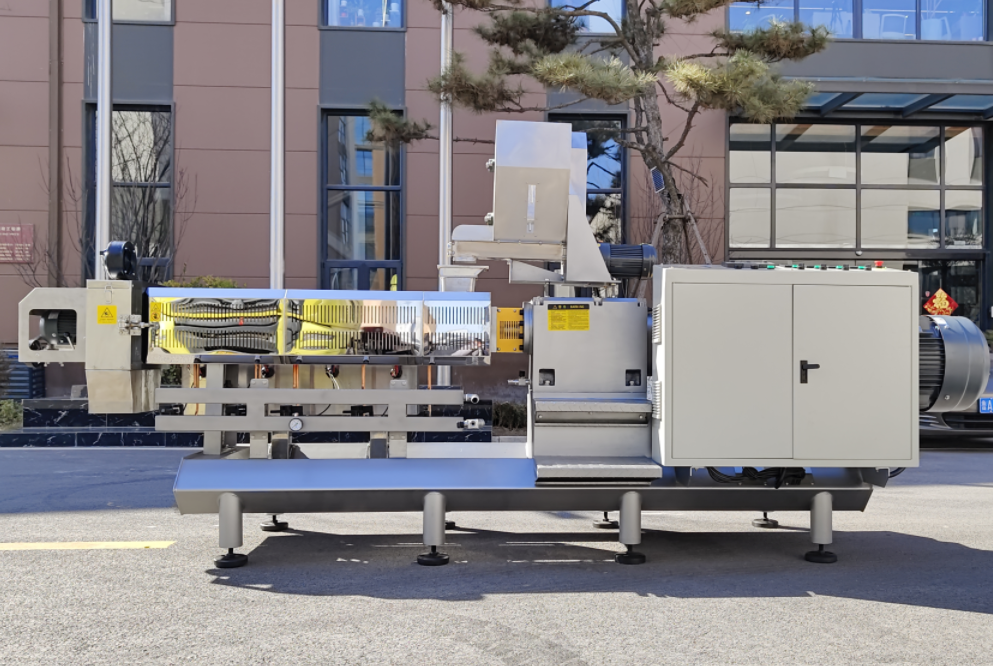
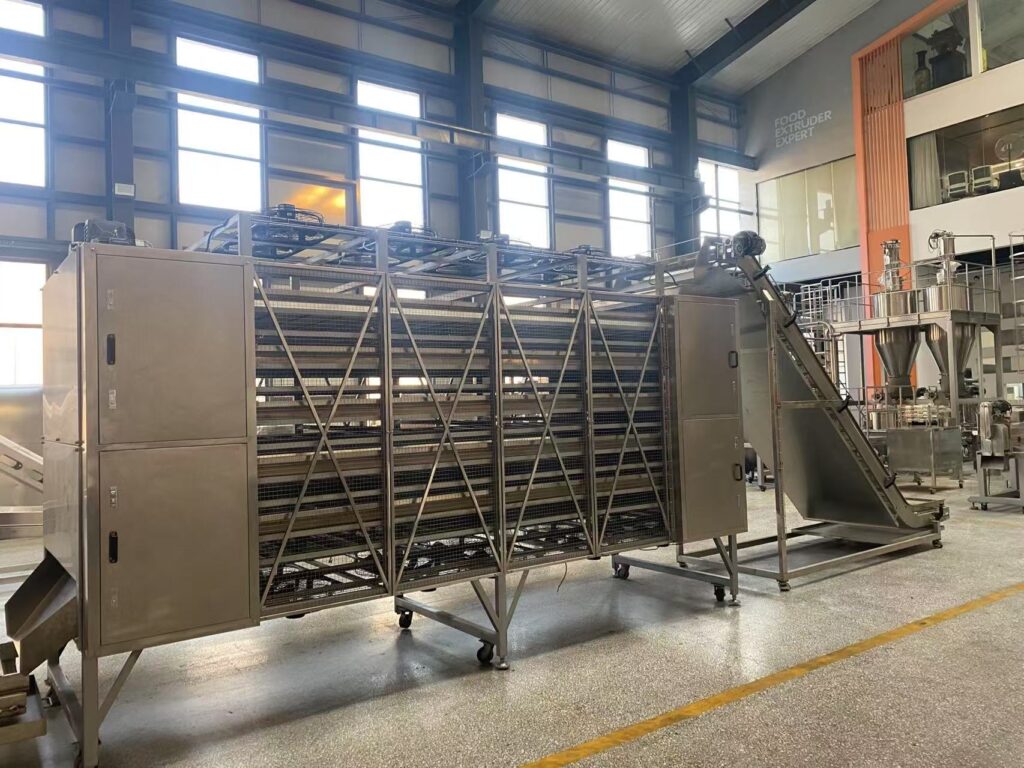
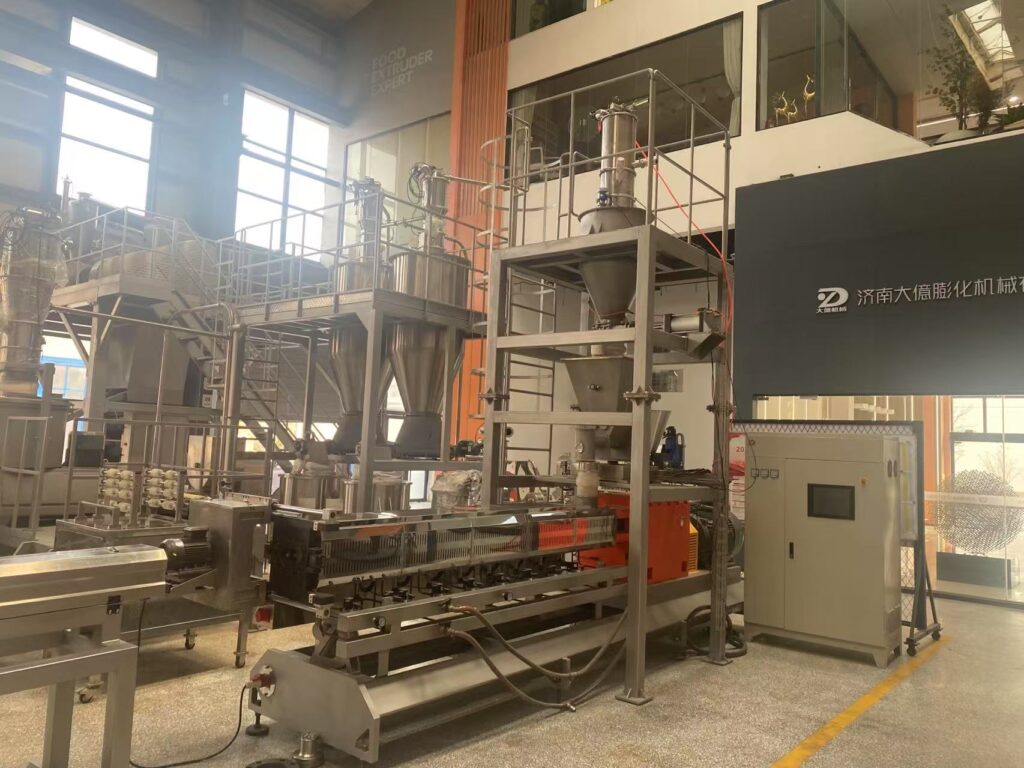
In conclusion, the fish feed market is poised for substantial and sustained growth. It is no longer just a supplier to aquaculture but a key enabler of its future. The market’s prospects are bright for those who can innovate in ingredient sourcing, embrace digital technologies, and meet the growing global demand for sustainable, high-quality seafood. If you are interested in the fish feed making machine , you can contact me , i will give you good advice and solutions .
1.Will you help us with the installation ?
Yes , We will send engineers to install and debug the equipment, and assist in training your staff.
2.Are you a factory or trading company?
We are a factory.
3.What certificate do you have?
We have ISO and CE certificate.
4.How long is the warranty period?
All of our machines have one year warranty.
5.What’s the main market of your company?
Our customers all over the world.
6.How much production capacity of your company one year?
This depends on your needs.
 French
  English
  Russian
  Spanish
  Italian
  Arabic
  Portuguese
  German
  Japanese
  Moroccan Arabic
  Persian
  Belarusian