
A twin-screw puffing extruder is a sophisticated piece of industrial machinery designed to continuously process and cook a variety of materials, from food ingredients and animal feed to polymers . Its ability to produce puffed snacks, texturized proteins, and breakfast cereals relies on the precise interaction of several key systems and components. Understanding these parts is essential for anyone involved in the operation, maintenance, or selection of this versatile equipment.
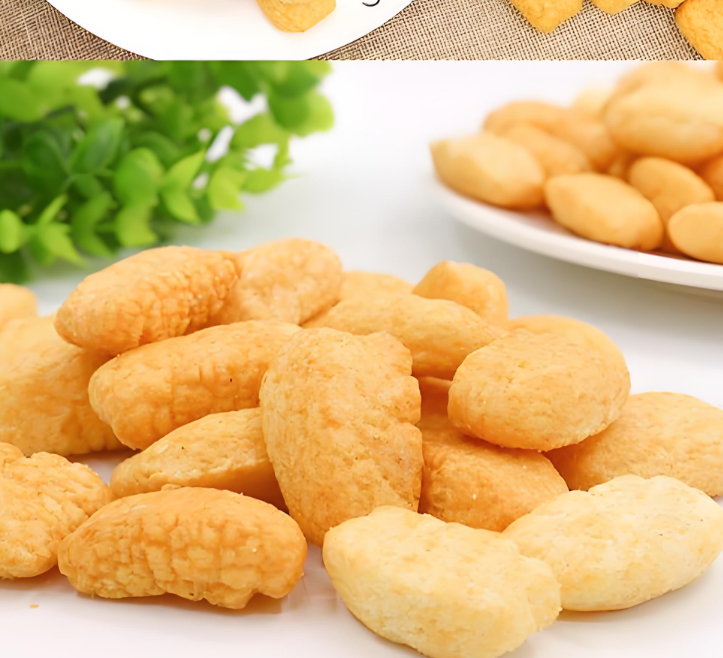
The extruder can be broken down into several primary systems, each playing a critical role in transforming raw materials into a finished puffed product.
flowchart TD
    A[Feeding System] --> B[Pre-Conditioning System]
    B --> C[Extrusion Barrel & Screw Assembly]
    C --> D[Die & Cutter Assembly]

    subgraph C [Extrusion Barrel & Screw Assembly]
        C1[Two Intermeshing Screws]
        C2[Barrel with Heating/Cooling Zones]
    end

    E[Drive System<br>Motor & Gearbox] --> C

    F[Control System] --> A
    F --> B
    F --> C
    F --> D
    F --> E

    C --> G[Post-Extrusion<br>Drying & Cooling]
    D --> G
1. Feeding System
The process begins with the feeding system, which introduces raw materials into the extruder in a controlled and consistent manner. This is crucial for product uniformity .
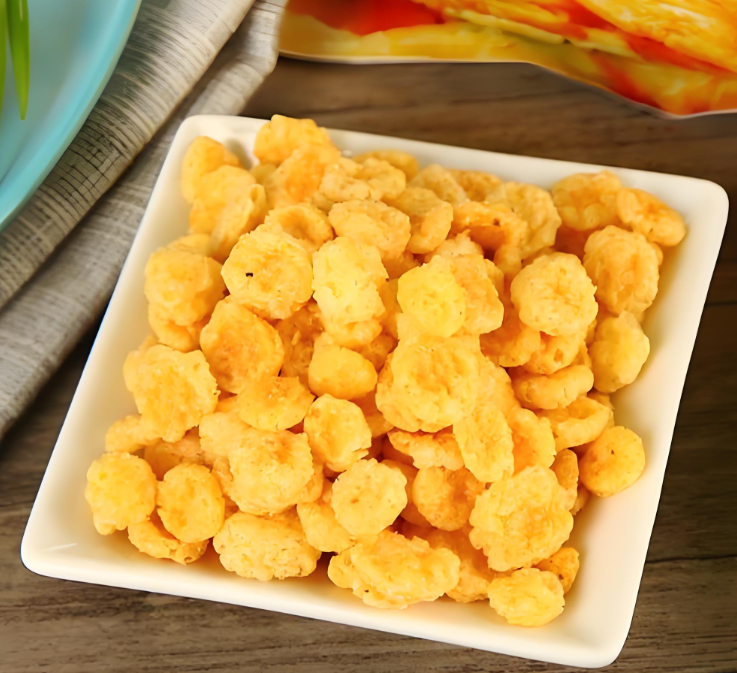
- Feed Hopper: A funnel-shaped container that holds the bulk raw material (e.g., cornmeal, rice flour, or a formulated powder mix) before it enters the extruder .
- Feeder: Located beneath the hopper, this mechanism, often a screw or auger, meters the material at a precise, adjustable rate into the extruder barrel. Accurate feeding is critical because fluctuations can directly impact product density, shape, and cooking degree .
2. Pre-Conditioning System
For many food and feed applications, particularly those involving starches and proteins, a preconditioner is used to prepare the raw material before it enters the main extruder barrel.
- Function: This cylindrical chamber uses steam and water to pre-moisten and pre-heat the dry ingredients . This step hydrates the particles, initiates starch gelatinization, and can improve the final product’s texture and reduce wear on the extruder’s internal components.
3. The Extrusion Barrel and Screw Assembly
This is the heart of the puffing extruder, where the actual cooking and transformation take place. It consists of two parallel shafts housed within a closed barrel.
- The Twin Screws: The two screws are the most critical component. They are typically co-rotating (turning in the same direction) and intermeshing, meaning the flight of one screw extends into the channel of the other . This design provides a self-wiping action that prevents material buildup and ensures even processing. The screws are not a single piece but are built from individual screw elements (with different pitches) and kneading blocks (for mixing) that can be arranged on a shaft to create a specific process profile for conveying, mixing, shearing, and building pressure .
- The Barrel: The screws are enclosed in a barrel that is typically “∞”-shaped in cross-section to accommodate the two screws . The barrel is modular, divided into sections, each with independent temperature control.
- Heating/Cooling Zones: To generate the precise temperatures needed for cooking and puffing, the barrel sections are equipped with heating elements (electric or steam) and cooling systems (water or oil) . This precise thermal control is vital for product quality.
- Venting/Degassing Zones: Some barrel sections have ports that allow steam, air, and volatile compounds to escape under vacuum or atmospheric pressure, which is important for product texture and safety .
4. Drive System
This system provides the powerful and controlled rotational force needed to turn the screws against the resistance of the thick, pressurized dough inside the barrel.
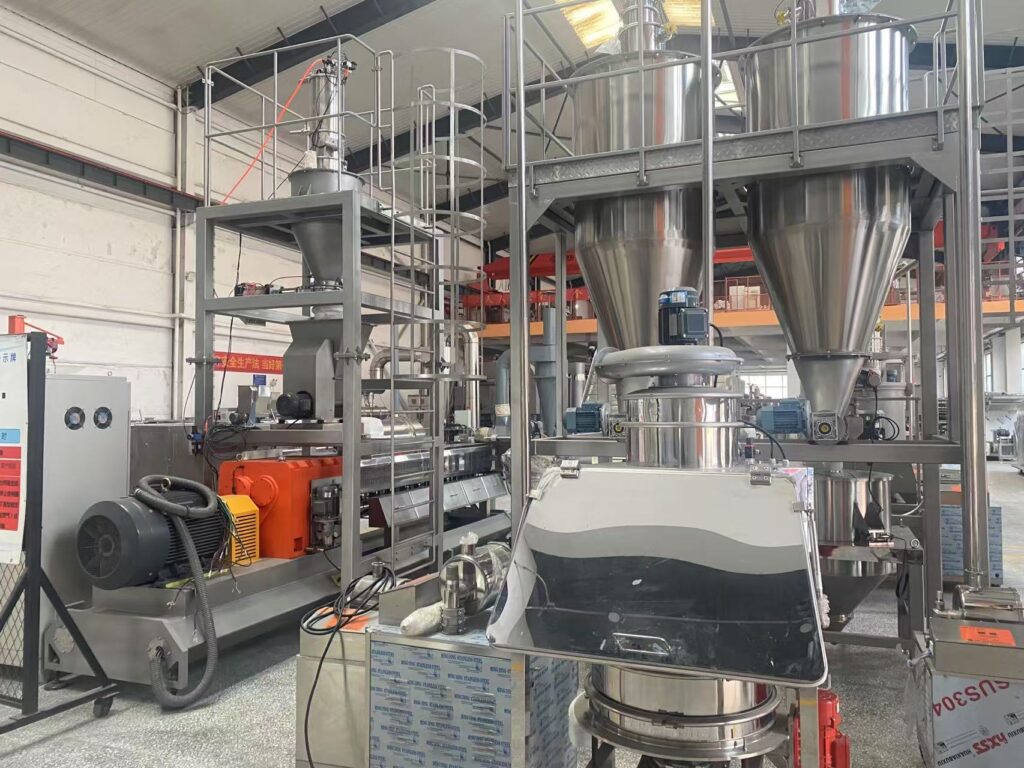
- Electric Motor: The primary power source, often a variable-frequency drive (VFD) motor that allows for precise control over the screw speed (RPM) .
- Gearbox: Connected to the motor, the gearbox reduces the speed while multiplying the torque (turning force) to a level suitable for extrusion . It also contains the thrust bearing assembly, which absorbs the immense axial force generated as the screws push the material forward toward the die .
5. Die and Cutter Assembly
This is the final stage where the cooked material is shaped and cut into the final product.
- Die Plate: Located at the discharge end of the barrel, the die is a thick metal plate with one or more precisely shaped openings (holes) . As the highly pressurized, molten material is forced through these openings, it experiences a sudden drop in pressure. This causes the superheated water within to flash into steam, instantly expanding or “puffing” the material into its final form.
- Cutter: A rotating knife assembly that sits flush against the face of the die plate . It spins at a controlled speed, cutting the extruded, puffy material into pieces of a specific length (e.g., pillow shapes, cylinders).
6. Control System
Modern twin-screw extruders are managed by a sophisticated computerized control panel .
- Function: This system acts as the brain of the operation. It monitors and precisely regulates all critical process parameters in real-time, including screw speed, feeder rate, barrel zone temperatures, melt pressure, and motor torque . This centralized control ensures product consistency, safety, and the ability to replicate results across different production runs.
7. Post-Extrusion Systems
While not part of the extruder itself, ancillary equipment is essential for completing the production line.
- Conveyor: Receives the hot, moist puffed pieces from the cutter and transports them to the dryer.
- Dryer: The freshly extruded product typically has a high moisture content. A dryer (oven) reduces this moisture to achieve the desired shelf-stable crispiness.
- Seasoning Drum: For snack foods, a tumbling drum is used to apply oil and flavor coatings evenly to the dried product.
In summary, a twin-screw puffing extruder is a complex system where mechanical action, thermal energy, and precise control converge. Each component, from the feeding screw to the cutter blade, plays an indispensable role in the continuous, high-efficiency transformation of raw powder into a structured, puffed final product.
 French
  English
  Russian
  Spanish
  Italian
  Arabic
  Portuguese
  German
  Japanese
  Moroccan Arabic
  Persian
  Belarusian