
A Comprehensive Guide to Fish Feed Manufacturing: From Raw Materials to Optimal Pellets
Fish feed manufacturing is a precision-driven process that transforms raw ingredients into nutritionally complete, water-stable, and palatable pellets. fish feed extruder The quality of feed directly impacts fish health, growth performance, feed conversion ratio (FCR), and water quality. This guide outlines the critical stages and principles of modern fish feed production, focusing on the prevalent extrusion cooking method used for aquafeeds.
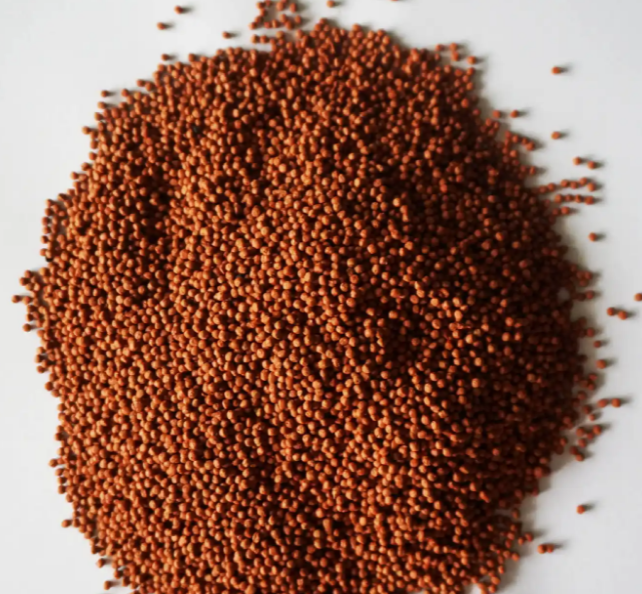
1. Raw Material Selection & Reception
The process begins with high-quality ingredients.
- Core Components:
- Sources de protéines : Fishmeal, soybean meal, poultry by-product meal, corn gluten meal, etc.
- Energy Sources: Wheat, corn, broken rice, wheat middlings, lipids (fish oil, vegetable oils).
- Binders: Wheat gluten, starches, gums (to enhance pellet durability).
- Micronutrients: Premixes of vitamins, minerals, and amino acids (e.g., methionine, lysine).
- Quality Control: Incoming materials are tested for moisture, protein, fat, and aflatoxin/contaminant levels. Consistency is key for formula accuracy.
2. Grinding & Micro-Pulverization
- Objective: To reduce particle size uniformly, typically to a fine powder (< 200 microns).
- Importance: Fine grinding increases the surface area of ingredients, leading to:
- Better mixing and nutrient homogeneity.
- Improved starch gelatinization during extrusion.
- Enhanced binding and pellet stability.
- Smoother pellet surface, reducing friction in feeders.
3. Weighing & Mixing (Blending)
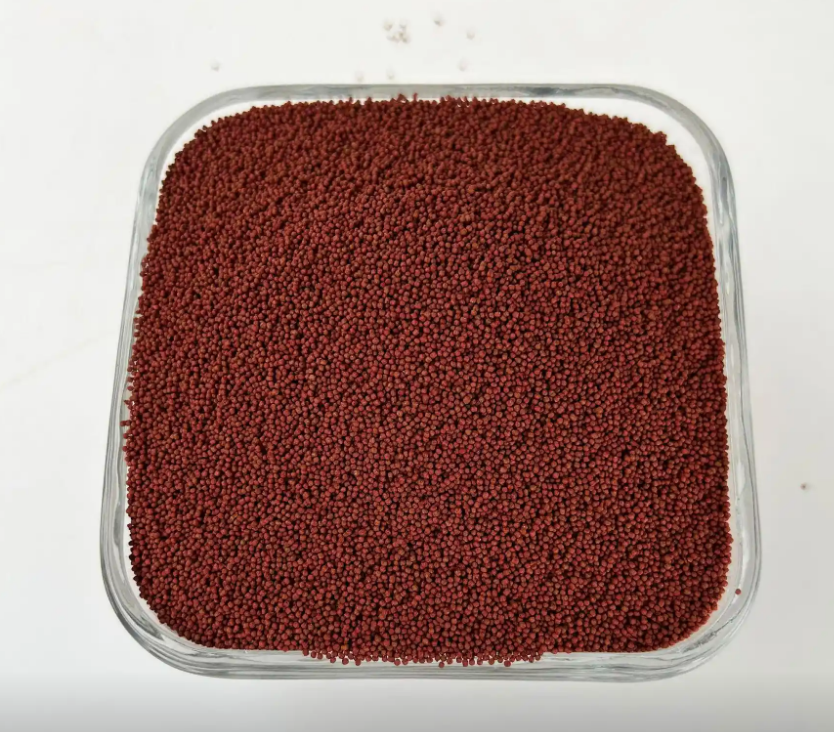
- Precision Weighing: Micro-ingredients (vitamins, minerals, additives) are weighed with high precision on micro-scales. Macro-ingredients are weighed by bulk scales.
- Batch Mixing: Ingredients are loaded into a horizontal ribbon mixer or a paddle mixer in a specific sequence to ensure a perfectly homogeneous blend. fish feed extruder This is critical for every pellet to contain the specified nutrition.
4. Conditioning & Pre-Mixing
- Purpose: To add steam and/or water to the dry blend, initiating hydration and pre-gelatinization.
- Benefits: Conditions the mash, making it more pliable for extrusion, improving starch digestibility, and reducing mechanical wear on the extruder.
5. Extrusion Cooking: The Core Process
This is the most critical stage where the physical and nutritional properties of the feed are defined.
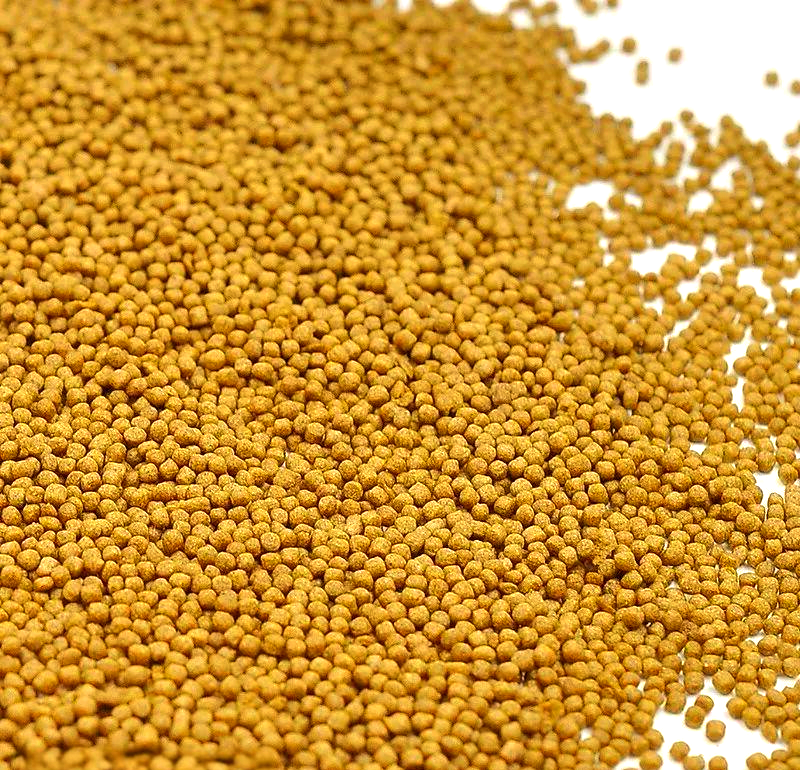
- Processus : The conditioned mash is fed into a twin-screw extruder. Under controlled temperature (90-150°C), pressure (20-40 bar), and shear forces:
- Starch gelatinizes, acting as a natural binder.
- Proteins denature, improving digestibility.
- The mass becomes a plasticized dough.
- Expansion: As the hot dough exits the die, the sudden pressure drop causes superheated water to flash into steam, creating a porous, expanded pellet structure.
- Key Controls: Die design, screw configuration, barrel temperature, and moisture content (typically 22-28% at this stage) are precisely managed to achieve:
- Sinking or Floating Feed: Controlled by the degree of expansion. Sinking feed is denser (low expansion); floating feed is more expanded (lower density).
- Pellet Size: Dictated by the die hole diameter.
- Water Stability: Critical for species like shrimp and slow-feeding fish.
6. Post-Extrusion Processing
- Drying: The hot, moist extrudates (25-30% moisture) are conveyed to a multi-stage dryer (e.g., a belt dryer). Hot air reduces the moisture to a stable level (8-10%). This step prevents mold growth and ensures shelf stability.
- Fat Coating (Vacuum or Atmospheric):
- Vacuum Coating: Pellets are cooled and placed under vacuum, which removes air from the pores. Liquid fat (oil) is then introduced, which is deeply drawn into the pellet’s core. This allows for very high fat inclusion (>25%) without surface oiliness—essential for high-energy feeds for salmonids.
- Atmospheric Coating: Fat and heat-sensitive additives (enzymes, probiotics, vitamins) are sprayed onto pellets in a rotating drum or coating cylinder. Liquid is added after drying to avoid leaching during drying.
7. Cooling & Screening
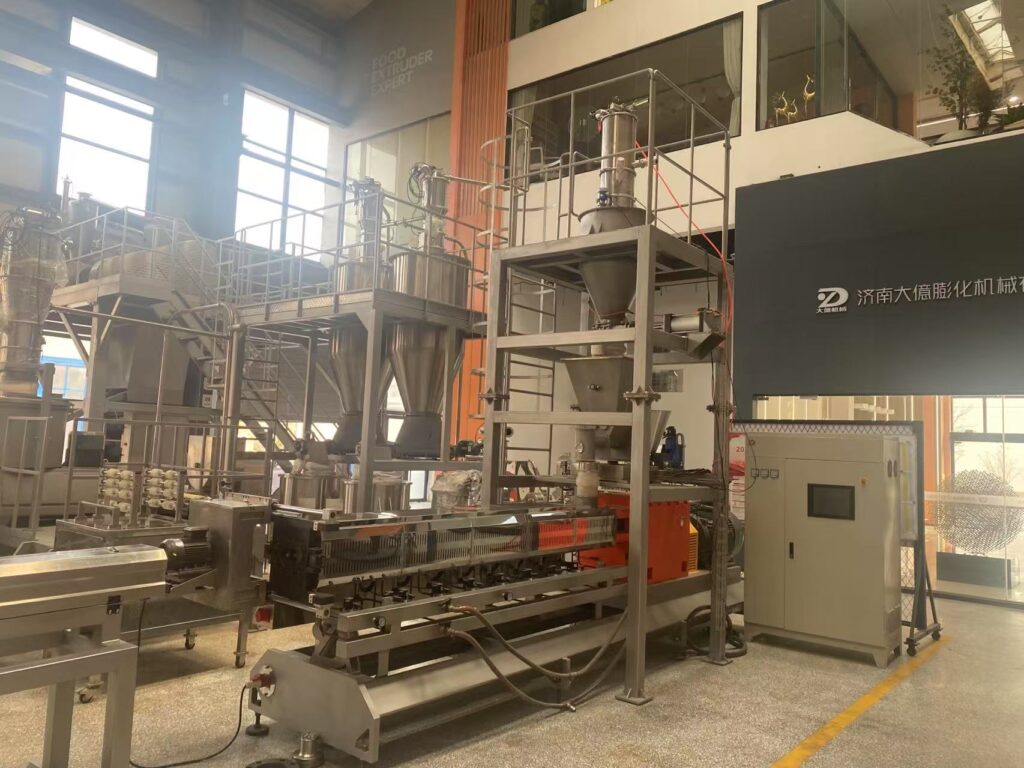
- Cooling: Pellets are cooled to near ambient temperature using a vertical or horizontal cooler. This stops the drying/curing process and prevents condensation in bags.
- Screening: Fines and oversized pellets are removed via vibrating screens. fish feed extruder Fines are recycled back to the mixer or extruder.
8. Packaging & Storage
- Finished feed is packaged in multi-walled, laminated bags or stored in silos.
- Storage Conditions: Cool, dry, and rodent-free environments are essential to preserve nutrient integrity and prevent rancidity.
Key Quality Parameters in Fish Feed Production
- Pellet Durability Index (PDI): Measures resistance to breakage during handling and transport.
- Water Stability: Measures how long a pellet maintains integrity in water without disintegrating (critical for shrimp and certain fish species).
- Nutritional Profile: Guaranteed analysis of protein, fat, fiber, and ash.
- Floating/Sinking Rate: Must match the feeding behavior of the target species.
- Hygiene: Absence of pathogens (e.g., Salmonella) and mycotoxins.
Conclusion
Modern fish feed manufacturing is a sophisticated blend of nutrition science and food process engineering. The extrusion process offers unparalleled flexibility to produce feeds with specific functional properties tailored to diverse aquatic species. Success hinges on rigorous raw material control, precise process parameters (especially during extrusion and drying), and a final product that is not only nutritious but also physically robust and water-stable. By mastering these stages, manufacturers can produce high-performance feeds that support sustainable and profitable aquaculture.
 French
  English
  Russian
  Spanish
  Italian
  Arabic
  Portuguese
  German
  Japanese
  Moroccan Arabic
  Persian
  Belarusian