
Moisture is arguably the most critical parameter in the production of fortified rice kernels (FRKs). Unlike natural rice, which is simply milled, extruded fortified rice is a manufactured product where water acts as both a reactant and a structural agent. Improper moisture control leads to a cascade of failures: poor gelatinization, vitamin degradation, cracking, and short shelf life. Effective moisture management requires precise control across three distinct stages: pre-extrusion conditioning, extrusion process control, and post-extrusion drying.
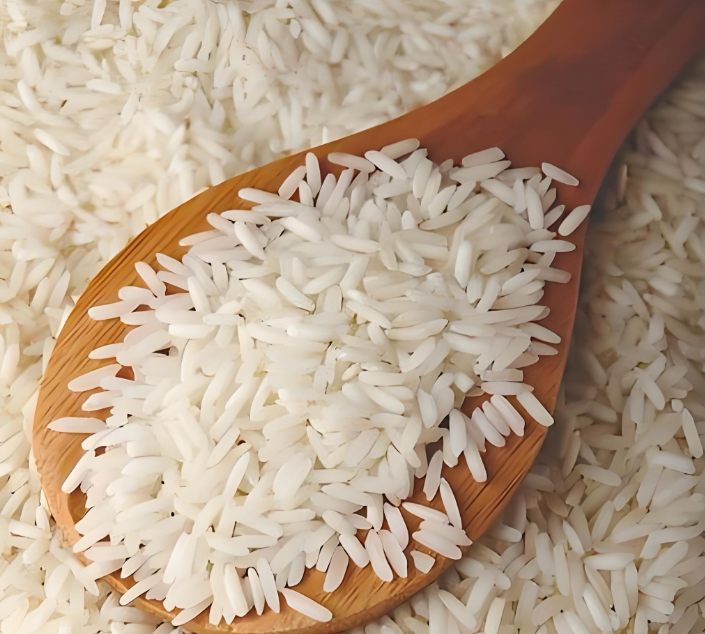
1. Pre-Extrusion Conditioning: Setting the Foundation
The journey of moisture control begins before the dry mix ever enters the extruder barrel. Pre-conditioning is the process of adding steam and water to the dry rice flour and vitamin premix in a conditioning cylinder.
- Target Range: The dry mix typically has a moisture content of 10–12%. During conditioning, this is raised to 30–35% .
- Why It Matters: This step initiates partial starch gelatinization. If the moisture entering the extruder is inconsistent, the extruder motor must work harder to compensate, leading to fluctuating torque and inconsistent product texture.
- Control Method: Use a differential dosing system where the water feed rate is slaved to the dry feed rate. Live steam injection is preferred over hot water alone, as steam provides both heat and moisture uniformly, ensuring every particle is hydrated before entering the screw section.
2. Extrusion Process Control: Managing the Melt
During extrusion, the combination of heat, pressure, and mechanical shear transforms the hydrated flour into a viscous dough. Water in this stage exists in three states: free water, bound water, and superheated steam. Controlling these states is key.
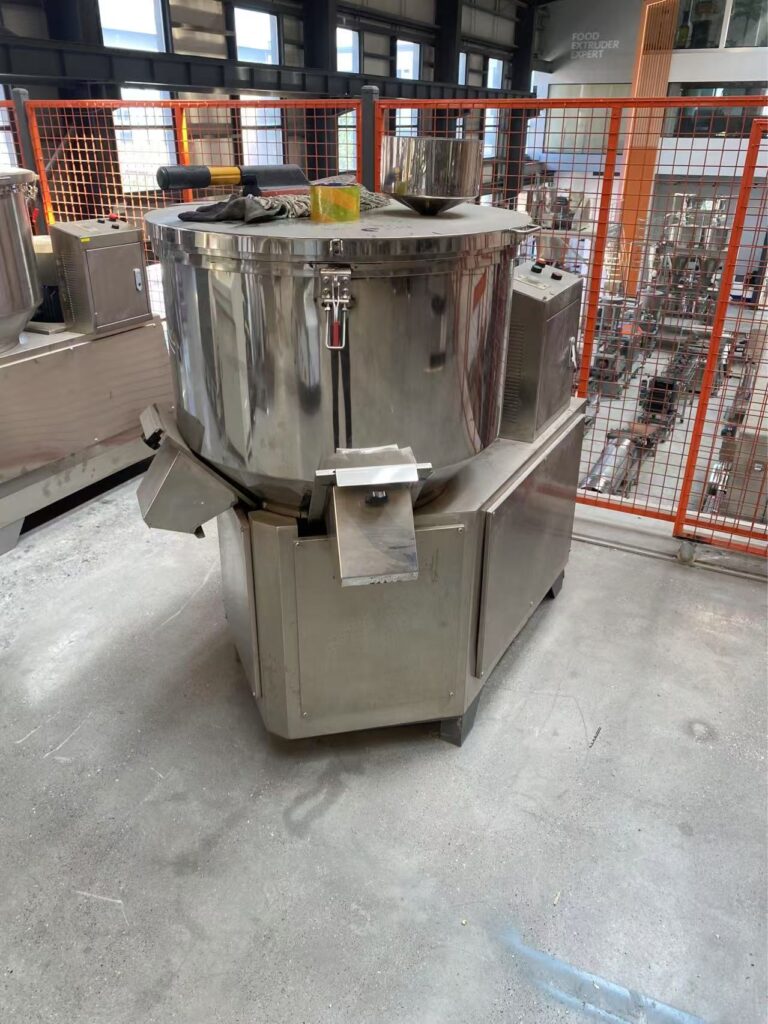
- Water as a Plasticizer: Water reduces the glass transition temperature of starch. Too little water (below 28%) results in high viscosity, causing motor overload, insufficient gelatinization, and “raw” tasting kernels. Too much water (above 38%) results in a runny melt that collapses upon exiting the die, failing to hold a rice grain shape.
- Temperature Interplay: Moisture and temperature are inversely related in the extruder barrel. For fortified rice, which is sensitive to heat (especially vitamins A and B), operators often use a “low moisture, low temperature” or “high moisture, moderate temperature” strategy. Typically, barrel temperatures are kept between 70°C and 95°C .
- Control Method: Install moisture sensors in the extruder barrel or monitor the motor amperage (torque). A sudden drop in torque indicates excess moisture, while a spike indicates the mix is too dry. Operators must adjust the water injection pump in real-time to maintain a stable torque reading.
3. Die Face and Cutting: Preventing Deformation
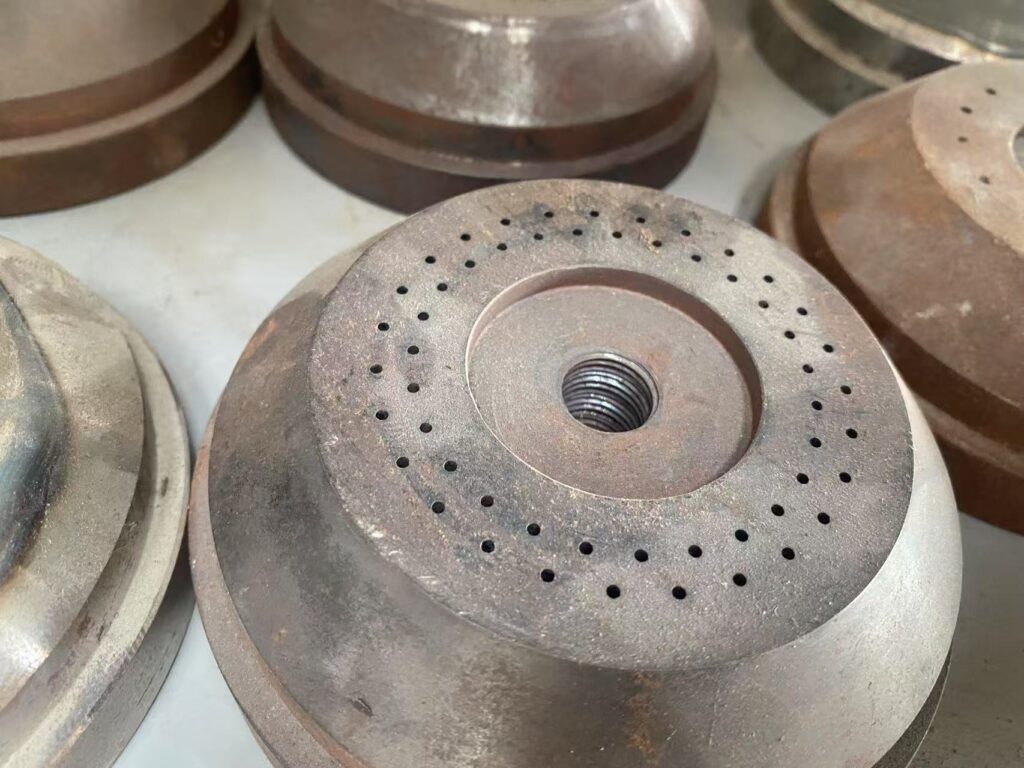
As the melt exits the die plate, the sudden pressure drop causes a small amount of “flash off”—superheated water turning to steam. This expansion is necessary to create a porous structure similar to natural rice, but it must be controlled.
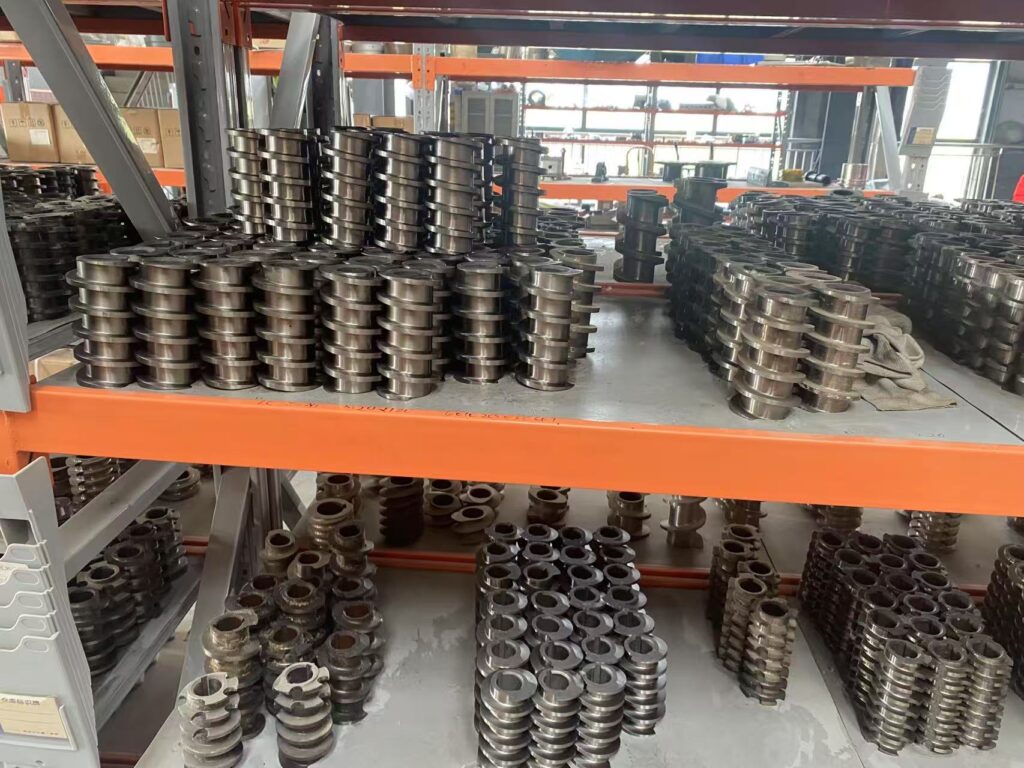
- The Risk: If the moisture content is too high at the die, the kernels will expand excessively (puffing), becoming spongy and lightweight. This is often mistaken for “good expansion” but actually results in a product that disintegrates during cooking.
- Control Method: The temperature of the die plate should be regulated separately from the barrel. Cooling the die plate slightly (using water jackets) can help reduce uncontrolled flash-off, allowing the moisture to remain bound within the kernel structure until the drying stage.
4. Post-Extrusion Drying: The Stabilization Phase
Drying is the most critical stage for shelf-life stability. Freshly extruded kernels exit the cutter with a moisture content of approximately 28–32%. This must be reduced to 10–12% for safe storage. However, drying is where most quality failures occur.
- The Case Hardening Trap: If drying temperatures are too high (e.g., above 60°C) or airflow is too aggressive, the outer surface of the kernel dries rapidly while the core remains wet. Over time (hours or days), the internal moisture migrates outward, creating internal tension that causes “checking”—microscopic cracks that lead to broken kernels during packaging, transport, or cooking.
- The Ideal Curve: Fortified rice requires a three-stage drying profile :
- Surface Drying (5–10 minutes): Ambient or slightly warm air (40–50°C) to remove surface moisture without shocking the kernel.
- Core Reduction (1–4 hours): Controlled temperature (50–60°C) with high airflow to draw moisture from the center to the surface.
- Tempering (2–8 hours): A rest period in a holding bin without heat. This allows moisture gradients within the kernel to equalize. Tempering is often done in cycles (dry for 30 minutes, temper for 30 minutes) to prevent stress fractures.
5. Final Moisture Verification and Packaging
Even after drying, moisture control continues until the bag is sealed. Fortified rice is hygroscopic, meaning it absorbs moisture from the ambient air.
- Cooling: Kernels must be cooled to ambient temperature (or within 5°C of room temperature) before packaging. Warm kernels packaged in hermetic bags will create condensation inside the bag, leading to mold growth and vitamin degradation.
- Packaging Barrier: The packaging material must include a high-moisture barrier (such as metalized film or multi-layer polyethylene) to prevent moisture ingress during storage. If the final product exceeds 12.5% moisture, the risk of aflatoxin development and bacterial growth increases significantly.
Summary Table: Moisture Targets
| Stage | Target Moisture | Consequence of Deviation |
|---|---|---|
| Dry Mix | 10–12% | Base line; inconsistent feed leads to extrusion instability. |
| Pre-Conditioner | 30–35% | Below 28%: Poor gelatinization, high motor wear. Above 38%: Sticky melt, die drool. |
| Extruder Melt | 28–32% (in barrel) | Maintains viscosity for proper grain formation. |
| Post-Extrusion (Wet) | 28–32% | Immediate drying required to prevent microbial growth. |
| Final Product | 10–12% | Below 10%: Brittle, high breakage. Above 12%: Mold risk, short shelf life. |
Conclusion
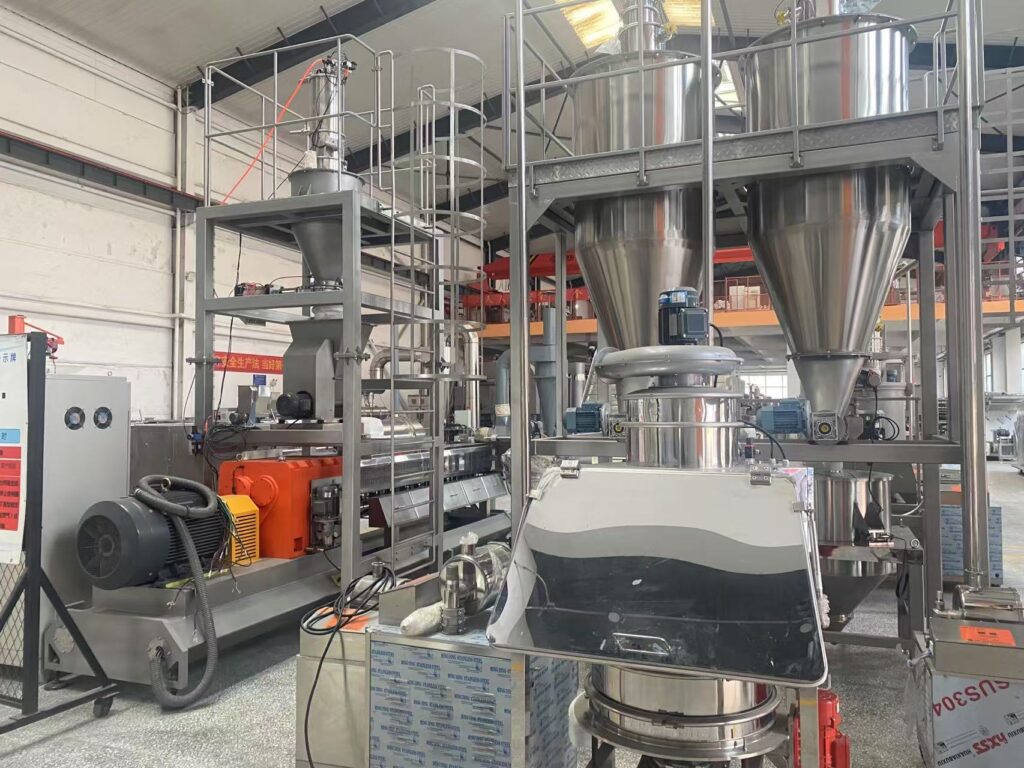
Controlling moisture in fortified rice production is a holistic process that spans from the conditioner to the packaging line. It requires precise instrumentation to maintain consistency, a thorough understanding of starch gelatinization dynamics, and disciplined drying protocols. By maintaining moisture at 30–35% during processing and carefully reducing it to 10–12% through staged drying and tempering, manufacturers can produce fortified rice kernels that are structurally sound, nutritionally potent, and capable of withstanding the rigors of cooking and storage. If you are interested in the fortified rice machine , you can contact me , i will give you good advice and solutions .
1.Will you help us with the installation ?
Yes , We will send engineers to install and debug the equipment, and assist in training your staff.
2.Are you a factory or trading company?
We are a factory.
3.What certificate do you have?
We have ISO and CE certificate.
4.How long is the warranty period?
All of our machines have one year warranty.
5.What’s the main market of your company?
Our customers all over the world.
6.How much production capacity of your company one year?
This depends on your needs.
 French
  English
  Russian
  Spanish
  Italian
  Arabic
  Portuguese
  German
  Japanese
  Moroccan Arabic
  Persian
  Belarusian