
It begins as a pile of grit and ends as a glowing, cheese-dusted crunch. The transformation of simple cornmeal into Cheetos is one of the most fascinating—and, depending on your perspective, disturbing—examples of modern food engineering. Kurkure making machine While the brand markets itself with a grinning cartoon cheetah and carefree snacking, the reality of how these puffs are made involves high-pressure physics, industrial friction, and a chemical cocktail designed to keep you reaching for more.
Here is an exposé of the Cheetos manufacturing process, from silo to snack bag.
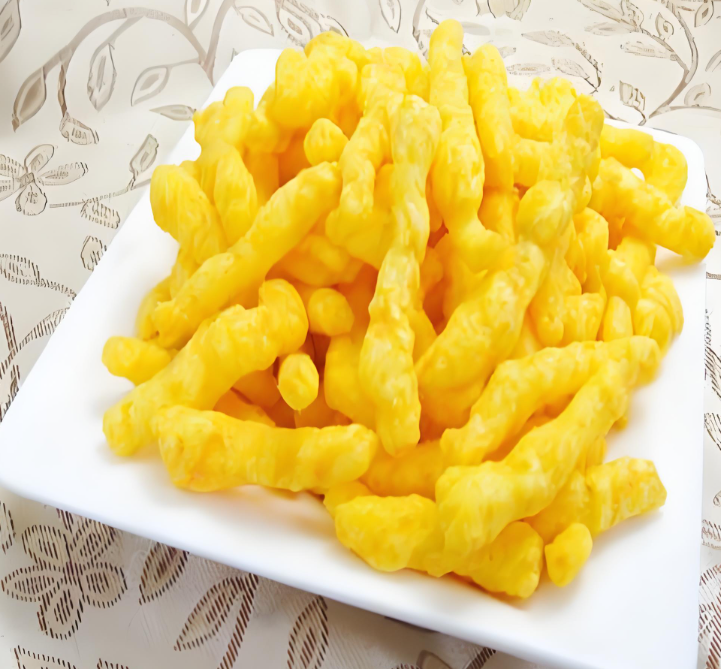
The Slurry Begins: Cornmeal and Chemistry
The journey of a Cheeto begins not on a farm, but in a massive industrial silo. Cornmeal is pneumatically pumped roughly 100 yards into the manufacturing plant, where it sits in a giant hopper awaiting its fate . This is not your grandmother’s cornmeal for baking; it is a finely ground, de-germed industrial product designed for one purpose: extrusion.
At its most basic level, the “dough” is a simple mix of corn and water . But the ingredient list tells a deeper story. According to ingredient disclosures, these snacks contain not just “Enriched Corn Meal,” but also vegetable oil, cheese seasoning, maltodextrin (a processed starch made from corn), whey protein concentrate, monosodium glutamate (MSG), lactic acid, citric acid, artificial colors, and a vague umbrella term: “Natural and Artificial Flavors” . The “cheese” flavor, we must admit, is largely a reconstruction of dairy chemistry rather than anything you’d find in a dairy farm.
The Extruder: The Machine That “Pops”
This is where the process turns truly industrial—and where the signature shape of the Cheeto is born. The cornmeal gobs are fed into a machine called an extrudeuse. Inside this device, the meal is forced between metal plates under immense pressure. The resulting friction generates intense heat, melting the starches and superheating the moisture trapped inside the meal .
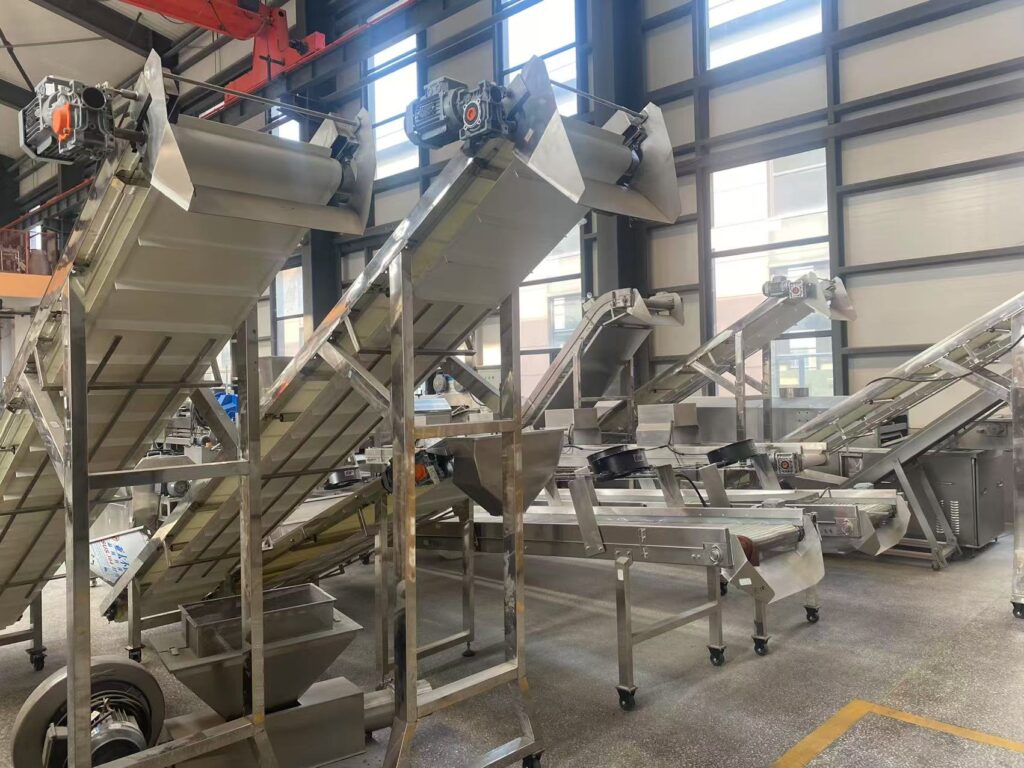
When the pressure becomes too great, the mixture is forced through a die (a specialized mold) and emerges into the open air. Kurkure making machine The sudden drop in pressure causes the superheated water to flash into steam instantly, causing the corn matrix to “pop” and expand, creating the light, airy texture of the snack . The craggy, irregular bits are shot out at high velocity—flying up to three feet through the air—before hitting a safety cage and tumbling onto a conveyor belt .
This process, known as extrusion, is the dirty secret of the snack industry. It takes something recognizable (corn) and fundamentally restructures it at a molecular level into something entirely synthetic in form, ready to absorb massive amounts of oil and flavoring.
The Fry: Turning Moisture into Crunch
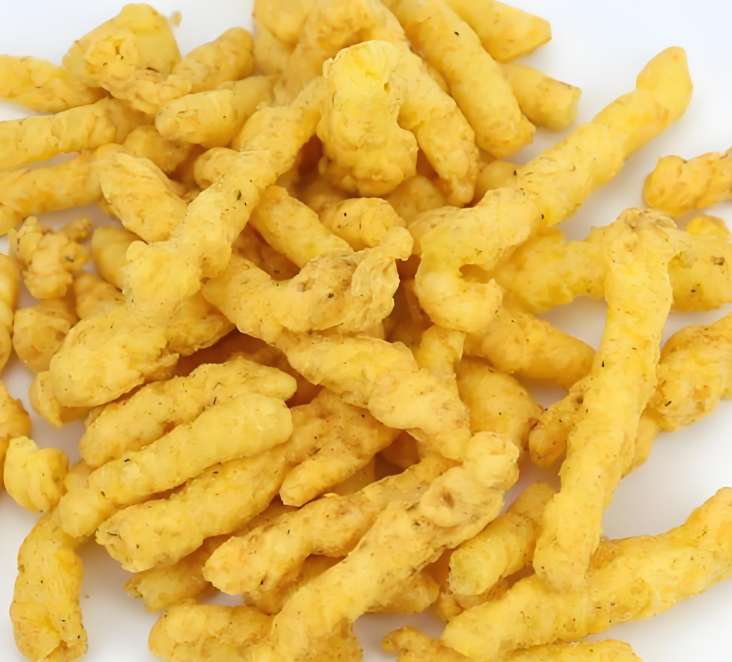
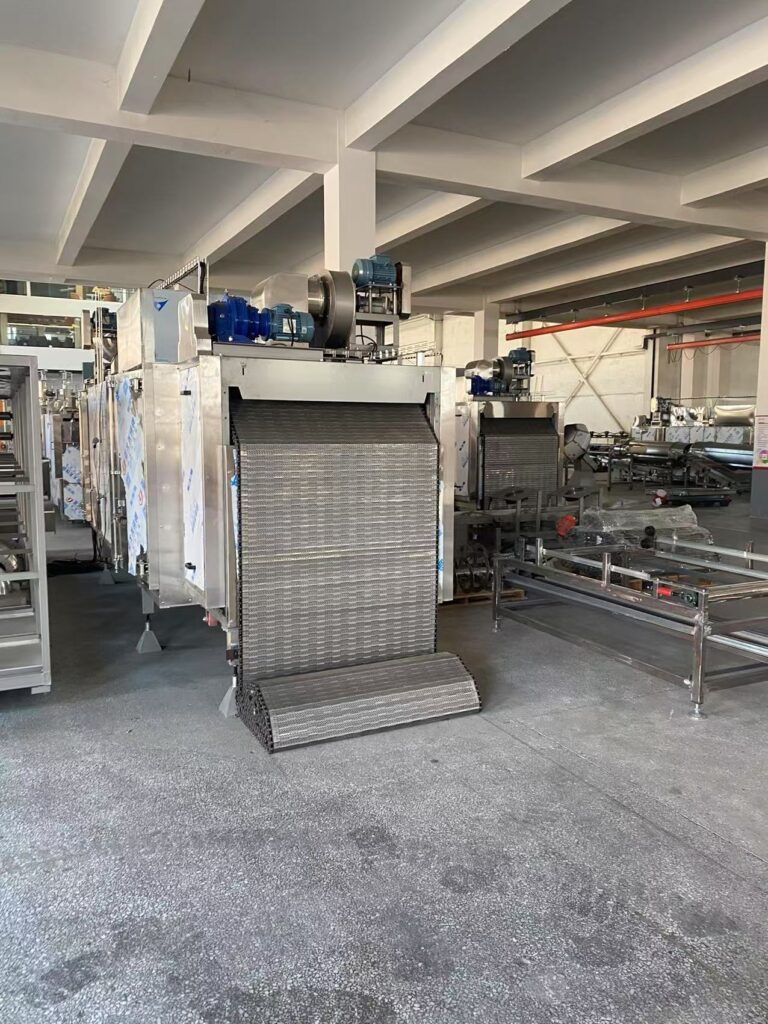
Once shaped, the raw puffs are far from finished. They are transported through a bath of piping-hot vegetable oil, a process described by one report as resembling an “amusement-park log flume” . This frying stage is critical for texture; it drives the moisture content of the snack down to below two percent . Achieving this low moisture level is the key to the signature crunch and gives the product a shelf life measured in months rather than days.
For those who prefer the “baked” varieties, the process differs slightly—these are dried using hot air rather than submerged in oil—but they still undergo the same initial extrusion process that gives them their shape .
The Dusting: Applying the “Cheese”
The hot, oily snacks now move into a massive rotating drum called a tumble drum. Inside, strategically placed nozzles spray a fine mist of oil onto the tumbling Cheetos to ensure they become sticky. Following the oil mist, a powder—the “cheese” seasoning—is dusted over them from all sides .
This powder, which reportedly looks like the contents of a boxed macaroni-and-cheese package, arrives at the Frito-Lay plants in 50-pound sacks. The company remains famously tight-lipped about who actually manufactures this pre-spiced powder . This combination of oil and powder is what creates that familiar “finger-lickin'” sensation—the orange dust that sticks to everything it touches. It is a carefully engineered adhesion process designed to maximize flavor delivery per square inch of snack.
Quality Control: The Taste Panel
Before they hit the shelves, the Cheetos must pass a rigorous approval process. Every half hour, samples are pulled from the production line and sent to an in-house laboratory. Technicians analyze the chemical composition of the snacks, verifying they have the correct density and nutritional content .
But the machines don’t have the final say. Every four hours, a four-person panel convenes for a rather unenviable task. These taste-testers inspect and consume the freshly made snacks, comparing them to “perfect” reference Cheetos sent directly from Frito-Lay headquarters . If the batch doesn’t match the texture, flavor, or “crunchiness” of the control sample, adjustments are made to the line. There is no room for error in the pursuit of maximum crunch.
The Global Machine: A $200 Million Bet
The scale of this operation is truly global. To understand just how big the business is, one need only look at recent moves by parent company PepsiCo. In January 2025, after a three-year hiatus, the company resumed production of Cheetos in Indonesia, investing a staggering USD 200 million in a new factory in Cikarang, West Java .
This facility is designed to be a model of efficiency, but it also highlights the immense resources required to satisfy the global craving for this snack. The plant covers approximately six hectares and, while it initially relies on imported corn and potatoes, PepsiCo is actively developing local supply chains by partnering with hundreds of local farmers . The factory also boasts of using 100% renewable electricity and recycling all of its water, presenting a “clean” image for a product that is, at its heart, a marvel of processed chemistry .
The production lines themselves are technological beasts. Suppliers like Jinan Dayi Extrusion Machinery offer equipment specifically designed for “Cheetos/kurkure/niknak” production, featuring stainless steel construction, automated frying systems with precise temperature control, and vibrating de-oilers to ensure the final product isn’t greasy . These machines can churn out 100-150 kilograms of Cheetos per hour, running 24 hours a day to meet demand .
Conclusion
From the initial friction-powered “pop” in the extruder to the final tumble in a cheese-flavored dust cloud, the making of a Cheeto is a triumph of industrial engineering. It is a process designed to transform simple agricultural commodities into a hyper-palatable, shelf-stable product engineered for maximum addictiveness. So the next time you tear open a bag and see that familiar orange glow, remember the high-pressure machinery, the chemical flavorings, and the four-person taste panel that deemed it “dangerously cheesy” enough for your consumption.
 French
  English
  Russian
  Spanish
  Italian
  Arabic
  Portuguese
  German
  Japanese
  Moroccan Arabic
  Persian
  Belarusian