
Commercial infant rice cereal is often a baby’s first solid food. baby food mix machine Its smooth texture, mild flavor, and easy digestibility make it an ideal introductory food, but its simplicity is the result of sophisticated food science and a meticulously controlled manufacturing process. This article unveils the key steps involved in transforming rice into the fortified, hypoallergenic, and instantly mixable cereal found on supermarket shelves.
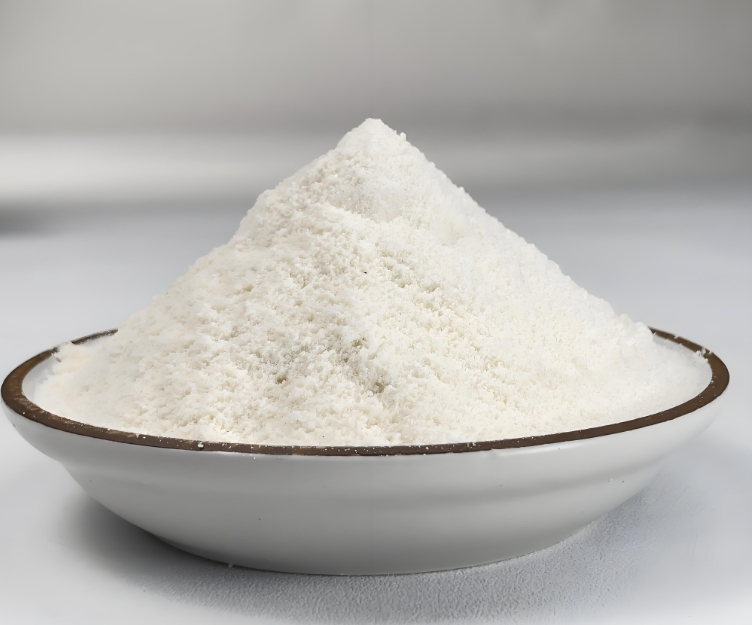
1. The Foundation: Selecting and Preparing the Rice
The process begins with the careful selection of white rice, typically a short or medium-grain variety known for its mild flavor and soft texture. This rice is thoroughly cleaned and milled to remove all bran and germ. This creates a pure, low-fiber starch base that is gentle on a baby’s immature digestive system and minimizes the risk of allergic reactions.
2. The Core Transformation: Precooking and Processing
This stage is crucial for creating the cereal’s signature digestibility and instant-mix properties. The two most common methods are:
- Precooking & Drum Drying: This is the traditional and most widespread method.
- Slurry Creation: The milled rice is ground into a fine flour and mixed with water and sometimes added vitamins/minerals to form a thin slurry.
- Gelatinization: The slurry is cooked under precise heat and pressure. baby food mix machine This process, called gélatinisation, breaks down the rice starch molecules, making them incredibly easy for a baby to digest.
- Drum Drying: The hot, cooked slurry is spread in a thin film onto the surface of one or two large, steam-heated rotating drums. Within seconds, the film dries completely.
- Écaillage : The dried sheet is scraped off the drum in a continuous motion. This fragile, porous sheet is then milled into the fine, flaky powder recognized as baby cereal.
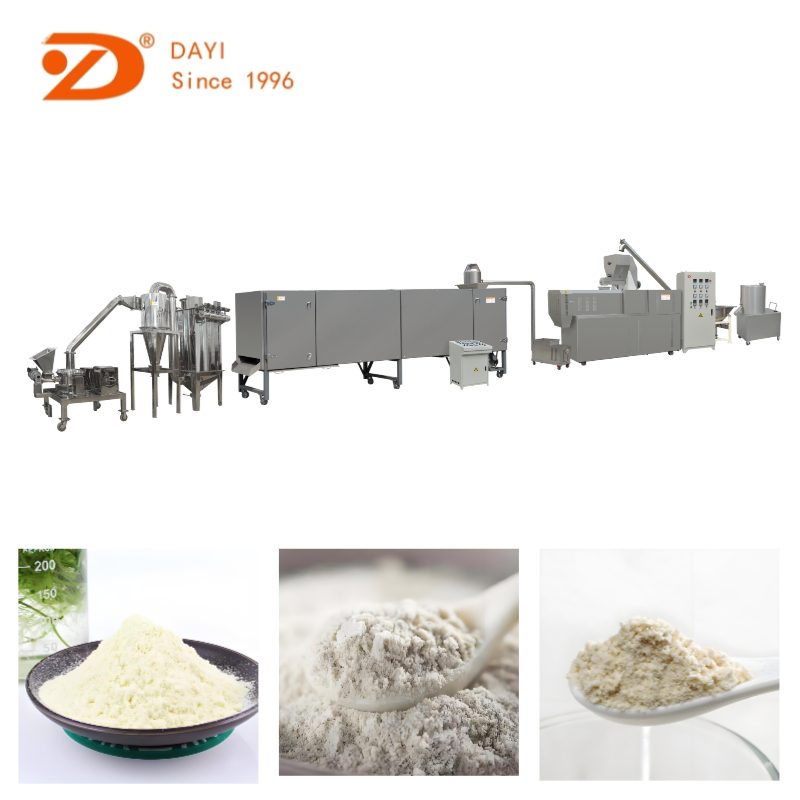
- Extrusion Cooking: A modern, highly controlled alternative.
- The rice flour, nutrients, and water are fed into an extrudeuse—a high-pressure cooker with a screw conveyor.
- Inside, the mixture is subjected to intense heat, pressure, and mechanical shear, which fully cooks and gelatinizes it instantly.
- The molten material is forced through a small die, where the sudden drop in pressure causes it to expand (“puff”).
- The puffed rice strands are then dried and ground into a very fine, consistent powder.
Both methods result in a pre-cooked, pre-gelatinized product. This is the secret to its “instant” nature: the starch has already been broken down, so it simply re-absorbs liquid without further cooking.
3. The Critical Step: Fortification (Nutrient Addition)
Plain rice flour is nutritionally inadequate for a growing infant. Therefore, fortification is the defining feature of commercial baby cereal.
- A custom nutrient premix is precisely blended into the rice flour base before the precooking stage or coated onto the final powder. baby food mix machine This premix is mandated by regulations and typically includes:
- Iron (as Ferrous Sulfate or Ferrous Fumarate): The single most important addition, in a highly bioavailable form to prevent anemia.
- B-Vitamins: Such as Thiamine, Riboflavin, Niacin, and B6.
- Zinc & Calcium: For immune function and bone development.
- Vitamin C: Often added to enhance iron absorption.
4. Ensuring Safety and Quality: Rigorous Standards
Baby food manufacturing is one of the most tightly regulated segments of the food industry.
- Raw Material Testing: Rice is screened for heavy metals (especially arsenic), pesticides, and mycotoxins at levels far stricter than for general food.
- Sterile Processing: Equipment is designed for easy cleaning (CIP – Clean-in-Place systems), and the high-temperature cooking process itself eliminates pathogens.
- Finished Product Testing: Every batch is tested for nutritional content to ensure it meets label claims, and for microbial safety (e.g., Cronobacter sakazakii, Salmonella).
5. Final Steps: Blending, Packaging, and Sealing
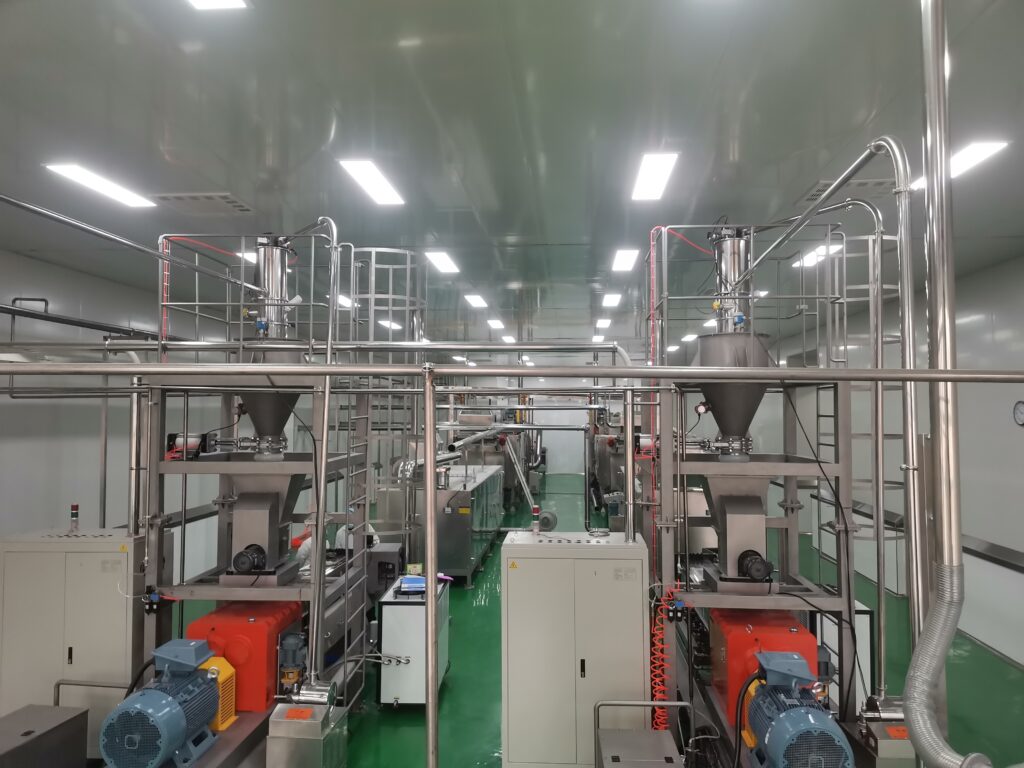
- The processed cereal powder may be blended in large batches to ensure absolute uniformity of texture and nutrient distribution.
- It is then filled into airtight, moisture-resistant pouches or boxes, often with a protective inner liner. This packaging is designed to preserve the cereal’s shelf life and prevent the fortified iron from oxidizing and causing off-flavors.
The creation of infant rice cereal is a carefully engineered process focused on safety, digestibility, and dense nutrition. While parents simply see a fine powder, baby food mix machine it represents a complex food product that has been pre-digested (via gelatinization), fortified to address key infant nutrient gaps, and produced under stringent hygienic controls. Understanding this process underscores why commercial fortified cereal is recommended by pediatricians as a reliable first food, providing a safe and nutritionally consistent foundation for an infant’s dietary journey.
 French
  English
  Russian
  Spanish
  Italian
  Arabic
  Portuguese
  German
  Japanese
  Moroccan Arabic
  Persian
  Belarusian