
The global pet food market has surpassed $110 billion, and the trend of pet humanization—where owners seek premium, nutritious, and customized options for their furry companions—has created a golden opportunity for entrepreneurs . Starting a small-scale dog food manufacturing business allows you to enter this growing market with manageable risk, serving local pet stores, direct-to-consumer channels, and niche segments like grain-free or functional diets.
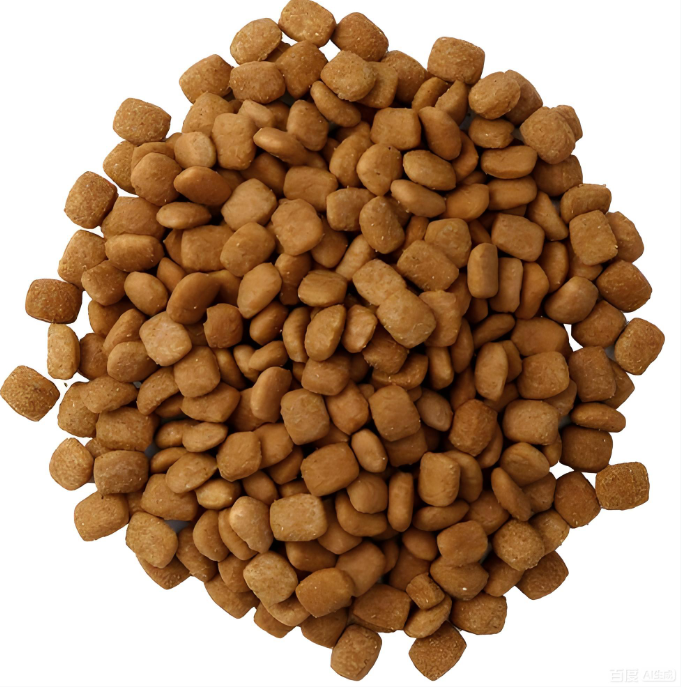
However, success requires more than passion for dogs. It demands a structured approach to formulation, equipment selection, regulatory compliance, and business planning. This comprehensive guide walks you through every step of launching your own dog food production operation.
1. Define Your Niche and Product Type
Before investing in equipment, you must determine what type of dog food you will produce. The market offers several categories, each with different production requirements, shelf life, and target customers .
| Product Type | Moisture Content | Shelf Life | Key Equipment | Target Market |
|---|---|---|---|---|
| Dry Kibble | 8–10% | 12–18 months | Extruder, dryer, coater | Mass market, everyday nutrition |
| Wet/Canned Food | 70–80% | 1–2 years | Retort, canning line | Premium, senior dogs, palatability-focused |
| Semi-Moist Treats | 20–30% | 6–9 months | Steam cooker, dryer | Training snacks, specialty treats |
| Freeze-Dried | <5% | 12–24 months | Freeze dryer | High-end, raw-feeding alternatives |
| Fresh/Refrigerated | 60–70% | 1–2 weeks | Steam or sous-vide cooker | Urban market, minimal processing |
For most small-scale startups, dry kibble is the most accessible entry point. Extrusion technology offers flexibility, scalability, and a familiar product format that consumers trust. Within dry kibble, you can further differentiate through :
- Life-stage formulas: Puppy, adult, senior
- Breed-specific products: Tailored kibble size and shape
- Functional nutrition: Joint support, weight management, digestive health
- Premium ingredients: Grain-free, high-protein, novel proteins (insect, exotic meats)
2. Develop Nutritionally Balanced Formulations
Dog food is not simply “mixing ingredients.” It requires scientifically formulated recipes that meet established nutritional standards. In the United States, the AAFCO (Association of American Feed Control Officials) nutrient profiles are the benchmark. In Europe, FEDIAF standards apply .
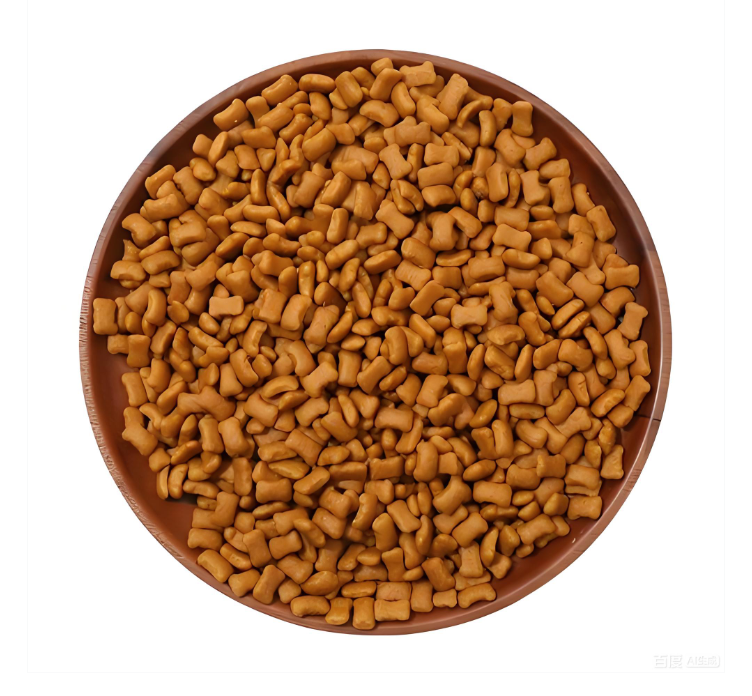
Basic Nutritional Requirements (Dry Matter Basis)
| Nutrient | Adult Dog (%) | Puppy (%) | Senior Dog (%) | Function |
|---|---|---|---|---|
| Crude Protein | 18–26 | 22–32 | 16–24 | Muscle development, tissue repair |
| Crude Fat | 8–15 | 10–20 | 8–12 | Energy, skin health, palatability |
| Fiber | 2–5 | 2–4 | 3–6 | Digestive regulation |
| Ash (Minerals) | 5–8 | 6–9 | 5–7 | Bone health, mineral balance |
| Moisture | ≤10 | ≤10 | ≤10 | Shelf stability |
Sample Formula: Chicken & Rice Kibble (per 100 kg batch)
| Ingredient | Quantity (kg) | Purpose |
|---|---|---|
| Chicken meal | 30 | Primary protein source |
| Corn flour | 20 | Carbohydrate, structure |
| Rice flour | 15 | Digestible carbohydrate |
| Chicken fat | 10 | Energy, palatability |
| Soybean meal | 10 | Supplemental protein |
| Vitamin & mineral premix | 2 | Nutritional completeness |
| Palatant/flavor enhancer | 0.5 | Taste appeal |
| Water | 12.5 | Processing aid |
Important: Formulations must be adjusted based on ingredient cost, local availability, and target digestibility. For premium products, consider adding functional ingredients like salmon oil (omega-3s), glucosamine (joint health), probiotics (digestive health), or kelp (trace minerals) .
3. Navigate Regulatory Compliance and Certifications
Before producing or selling a single bag, you must secure the necessary licenses and certifications. Regulations vary by region but generally follow similar principles .
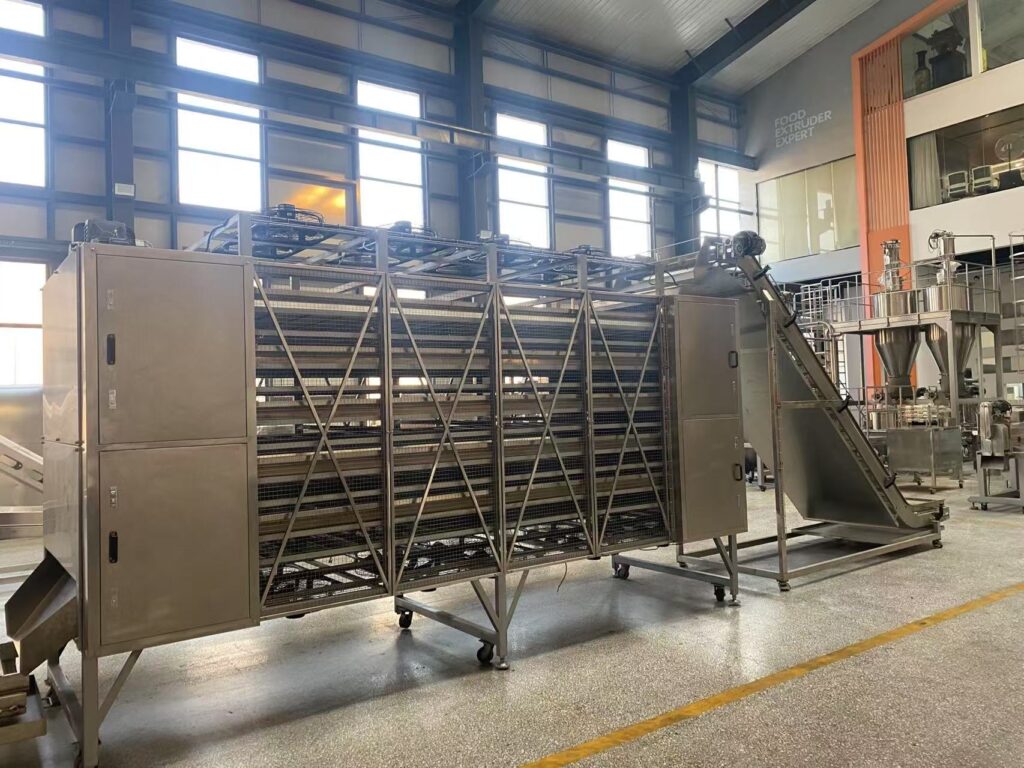
Regulatory Framework by Region
| Region | Governing Body | Key Requirements |
|---|---|---|
| USA | FDA, AAFCO, USDA | Facility registration, AAFCO nutrient profile compliance, labeling review, state feed licenses |
| European Union | FEDIAF, EFSA | FEDIAF nutritional guidelines, ingredient traceability, CE marking for equipment |
| China | MARA (Ministry of Agriculture) | Feed Production License, GB/T standards compliance |
| Export Markets | SGS, BV | ISO 22000, HACCP certification for international trade |
Key Regulatory Documents (USA Context)
The USDA’s Animal and Plant Health Inspection Service (APHIS) and the FDA regulate pet food. Key requirements include :
- Facility Registration: All pet food manufacturing facilities must register with FDA
- Product Labeling: Must include guaranteed analysis, ingredient list (descending order), feeding guidelines, and manufacturer contact
- Lot Traceability: Systems to track raw materials to finished products for recall purposes
- Good Manufacturing Practices (GMP) : Sanitary facility design and operational procedures
Recommended Certifications
While not always mandatory, certifications build consumer trust and may be required by retailers:
- HACCP (Hazard Analysis Critical Control Point) : Systematic preventive approach to food safety
- ISO 22000: International food safety management standard
- Organic/Non-GMO: For premium market positioning (requires accredited certification)
4. Select the Right Equipment for Your Scale
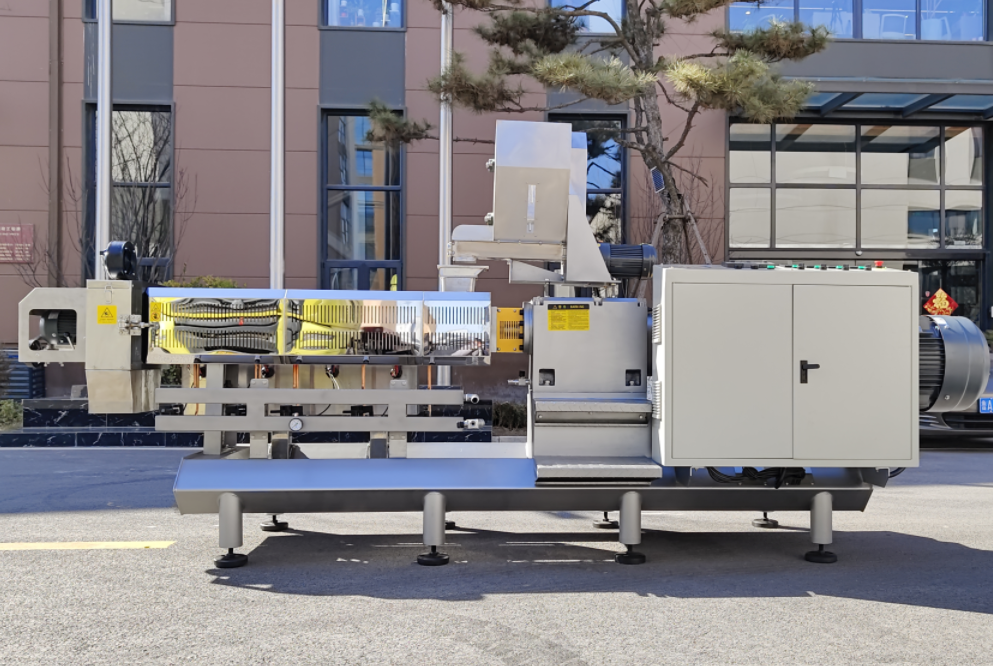
Your machinery investment determines production capacity, product quality, and operational efficiency. For small-scale startups, the goal is to balance affordability with reliability.
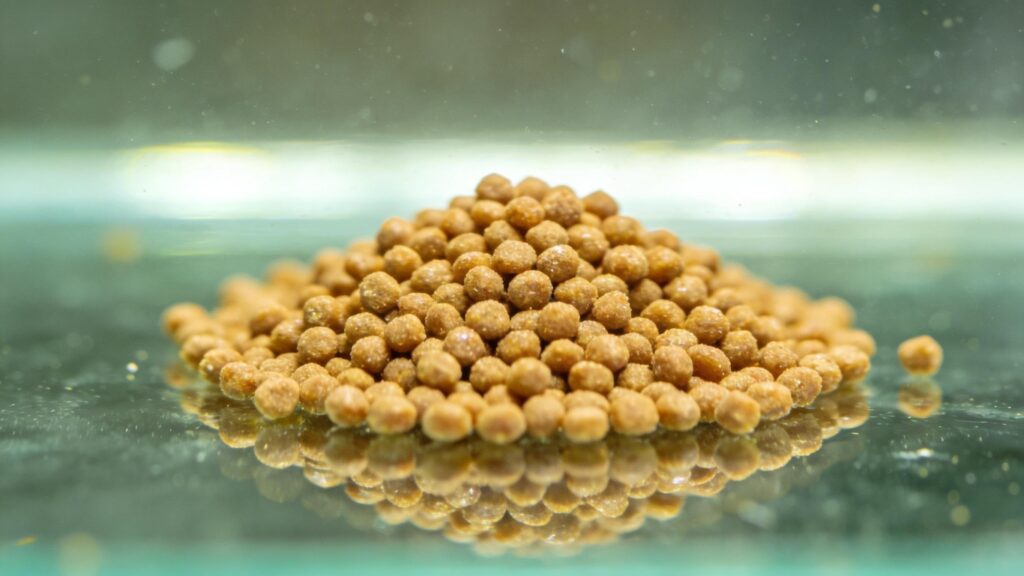
Equipment Line Overview for Dry Kibble
| Processing Stage | Equipment | Function |
|---|---|---|
| Grinding | Hammer mill | Reduces grains and ingredients to uniform particle size |
| Mixing | Ribbon or vertical mixer | Blends dry ingredients with liquids for even distribution |
| Extrusion | Single-screw or twin-screw extruder | Cooks and shapes kibble under heat (120-150°C) and pressure (3-5 MPa) |
| Drying | Multi-layer belt dryer | Reduces moisture to 8-10% for shelf stability |
| Coating | Rotary drum coater | Applies fats, flavors, and functional additives |
| Cooling | Cooling conveyor | Stabilizes product temperature before packaging |
| Packaging | Automatic weigher and sealer | Ensures consistent bag weights and seals |
Capacity and Cost Options
| Model | Capacity (kg/h) | Power (kW) | Estimated Cost (USD) | Best For |
|---|---|---|---|---|
| Ultra-small (home/pet store) | 10–50 | 2.2–5.5 | 1,500–3,000 | Testing, 1–3 tons/month |
| Entry commercial | 50–100 | 5.5–7.5 | 3,000–8,000 | 3–10 tons/month, pet shops |
| Small commercial | 100–150 | 45 | 35,000–50,000 | 10–30 tons/month, local distribution |
| Medium commercial | 200–400 | 60 | 60,000–85,000 | 30–100 tons/month, regional expansion |
Equipment Selection Considerations
- Single-screw vs. Twin-screw: Single-screw extruders are more affordable and suitable for basic kibble. Twin-screw extruders offer better control over texture, higher fresh meat inclusion (up to 50%), and greater formulation flexibility .
- New vs. Used: New equipment offers reliability and warranties; used equipment reduces upfront cost but requires thorough inspection for wear and compliance with current safety standards .
- Ancillary Equipment: Don’t overlook costs for forklifts, freezers (for raw meat storage), air compressors, and laboratory testing equipment .
5. Plan Your Facility Layout and Infrastructure
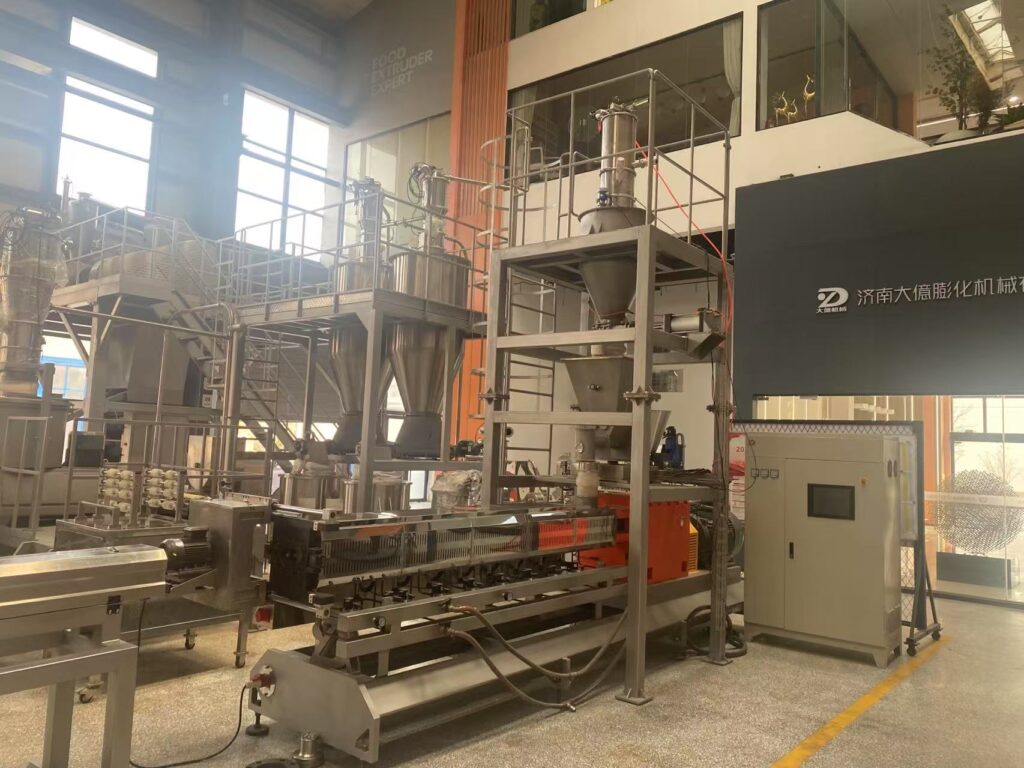
A well-designed facility ensures efficient workflow, sanitation, and regulatory compliance. Follow GMP zoning principles to prevent cross-contamination .
Suggested Facility Zones
| Zone | Function | Requirements |
|---|---|---|
| Raw Material Storage | Store grains, proteins, supplements | Clean, ventilated, low humidity, pest-proof |
| Processing Area | Grinding, mixing, extrusion | Separate from packaging, easy-to-clean surfaces |
| Drying & Cooling | Moisture reduction, temperature stabilization | Dust-free, controlled airflow |
| Coating & Packaging | Flavor application, bagging | Temperature-controlled, clean room standards |
| Quality Control Lab | Testing moisture, protein, microbial load | Dedicated space with testing equipment |
| Finished Goods Warehouse | Store finished product | Pest-proof, palletized, FIFO inventory system |
Facility Investment Example (Small-Medium Scale)
| Item | Estimated Cost (USD) |
|---|---|
| Land & Construction (1000 m²) | 50,000–80,000 |
| Equipment Line | 70,000–120,000 |
| Utilities (electric, steam, water) | 10,000–20,000 |
| Packaging System | 10,000–25,000 |
| Licensing & Certification | 5,000–10,000 |
| Initial Raw Materials | 5,000–15,000 |
| Total Estimated | 150,000–250,000 |
For ultra-small operations (e.g., pet store production), a 30-50 m² space may suffice, with total investment as low as $10,000–$30,000 .
6. Implement Quality Control and Testing Protocols
Quality consistency is the foundation of brand reputation. Establish a Quality Management System (QMS) aligned with HACCP principles.
Key Quality Control Parameters
| Test | Standard Range | Frequency | Method |
|---|---|---|---|
| Moisture | ≤10% | Each batch | Oven drying / NIR |
| Protein | 18–30% (varies by formula) | Each batch | Kjeldahl / NIR |
| Fat | 8–20% | Each batch | Soxhlet extraction |
| Salmonella | Negative | Weekly | Microbiological culture |
| Mold & Yeast | <100 CFU/g | Weekly | Plate count |
| Water Activity | <0.6 aw | Each batch | Water activity meter |
| Shelf Life Stability | ≥12 months | Quarterly | Accelerated aging, rancidity testing |
Food Safety Considerations
Unlike human food that often includes a heat-based “kill step,” some pet food processes (like freeze-drying) require alternative safety measures. For extruded kibble, the high temperatures (120-150°C) during extrusion serve as an effective pathogen reduction step . However, post-extrusion handling (coating, packaging) must maintain sanitary conditions.
Important: Conduct palatability testing with actual dogs. Acceptance rates above 70% indicate market-ready products .
7. Budget Planning: From Lean Startup to Full Production
Your budget will vary significantly based on your chosen scale. Here are three common scenarios :
Scenario A: Lean Entry (Outsourcing + Minimal Equipment)
- Investment: $12,000–$50,000
- Approach: Formulate recipes, outsource extrusion and packaging, focus on branding and marketing
- Best for: Market validation, DTC e-commerce testing
Scenario B: Micro Dry Food Line
- Investment: $50,000–$220,000
- Capacity: 80–200 kg/hour
- Equipment: Single-screw extruder, belt dryer, basic coating system, semi-automatic packaging
- Risks: Limited formulation flexibility, moisture consistency challenges
Scenario C: Small Standard Line
- Investment: $200,000–$600,000
- Capacity: 300–1,000 kg/hour
- Equipment: Twin-screw extruder, multi-stage dryer, vacuum coater, automatic packaging
- Advantages: Better stability, regulatory compliance, scalability
Profitability Analysis (Small-Scale Example)
Based on a small twin-screw extruder producing 100 kg/day of premium dog food :
- Raw material cost: ~$1.10–$1.40 per kg ($0.50–$0.65 per lb)
- Factory selling price: ~$3.50 per kg ($1.60 per lb)
- Gross margin: ~35–40%
- Daily gross profit: ~$240 (100 kg × $2.40 margin)
- Payback period: 6–10 months on equipment investment
8. Build Your Brand and Go to Market
With production capabilities established, focus on creating a compelling brand and reaching customers.
Branding Principles for Dog Food
- Authenticity: Clearly communicate your values—”human-grade ingredients,” “locally sourced,” “grain-free”
- Transparency: Use QR codes linking to traceability data and ingredient sourcing
- Design: Natural colors (earth tones, greens), clean typography, realistic pet imagery
- Trust Symbols: Display certifications (HACCP, ISO) prominently
Packaging Specifications
Use multi-layer laminated bags (PET/PE, OPP/AL) with resealable zippers for moisture protection. Required label elements :
- Guaranteed Analysis (protein, fat, fiber, moisture %)
- Ingredient list in descending order by weight
- Feeding guide (based on dog weight)
- Manufacturing date and lot number
- Storage conditions and shelf life
- Manufacturer contact information
Marketing Channels
| Channel | Strategy |
|---|---|
| Direct-to-Consumer | Website + Shopify, subscription model, social media advertising |
| Retail Distribution | Local pet stores, groomers, veterinary clinics (offer samples, shelf displays) |
| Export | Alibaba, trade shows, distributor partnerships |
| Community | Partner with local shelters, dog parks, pet events for brand visibility |
For small producers, focusing on a local market—pet stores, veterinary clinics, and community pet owners—allows you to build a loyal customer base before expanding regionally .
9. Team Structure and Operations
Even a small-scale plant requires a capable team. Typical roles for a single-shift operation :
| Role | Responsibilities |
|---|---|
| Production Operator | Run extruder, dryer, coating equipment |
| Maintenance Technician | Equipment upkeep, troubleshooting |
| Quality Control | Testing, documentation, compliance |
| Procurement/Warehouse | Raw material ordering, inventory management |
| Marketing/Sales | Brand building, customer acquisition, retail relationships |
Scaling Note: Transitioning to two shifts doubles output with only ~40% increase in overhead costs due to improved equipment utilization .

10. Common Pitfalls to Avoid
Based on industry experts’ experience, here are critical mistakes to anticipate :
| Pitfall | Prevention Strategy |
|---|---|
| Underestimating space requirements | Plan for 2x initial estimated space; expansion happens faster than expected |
| Ignoring ancillary equipment costs | Budget for forklifts, freezers, pan washing systems, lab equipment—not just extruder |
| Skipping moisture control systems | Invest in proper drying equipment; air drying is unreliable for commercial consistency |
| Inadequate food safety planning | Implement HACCP from day one; recalls can destroy a small brand |
| Over-investing before market validation | Start with lean entry or outsourced production to test demand |
Conclusion
Opening a small-scale dog food manufacturing plant is a rewarding venture that combines entrepreneurial opportunity with the joy of serving pet owners. The path forward requires careful planning across formulation science, equipment selection, regulatory compliance, and brand building.
Start by defining your niche—whether it’s grain-free kibble, functional treats, or premium freeze-dried formulas. Match your equipment investment to realistic sales projections; a small extruder with 100-200 kg/hour capacity is often sufficient for local market entry. Secure the necessary FDA (or equivalent) registrations and AAFCO compliance before production. Finally, build a brand story that resonates with today’s discerning pet owners who view their dogs as family.
With total investments ranging from $20,000 for a lean start to $250,000 for a fully equipped small factory, the barriers to entry are lower than many food manufacturing sectors. By following this guide and focusing on quality, transparency, and consistent execution, you can build a profitable business that keeps tails wagging for years to come. If you are interested in the dog food making machine , you can contact me , i will give you good advice and solutions .
1.Will you help us with the installation ?
Yes , We will send engineers to install and debug the equipment, and assist in training your staff.
2.Are you a factory or trading company?
We are a factory.
3.What certificate do you have?
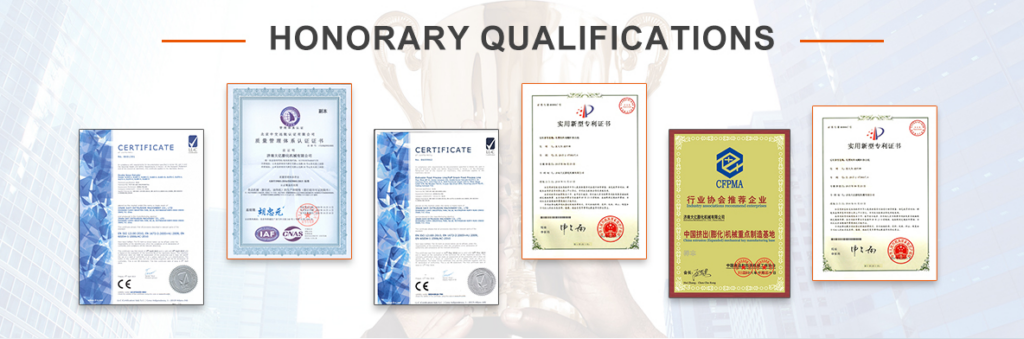
We have ISO and CE certificate.
4.How long is the warranty period?
All of our machines have one year warranty.
5.What’s the main market of your company?
Our customers all over the world.
6.How much production capacity of your company one year?
This depends on your needs.
.
 Persian
  English
  Russian
  Spanish
  Italian
  Arabic
  Portuguese
  German
  French
  Japanese
  Moroccan Arabic
  Belarusian