
An extrusion machine, commonly referred to as an extruder, is a critical piece of industrial equipment used to produce a vast array of products, from food snacks and animal feed to plastics and construction materials. machine extruder The process involves forcing a material through a shaped die under controlled conditions to create products of a desired cross-section. While designs vary based on application, a standard extrusion machine consists of several core components that work in tandem. This article outlines the fundamental composition of a typical extrusion machine.
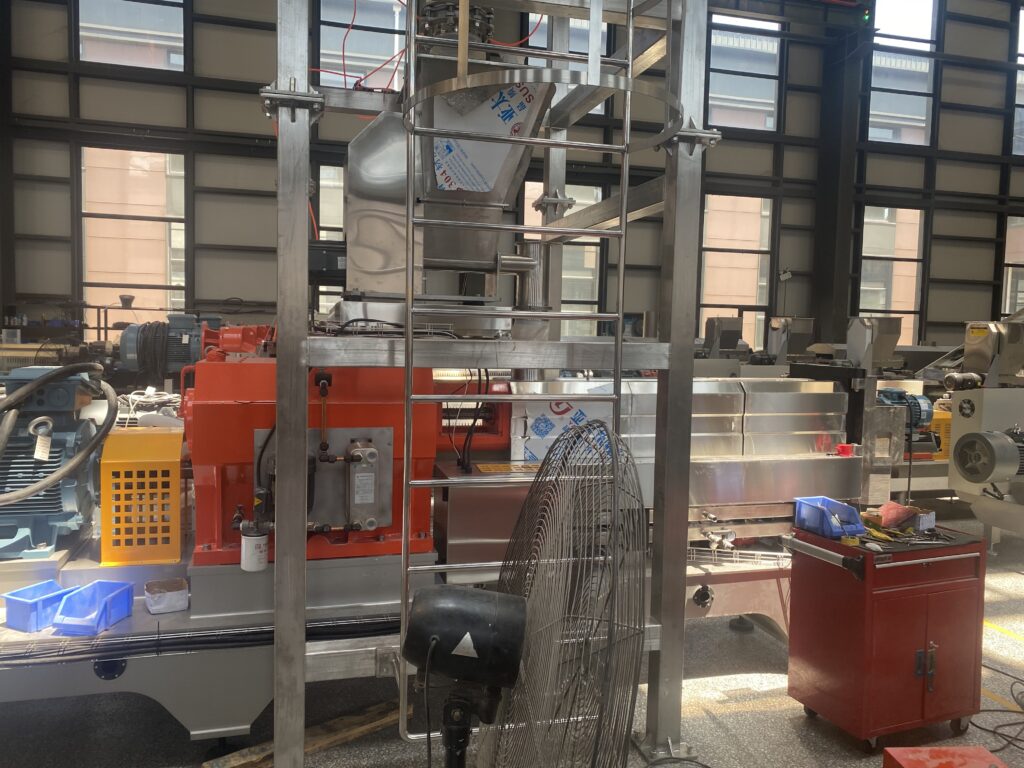
1. Feeding System
The process begins at the feeding system. This component, often a hopper or feeder, stores and meters the raw input material (known as the feedstock) into the machine. machine extruder For consistent product quality, precise control over the feed rate is essential. Some advanced systems include pre-conditioners where steam, water, or other liquids are added to the dry mix to initiate hydration and cooking before the material enters the main extruder barrel.
2. Drive System
The heart of the machine’s mechanical power is the drive system. It typically consists of a heavy-duty electric motor connected to a gear reduction box. machine extruder This system provides the necessary torque to rotate the screw(s) inside the barrel. Variable speed drives are common, allowing operators to control the screw speed, which directly influences residence time, shear, and the final product characteristics.
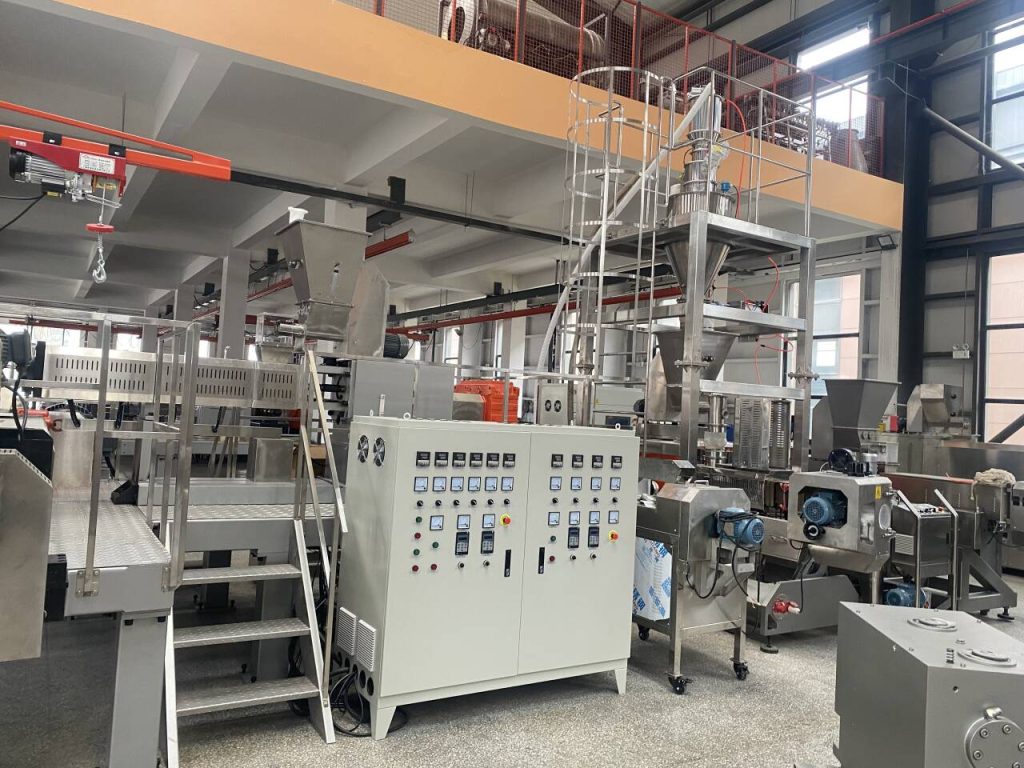
3. The Barrel and Screw(s)
This is the core transformation zone of the extruder.
- The Barrel: A cylindrical, hardened metal sleeve that houses the screw. It is often lined with wear-resistant material. Barrels can be heated or cooled via external jackets to precisely control the temperature profile along the length of the extrusion process.
- The Screw: A rotating shaft with helical flights that fits closely inside the barrel. It is the primary workhorse, responsible for conveying, mixing, compressing, shearing, and cooking the material. Screws are usually segmented or designed with varying pitch and flight depth along their length to perform different functions (feeding, compression, metering). In twin-screw extruders, two intermeshing screws provide superior mixing, pumping, and process flexibility compared to single-screw designs.
4. Conditioning Units (Heating/Cooling)
Temperature control is paramount. Most extruders have integrated heating and cooling systems. Heating (via electric bands, steam, or thermal fluid) plasticizes the material, machine extruder while cooling (via water or air circulation) manages the heat generated by mechanical shear and prevents overheating. Precise thermal management ensures proper cooking, texture, and expansion.
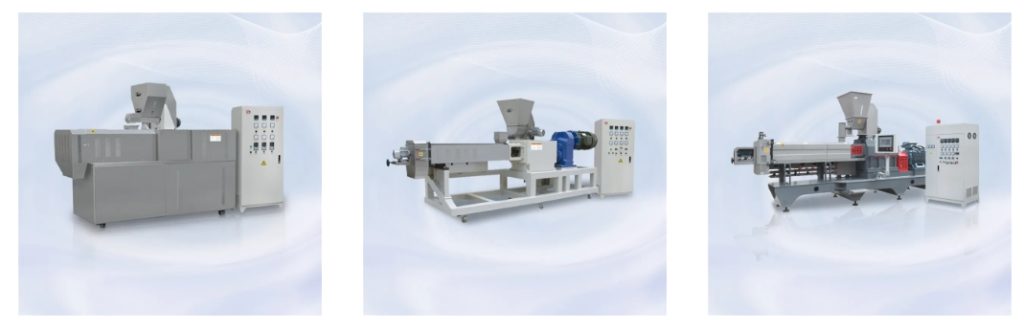
5. The Die Assembly
Located at the discharge end of the barrel, the die gives the product its final shape. It is a metal plate with one or more precisely machined openings. As the highly pressurized, molten material is forced through these openings, it takes on the die’s profile. The design of the die is crucial for product shape, expansion, and surface texture.
6. Cutting Mechanism
Positioned immediately after the die face, this mechanism cuts the continuous extrudate into pieces of specific lengths. For many foods, this is a rotary cutter with blades that spin at a synchronized speed against the die face. The cutter speed determines the final product length.
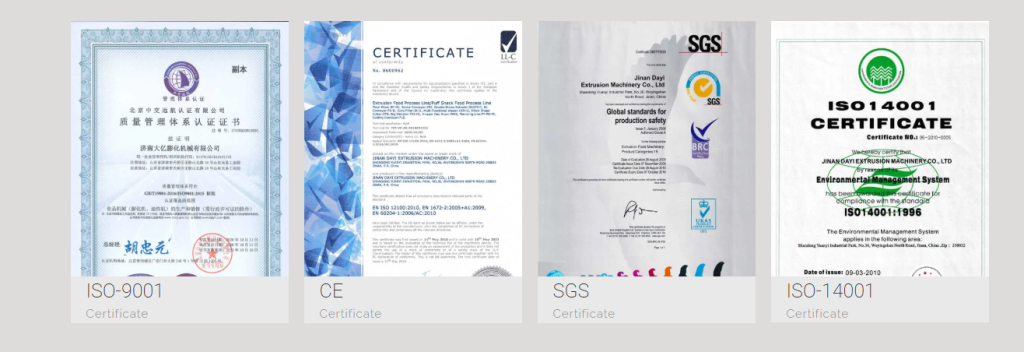
7. Control System
Modern extruders are governed by sophisticated computerized control systems (often a PLC or PC-based interface). These systems monitor and regulate all critical parameters, including screw speed, feed rate, temperatures at multiple barrel zones, liquid injection rates, and cutter speed. This ensures process repeatability, efficiency, and product consistency.
8. Ancillary Equipment
While not part of the extruder per se, auxiliary systems are vital for a complete production line. These typically include:
- Dryers/Coolers/Ovens: To reduce moisture and set the final texture of the product after cutting.
- Flavoring/Coating Drums: To apply oils, powders, or liquid flavors.
- Packaging Systems.
In summary, an extrusion machine is an integrated system where the feeding syste supplies the raw material, the drive system powers the screw within the barrel to plasticize and pressurize it, with conditioning units carefully managing the temperature. The shaped die and cutter then form the final product, all orchestrated by a central control system. The precise engineering and interaction of these components allow extrusion technology to be remarkably versatile and efficient for continuous shaping and cooking processes across numerous industries.
 Persian
  English
  Russian
  Spanish
  Italian
  Arabic
  Portuguese
  German
  French
  Japanese
  Moroccan Arabic
  Belarusian