
An extruder is a sophisticated machine used extensively in the food, feed, and plastics industries to produce a wide variety of puffed and shaped products—from breakfast cereals and snacks to pet food and biodegradable packaging. extruder machine Its operation relies on the application of heat, pressure, and mechanical shear to transform raw materials (often a powder or dough) into a molten mass, which is then forced through a die to achieve the desired shape and texture. The fundamental components of a food/feed extruder can be categorized into several key systems:
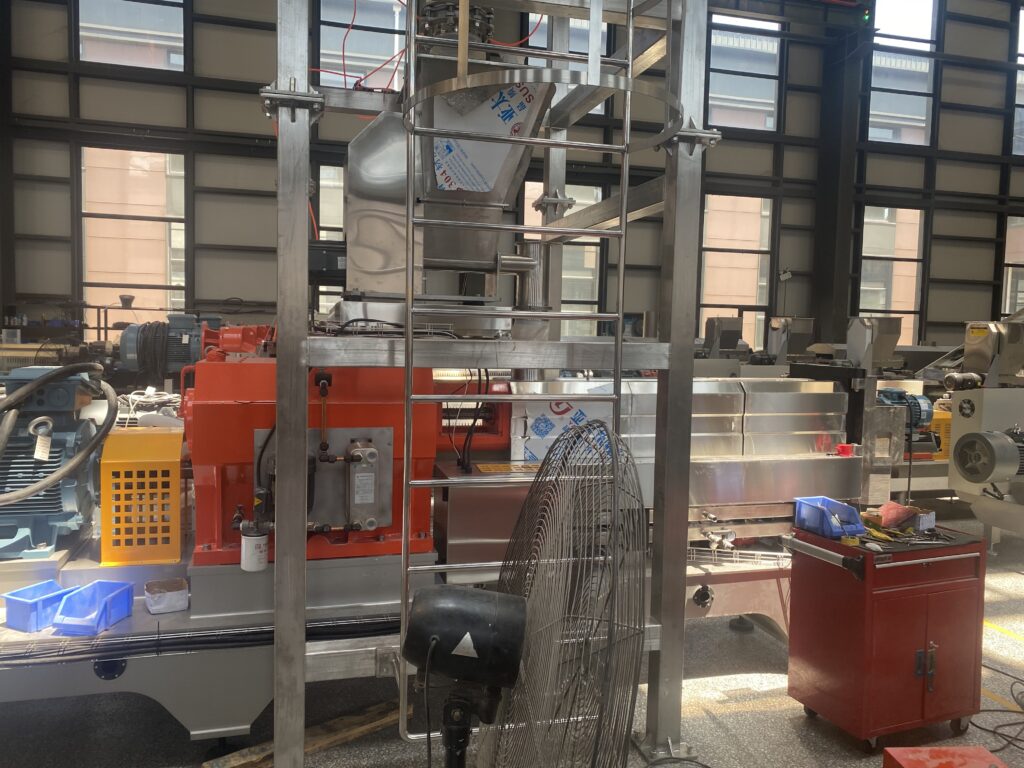
1. Feeding System
This is the starting point of the extrusion process. It typically consists of a hopper or storage bin that holds the raw ingredient mix (flours, starches, proteins, etc.). extruder machine Below the hopper, a feeder (often a screw or volumetric feeder) ensures a consistent, controlled, and uninterrupted flow of material into the main body of the extruder. The accuracy of this system is crucial for maintaining stable operation and product quality.
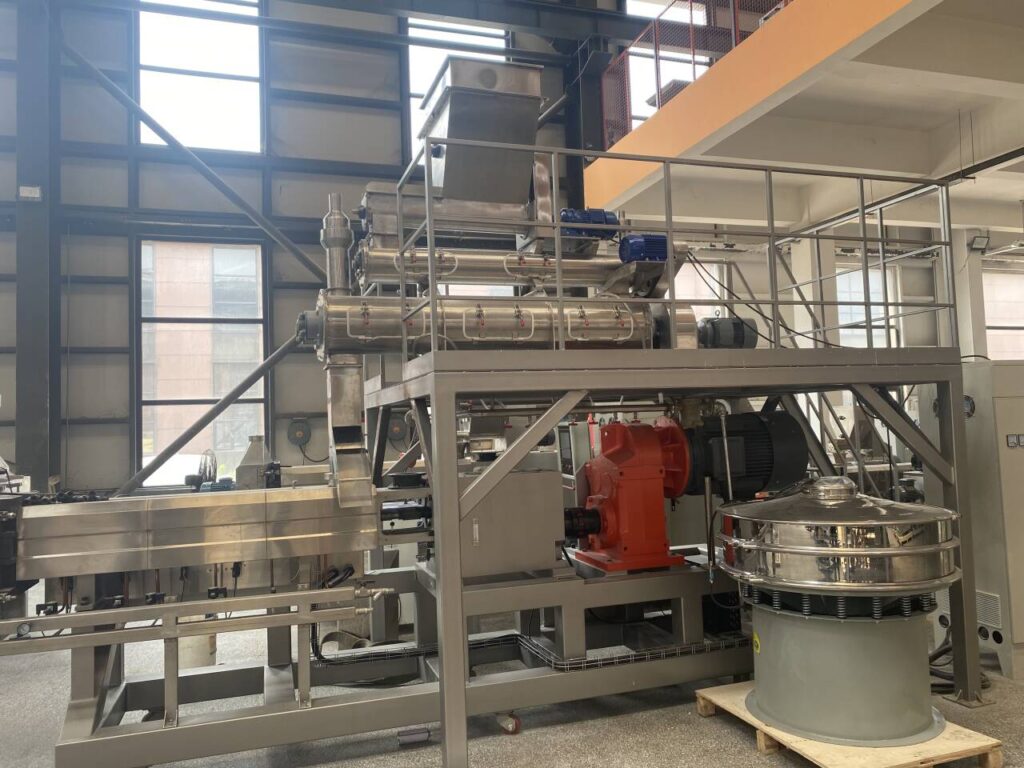
2. Pre-Conditioning Chamber (Optional but Common)
Before entering the main barrel, many extruders route the dry feed through a pre-conditioner. Here, the powder is mixed with steam and/or liquid ingredients (water, oils, dyes, flavors) in a separate mixing vessel. This process hydrates and pre-heats the ingredients, beginning the cooking process and significantly improving the efficiency and capacity of the main extruder.
3. Barrel and Screw Assembly (The Heart of the Machine)
This is the core component where most of the cooking, mixing, and pressurization occurs.
- Barrel: A cylindrical, hardened steel casing that houses the screw. extruder machine It is often segmented into several sections or blocks, each with independent temperature control (via electric heaters or steam/cooling water jackets). The inner surface may be lined or grooved to increase friction and prevent material from rotating with the screw.
- Screw(s): Located inside the barrel, this is a long, helical shaft that conveys, mixes, compresses, and shears the material. In Single-Screw Extruders, one screw performs all functions. Twin-Screw Extruders use two intermeshing screws (co-rotating or counter-rotating) which offer superior mixing, self-cleaning, and handling capabilities for complex recipes. The screw is usually composed of individual elements (flight segments, kneading blocks, reverse elements) assembled on a shaft, allowing for customizable configurations to control processing intensity.
4. Die Assembly
Mounted at the discharge end of the barrel, the die gives the product its final shape. It consists of a heavy-duty die plate with precisely machined holes or slots. The design of these openings—their size, shape, and length—directly influences the product’s form, expansion (puffing) upon exit, and texture. A cutter is mounted directly in front of the die face, comprising rotating blades that slice the emerging extrudate into precise lengths at a controlled speed.
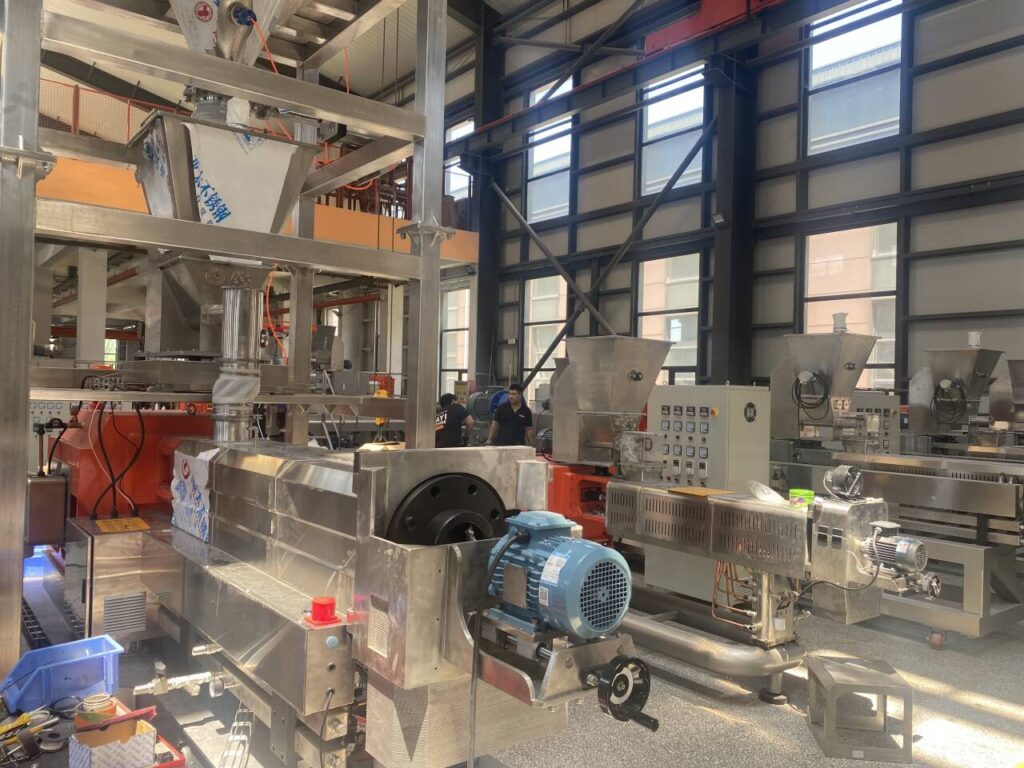
5. Drive System
This provides the motive power. It includes a high-torque motor (often electric or hydraulic) and a gearbox (reducer) that transmits power to the screw(s), allowing for precise control over the screw speed (RPM). The screw speed is a critical process parameter affecting residence time, shear, and final product characteristics.
6. Heating and Cooling System
Precise thermal management is essential. The system typically combines:
- Heating: Electric resistance heaters or steam jackets around the barrel segments.
- Cooling: Circulating water or oil channels to remove excess heat generated by mechanical shear, preventing overheating and ingredient degradation.
- Screw Cooling: Some screws have a central channel for coolant to control the temperature at the core.
7. Control System
Modern extruders are governed by a centralized Programmable Logic Controller (PLC) and Human-Machine Interface (HMI) or computer. extruder machine This system monitors and controls all critical parameters in real-time: temperatures at various barrel zones, screw speed, feeder rates, liquid injection rates, motor load (amperage), and final product moisture/temperature. This ensures consistency, repeatability, and rapid adjustment of recipes.
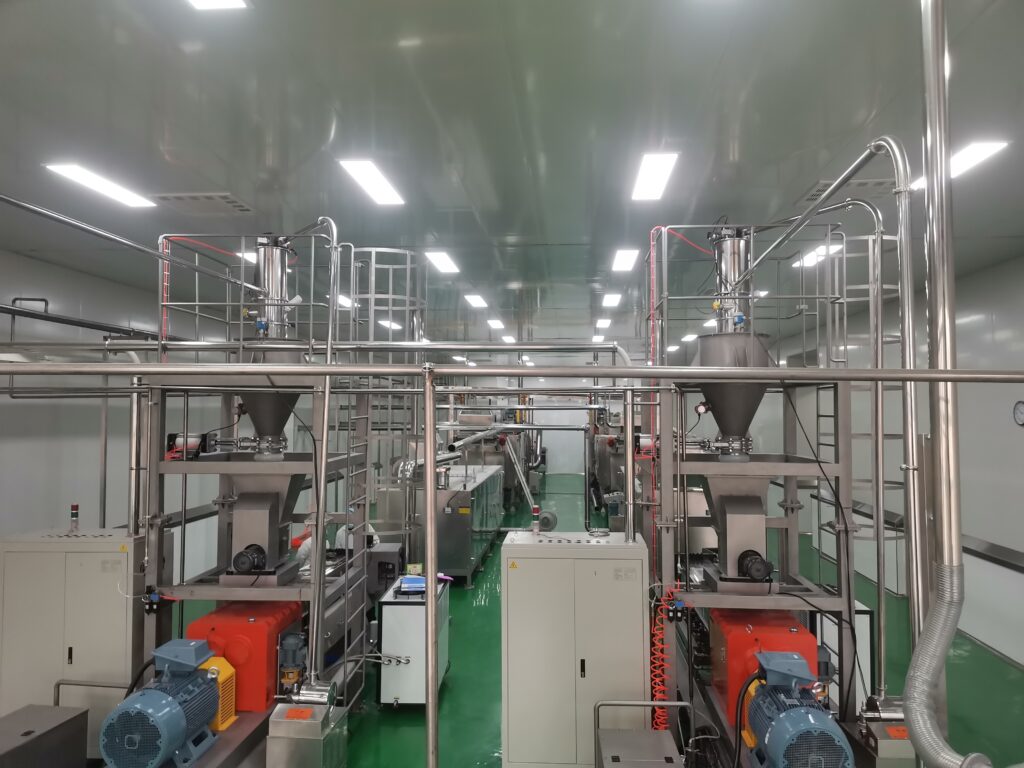
8. Downstream Equipment (Auxiliary but Integral)
While not part of the extruder per se, the final product quality depends on subsequent units:
- Dryer/Oven: Reduces moisture and sets the structure of puffed products.
- Coater/Flavor Applicator: Applies oils, powders, or liquid flavors.
- Cooler: Brings the product to ambient temperature and safe moisture levels for packaging.
In summary, the extruder is an integrated system where the precise interplay of its feeding, mechanical (screw/barrel), thermal, extruder machine and control components transforms basic ingredients into an immense array of useful, value-added products through the versatile process of extrusion cooking.
 Persian
  English
  Russian
  Spanish
  Italian
  Arabic
  Portuguese
  German
  French
  Japanese
  Moroccan Arabic
  Belarusian