
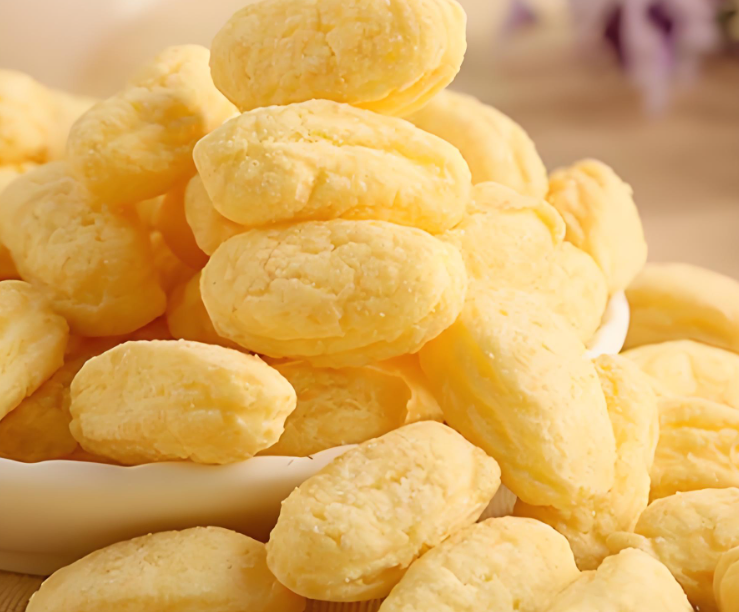
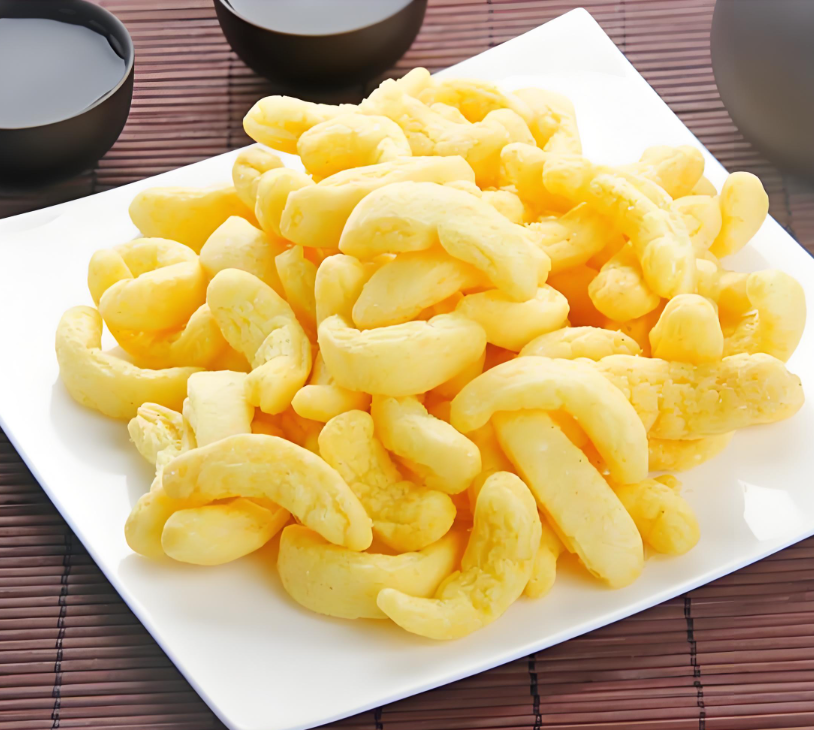
Crispy puffed snacks—such as corn puffs, cheese curls, rice puffs, and many other “extruded” snacks—feel simple to eat, but they are engineered foods. Their light texture, loud crunch, and quick melt-in-the-mouth bite come from tightly controlled processing: hydration, cooking under pressure, rapid expansion, drying, and seasoning. This article explains how manufacturers produce consistently crisp puffed foods and what variables make or break crunch.
1) Start With the Right Base: Starch Is the Engine of Puffing
Most crispy puff snacks are built on starch-rich flours or grits, commonly:
- corn meal/grits
- rice flour
- wheat flour
- potato starch/flakes
- tapioca/cassava starch
- blended cereals (e.g., corn + rice)
Why starch matters: during extrusion, starch gelatinizes (cooks and swells). When the product exits the die, water flashes into steam and the cooked starch matrix expands, creating a porous structure—the foundation of crispness.
Small additions can tune texture:
- Protein (e.g., soy, pea): can reduce expansion if too high, but adds structure
- Fiber: usually reduces puffing and can make a harder bite
- Sugar: can change expansion and browning; too much may lead to stickiness
- Emulsifiers: can improve processing and mouthfeel
2) Milling and Sieving: Uniform Particle Size = Uniform Crunch
Before cooking, manufacturers control particle size through milling and sieving.
- Too coarse → uneven cooking, weak spots, irregular expansion
- Too fine → excessive shear, dense texture, higher risk of die pressure problems
Uniform particles help produce consistent cell structure (the “bubble network” inside the puff), which directly affects crispness.
3) Mixing and Hydration: Water Controls Expansion
Dry ingredients are blended, then water (and sometimes steam) is added to reach a target moisture level.
- Higher moisture often reduces expansion and can make a denser bite
- Lower moisture can increase expansion but may raise pressure and cause instability
Hydration must be even; dry pockets or clumps become hard bits that ruin texture.
4) Extrusion Cooking: Pressure + Heat + Shear Build the Puff Structure
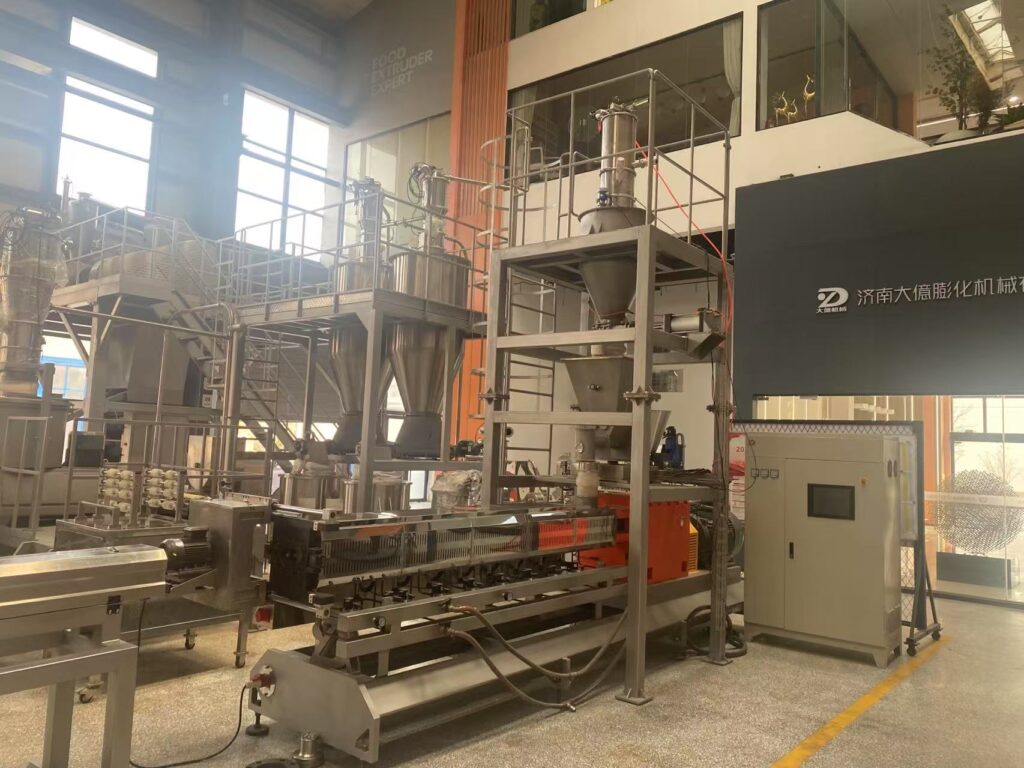
Most crispy puff snacks are made with an extruder (single-screw or twin-screw). Inside the barrel, the mixture is:
- heated
- compressed
- sheared (mechanical mixing and “working”)
- cooked under pressure
This step creates a cooked, viscoelastic dough with gelatinized starch—ready to expand.
Key controls that determine crispness:
- Barrel temperature profile (by zone)
- Screw speed and configuration (how much shear and mixing)
- Feed rate (stability and residence time)
- Moisture level (controls viscosity and puffing)
- Die design (shape, thickness, pressure drop)
- Knife speed (piece length and surface area)
5) Expansion at the Die: The “Pop” Moment
When the cooked dough exits the die, pressure drops instantly. Water inside flashes into steam, forming gas cells and expanding the product.
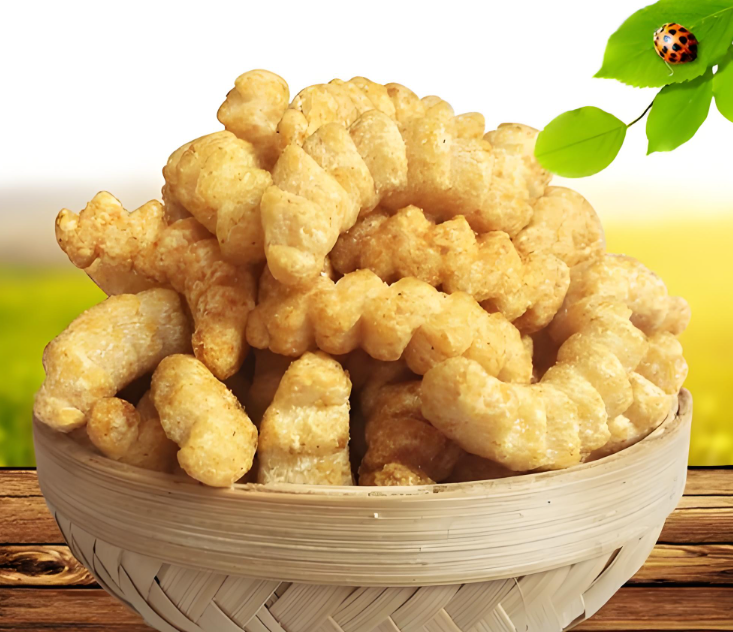
A crisp puff depends on:
- rapid, even expansion
- stable cell walls (not collapsing)
- a porous structure with the right density
If expansion is uneven, you get defects like:
- dense centers
- collapsed or wrinkled puffs
- brittle, glassy pieces that shatter rather than crunch
6) Drying: Crispness Is Mostly About Final Moisture
Freshly extruded puffs are not fully crisp—they contain too much moisture. Drying removes water to a level where the structure becomes crunchy and stable.
- Too wet → chewy, stale-like bite, faster spoilage
- Too dry → overly hard, fragile, higher breakage and dust
Manufacturers use belt dryers or multi-pass ovens with controlled temperature and airflow. Even drying is crucial: a puff that is dry outside but wet inside will lose crispness quickly.
7) Oil and Seasoning: Flavor Without Killing Crunch
After drying, snacks are often:
- sprayed with oil (for flavor adhesion and mouthfeel)
- tumbled with seasoning powders (cheese, barbecue, chili, etc.)
This stage must be balanced:
- too much oil → greasy surface, faster staling, soggy texture
- too much fine powder → clumping, uneven flavor, messy fines in the bag
- poor adhesion → seasoning falls off, inconsistent taste
Some plants use electrostatic seasoning or optimized tumblers to improve coverage without heavy oil loading.
8) Cooling and Packaging: Protect Crispness From Humidity
Crisp snacks are extremely sensitive to moisture pickup. After seasoning, products must be cooled and packaged quickly.
High-quality packaging focuses on barriers:
- moisture barrier films
- proper sealing
- controlled headspace (often nitrogen flushing) to reduce oxidation and protect fragile pieces
Bad seals or humid packing rooms can ruin crispness even if extrusion and drying were perfect.
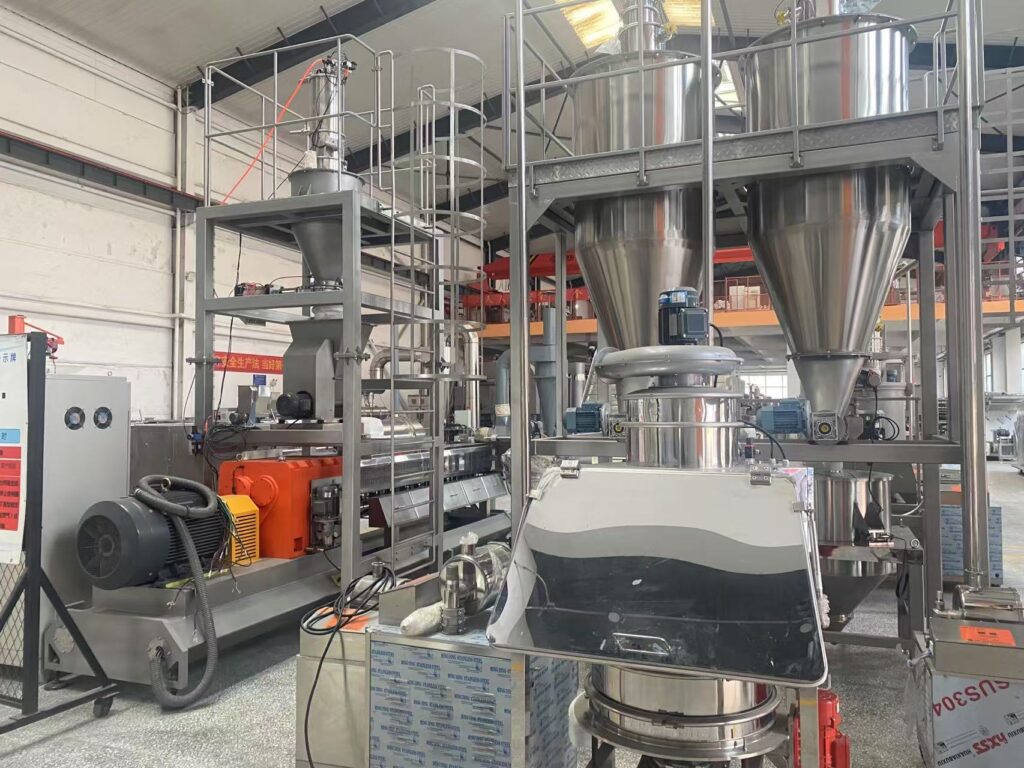
9) What Makes a Puff “Extra Crispy”? Practical Levers
If your goal is a louder crunch and lighter bite, manufacturers typically optimize:
- Starch type and ratio (more puff-friendly starches)
- Moisture setpoint (enough to process smoothly, low enough to expand)
- Extrusion energy (temperature + shear to fully cook starch)
- Die design (pressure drop and shape stability)
- Drying curve (gentle enough to prevent collapse, strong enough to reach crisp moisture)
- Final water activity control (to keep crunch during shelf life)
Crispness is not just “dryness”—it’s the combination of porous structure and the right final moisture state so the cell walls stay rigid.
Common Problems and Why They Happen
- Dense, hard puffs: moisture too high, insufficient cooking, or too much protein/fiber
- Collapsed pieces: weak structure, uneven heating, or drying too aggressive early on
- Soggy after packaging: packaging barrier/seal issues, humid environment, or final moisture too high
- Too brittle and dusty: over-dried, overly thin walls, or rough handling/transport
Producing a truly crispy puffed snack is a controlled engineering process. The core steps—hydrate, extrude-cook, expand, dry, season, and protect from humidity—must work together. The best crunch comes from the right starch base, stable extrusion conditions, a porous structure that doesn’t collapse, and packaging that keeps moisture out.
 Persian
  English
  Russian
  Spanish
  Italian
  Arabic
  Portuguese
  German
  French
  Japanese
  Moroccan Arabic
  Belarusian