
There is perhaps no snack more immediately recognizable than the Cheetos puff. Its violent orange dust has stained countless fingers, car upholsteries, and library books, leaving a trail of evidence that is both incriminating and indelible. We are told by the cartoon cheetah mascot that “it ain’t easy being cheesy,” but what the cheerful advertisements omit is that the path from corn silo to convenience store shelf is a unsettling journey of industrial hyper-efficiency that resembles an auto plant more than a bakery.
Welcome to the extrusion line.
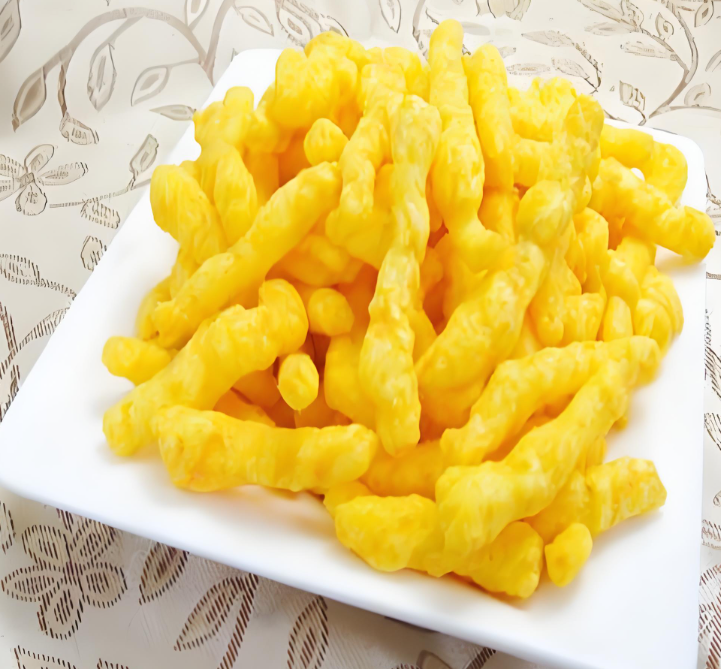
The Humble Beginning: Cornmeal in a Silo
Before the transformation into the iconic crunchy appendage, every Cheeto begins its life as anonymous cornmeal stored in massive silos. From these towering storage units, the gritty powder is pneumatically pumped approximately 100 yards through tubes into the manufacturing plant . This is not flour your grandmother kept in a pantry bin; this is industrial raw material, the same stuff used to bulk up animal feed and breakfast cereals.
Frito-Lay operates 14 fried-Cheeto plants across 11 states, each one a temple to processed food efficiency . The cornmeal sits in a giant hopper, awaiting what can only be described as a violent transformation. There is nothing artisanal about what happens next.
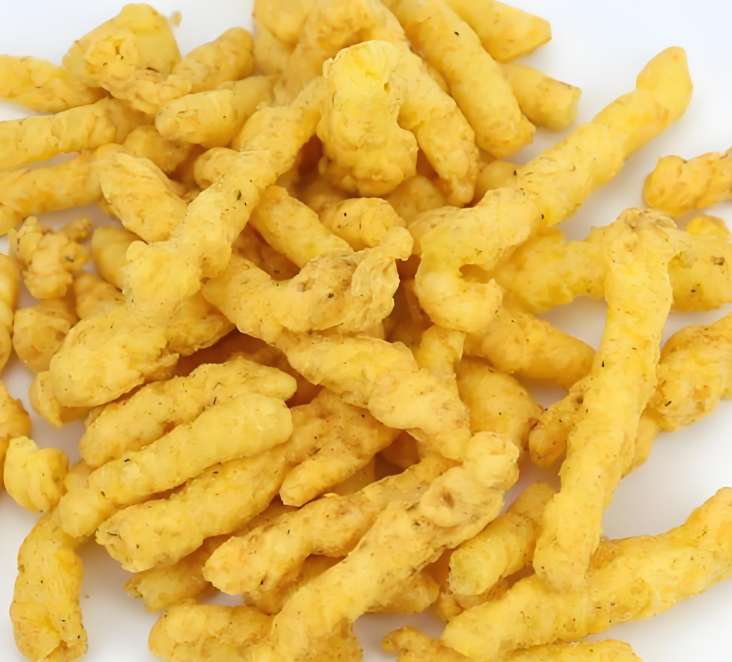
The Extruder: Where Geometry Meets Brutality
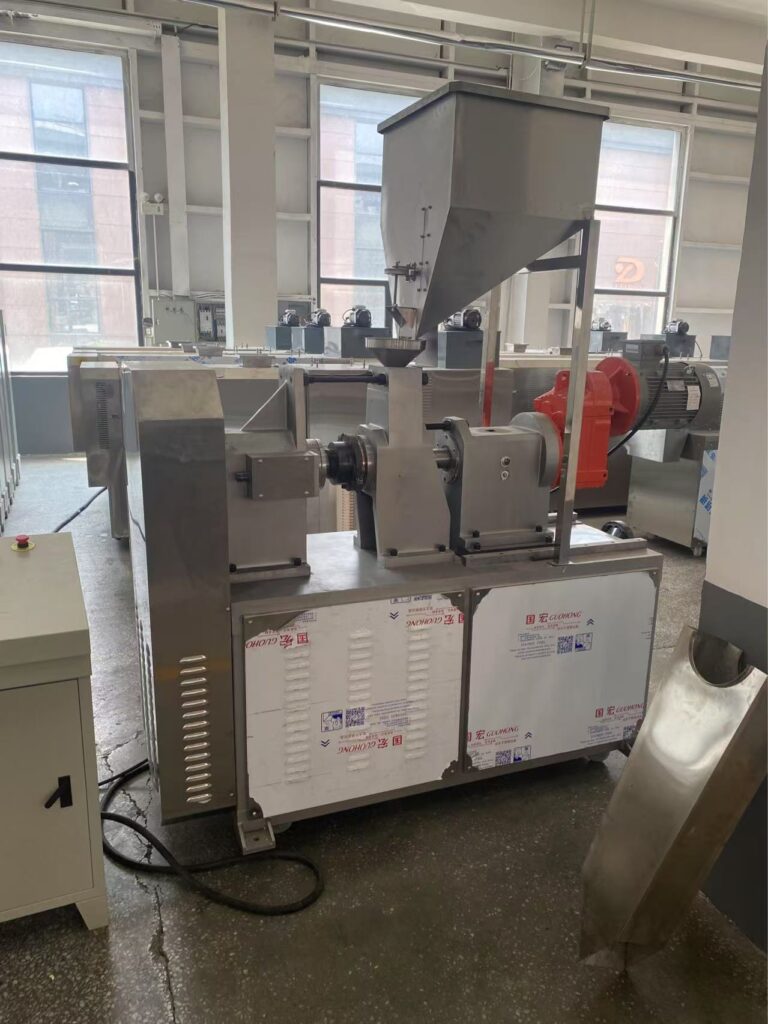
The real magic—or perhaps “horror” is the more appropriate term—begins when the cornmeal enters the extruder. This machine feeds the meal between two rotating metal plates, creating friction so intense that it melts the starch in the corn . The moisture within the mixture superheats past its boiling point, and when the pressure becomes too great, the mixture “pops” as it is forced through a die.
This is where the Cheeto is born, and it is not a gentle birth.
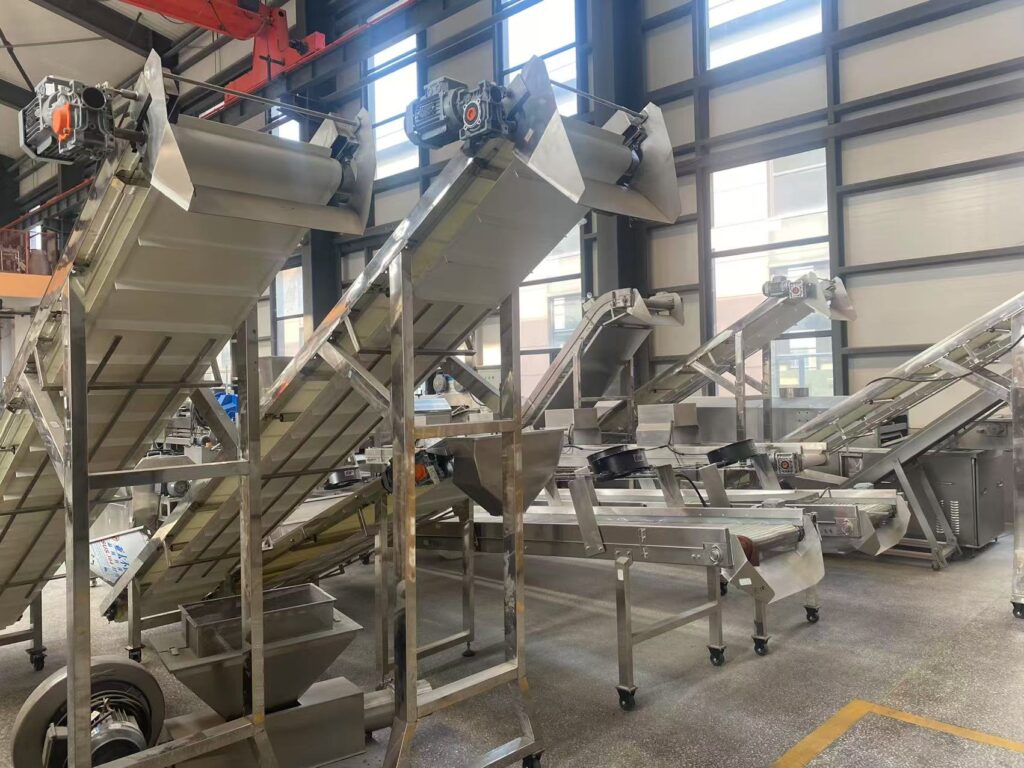
The newly formed bits are spit out of the extruder at high velocity, flying three feet through the air before smashing into a safety cage and dropping onto a conveyor belt . The process takes roughly ten minutes from raw grain to finished product . Ten minutes to create something that will sit on a shelf for months.
The extrusion process bears a striking resemblance to how plastic products are manufactured—the same application of heat, pressure, and mechanical shearing to create a specific shape . In fact, if you were to visit a plastics plant and a Cheetos plant, the machinery would look disturbingly similar.
The Fryer: Fat Immersion Therapy
Once shaped, the puffs move through a piping-hot bath of vegetable oil in what the WIRED description aptly compared to an “amusement-park log flume” . This is not a light spritzing for texture; this is a full immersion fry that reduces the snack’s moisture content to below 2 percent . That low moisture level is what provides the satisfying crunch—and also what gives the product its remarkably long shelf life. Nothing that retains that much water can sit unrefrigerated for months without spoiling. The Cheeto is, in essence, a mummified piece of corn.
The oils used are a blend of corn, canola, and/or sunflower oil—cheap, shelf-stable vegetable oils chosen for their neutrality and low cost . These are not oils celebrated for their health benefits; they are selected because they can be heated to high temperatures repeatedly and they won’t impart competing flavors.
The Flavoring Drum: Applying the Signature Dye
After frying, the naked puffs enter a tumble drum. Here, strategically placed nozzles spray a mixture of oil and powdered cheese from all sides . This is the moment the bland, beige puff becomes the iconic orange Cheeto. The cheese powder, which Frito-Lay purchases pre-spiced in 50-pound sacks, looks exactly like the stuff used in boxed macaroni-and-cheese products . The company remains coy about their suppliers, but the ingredient list tells a more complicated story.
When you examine the ingredients of Cheetos Crunchy Flamin’ Hot, the “cheese” is far down the list, behind enriched corn meal, vegetable oil, salt, maltodextrin, yeast extract, and monosodium glutamate . The familiar orange hue comes not from cheddar but from a cocktail of artificial colors: Yellow 6, Yellow 5, Red 40 Lake, and Yellow 6 Lake . These are petroleum-derived dyes that have been the subject of health concerns for decades. The “cheese” flavor is as much a product of chemical engineering as it is of dairy farming.
The Bolitas variety, which debuted in the U.S. after success in Mexico, lists even more artificial colors including Blue 1 Lake, alongside disodium inosinate and disodium guanylate—flavor enhancers that work in concert with MSG to convince your brain you’re experiencing something far more complex than fried cornmeal with chemicals .
Quality Control: The Taste Panel
Every half hour, an in-house lab analyzes samples pulled from the production line to verify density and nutritional content . But the more unsettling quality check happens every four hours: a four-person panel convenes to inspect and taste the snacks, comparing them to “perfect reference Cheetos” sent from Frito-Lay headquarters .
Consider that for a moment. Somewhere in a corporate office, there exists a “perfect reference Cheeto”—an Platonic ideal of processed cheese snack against which all others are judged. The implication is that there is a single correct expression of this artificial product, and the tasting panel must ensure that every bag conforms.
The Baked Alternative: Still Processed
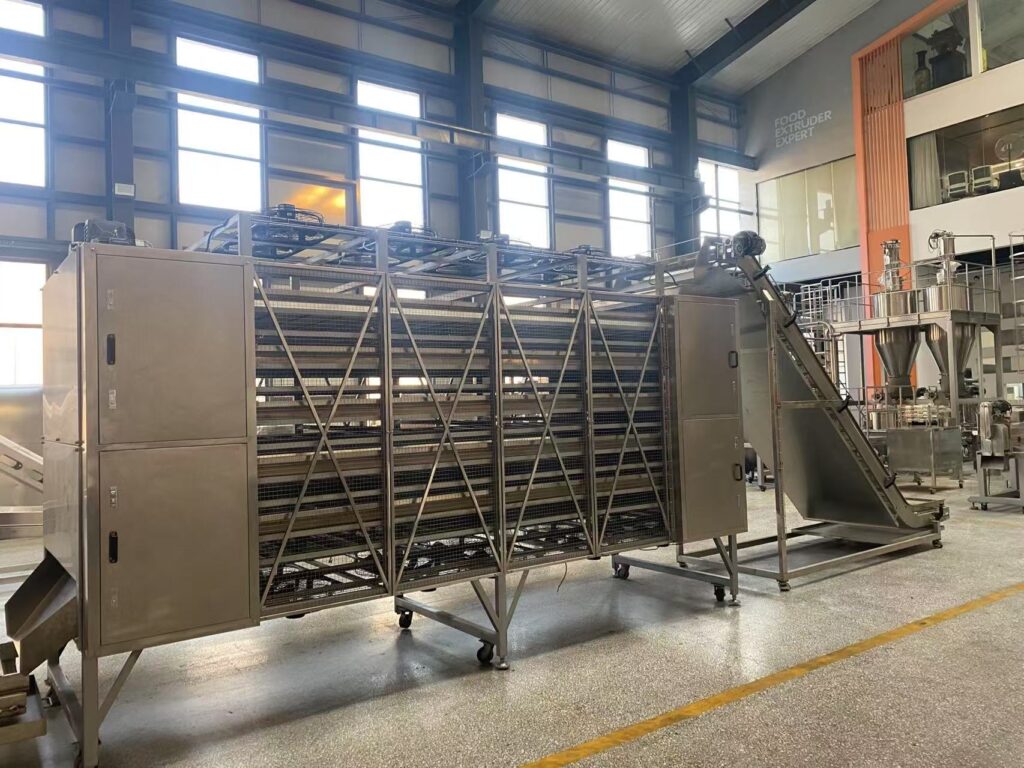
For those seeking to avoid the deep-fried version, Frito-Lay offers baked Cheetos. The ingredient list is marginally different—whole corn meal instead of enriched, slightly different oil blends—but the core industrial process remains . They are still extruded, still tumbled with cheese powder and artificial colors, still produced on the same type of equipment by the same corporation. The baked version merely skips the fryer, passing through an oven instead . The “healthier” option is a distinction without a difference.
What We’re Actually Eating
Let us be honest about what a Cheeto is: cornmeal that has been subjected to extreme heat and pressure, shaped by a metal die, flash-fried in vegetable oil until nearly all moisture is eliminated, then tumbled with a mixture of cheese powder, MSG, artificial colors, and various chemical flavor enhancers designed to create an addictive eating experience.
The extrusion process creates a structure that rapidly dissolves on the tongue, delivering the flavoring directly to taste buds before the consumer has time to register what they’re eating. This is not accidental; it is food science. The “vanishing caloric density” allows for rapid consumption without triggering satiety signals. One can eat an entire family-size bag before the body registers that anything has been consumed.
The Cheetos manufacturing process is a triumph of industrial engineering but a indictment of the modern food system. It takes a perfectly respectable agricultural product—corn—and transforms it through extreme processing into something the body barely recognizes as food. The signature “cheetle” that fans celebrate as a quirky brand element is, in reality, evidence of how thoroughly these snacks bypass normal eating mechanics.
Mr. Cheetah was right: it isn’t easy being cheesy. But perhaps the more pressing question is whether we should be eating anything that requires this much industrial intervention to exist. The next time you reach for that bright orange bag, remember the silo, the extruder, the safety cage, the fryer, the chemical bath, and the tasting panel with their reference Cheetos. And then decide if that crunch is really worth it. If you are interested in the kurkure making machine , you can contact me , i will give you good advice and solutions .
1.Will you help us with the installation ?
Yes , We will send engineers to install and debug the equipment, and assist in training your staff.
2.Are you a factory or trading company?
We are a factory.
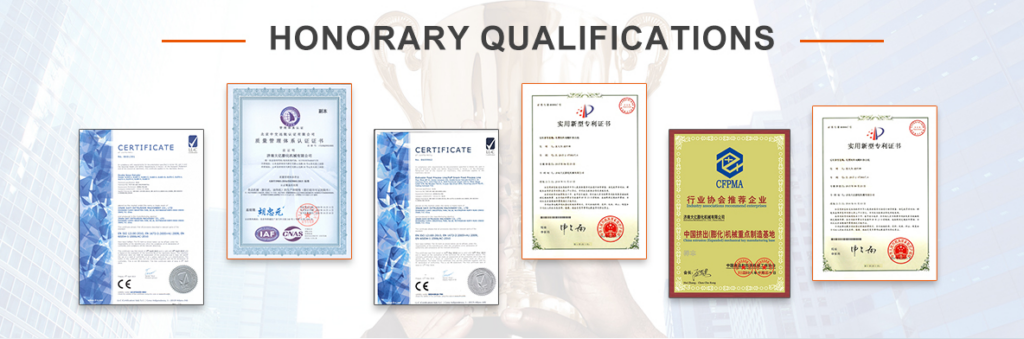
3.What certificate do you have?
We have ISO and CE certificate.
4.How long is the warranty period?
All of our machines have one year warranty.
5.What’s the main market of your company?
Our customers all over the world.
6.How much production capacity of your company one year?
This depends on your needs.
 Spanish
  English
  Russian
  Italian
  Arabic
  Portuguese
  German
  French
  Japanese
  Moroccan Arabic
  Persian
  Belarusian