
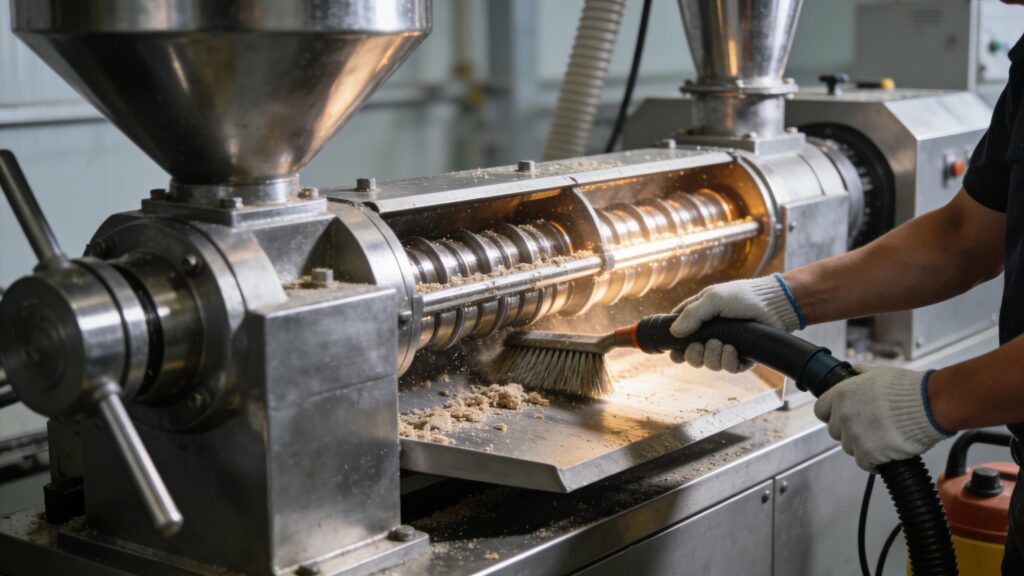
Cleaning a food extruder is critical for maintaining product quality, preventing cross-contamination, and extending the machine’s lifespan. Because food residue can dry quickly and become difficult to remove, it is best to clean the extruder immediately after use.
Safety First:
- Disconnect Power: Always unplug the machine or switch off the main power supply before disassembling.
- Wear PPE: Use heat-resistant gloves (if the machine was running), safety glasses, and non-slip footwear.
Step 1: Initial Disassembly
- Remove the hopper: Detach the feed hopper and scrape out any remaining raw material. Save or discard it according to your food safety plan.
- Detach the barrel and screw: Carefully remove the barrel casing and the auger screw (the rotating shaft that pushes the food forward). Refer to your machine’s manual, as locking mechanisms vary by model.
- Remove the die head: Unscrew the die nut and remove the shaping plate (die). This is where most clogs occur.
Step 2: Dry Cleaning (Scrape & Brush)
Before using water, remove all loose debris.
- Scrape the screw, barrel, and die with soft plastic or wooden scrapers. Do not use metal tools (screwdrivers, knives) on the screw threads or die holes, as scratches will harbor bacteria.
- Brush the screw flights with a stiff nylon brush to dislodge baked-on dough or paste.
- Poke out blocked die holes using a soft brass rod or a specialized die-pin tool.
Step 3: Soaking
- Fill a food-grade plastic tub or sink with warm water (not boiling, 40–50°C / 104–122°F).
- Add an approved food-safe detergent or degreaser.
- Submerge the screw, die, barrel, and small parts. Soak for 15–30 minutes to soften stubborn residue.
Step 4: Wet Cleaning & Scrubbing
- Scrub all parts using non-abrasive pads (e.g., Scotch-Brite) and a long-handled bottlebrush for the barrel interior.
- Clean die holes individually using a small brush or die-pin tool. Hold the die up to a light to ensure every hole is clear.
- Rinse thoroughly with hot potable water (70–80°C / 158–176°F) to remove all soap residue. Do not use a pressure washer on seals or bearings.
Step 5: Sanitizing (If required)
- Submerge or spray parts with a food-grade sanitizer (e.g., chlorine or peracetic acid solution) following the manufacturer’s contact time.
- Do not rinse after sanitizing unless the label instructs you to (to avoid recontamination).
Step 6: Drying & Inspection
- Air dry all parts on a clean, sanitized drying rack. Never towel-dry, as towels can introduce lint and bacteria.
- Inspect the screw for cracks or wear, the die for nicks, and the barrel for scoring. Replace worn gaskets or seals.
Step 7: Reassembly & Final Rinse
- Reassemble the extruder according to the manual. Lightly coat the screw with food-grade lubricant (if specified by your manufacturer).
- Run a “sacrificial batch” of plain bread dough or wet flour through the extruder for 30 seconds, then discard it. This removes any lingering sanitizer or trapped particles.
Cleaning Schedule Reference
| Part | Frequency | Method |
|---|---|---|
| Die & Screw | After every batch | Scrape, soak, brush, sanitize |
| Barril | Daily | Flush with hot water & brush |
| Hopper | Daily | Wipe dry & vacuum |
| Full teardown | Weekly or as needed | Complete disassembly & deep soak |
Common Mistakes to Avoid
- ❌ Using steel wool: Leaves metal shards in your food.
- ❌ Letting residue dry: Dried dough requires caustic cleaners and can damage the screw.
- ❌ High-pressure water on bearings: This washes out the grease and ruins the bearings.
- ❌ Skipping the sacrificial batch: This leads to sanitizer residue in your first production run.
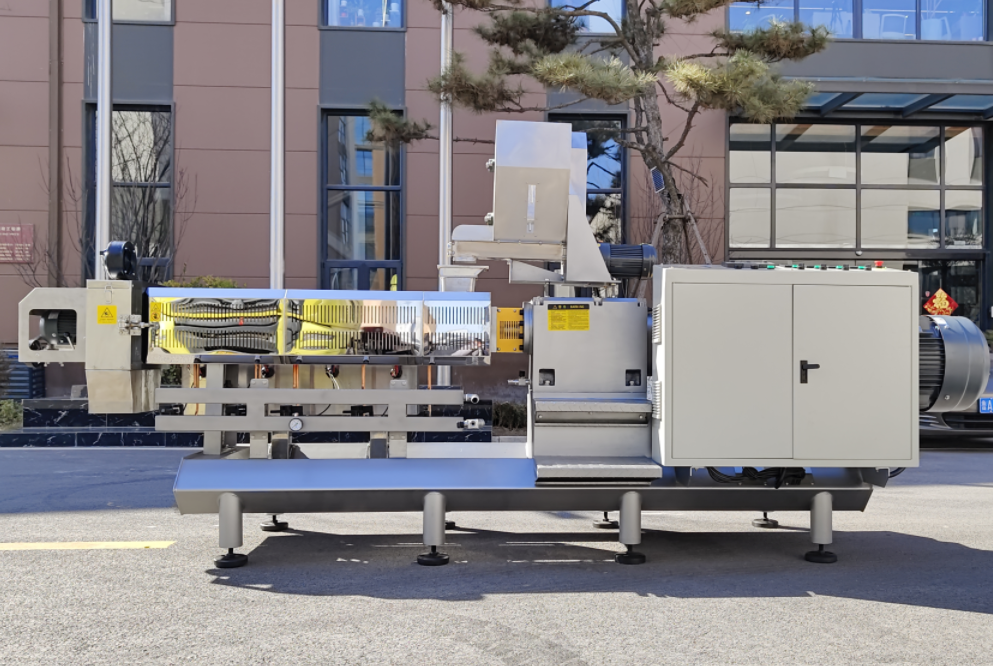
Following this protocol will ensure your food extruder operates efficiently, produces consistent shapes, and meets health inspection standards. If you are interested in the double screw extruder, you can contact me , i will give you good advice and solutions .
1.Will you help us with the installation ?
Yes , We will send engineers to install and debug the equipment, and assist in training your staff.
2.Are you a factory or trading company?
We are a factory.
3.What certificate do you have?
We have ISO and CE certificate.
4.How long is the warranty period?
All of our machines have one year warranty.
5.What’s the main market of your company?
Our customers all over the world.
6.How much production capacity of your company one year?
This depends on your needs.
 Spanish
  English
  Russian
  Italian
  Arabic
  Portuguese
  German
  French
  Japanese
  Moroccan Arabic
  Persian
  Belarusian