
Temperature control in a twin-screw extruder is not merely a technical detail—it is the very essence of the process. Whether you are producing cheese-flavored snacks, texturized vegetable protein, or aquatic feed, the thermal energy inside the barrel dictates the final product’s texture, shape, and taste. Too cold, and the dough remains raw and dense; too hot, and you risk scorching, off-flavors, or dangerous pressure buildups.
This guide explores the science, hardware, and practical strategies required to maintain precise thermal command of your extrusion line.
1. The Philosophy of Zonal Control
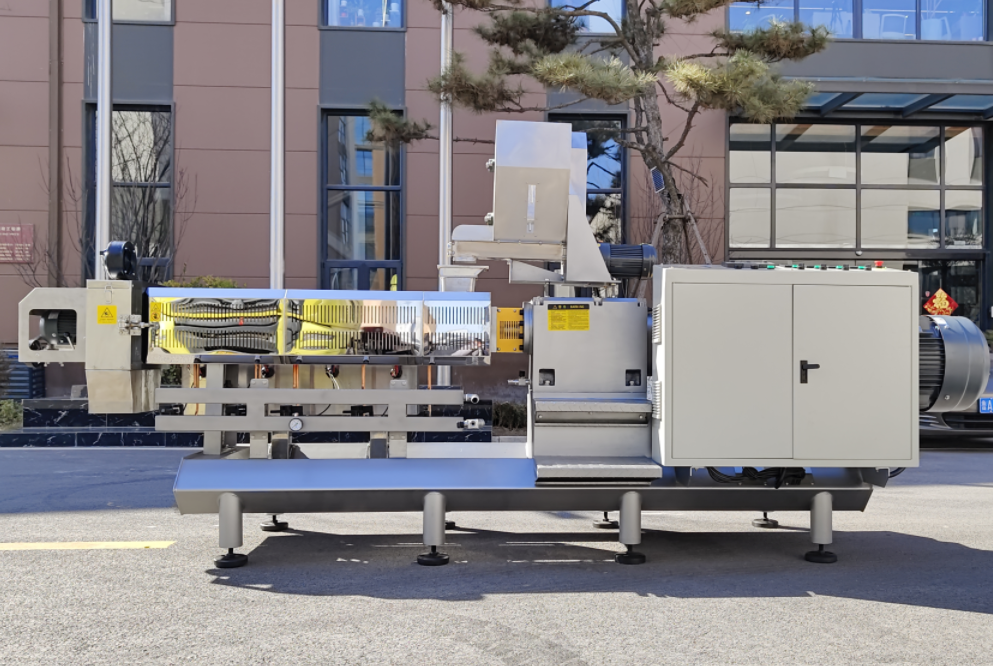
The first rule of extrusion is that the barrel is not one single oven—it is a series of independent climate zones. A typical industrial twin-screw extruder, such as the French-made Clextral EVO25, features between four to six barrel segments, each capable of being heated or cooled independently .
Why zones? The material undergoes a transformation as it travels from the feed port to the die. In the initial zone (often called the feeding zone), the goal is merely to warm the raw flour or meal to prepare it for compression. In the middle sections, you need high heat to cook and gelatinize the starches. In the final zone (the metering zone), you might need to cool the melt slightly to control expansion at the die.
A practical reference point from the snack food industry suggests the following zonal temperature profile for extruded corn-based products like puffed pellets:
- Zone 1 (Feed Section): 50°C — Gentle warming to condition the material.
- Zone 2 (Transition/Compression): 120°C–125°C — Initial cooking and plastification.
- Zone 3 (Metering/Die Section): 155°C–165°C — Final cooking and expansion preparation .
2. The Hardware: Heating and Cooling in Harmony
To achieve these temperatures, modern extruders rely on a dual-action system involving both heating mechanisms and cooling mechanisms.
Heating Systems
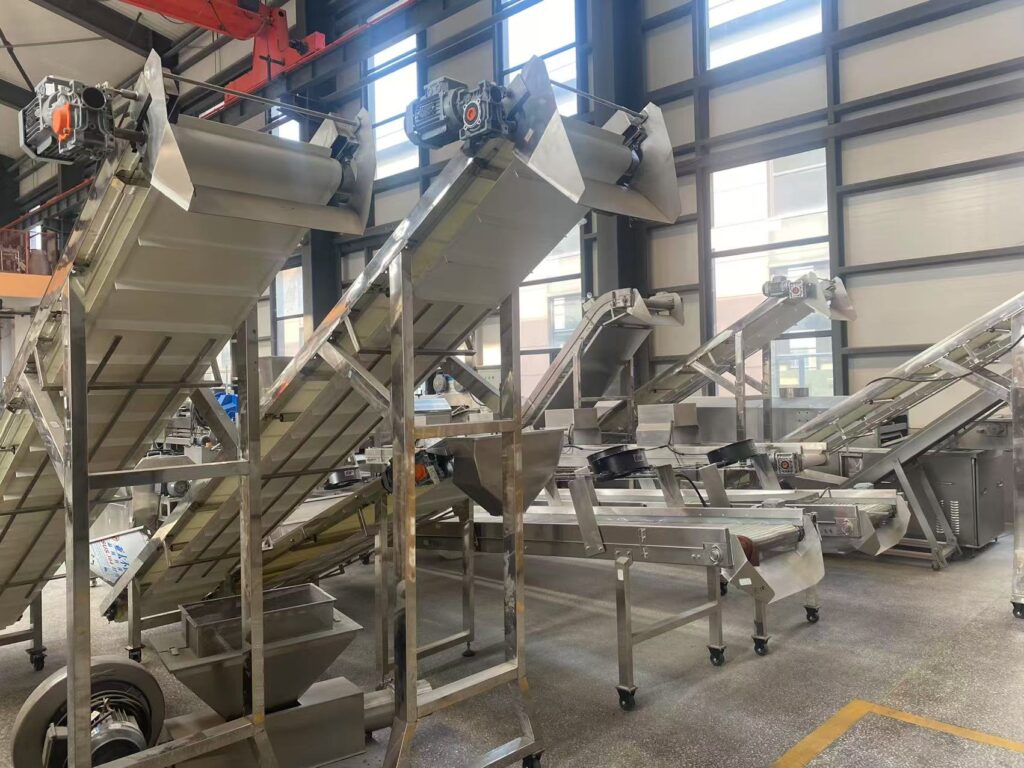
Most extruders utilize electric heating elements. In many designs, this takes the form of heating jackets or heating plates clamped onto the outer surface of the barrel sections . These elements convert electrical energy into heat, which conducts through the barrel wall into the product.
Cooling Systems
Friction is the enemy of stability. As the screws rotate, they generate immense mechanical energy that is converted into heat. Often, the machine generates more heat than the recipe requires. To combat this, cooling systems are essential.
The most common method is liquid cooling. This involves circulating water or oil through channels embedded in the barrel. Advanced systems use solenoid valves to pulse the coolant flow on and off, regulating the temperature without causing thermal shock .
For high-performance applications, some manufacturers have developed sophisticated through-shaft cooling. By circulating coolant through the hollow core of the rotating screws themselves, heat can be pulled directly from the heart of the material, preventing “hot spots” on the mixing elements that could degrade sensitive formulas .
3. The Brain: Control Algorithms
The physical hardware of heaters and cooling channels is useless without a sophisticated controller to dictate their actions. While older machines relied on simple On/Off thermostats (leading to temperature oscillations), modern machines utilize advanced algorithms.
PID Control
The industry standard is the Proportional-Integral-Derivative (PID) controller. The PID controller continuously calculates the difference between the current temperature and the “set point” (your target). It then applies a corrective output based on three parameters: the current error (Proportional), the accumulation of past errors (Integral), and the rate of change of the error (Derivative) .
Tuning these three values is an art form. If the P value is too high, the temperature will overshoot wildly. If it is too low, it will take forever to reach the target. Experienced operators perform “step tests”—introducing a sudden change and watching how the system responds—to find the perfect tuning balance .
Advanced Cascade Control
Recent research suggests that standard PID control can be significantly improved. A study published in Machinery Design & Manufacture explored a Cascade DMC-PID (Dynamic Matrix Control) method. This advanced strategy not only reacts to temperature changes but also predicts them by monitoring disturbances in feed rate and inlet temperature of the raw materials. By adding these variables as “feedforward” compensation, the controller can adjust heating/cooling before the temperature drifts, rather than after .
4. Disturbance Variables: The Hidden Factors
You can have the best PID loop in the world, but if you ignore the physics of the material, you will fail. Temperature is not isolated; it is deeply connected to the mechanical side of the process.
Screw Speed (RPM)
If you increase the screw speed, you increase the mechanical energy input (Specific Mechanical Energy or SME). This will raise the product temperature regardless of what the barrel heaters are doing. A good control system must anticipate this. Some systems use pulse-width-modulated (PWM) actuators to adjust the heating/cooling duty cycle in response to these speed changes .
Moisture Content
Water is a powerful thermal regulator. When water is injected into the extruder, it acts as a heat sink. As the water absorbs heat and turns to steam, it prevents the product from burning. Adjusting the “water injection ratio” is a quick way to drop the product temperature without relying on the barrel cooling jackets .
5. Practical Operation: Starting Up and Steady State
Knowing the theory is one thing; running the line is another. Here is a practical workflow for controlling temperature on the factory floor:
- Preheat: Before introducing raw material, bring all zones to their set points and allow them to soak. Ensure the barrel metal is fully saturated with heat.
- Start Wet: When starting a line, it is common practice to introduce water (or a wet “slug”) ahead of the dry mix. This lubricates the die and prevents the initial material from burning and plugging the machine before the thermal equilibrium is reached .
- Monitor Viscosity: Temperature is a proxy for viscosity. If the extrudate looks rough or the motor load is spiking, it often means the melt temperature is too low, making the dough too stiff.
- Trim with Cooling: In steady state, you should find that the heaters are actually off most of the time. The friction of the screws generates the necessary heat, and the controller spends its time cracking open the cooling valves to remove excess heat to maintain the exact set point.
Conclusion
Controlling the temperature of a twin-screw extruder is a balancing act between electrical input, mechanical friction, and liquid cooling. By dividing the barrel into precise thermal zones, equipping the machine with responsive heating jackets and cooling channels, and utilizing intelligent PID or cascade algorithms, operators can transform raw powder into a perfectly cooked, consistently shaped final product. It is the mastery of this thermal environment that separates a perfectly crunchy snack from a scorched disaster.
 Spanish
  English
  Russian
  Italian
  Arabic
  Portuguese
  German
  French
  Japanese
  Moroccan Arabic
  Persian
  Belarusian