
Introduction
Modified starch represents a critical functional ingredient in modern food processing, obtained through controlled physical, chemical, or enzymatic treatment of native starch to enhance its stability, texture, clarity, or tolerance to extreme processing conditions. Its manufacturing process is a precise, multi-step operation that tailors starch properties to specific industrial applications.
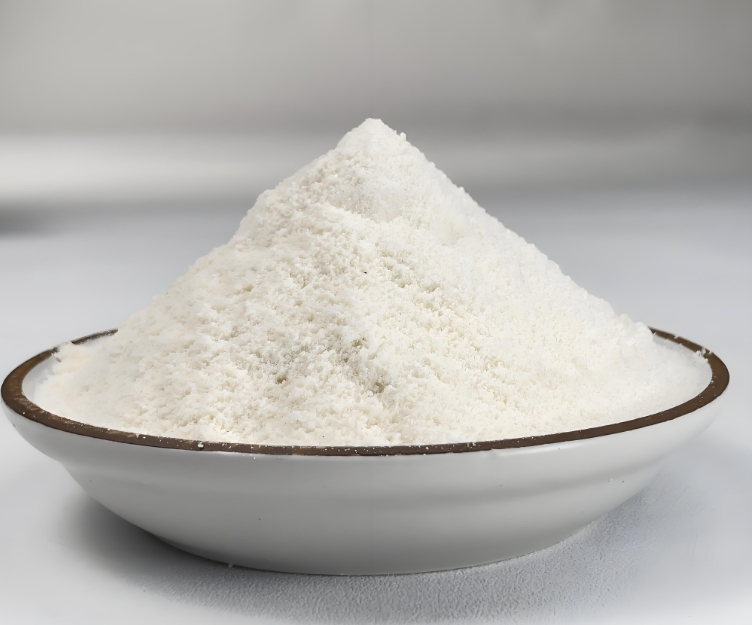
1. Raw Material Selection & Pretreatment
The process begins with the selection of starch sources—commonly corn, potato, tapioca, or wheat. High-purity starch slurry (typically 35–45% solids) is extracted through wet milling, followed by refining to remove proteins, lipids, and soluble sugars. The slurry is adjusted to a defined pH and temperature to ensure optimal reactivity in subsequent modification steps.
2. Key Modification Methods & Process Control
a) Physical Modification
- Pre-gelatinization: Starch slurry is cooked on hot drums or via extrusion, then instantly dried to create cold-water-soluble starch.
- Heat-Moisture Treatment (HMT): Starch with controlled moisture (18–30%) is heated at 90–120°C for up to 16 hours under confined conditions, enhancing thermal stability without gelatinization.
- Annealing: Starch is incubated in excess water at temperatures below gelatinization point (40–60°C) for prolonged periods to reorganize crystalline structures.
b) Chemical Modification
- Cross-linking: Starch is treated with multifunctional reagents (e.g., sodium trimetaphosphate, adipic-acetic mixed anhydrides) under alkaline conditions (pH 9–12) at 30–50°C. Reaction time (2–24 hours) and reagent concentration (0.005–0.1%) determine the degree of cross-linking, which strengthens granule integrity against heat and shear.
- Substitution (Stabilization): Introduction of monofunctional groups (e.g., acetyl, hydroxypropyl) using acetic anhydride or propylene oxide under controlled alkalinity. This reduces retrogradation and improves freeze-thaw stability.
- Acid/Enzyme Hydrolysis: Starch is treated with dilute acids (HCl, H₂SO₄) or enzymes (α-amylase) at sub-gelatinization temperatures to produce thin-boiling or maltodextrin products with reduced viscosity.
c) Dual Modification
Many industrial starches undergo combined treatments—e.g., cross-linking followed by substitution—to achieve synergistic functional properties.
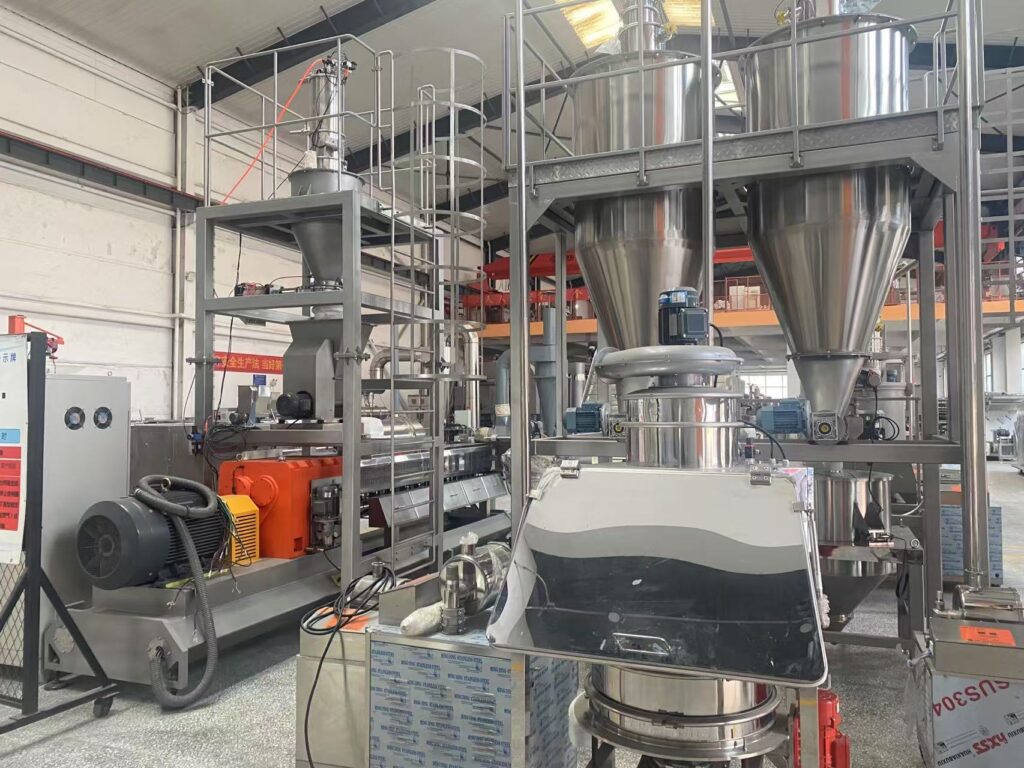
3. Reaction Termination & Neutralization
After modification, the reaction is halted by adjusting pH to 5.5–7.0 using food-grade acids or bases. The slurry is washed extensively with water in counter-current systems to remove by-products and residual reagents, ensuring compliance with regulatory limits (e.g., acetyl or phosphorus content).
4. Dewatering & Drying
The purified starch slurry is dewatered using centrifuges or vacuum filters to ~40% solids, then dried via:
- Flash Dryers: Hot air (120–180°C) rapidly dries starch in seconds, preserving granule structure.
- Fluidized-Bed Dryers: Gentler drying for heat-sensitive modifications.
Final moisture content is controlled at 8–14%, depending on end use.
5. Finishing & Quality Assurance
Dried starch is milled to uniform particle size, sieved, and blended for consistency. Each batch undergoes rigorous testing:
- Functional Properties: Viscosity (RVA/Amylograph), gel strength, swelling power
- Chemical Compliance: Degree of substitution, residual reagents, heavy metals
- Microbiological Safety: Total plate count, absence of pathogens
6. Advanced & Emerging Technologies
- Extrusion Modification: Continuous, high-shear cooking and modification in twin-screw extruders.
- Ultrasonic/Radiation Treatment: Physical modification via ultrasound or gamma rays to alter starch structure without chemicals.
- Encapsulated Starch Products: Spray-dried or co-crystallized starch-based delivery systems for flavors or nutrients.
7. Environmental & Safety Considerations
- Wastewater Management: High COD/BOD effluent from washing steps requires biological or membrane treatment.
- Dust Control: Explosion-proof equipment and dust collection systems are mandatory due to starch combustibility.
- Process Automation: Computer-controlled reactors improve reproducibility and reduce chemical exposure.
Conclusion
The production of modified starch is a sophisticated interplay of chemistry, process engineering, and application science. By selecting specific modification pathways and precisely controlling reaction parameters, manufacturers can design starches with customized functionalities—from improved thickening and gelling to enhanced emulsion stability or delayed digestibility. As demand for clean-label and sustainable ingredients grows, innovations in enzymatic and physical modification technologies continue to expand the possibilities for starch-based ingredients in food and industrial applications.
 Spanish
  English
  Russian
  Italian
  Arabic
  Portuguese
  German
  French
  Japanese
  Moroccan Arabic
  Persian
  Belarusian