
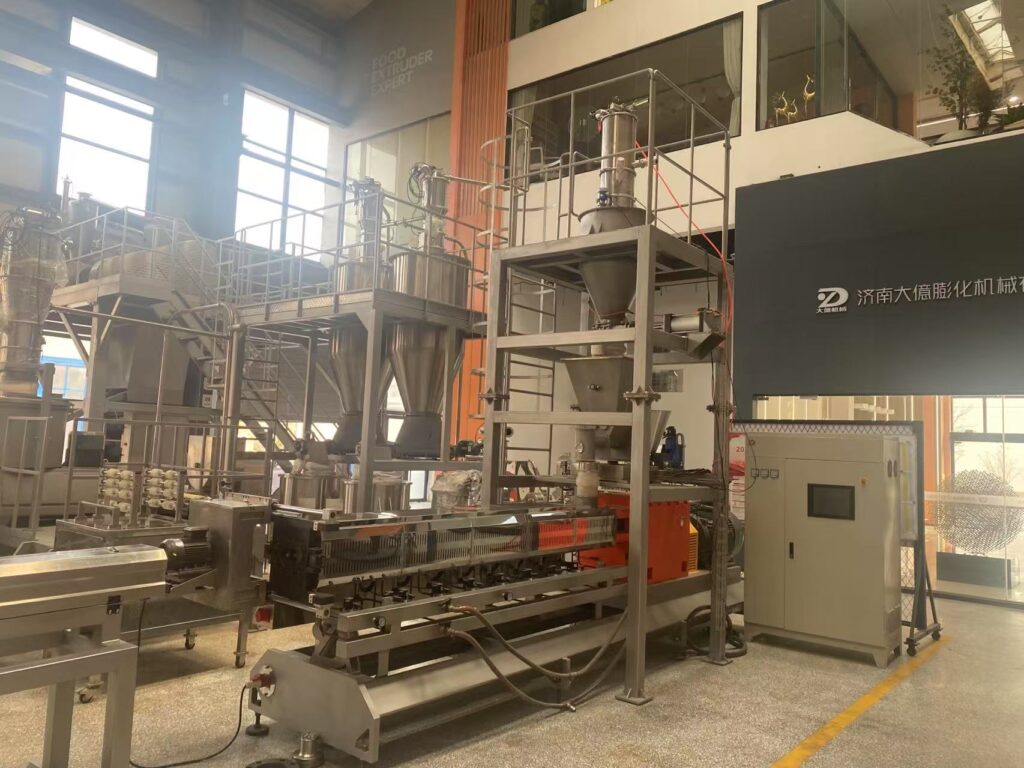
The signature appeal of expanded snacks lies in their delicate, airy, and profoundly crispy texture. This characteristic “crunch” is not accidental but the result of precise scientific and engineering control throughout the manufacturing process. snack extruder machine Achieving and maximizing crispness involves optimizing the structure of the snack matrix itself and preserving it until consumption. Here is a comprehensive guide to the key factors.
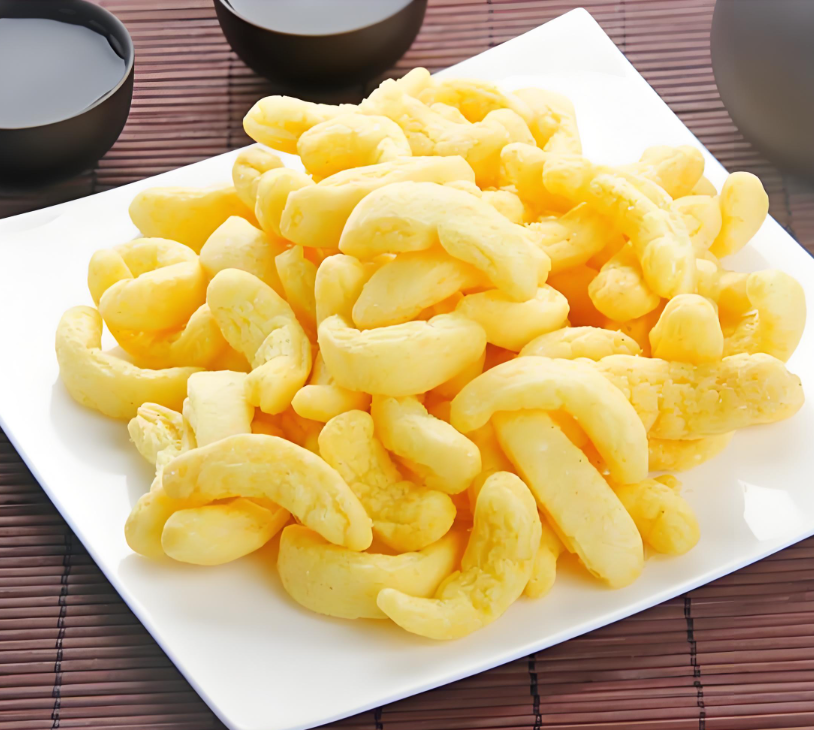
1. Foundational Principles: The Science of Crispness
Crispness is a textural attribute perceived when a brittle, glassy material fractures suddenly and completely under force, producing many high-frequency sound waves. In snacks, this state is achieved when the biopolymer matrix (primarily gelatinized starch) is in a rigid, glassy state with minimal moisture (typically 1-3%) and a meticulously engineered, highly porous cellular structure.
2. Process Optimization for Maximum Crispness
a) Raw Material Selection & Blending:
- Starch Type: The ratio of amylose to amylopectin is critical. High-amylose starches (e.g., from certain corn or legume sources) form stronger, more rigid films and networks during extrusion, leading to a harder, snappier crunch. snack extruder machine Amylopectin promotes a more tender, melt-in-the-mouth crispness.
- Protein Content: Minor additions of proteins (e.g., whey, soy) can reinforce the cell walls of the air bubbles, creating a stronger, more resilient crunch. However, excess protein can lead to hardness.
- Fiber: Insoluble fibers (e.g., oat bran, cellulose) can disrupt the structure, potentially reducing crispness. Soluble fibers may increase hygroscopicity (moisture attraction).
b) Extrusion Cooking: Creating the Crispy Structure
This is the most critical stage for setting the foundation of crispness.
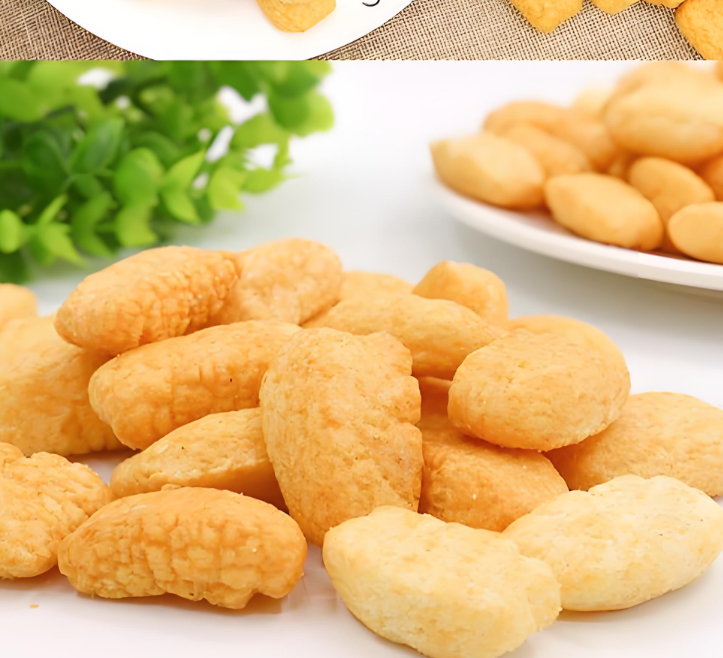
- Moisture & Shear Control: A lower moisture content (within the operable range of 12-18% in the extruder barrel) increases melt viscosity. This, combined with high mechanical shear, leads to more intense starch gelatinization and a finer, snack extruder machine more uniform cell structure upon expansion. The result is a less “puffy” but much crispier, more delicate texture.
- Expansion Ratio: While a high expansion ratio creates lightness, an optimal ratio is key. Over-expansion creates large, thin-walled bubbles that are fragile and collapse easily, leading to a soft texture. A controlled, moderate expansion with many small, uniform cells provides a more robust and consistently crispy bite.
- Melt Temperature & Die Design: A higher melt temperature at the die ensures maximum superheating of water, leading to a rapid, violent expansion (flash-off) as the product exits. This creates a fine, glassy matrix. The die shape and land length influence the final bubble structure and surface integrity.
c) Post-Extrusion Drying: Locking in the Crunch
- Multi-Stage Drying Protocol: The goal is to remove moisture efficiently without causing case-hardening (a tough exterior that traps interior moisture).
- Stage 1 (Equilibrium Drying): Use moderate temperature and higher humidity to gently remove surface moisture without sealing the surface.
- Stage 2 (Falling Rate Drying): Apply higher temperatures and lower humidity to drive out bound moisture from the interior of the cell walls, bringing the product to its final, ultra-low moisture target (ideally 1-2%).
- Thorough & Even Drying: Incomplete drying leaves a soft, chewy core. Inconsistent drying creates variable texture within the same batch. Online NIR (Near-Infrared) sensors are essential for real-time monitoring.
d) Frying (For Fried Expanded Snacks):
- Oil Temperature & Time: Frying at a sufficiently high temperature (typically 160-180°C) ensures rapid moisture removal and quick setting of the structure. Optimal fry time is critical to achieve the right balance of color, oil uptake, and complete dryness.
- Oil Quality: Fresh, stable oil with low polar compounds is essential. Degraded oil leads to soggy, greasy products with poor mouthfeel and reduced crispness.
e) Coating & Seasoning Application:
- Oil-Based Seasonings: A fine, even mist of oil applied before dry seasoning helps the powder adhere. However, excessive oil can saturate the porous structure, creating a greasy mouthfeel and acting as a barrier that ironically makes the bite less sharp and “dry-crisp.”
- Dry Seasoning Particle Size: Finer powders distribute more evenly and interfere less with the fracture of the base snack, preserving a clean crunch.
3. Preservation of Crispness: The Packaging Barrier
The crispiest product is worthless if it softens before reaching the consumer.
- Water Vapor Barrier: Use packaging films with an exceptionally low Water Vapor Transmission Rate (WVTR), such as metallized films or high-barrier laminates.
- Modified Atmosphere Packaging (MAP): Flushing the package with dry nitrogen (N₂) removes oxygen and moisture, creating a protective environment that dramatically extends crisp shelf-life.
- Absolute Seal Integrity: Any pinhole or weak seal allows humid air to enter, leading to rapid texture loss.
4. Analytical & Sensory Verification
- Instrumental Texture Analysis: Use a texture analyzer (e.g., with a 3-point bend or shear probe) to measure breaking force and sound emission objectively. A crisp product shows a sharp, high-force peak with multiple small fractures.
- Water Activity (a_w): The ultimate predictor of stability. For long-lasting crispness, the final product’s water activity must be below 0.3, and ideally closer to 0.2.
- Sensory Panels: Trained panels are indispensable for evaluating the holistic “crunch experience”—sound, force, breakdown, and mouthfeel.
Ultimate crispness in expanded snacks is a multi-dimensional achievement. It begins with formulating for structural strength, is created through high-shear, low-moisture extrusion and precise thermal processing, and is preserved by impeccable drying and hermetic, high-barrier packaging. By systematically optimizing each of these levers, manufacturers can move beyond mere puffiness to deliver the irresistibly sharp, light, and enduring crunch that defines snack perfection.
 German
  English
  Russian
  Spanish
  Italian
  Arabic
  Portuguese
  French
  Japanese
  Moroccan Arabic
  Persian
  Belarusian