
The universal appeal of a corn chip lies in its distinctive crunch—that audible, satisfying fracture that signals freshness and quality. Achieving this perfect crispness is not a matter of luck but the result of precise scientific control over ingredients, processing parameters, and frying dynamics. Whether you are producing traditional corn chips or the thinner tortilla chips, understanding the fundamental principles of crispness development is essential for consistent quality.
This article explores the step-by-step process of producing crispy corn chips, focusing on the critical factors that transform simple corn into a perfectly crunchy snack.
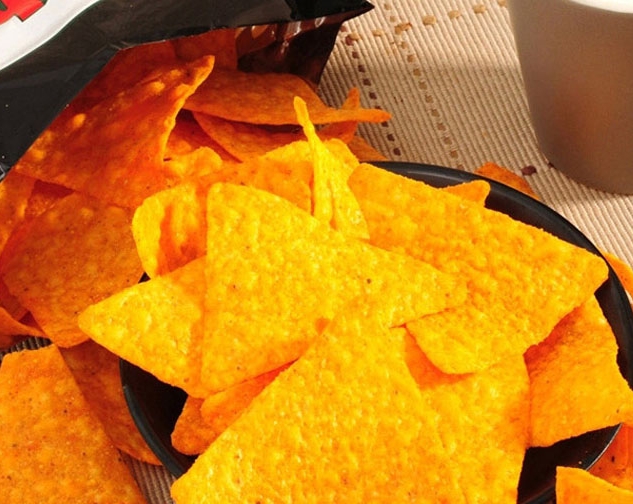
Understanding the Two Main Types: Corn Chips vs. Tortilla Chips
Before diving into production, it is important to distinguish between the two primary corn-based snack chips, as their manufacturing processes differ significantly:
| Feature | Corn Chips | Tortilla Chips |
|---|---|---|
| Production Path | Masa is extruded or sheeted and fried directly | Masa is sheeted, cut, baked first, then fried |
| Baking Step | No preliminary baking | Baked at 315°C for 30-32 seconds |
| Typical Oil Content | 35% | 25% |
| Texture | Thicker, scoop-shaped, denser crunch | Thinner, firmer texture, stronger alkaline flavor |
The extra baking step for tortilla chips sets the structure before frying, which minimizes oil absorption and creates a firter texture . Both types can achieve excellent crispness, but the pathways differ.
Step 1: Raw Material Selection and Nixtamalization
The journey to a crispy chip begins with the corn itself. Quality corn should have intermediate to large kernel size (1000-kernel weight of 320g or 11.3 oz) and a test weight of 72 kg/hL . Kernel hardness is critical—soft kernels cook too quickly and break easily, while hard kernels may not absorb sufficient water during processing .
The defining step in corn chip production is nixtamalization, an ancient Mesoamerican process that transforms raw corn into workable masa .
The Nixtamalization Process
- Alkaline Cooking: Whole corn is cooked in water containing 0.5-1.5% calcium hydroxide (lime) at 80-100°C for 0.5-3 hours . This heat initiates partial starch gelatinization and begins loosening the pericarp (hull).
- Steeping: The cooked corn is steeped for 8-24 hours at 55-65°C . During this time, moisture content increases significantly—for corn chips, moisture reaches 42-44% during cooking and rises to 50-52% after steeping .
- Washing: The steeped corn is washed thoroughly with water below 27°C to remove the pericarp and residual lime .
- Grinding: The cleaned nixtamal is stone-ground into fresh masa. For corn chips, grinding occurs at 46-54°C with a final moisture of 50-52% . For tortilla chips, masa temperature is kept below 38°C with moisture of 52-54% .
Why Nixtamalization Matters for Crispness
The alkaline treatment fundamentally changes corn’s functionality:
- Starch modification: Partial gelatinization and reorganization of starch molecules creates the right structure for crispness
- Protein network development: Zein proteins unfold and bond through hydrogen and hydrophobic interactions, forming a viscoelastic network that traps steam during frying
- Flavor development: The characteristic “strong” alkaline flavor becomes a signature of quality chips
Without proper nixtamalization, masa lacks the structural integrity to develop the porous, crisp matrix essential for good chips.
Step 2: Masa Preparation and Forming
Particle Size Considerations
If using reconstituted dry masa flour, particle size is critical for crispness. Large particle size should be used for corn chips because this provides interruptions in the dough structure that allow air and water to escape during frying . If small particle flour is used, excessive puffing occurs during frying, resulting in chips that:
- Absorb more oil
- Break more easily
- Lack the desired dense crunch
Forming Methods
For Corn Chips:
Masa can be either:
- Extruded through a die and cut by rotating knives directly into frying oil
- Sheethed and cut before frying
For Tortilla Chips:
Masa is sheeted, cut into triangles or circles, then baked before frying . This extra step is crucial for texture development.
Moisture Control in Dough
The moisture content of the dough before forming significantly impacts final crispness. Research indicates that for corn masa, optimum moisture is around 60% for achieving maximum crispness, though this must be balanced against color development . For low-fat applications, controlled moisture of 25-40% combined with high compression (at least 1000 psig at temperatures below 43°C) can produce chips with reduced oil content while maintaining crispness .
Step 3: The Critical Baking Step (For Tortilla Chips)
Tortilla chips undergo a crucial baking step that corn chips skip:
- Baking temperature: 315°C
- Baking time: 30-32 seconds
- Tortilla discharge temperature: 79°C
- Cooling: Rapid cooling to 29-32°C in atmospheric conveyors
This baking accomplishes several objectives:
- Structure setting: The heat sets the starch-protein matrix, creating a rigid framework
- Moisture reduction: Initial moisture drops from around 50% to about 40%
- Reduced oil absorption: The set structure prevents excessive oil uptake during frying
- Flavor development: Baking intensifies the alkaline-cooked flavor
The result is tortilla chips with approximately 25% fat content versus 35% for corn chips .
Step 4: Frying—Where Crispness is Born
Frying is the transformative step where crispness truly develops. The interaction between heat, oil, and product moisture determines the final texture.
Frying Parameters
| Parameter | Corn Chips | Tortilla Chips |
|---|---|---|
| Frying temperature | 190-210°C | 179°C |
| Frying time | ~1.5 minutes | ~2 minutes |
| Final moisture | 1.0-1.5% | 1.0-1.2% |
| Oil content | 35% | 25% |
The Science of Crispness Development
During frying, several simultaneous processes occur:
- Steam generation: Water inside the masa converts to steam, creating internal pressure
- Structure expansion: The steam forces open air cells and cracks formed during baking (for tortilla chips) or creates new voids
- Glass transition: As moisture drops below critical levels, the starch matrix transitions to a glassy state—the physical state required for crispness
- Oil absorption: Oil replaces some of the lost water, contributing to mouthfeel and flavor
Research has shown that fracture force for fried corn chips ranges from 547.8 to 1955.9 grams, depending on thickness and processing conditions . This mechanical resistance, combined with the acoustic signature of multiple fracture events, defines what consumers perceive as crispness.
The Role of Oil Content
While high oil content (33-35% for corn chips) contributes to flavor and mouthfeel, lower-fat alternatives are possible. Continuous vacuum drying (CVD) can produce chips with as little as 1.57-1.82 g oil/100 g while still achieving measurable crispness attributes . These vacuum-dried chips actually showed more sound events and greater sound energy during acoustic analysis, though consumer preference remained higher for traditionally fried chips .
Step 5: Post-Frying Quality Control
Moisture Management
Final moisture content is perhaps the single most critical factor for crispness and shelf life. Corn and tortilla chips typically have moisture between 1.0 and 2.5% depending on manufacturer specifications . This low moisture ensures:
- The glassy state that produces crisp fracture
- Microbial stability
- Extended shelf life
Near-infrared (NIR) transmitters are commonly used online to monitor moisture at the fryer exit, allowing real-time adjustment of frying temperature and duration .
Oil Content Measurement
Oil content typically ranges from 25-35% and significantly impacts flavor and texture . Measurement at the fryer exit helps ensure consistency. For flavored chips, moisture should also be measured after seasoning application to verify that added coatings haven’t compromised crispness .
Texture Validation
Instrumental texture analysis using devices like the TA.XT Plus Texture Analyzer with crisp fracture rigs allows objective measurement of:
- Fracture force (peak force required to break the chip)
- Fracture events (number of breaks during compression)
- Acoustic emissions (sound energy and frequency)
Research has shown that crisp products contain specific frequency signatures, with thicker chips producing higher frequency peaks .
Alternative Approaches for Achieving Crispness
Vacuum Drying Technology
Continuous vacuum drying (CVD) offers an alternative to traditional frying for producing low-fat crispy chips. Operating under reduced pressure, CVD:
- Lowers the boiling point of water, allowing bubble formation at lower temperatures
- Creates expanded structure through gentle puffing
- Produces chips with fracture force of 778.4-2910.4 g (slightly higher than fried chips)
- Achieves acceptable consumer ratings, with 71% of consumers indicating “low-fat” would influence purchase
Sodium Bicarbonate for Enhanced Crispness
Research on feed corn chips showed that adding 1.5% sodium bicarbonate to the formulation produced the crispiest product, though color darkened somewhat . The alkaline salt promotes additional gas production during frying, enhancing pore formation and crispness.
Controlled Compression
High-pressure compression of masa (at least 1000 psig at temperatures below 43°C) before frying can produce chips with reduced oil content (12-25%) while maintaining desirable crispness . This approach works by creating a more compact structure that limits oil penetration while still allowing steam expansion.
Troubleshooting Common Crispness Problems
| Problem | Likely Cause | Solution |
|---|---|---|
| Soggy chips | Final moisture > 2.5% | Increase fry time or temperature; verify moisture measurement |
| Excessive oil absorption | Structure not properly set (tortilla chips); too small particle size (corn chips) | Ensure proper baking; use coarser masa flour |
| Too hard, not crisp | Over-drying; excessive protein cross-linking | Reduce fry time; check moisture content; verify steeping parameters |
| Uneven texture | Non-uniform sheet thickness; variable moisture in masa | Calibrate sheeting rolls; improve mixing consistency |
| Dark color with burnt flavor | 100% yellow corn; excessive frying temperature | Blend white and yellow corn; reduce oil temperature |
Conclusion
Producing perfectly crispy corn chips is a science that demands precision at every step—from selecting the right corn and controlling nixtamalization parameters to optimizing frying conditions and verifying final moisture. The key principles for achieving that satisfying crunch include:
- Proper nixtamalization to develop the right starch-protein matrix
- Correct particle size (coarse for corn chips) to allow proper steam escape
- Baking (for tortilla chips) to set structure before frying
- Precise frying control to achieve final moisture of 1.0-1.5%
- Oil temperature management at 179-210°C depending on chip type
By understanding and controlling these variables, manufacturers can consistently produce corn chips with the golden color, satisfying crunch, and excellent shelf life that consumers demand. Whether through traditional frying or innovative vacuum technologies, the pursuit of the perfect crunch continues to drive innovation in snack food manufacturing.
 German
  English
  Russian
  Spanish
  Italian
  Arabic
  Portuguese
  French
  Japanese
  Moroccan Arabic
  Persian
  Belarusian