
A Comprehensive Guide to Moisture Control in Expanded Snack Foods
Abstract: Moisture content is the single most critical factor determining the texture, shelf life, and overall acceptability of expanded (puffed) snack foods. Achieving and maintaining the ideal low moisture level—typically between 1% and 3%—is a complex challenge that spans the entire production chain. This article outlines the key principles and control points for effective moisture management in puffed snack manufacturing.
1. Introduction: The Importance of Crispness
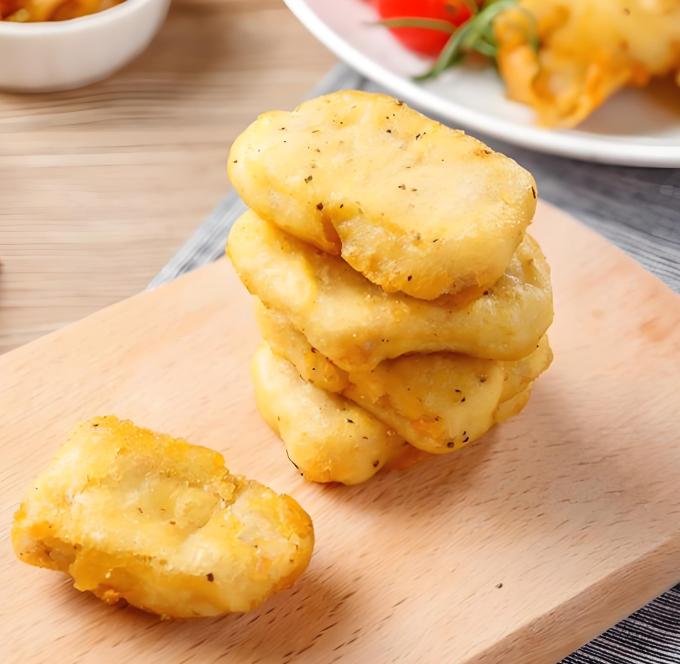
The desirable “crisp” or “crunchy” texture of puffed snacks is a direct function of their glassy state, achieved at very low moisture levels. Excessive moisture plasticizes the starch-protein matrix, leading to a soft, chewy, or stale texture. Furthermore, moisture promotes microbial growth, rancidity, and clumping. Therefore, precise moisture control is essential for quality and safety.
2. Key Control Points in the Production Process
2.1. Raw Material & Pre-Processing
- Ingredient Specification: Incoming raw materials (flours, meals, starches) must have consistent and specified moisture content. Variability here disrupts downstream process equilibrium.
- Conditioning: Pre-mixing dry blends with controlled amounts of water and steam (conditioning) is crucial. It ensures uniform hydration before extrusion, which is vital for consistent starch gelatinization, expansion, and final product density. Inconsistent conditioning leads to erratic final moisture.
2.2. The Extrusion Process
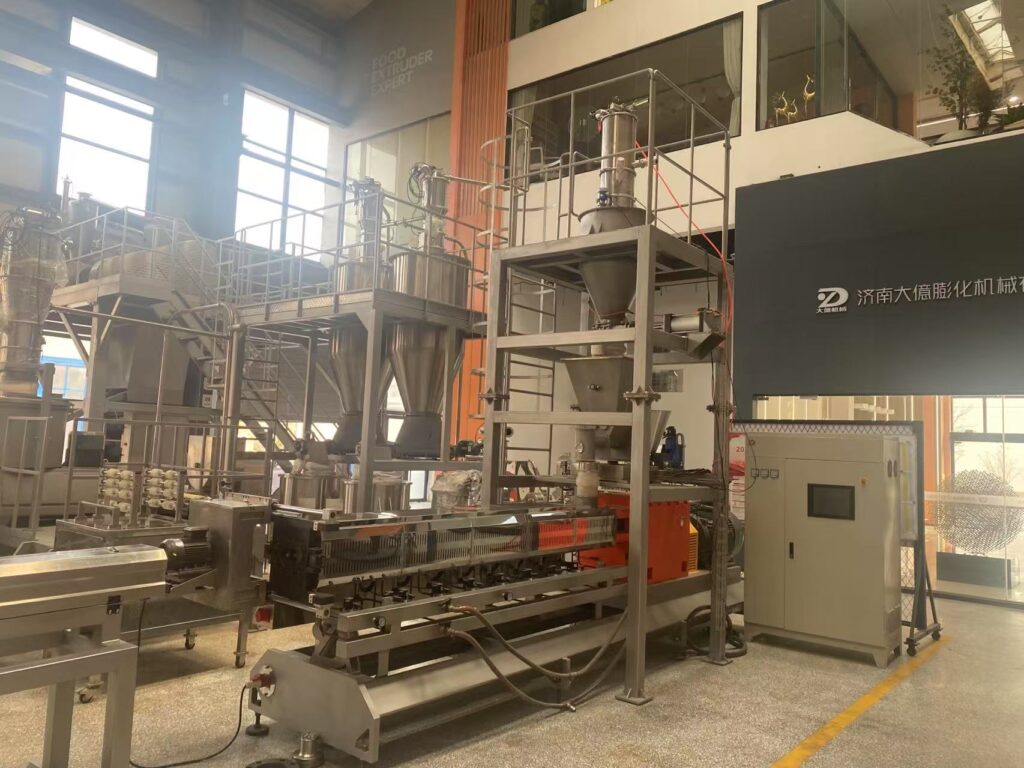
The extruder cooker is the heart of the process, where moisture acts as a plasticizer, coolant, and expansion agent.
- Precise Metering: Water and steam injection into the extruder barrel must be precisely metered and controlled. The total moisture in the melt (usually 12-25% wet basis) dictates:
- Viscosity: Affects mechanical energy input and product texture.
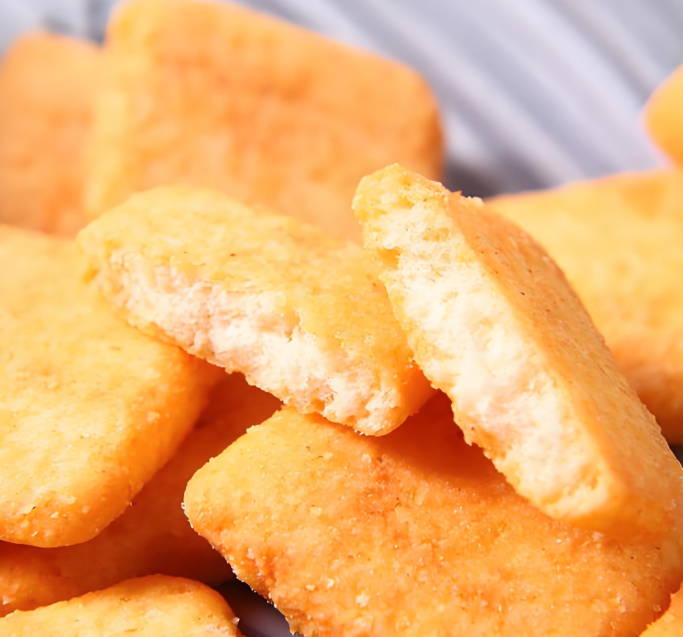
- Expansion: The right moisture flash-volatilizes at the die, creating the puffed structure. Too little moisture inhibits expansion; too much causes collapse or large, uneven bubbles.
- Die Temperature & Pressure: These parameters must be optimized in relation to melt moisture to achieve the desired puff and initial moisture level post-die.
2.3. Post-Extrusion Drying & Toasting
Freshly extruded products have high internal moisture (e.g., 8-12%). Multi-stage drying is mandatory to achieve the target crispness.
- Multi-Zone Dryers: Conveyor dryers or ovens use progressively higher temperatures and lower humidity zones.
- Initial Zone: Gentle heat removes surface moisture without causing case-hardening (a hard shell that traps interior moisture).
- Final Zones: Higher temperatures drive out bound internal moisture to reach the target of 1-3%.
- Process Control: Critical parameters include air temperature, humidity, airflow velocity, and residence time. Online Near-Infrared (NIR) moisture sensors provide real-time feedback for automatic adjustment of dryer settings.
2.4. Cooling & Equilibrium
Products exiting the dryer are hot and may have residual moisture gradients.
- Cooling Conveyors: Efficient cooling to ambient temperature is vital before packaging to prevent condensation inside the bag, which would instantly soften the product.
- Moisture Equalization: A brief equilibration period allows for the redistribution of any residual moisture within the product, ensuring uniform texture.
2.5. Coating & Seasoning Application
- Oil-Based Coatings: While oil acts as a moisture barrier and flavor carrier, it must be applied to a perfectly dry substrate. Oil can seal in residual moisture, leading to rapid quality loss.
- Powdered Seasonings: These must be low in moisture and often include anti-caking agents (e.g., silicon dioxide) to prevent them from absorbing environmental humidity and becoming sticky or causing localized softening.
2.6. Packaging: The Final Barrier
Packaging is the last and most critical defense against moisture regain.
- High-Barrier Materials: Laminates with excellent Water Vapor Transmission Rate (WVTR), such as metallized polyester or polypropylene films, are standard.
- Modified Atmosphere Packaging (MAP): Flushing packages with dry nitrogen (N₂) displaces oxygen and moisture-laden air, creating a protective internal environment that prolongs crispness and prevents oxidative rancidity.
- Seal Integrity: Hermetic seals are non-negotiable. Even micro-leaks can allow humid air ingress, leading to rapid texture failure.
3. Quality Assurance & Monitoring
- Laboratory Testing: Regular offline validation using standard oven drying methods to calibrate and verify online NIR sensors.
- Water Activity (a_w) Measurement: While moisture content is a percentage, Water Activity (scale of 0 to 1) measures the “free” water available for chemical reactions and microbial growth. For crisp snacks, a_w must be kept very low, typically below 0.3. Monitoring a_w is a powerful tool for predicting shelf-life stability.
- Texture Analysis: Instrumental measurement of crispness (e.g., using a texture analyzer for snap force) provides objective data correlating to moisture content.
Effective moisture control in expanded snacks is not a single-step operation but an integrated strategy. It requires precise control from ingredient reception through conditioning, extrusion, multi-stage drying, and finally, robust barrier packaging. By rigorously managing these critical control points and employing continuous monitoring via moisture sensors and water activity tests, manufacturers can consistently deliver the satisfying, crisp texture that defines a high-quality puffed snack, ensuring consumer satisfaction and extended shelf life
 German
  English
  Russian
  Spanish
  Italian
  Arabic
  Portuguese
  French
  Japanese
  Moroccan Arabic
  Persian
  Belarusian