
Temperature is arguably the most critical process parameter in twin-screw extrusion cooking. It dictates the degree of starch gelatinization, protein denaturation, melt viscosity, and ultimately, the expansion and texture of the final product—whether it’s puffed breadcrumbs, breakfast cereals, or texturized protein.
Unlike a simple oven, an extruder does not just apply heat; it manages a complex interplay of external heating and internally generated friction. Understanding how to control this thermal environment is essential for consistent, high-quality output. This article explains the mechanisms and strategies behind temperature regulation in a twin-screw extruder.
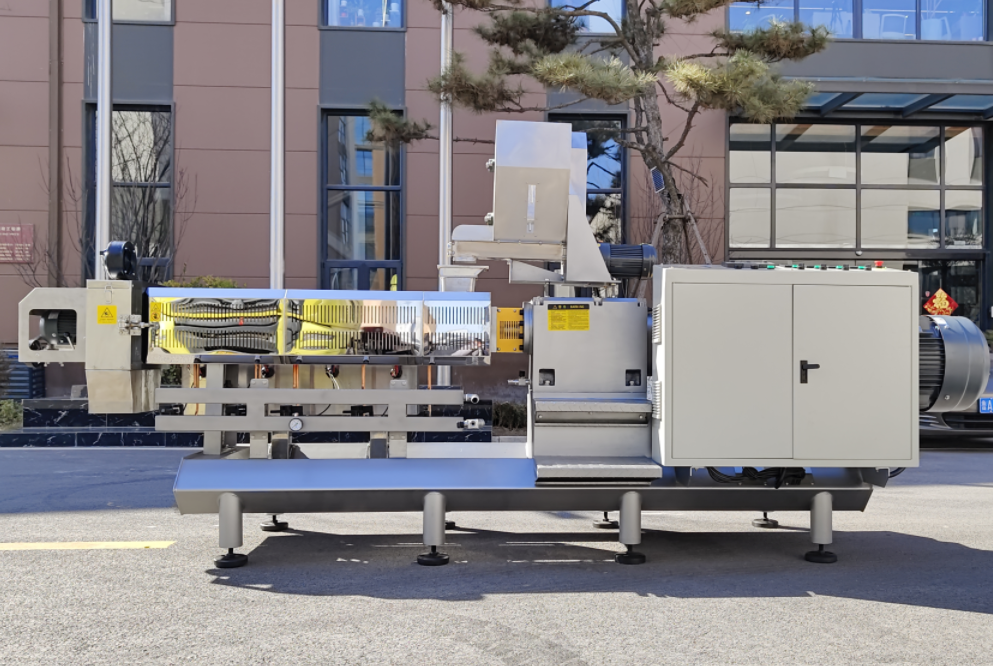
1. The Dual Nature of Heat in Extrusion
Before discussing control systems, it is vital to understand where the heat comes from:
- External Heat (Joule Heating): Provided by electric cartridge heaters or circulating oil/steam jackets wrapped around the barrels.
- Internal Heat (Dissipative Heat): Generated by the mechanical shearing and friction of the screws working on the product. This is often referred to as Viscous Dissipation. At high screw speeds, this internal heat can far exceed the external heat input.
Effective temperature control means balancing these two sources to maintain a precise thermal profile along the barrel.
2. The Architecture of a Temperature Control System
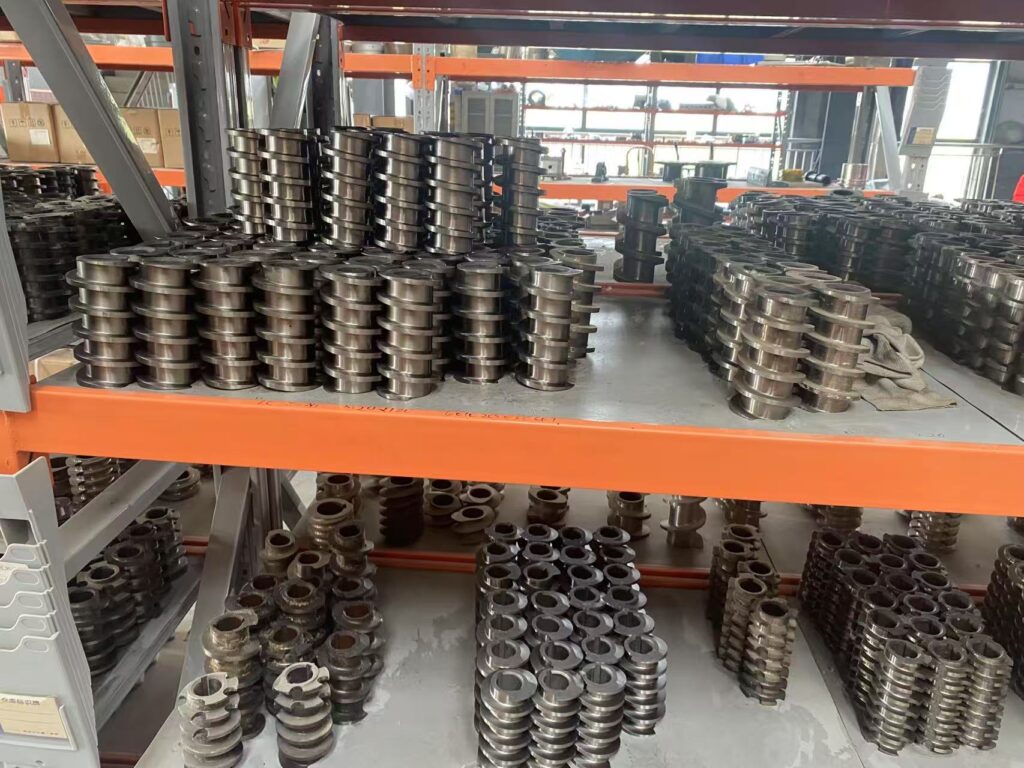
A modern twin-screw extruder is divided into multiple independent barrel zones (typically 4 to 12, depending on machine length). Each zone functions as its own mini-climate control unit.
Core Components per Zone:
- Heating Elements: High-density ceramic or mica band heaters that clamp around the barrel.
- Cooling System: To prevent overshoot and manage dissipative heat, zones are equipped with cooling. This is usually achieved via:
- Water Cooling: Solenoid valves control the flow of water through cooling channels cast into the barrel.
- Oil Cooling: A closed-loop system where temperature-controlled oil circulates through the barrel jacket.
- Thermocouples: Temperature sensors (usually Type J or K) that penetrate deep into the barrel wall to measure the actual temperature.
- PLC Controller: A Programmable Logic Controller running a PID (Proportional-Integral-Derivative) algorithm. This is the “brain” that reads the thermocouple and decides whether to turn on the heater or open the cooling valve.
3. The PID Control Loop: How It Works
The PLC does not simply turn the heater on and off based on a single target. It uses a sophisticated predictive algorithm:
- Proportional (P): Reacts to the current error. If the temperature is 10°C below setpoint, it applies more power than if it is only 2°C below.
- Integral (I): Reacts to the history of error. If the temperature has been slightly below setpoint for a long time, it gradually increases power to close that small, persistent gap.
- Derivative (D): Reacts to the rate of change. If the temperature is rising very fast toward the setpoint, the D-term reduces power early to prevent “overshoot.”
The Process:
The thermocouple sends a real-time reading to the PLC. The PLC compares this to the Setpoint (SP). If the reading is low, it sends a pulsed signal to the heater relay. If the reading is high, it sends a signal to open the cooling valve (or turn on a fan). This cycle repeats many times per second.
4. Strategic Temperature Profiling
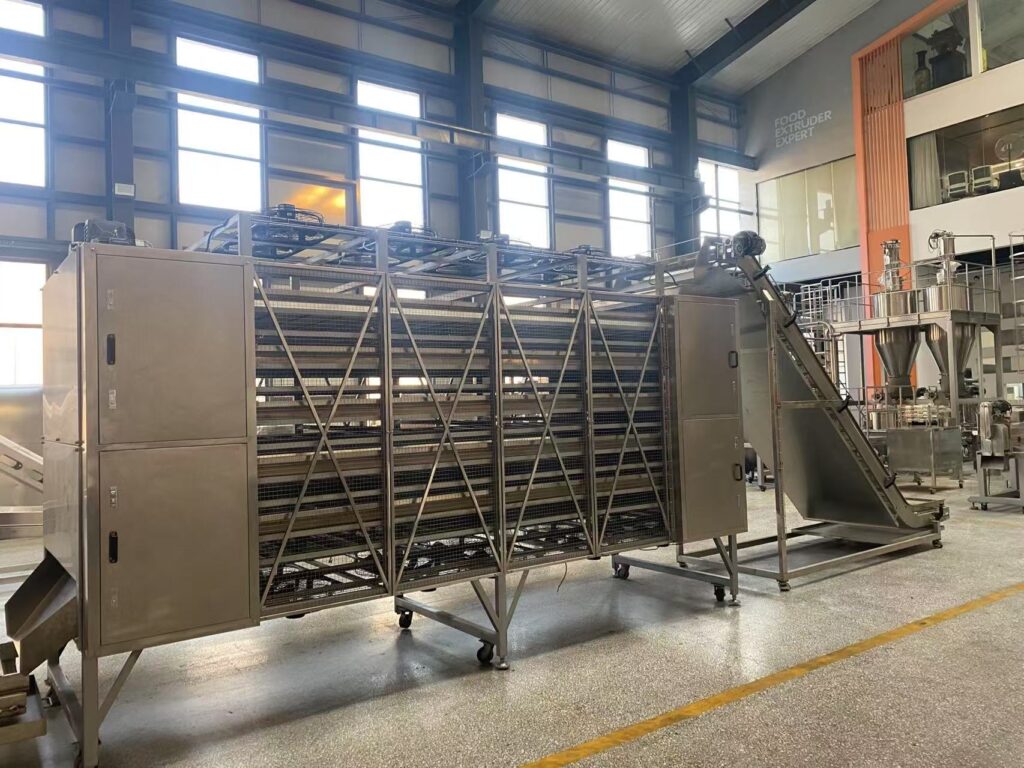
Operators do not set one temperature for the whole machine; they set a “profile.” This profile dictates the product’s journey through the machine.
- Zone 1 (Feeding/Conveying):
- Goal: Convey raw powder without sticking.
- Control: Often cooled (sometimes with a dedicated cooling jacket) or set to a low temperature (20-30°C / 70-85°F). This prevents the feed from “cooking” too early and forming a plug at the feed throat.
- Zones 2-3 (Kneading/Mixing):
- Goal: Initiate gelatinization and mixing.
- Control: Temperatures are ramped up significantly (60-100°C / 140-212°F). Here, external heat is crucial to raise the dough temperature to the point of transformation.
- Zones 4-5 (Cooking/Shear):
- Goal: Full cooking.
- Control: This is the hottest zone (120-180°C / 250-355°F). However, due to high shear, dissipative heat may take over. The controller may need to cool this zone to prevent thermal degradation (burning), even though the setpoint is high.
- Die Zone (Last Zone before Die):
- Goal: Condition the melt for expansion.
- Control: Often set slightly lower than the cooking zone. This cools the outer layer of the melt, increasing viscosity so it holds its shape as it exits the die. For puffed products, this temperature is critical for bubble formation.
5. The Challenge of Dissipative Heat Management
The biggest challenge in temperature control is managing the heat generated by the screws themselves.
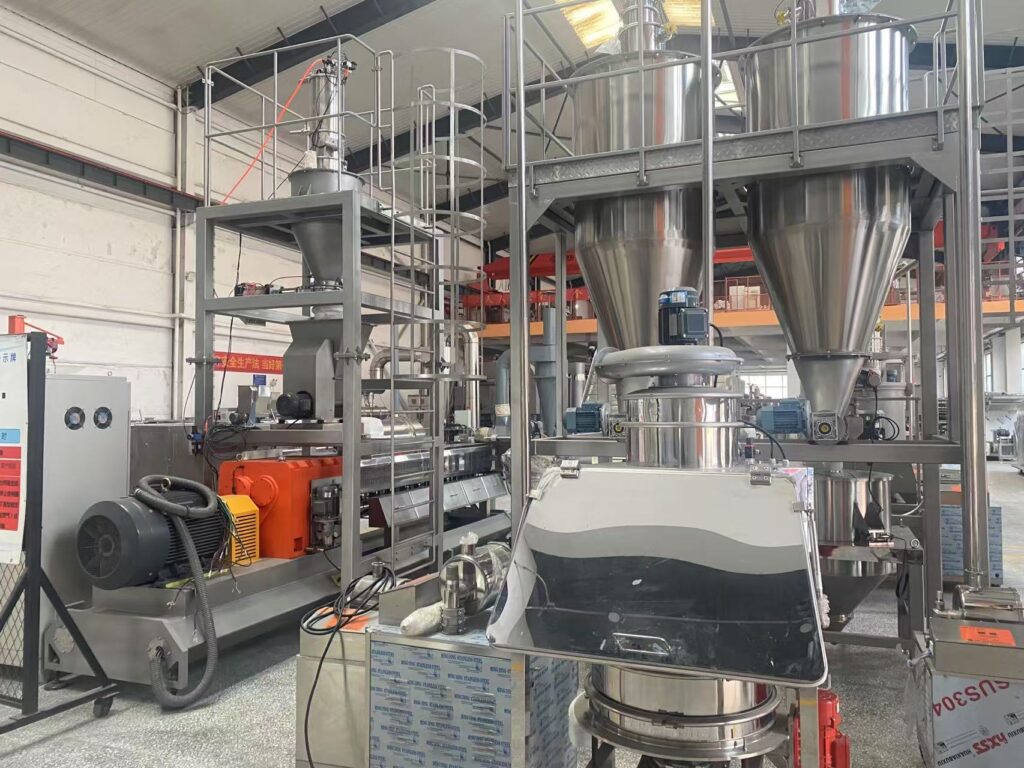
- Scenario: An operator increases the screw speed (RPM) to increase throughput.
- Result: More friction is generated in the barrel. The temperature in Zone 4 (cooking) may spike by 20°C.
- Response: The PLC detects the spike via the thermocouple. It immediately shuts off the electric heaters in that zone and opens the water cooling valves. Water circulates, pulling the excess heat out of the barrel to bring the temperature back down to the setpoint.
If the cooling system is undersized or the PID loop is poorly tuned, this spike will cause “thermal runaway,” resulting in burnt product and potential die plugging.
6. Operator Best Practices
- Allow for “Heat Soak”: When starting a cold machine, bring all zones to setpoint and wait 15-30 minutes before introducing feed. The thermocouple reads the barrel wall, but the inner surface needs time to reach equilibrium.
- Monitor Product Temperature, Not Just Barrel Temperature: Some advanced systems use “melt thermocouples” that protrude into the product stream. The product temperature can differ significantly from the barrel wall temperature due to shear.
- Respect the Interdependence: Changing the recipe (e.g., adding sugar) changes the melt viscosity and friction. This will immediately affect the temperature profile, requiring adjustments to the setpoints or cooling water flow.
- Tune the PID Loops: A machine processing high-fat snacks needs different PID tuning than one processing dry, fibrous protein. Improper tuning leads to oscillation (temperature constantly cycling above and below setpoint).
Conclusion
Temperature control in a twin-screw extruder is a dynamic balancing act between applied heat, frictional heat, and active cooling. By dividing the barrel into independently controlled zones and utilizing sophisticated PID logic, operators can create precise thermal environments that transform raw powders into structured, puffed, or texturized finished goods. Mastery of this system—knowing how the setpoints interact with screw speed and recipe—is the key to unlocking consistent product quality and maximizing the extruder’s potential.
 Belarusian
  English
  Russian
  Spanish
  Italian
  Arabic
  Portuguese
  German
  French
  Japanese
  Moroccan Arabic
  Persian