
The production of puffed snacks is a complex process where precise control over multiple parameters determines the final product’s texture, flavor, shelf life, and consumer appeal. From simple extruded curls to multi-layered, coated snacks, mastering the following key elements is essential for consistent, high-quality production.
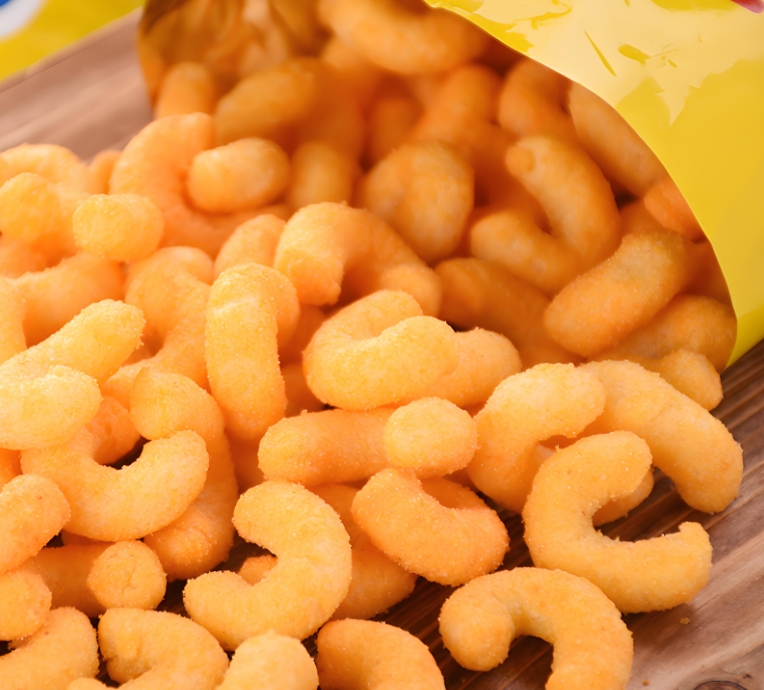
1. Raw Material Selection and Formulation
The foundation of any puffed product lies in its recipe.
- Starch Source: The type and ratio of starch (corn, rice, wheat, potato) are primary determinants of expansion, crispiness, and texture. High amylopectin starches generally promote greater expansion.
- Protein Content: Ingredients like soy or dairy proteins can enhance nutritional value but may limit expansion if not balanced correctly.
- Moisture Content: Uniform and optimal moisture in the raw mix (typically 12-16% for many direct-expansion processes) is critical. It affects gelatinization, viscosity, and the pressure build-up necessary for puffing.
- Lipids/Fats: Fats can improve mouthfeel and flavor carry but can lubricate the melt and reduce shear, potentially limiting expansion. They are often added post-extrusion as a coating.
- Leavening Agents: Baking soda or other chemical agents can be used in specific products (like some cereals) to influence pore structure and density.
2. Thermal-Mechanical Process Control (The Heart of Puffing)
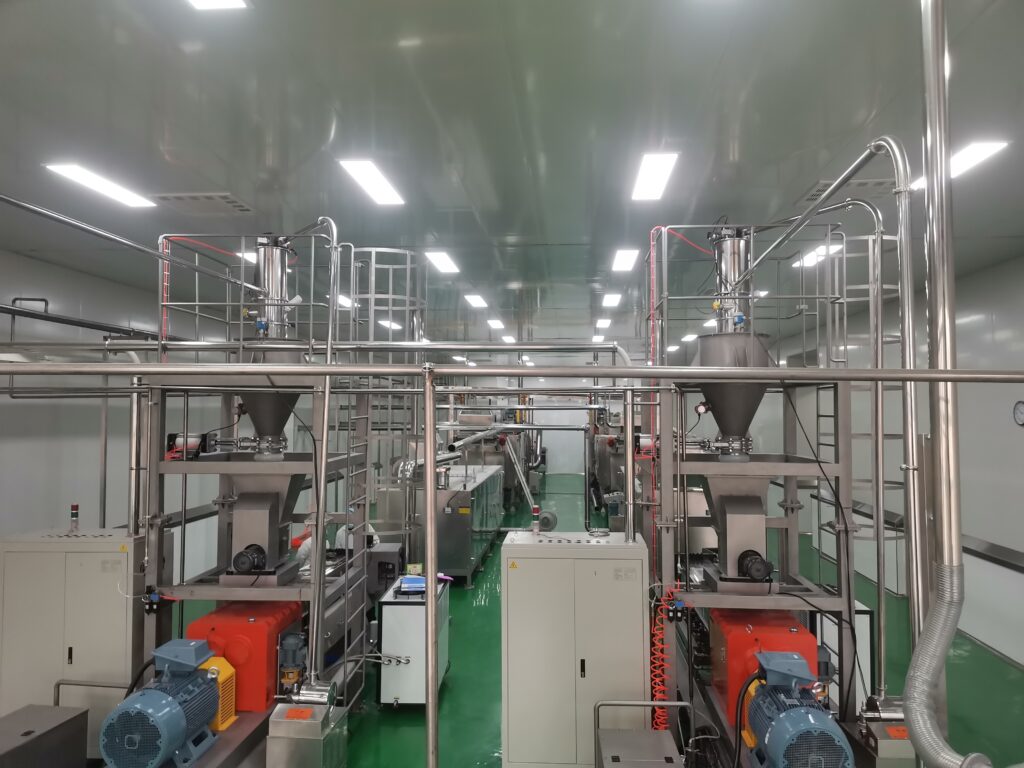
This is the transformative stage, primarily occurring in the extruder or oven.
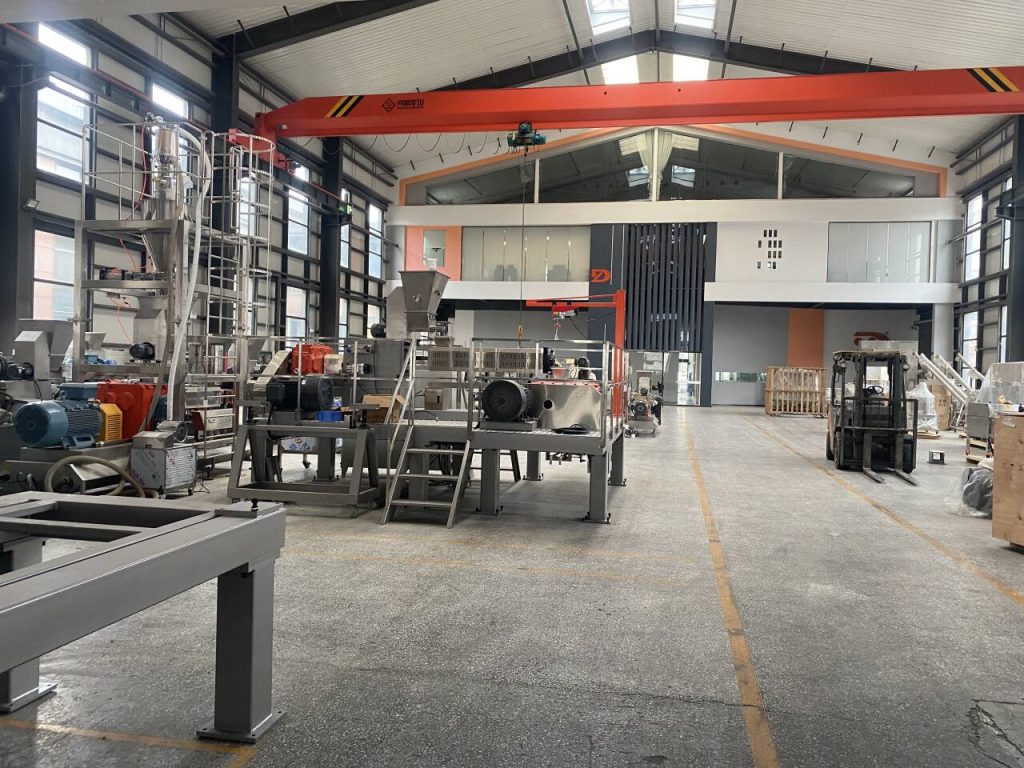
- Specific Mechanical Energy (SME): This is the single most critical parameter. SME is the mechanical energy input (from the screw) per unit mass of product. It directly governs starch gelatinization, melt temperature, and viscosity.
- Too Low SME: Incomplete gelatinization, poor expansion, dense texture.
- Too High SME: Over-gelatinization, excessive browning, burnt flavor, and fragile structure.
- Temperature Profile: Precise control across multiple barrel zones is vital.
- Feed Zone: Cool enough to ensure solid conveying.
- Compression Zone: Temperature rises to initiate starch gelatinization.
- Metering/Melting Zone: Reaches peak temperature (often 130-180°C), creating a superheated, plasticized dough.
- Pressure Build-up and Sudden Release: The plasticized mass is forced under high pressure (often 20-40 bar) through a restrictive die. The instantaneous pressure drop at the die exit causes the superheated water to flash into steam, expanding the product matrix and creating the porous, puffed structure.
3. Die and Cutting Design
The final shaping point has a major impact.
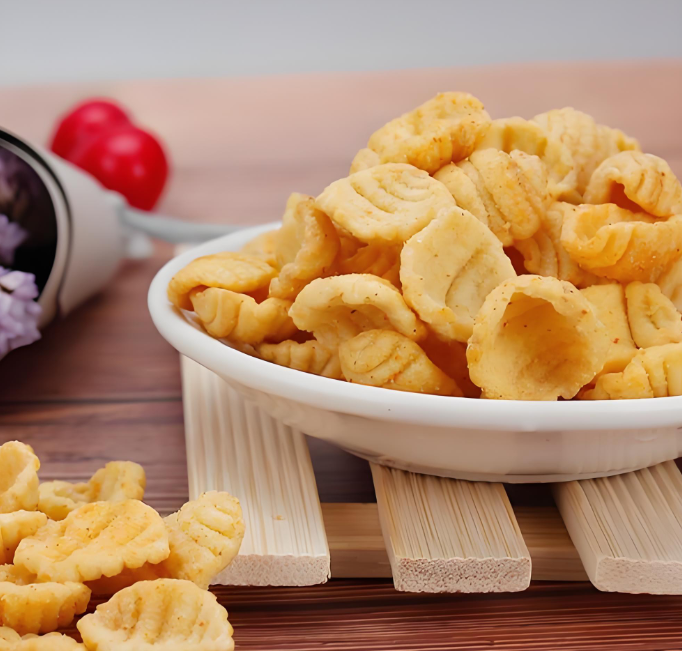
- Die Geometry: The size, shape, and land length of the die opening control the final pressure and flow, affecting expansion, shape, and surface smoothness.
- Cutting Mechanism: A high-speed rotary cutter slices the extrudate. The knife sharpness and speed relative to extrusion speed determine product length, clean cuts, and prevent “tails” or deformation.
4. Drying and Toasting Post-Extrusion
Most puffed snacks exiting the extruder have a high residual moisture content (e.g., 8-10%) and require further processing.
- Drying: Multi-pass dryers reduce moisture to a brittle, shelf-stable level (e.g., 1-3%). Time, temperature, and airflow must be balanced to remove moisture without case-hardening (creating a hard shell that traps interior moisture).
- Toasting/Baking: For added color, flavor development (via Maillard reaction), and final texture setting. Infrared or hot air ovens are commonly used.
5. Flavoring and Coating
This step delivers the final taste and mouthfeel.
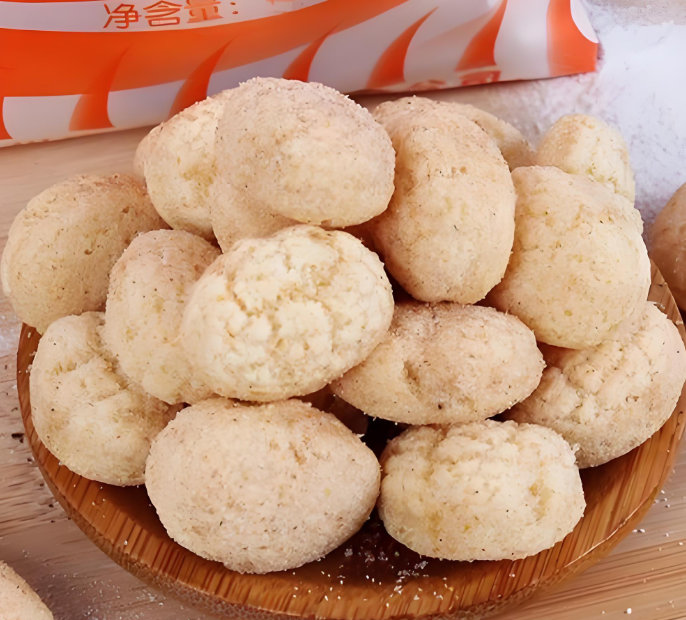
- Application Method: Flavor application in a rotating drum is standard. Tumbling ensures even distribution of oils and seasonings.
- Adhesion: A light coating of oil or a gum-based solution is often applied first to help dry seasoning powders adhere to the snack surface.
- Flavor Type: Cheese, barbecue, sour cream & onion, etc. Must be heat-stable if applied before a secondary drying stage.
6. Moisture Management and Packaging
Protecting the crispy texture is paramount for shelf life.
- Critical Final Moisture: The product must be cooled to ambient temperature before packaging to prevent condensation inside the bag.
- Barrier Packaging: Packaging film must have excellent moisture and oxygen barrier properties (e.g., metallized films). Even small gains in moisture will render the product soggy.
- Nitrogen Flushing: Most high-quality puffed snacks are packaged in an inert nitrogen atmosphere. This prevents oxidative rancidity of fats, preserves flavors, and provides cushioning to protect the fragile pieces.
Producing superior puffed food is a science of balancing interconnected variables. Optimal expansion and texture are achieved by meticulously controlling the Specific Mechanical Energy and thermal profile during extrusion, transforming a starch-based mix into a superheated melt. This structure is then locked in through precise drying and toasting, before flavor application and immediate barrier packaging preserve the critical low moisture content and crispiness. Success lies not in optimizing one factor in isolation, but in understanding and managing the dynamic interplay between formulation, process mechanics, and post-processing from raw material to sealed bag.
 Belarusian
  English
  Russian
  Spanish
  Italian
  Arabic
  Portuguese
  German
  French
  Japanese
  Moroccan Arabic
  Persian