
Effective cooling is a critical aspect of extrusion machine operation. Proper temperature control ensures product quality (preventing burning, ensuring correct texture and expansion), double screw extruder machinemaintains equipment integrity, prevents thermal degradation of materials, and ensures operator safety. An overheated extruder can lead to premature wear, motor overload, and inconsistent output. This guide outlines the primary methods and best practices for cooling an extrusion machine.
1. Understanding Heat Sources
Before implementing cooling, it’s essential to understand where heat originates in an extruder:
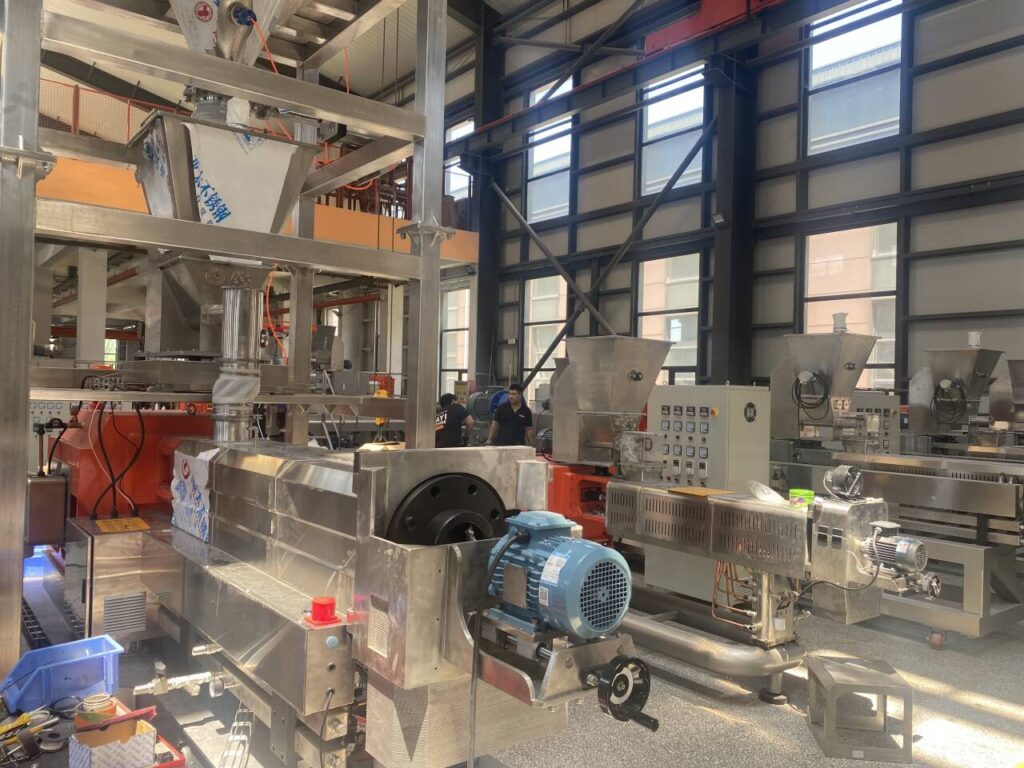
- Mechanical Energy (Shear Heat): The primary source. The motor’s energy and the friction between the screw, barrel, and material convert into significant heat.
- External Heating: Deliberately added by barrel heaters to initiate material plasticization or maintain specific temperature zones.
- Exothermic Reactions: In some processes (like certain chemical or food reactions), the material itself generates heat.
2. Primary Cooling Methods
Extruders utilize a combination of the following cooling systems:
A. Barrel Cooling
The barrel is divided into multiple zones, each with independent temperature control.
- Water Cooling Jackets: The most common method. Channels or jackets surrounding the barrel circulate cooling water. Thermostatic control valves regulate water flow based on temperature sensor feedback.
- Best Practice: Use a closed-loop chilled water system for consistent temperature and water conservation. Ensure water is treated to prevent scaling and corrosion inside the jackets.
- Air Cooling: Fans or blowers direct ambient or chilled air onto the barrel. Common on smaller or less heat-intensive extruders.
- Advantage: Simpler, no risk of water leaks.
- Disadvantage: Less efficient at removing large heat loads compared to water.
B. Screw Cooling
The screw core can be cooled, especially in the feed and compression zones, to prevent material from sticking too early and to help control melt temperature.
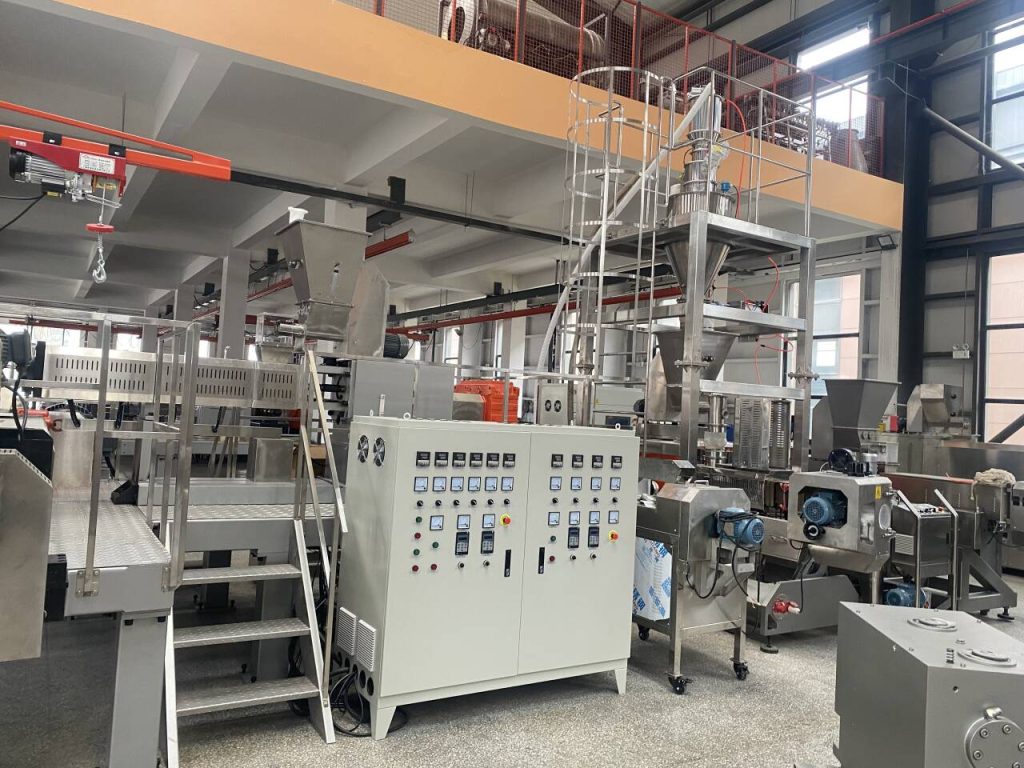
- Internal Circulating Fluid: A temperature-controlled fluid (usually water or oil) is pumped through a channel inside the hollow screw shaft.
- Purpose: Precisely manages the heat profile along the screw’s length, improving stability and output rate.
C. Gearbox and Drive Motor Cooling
The mechanical drive system generates substantial heat.
- Internal Cooling Coils: Many gearboxes have built-in water-cooling coils.
- External Heat Exchangers/Oil Coolers: For hydraulic systems or large gearboxes.
- Forced Air Ventilation: Essential for the main drive motor and control cabinets. Keep ventilation fins clean and ensure ambient air intake is cool and dust-free.
D. Die and Head Cooling
The die assembly must be kept at a specific temperature to ensure proper product shape and surface finish.
- Independent Temperature Control Zones: Dies often have their own heating/cooling cartridges or water channels.
- Air Rings or Water Baths: For certain plastics or immediate product setting.
3. Cooling System Components & Best Practices
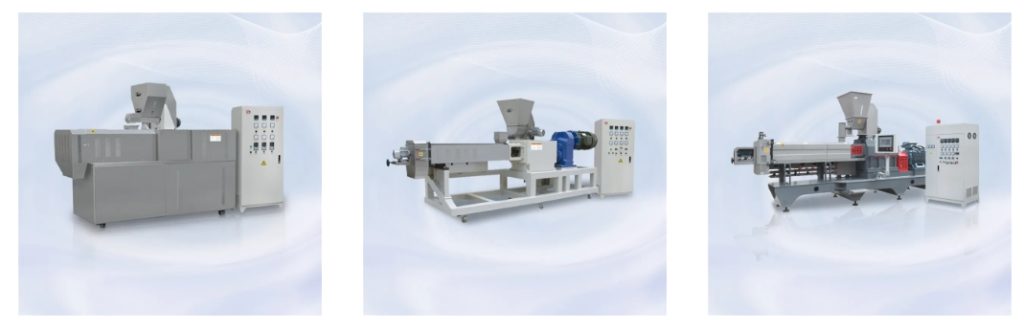
- Closed-Loop Chiller Unit: The cornerstone of effective cooling. It circulates a chilled fluid (water or water-glycol mix) at a constant, programmable temperature. This is far superior to relying on municipal water.
- Temperature Controllers and Sensors: Each cooling zone must have a accurate RTD or thermocouple sensor connected to a PID (Proportional-Integral-Derivative) controller. The PID adjusts cooling valve positions for precise temperature stability.
- Flow Control Valves: Solenoid or modulating valves control the flow of coolant to each zone based on the controller’s signal.
- Heat Exchangers: Used to transfer heat from the process coolant to a secondary cooling circuit or the environment.
- Regular Maintenance:
- Clean Heat Exchangers: Finned air-cooled heat exchangers and water-cooled shell-and-tube units must be kept clean from dust and scale.
- Check Coolant Quality: Regularly test and treat coolant to prevent biological growth, corrosion, and scale buildup, which drastically reduce efficiency.
- Inspect Hoses and Fittings: Prevent leaks that can cause downtime or safety hazards.
- Clean Air Filters and Vents: On motors, control cabinets, and air-cooled systems.
4. Operational Strategies for Optimal Cooling
- Zonal Profile Management: Don’t just cool everything. Set an optimal temperature profile from the feed zone to the die. The feeding zone often requires some cooling to ensure solid conveying, while the metering zone may need precise control to hit the target melt temperature.
- Monitor Melt Temperature: Use a handheld or installed melt thermocouple probe. double screw extruder machine This is the true indicator of material state, not just barrel setpoints. Adjust cooling (and screw speed) based on this reading.
- Balance Shear vs. Cooling: If the melt temperature is too high, consider reducing screw speed (which reduces shear heat) before increasing cooling. Sometimes, a small reduction in RPM is more effective than overwhelming the cooling system.
- Startup Sequence: Begin with barrel heaters on to reach operating temperature. Initiate the cooling system before starting the screw to prevent an initial heat overshoot.
Cooling an extrusion machine is not merely about removing excess heat; it’s about precise thermal management. A well-designed system integrates zoned barrel cooling (preferably with a closed-loop chiller), screw core cooling, and drive system protection, all governed by accurate PID controls. Combining this hardware with smart operational strategies—like managing shear, monitoring true melt temperature, and adhering to a rigorous maintenance schedule—ensures stable operation, high product quality, extended equipment life, and optimal energy efficiency. Remember, consistent cooling is synonymous with consistent production.
 Belarusian
  English
  Russian
  Spanish
  Italian
  Arabic
  Portuguese
  German
  French
  Japanese
  Moroccan Arabic
  Persian