
The rise of plant-based eating has brought many innovative foods into the spotlight, but few are as fundamental and transformative as Textured Soy Protein (TSP), also known as Textured Vegetable Protein (TVP). Often called “plant-based meat” or “soy meat,” this versatile ingredient is the building block for countless vegetarian and vegan dishes, from hearty tacos to Bolognese sauce. But how exactly are those dry, spongy chunks and crumbles created?
The journey from a simple soybean to a protein-rich meat analogue is a fascinating feat of food engineering, primarily relying on a process called extrusion cooking. This article unveils the step-by-step industrial process of producing textured soy protein.
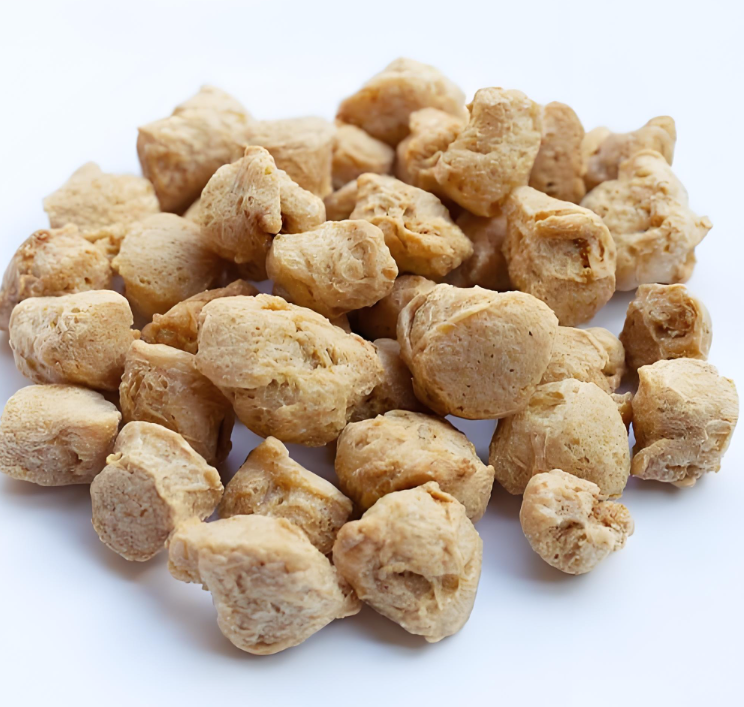
What is Textured Soy Protein?
Before diving into the process, it’s important to understand what TSP is. It is a defatted soy flour product, a byproduct of soybean oil production, that has been processed to have a spongy, meat-like texture. When rehydrated, it mimics the mouthfeel and appearance of ground meat. It’s prized for its high protein content (around 50-70%), long shelf life, and ability to absorb flavors .
There are two primary methods for creating TSP, with extrusion being the most common and commercially viable.
1. The Primary Method: Extrusion Cooking
The vast majority of TSP is made using a machine called an extruder. This continuous processing system uses heat, pressure, and mechanical shear to transform simple ingredients into a structured final product . The process can be broken down into the following key stages:
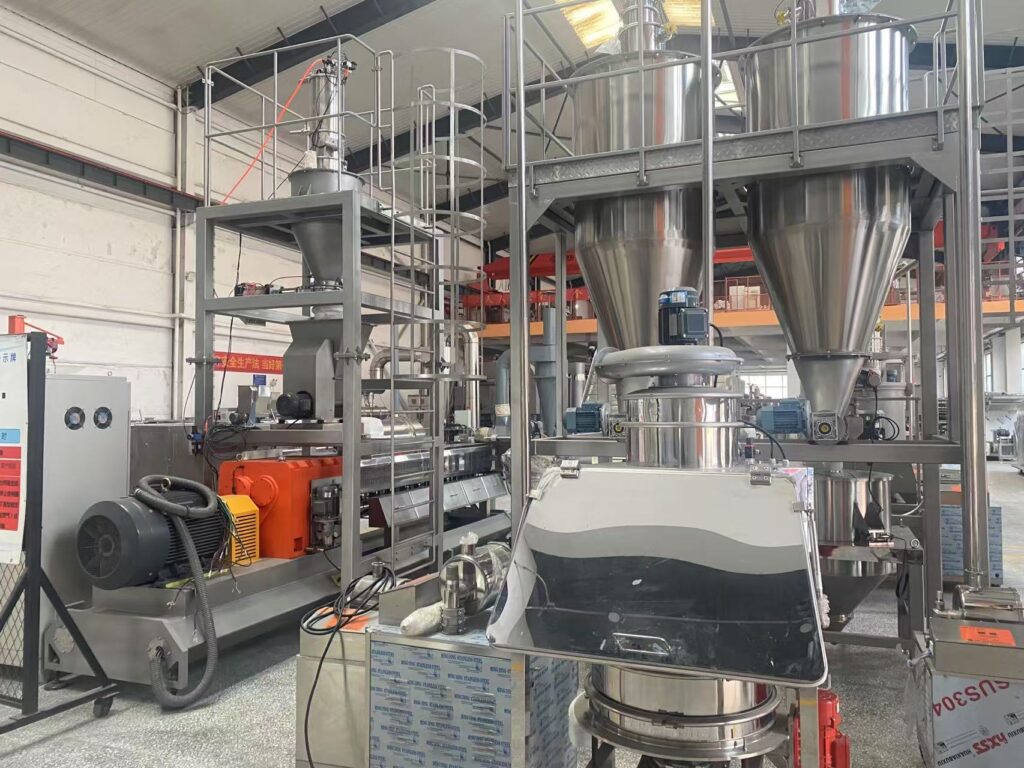
Step 1: Raw Material Preparation and Mixing
The foundation of TSP is a protein-rich raw material. Traditionally, this is low-denatured defatted soy flour or soybean meal, a byproduct left after soybean oil is extracted . To achieve specific textures or nutritional profiles, manufacturers may also blend in protein concentrates or isolates from soy, pea, or even other sources like faba bean . Other dry ingredients, such as starches, fibers, or natural colors, may be added to the mix.
The dry ingredients are fed into a conditioner or mixer, where they are combined with water (and sometimes steam) to create a consistent, hydrated mixture. For traditional, low-moisture TSP, the water content is typically kept low, usually between 15% and 35% . This creates a moist, free-flowing powder or dough-like crumble.
Step 2: Extrusion – The Heart of the Process
The conditioned mixture is then fed into the barrel of a twin-screw extruder . This is where the magic happens. Inside the barrel, large rotating screws convey the material forward under intense conditions.
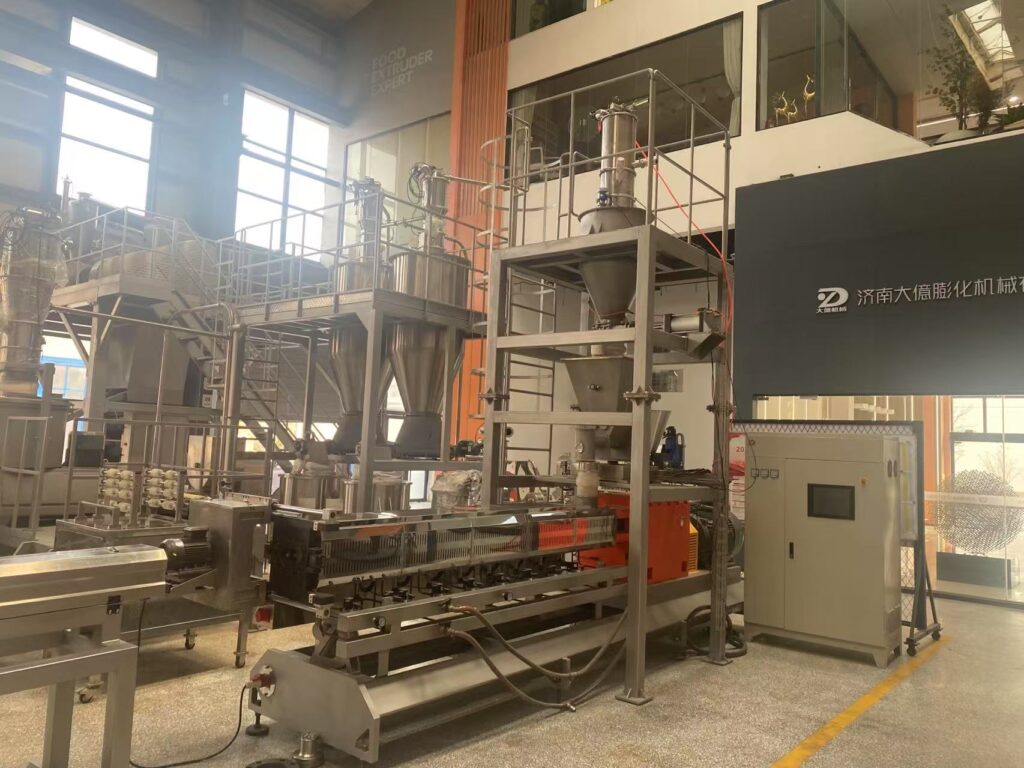
- Heat and Shear: As the material is pushed along the barrel, it is subjected to extreme heat, generated both by external heating elements and the intense mechanical friction (shear) between the screws and the barrel wall. Temperatures can soar to between 120°C and 170°C or even higher .
- Protein Unfolding and Alignment: This combination of heat, pressure, and shear forces causes the tightly coiled soy protein molecules to denature, or unfold. As they flow through the narrow channels of the extruder, these long, unfolded protein strands align themselves in a directional, layered structure, similar to the fibers in real meat .
- A “Melt” Under Pressure: The high temperature also superheats the moisture in the mixture, turning it into steam. However, because the extruder barrel is sealed and under immense pressure (which can exceed 45 bar), the steam cannot escape. The material becomes a pressurized, viscous, “molten” mass .
Step 3: Expansion and Solidification at the Die
The molten, pressurized protein mass is forced out of the extruder through a die—a metal plate with holes of specific shapes and sizes. This sudden exit is the critical moment of transformation.
As the material leaves the die, it instantly experiences a dramatic drop from high pressure to normal atmospheric pressure. This causes the superheated water inside the protein matrix to flash into steam instantly, creating millions of tiny gas bubbles and causing the extruded pieces to puff up and expand . This rapid expansion locks the aligned protein fibers into place, creating the characteristic porous, spongy structure of TSP. A rotating knife at the die face cuts the extruded material into the desired sizes—small chunks, granules, or flakes .
Step 4: Drying and Cooling
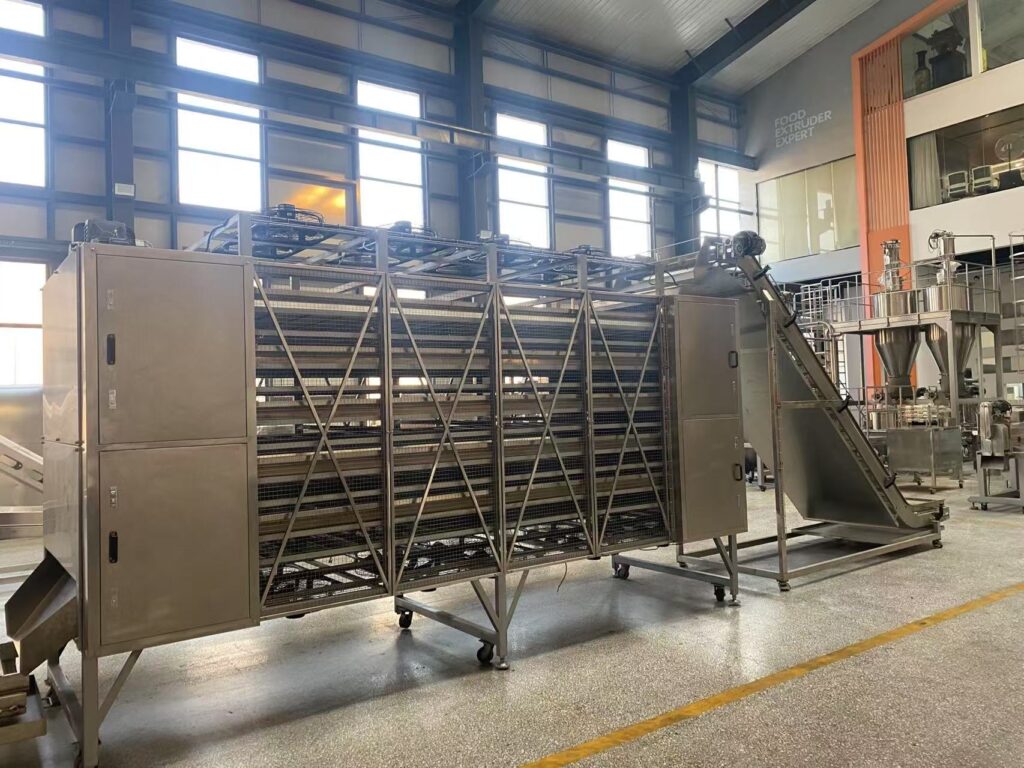
At this stage, the expanded TSP pieces are still hot and have a relatively high moisture content (around 25-35%) . They must be dried immediately to ensure safe storage and a long shelf life. They are conveyed through a drying system, where hot air reduces their moisture content to a safe level, typically below 10% , and ideally between 6-8% . After drying, the product is cooled before moving to the final stage.
Step 5: Packaging and Quality Control
The final, shelf-stable TSP is then ready for packaging. Before being sealed into bags, it passes through various quality control checks. It is often screened to ensure uniform particle size, and samples are tested for key functional properties like water holding capacity (how well it rehydrates) and texture . The finished product is then packed into bags, boxes, or bulk containers, ready to be shipped to food manufacturers or retail stores worldwide .
2. The Alternative: Spinning (Fiber Formation)
While less common for the crumbles and chunks found in stores, there is another method for creating textured protein: spinning, which is conceptually similar to making synthetic fibers like nylon.
In this process, a high-protein solution (like soy protein isolate) is prepared in an alkaline liquid. This thick “dope” is then forced through a spinneret—a device with thousands of tiny holes—into an acidic salt bath . The acid causes the protein to coagulate and solidify into fine, continuous filaments. These thousands of tiny filaments are then bundled together, stretched to align the protein molecules, and combined with binders, fats, and flavorings to form a product that closely mimics the fibrous structure of muscle meat . While it allows for precise textural control, it is a more complex and expensive process than extrusion.
Conclusion: A Marvel of Modern Food Science
The production of textured soy protein is a remarkable example of how food science can transform a simple bean into a versatile, sustainable, and nutritious food source. The extrusion process, in particular, is an elegant solution that uses the fundamental forces of heat, pressure, and shear to architect a new structure from plant proteins. From the initial mixing of defatted flour to the final puff at the die, every step is carefully controlled to create the perfect canvas for countless meat-free meals, proving that sometimes, the most innovative foods are built from the ground up.
 Belarusian
  English
  Russian
  Spanish
  Italian
  Arabic
  Portuguese
  German
  French
  Japanese
  Moroccan Arabic
  Persian