
A twin-screw extruder is a versatile thermal-mechanical processing system used extensively in food, feed, plastics, and biochemical industries. double screw extruder Its heating is crucial for transforming raw materials into a molten, homogenous mass suitable for shaping, texturizing, or chemical reaction. The heating process in a twin-screw extruder is not singular but a synergistic combination of multiple mechanisms, precisely controlled to achieve the desired product characteristics.
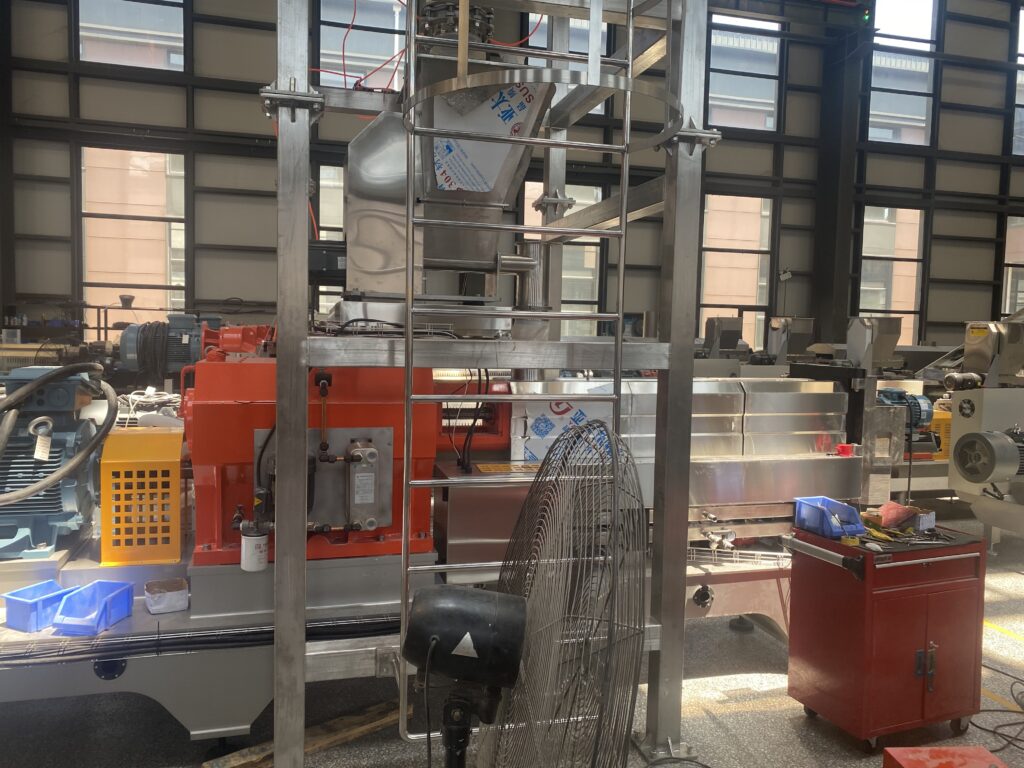
The primary heating sources can be categorized into two main types: External (Barrel) Heating and Internal (Mechanical) Heating.
1. External Heating: Barrel Heating Systems
The barrels, which house the intermeshing screws, are equipped with external heating jackets. These jackets typically utilize one or more of the following methods:
- Electrical Resistance Heaters: The most common method. Band or cartridge heaters are clamped around the barrel segments. double screw extruder They convert electrical energy directly into heat, which is conducted through the barrel wall into the processing material. This system allows for precise, zone-controlled heating, where different barrel sections (e.g., feeding, melting, mixing, metering) can be maintained at specific temperatures.
- Fluid-Circulating Heaters: In some applications, especially where very uniform temperature control is critical or for cooling purposes, a thermal fluid (oil or water) is circulated through channels in the barrel jacket. An external heater/chiller unit controls the fluid’s temperature.
- Steam Heating: Less common in modern precision extruders but sometimes used in specific industries, steam can be passed through jacket channels to provide heating.
External heating is essential during start-up to bring the machine to operating temperature and to supply supplemental heat during processing, especially for heat-sensitive materials or formulations that generate less internal shear heat.
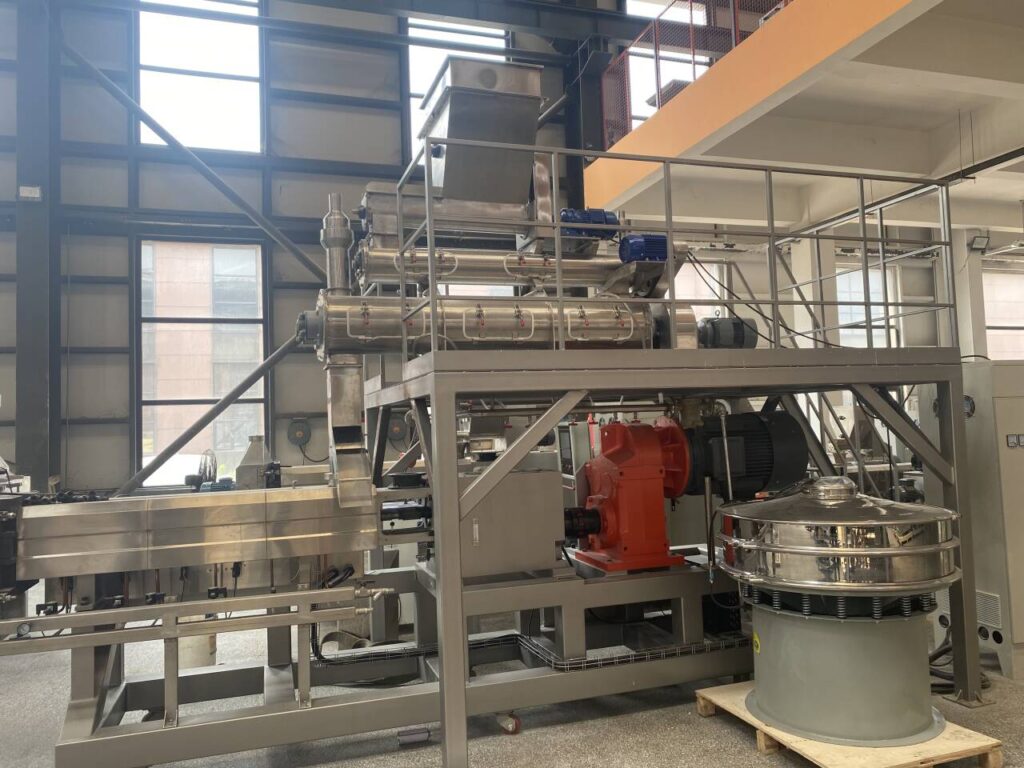
2. Internal Heating: Mechanical (Dissipative) Heating
This is the dominant and most distinctive heating mechanism in twin-screw extrusion, particularly in high-shear applications. It is generated within the material itself due to the mechanical action of the screws.
- Viscous Dissipation (Shear Heating): As the motor drives the co-rotating screws, they convey, mix, and knead the viscous material. double screw extruder The intense shear forces created between the screw flights and the barrel wall, between the two screws, and within the material itself cause severe friction and viscous drag. This mechanical energy is converted directly into thermal energy (heat). The higher the screw speed (RPM) and the higher the viscosity of the melt, the greater the amount of shear heat generated.
- Compression Heating: The screw profile is often designed with restrictive elements such as kneading blocks, reverse-pitch elements, or valves. These elements create a deliberate pressure build-up and compression of the material, which also contributes to its temperature rise.
Internal heating is highly efficient and self-regulating to some extent but requires careful control through screw design and operating parameters to avoid overheating.
The Integrated Heating Process and Control
In operation, heating is a dynamic and integrated process:
- Start-up: Initially, external heaters bring the empty or filled barrel zones to a set temperature profile to initiate melting and prevent motor overload.
- Transition to Steady State: As material is fed and the screws rotate, internal shear heating becomes significant. The control system constantly monitors temperature via thermocouples inserted in each barrel zone.
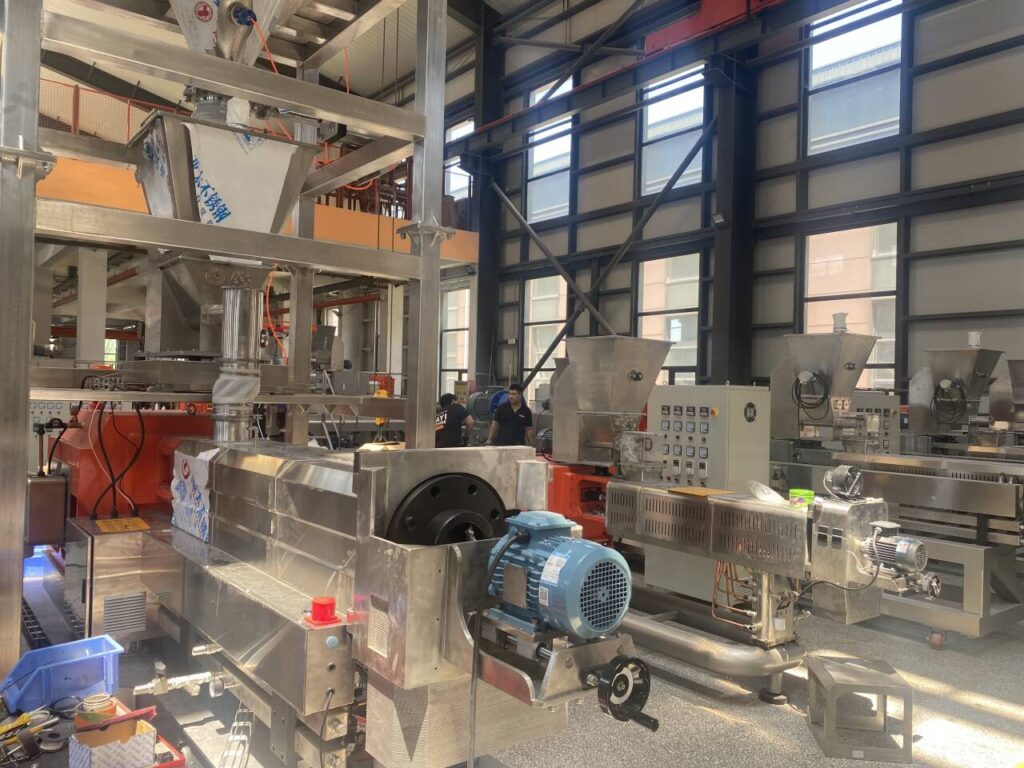
- Precision Control: The extruder’s control panel (PLC) is the nerve center. Based on the set temperature for each zone and the real-time readings, it automatically modulates the external heaters (turning them on/off or adjusting power) and can trigger barrel cooling systems (often air fans or water circulators) to remove excess heat when shear heating becomes too intense. This ensures the material temperature follows the precisely defined “thermal profile” required for the specific product recipe.
Cooling as a Complementary Process: It is important to note that cooling is an integral part of temperature management. double screw extruder Preventing thermal degradation is as critical as providing enough heat. Thus, an extruder’s thermal system is more accurately described as a “heating and cooling” system, working in tandem to maintain the exact thermomechanical environment.
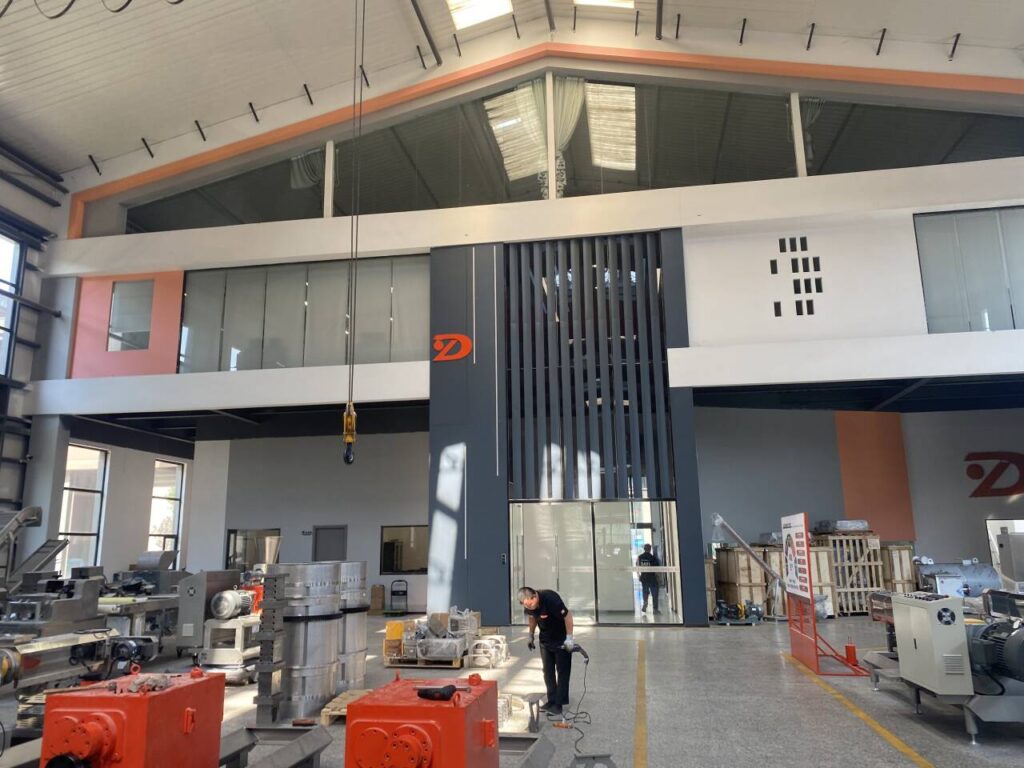
In summary, a twin-screw extruder heats material through a sophisticated interplay of externally applied thermal energy and internally generated mechanical energy. This combination, managed by advanced process control, provides the flexibility to handle a vast range of materials and create products with specific textures, densities, functionalities, and chemical properties.
 Belarusian
  English
  Russian
  Spanish
  Italian
  Arabic
  Portuguese
  German
  French
  Japanese
  Moroccan Arabic
  Persian